1. ArchDaily
  2. Animated Films

Animated Films: The Latest Architecture and News

Architecture as Translation: Africanfuturism in Folklore, Film, and Speculative Art

Audio available

"Take your dream suppressants." The opening line in Wanuri Kahiū's Pumzi, directed at our protagonist Asha, enforces the order of severing ties with hopeful futures and ancestral memories in pasts shared to compel her focus on the perpetual present in the Maitu Community's heterotopia of an enclave. The bird's-eye view shot of the Maitu reveals a sterile, drone-like structure with a panoptic sphere at its center where normal human behavior is medicalized. The layout is built around closed-loop recycling systems as apt as a self-sufficient organism, designed to escape the toxic environment of a sickly Earth, where every pipe and corridor is engineered to harvest human excretion for water generation, thereby absorbing the roles of nature and state both. The community's architecture perfectly translates the film's message with its physicality.

Across folklore, film, and art, the same move recurs: architecture translates an elsewhere, whether ancestral, spiritual, or speculative, into form that can be seen or entered. The sections below follow that translation from the Kasubi Tombs to Kizazi Moto, and show that the elsewhere is a way of reading the present.


Architecture as Translation: Africanfuturism in Folklore, Film, and Speculative Art - Imagen 1 de 4Architecture as Translation: Africanfuturism in Folklore, Film, and Speculative Art - Imagen 2 de 4Architecture as Translation: Africanfuturism in Folklore, Film, and Speculative Art - Imagen 3 de 4Architecture as Translation: Africanfuturism in Folklore, Film, and Speculative Art - Imagen 4 de 4Architecture as Translation: Africanfuturism in Folklore, Film, and Speculative Art - More Images+ 7

Beyond the Animation: Studio Ghibli and Disney’s Approach to Child-Centric Theme Park Design

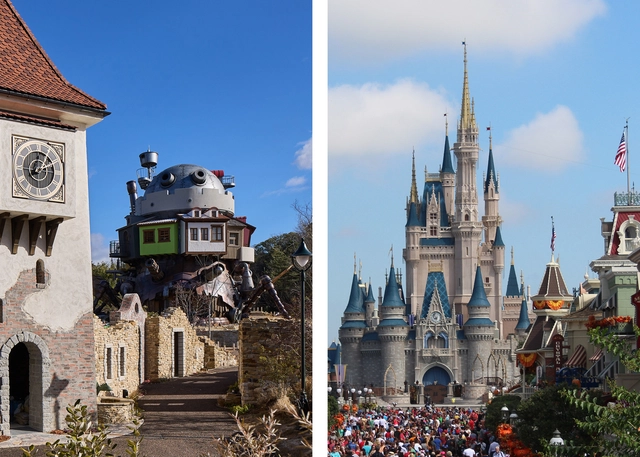
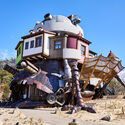
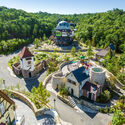
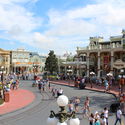
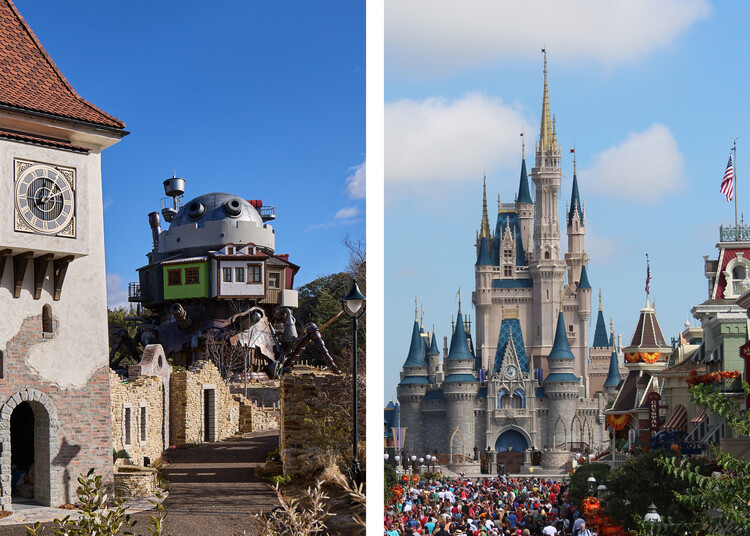
When it comes to designing for a child's imagination, the architectural landscape presents two different philosophies. Disneyland and Studio Ghibli, both masters of imaginative storytelling, represent this core division. Their approaches, far from being accidental, reflect different views on how children experience and engage with space. One provides a spectacle of constructed fantasy, while the other offers a landscape for potential magic. These two models present architects with a fundamental choice for tackling these sorts of projects: to design spaces that cater to children's innate need for sensory and personal discovery, or to create a fantasy that appeals to their growing ability to understand narratives and more complex spaces.

Beyond the Animation: Studio Ghibli and Disney’s Approach to Child-Centric Theme Park Design - Imagen 1 de 4Beyond the Animation: Studio Ghibli and Disney’s Approach to Child-Centric Theme Park Design - Imagen 2 de 4Beyond the Animation: Studio Ghibli and Disney’s Approach to Child-Centric Theme Park Design - Imagen 3 de 4Beyond the Animation: Studio Ghibli and Disney’s Approach to Child-Centric Theme Park Design - Imagen 4 de 4Beyond the Animation: Studio Ghibli and Disney’s Approach to Child-Centric Theme Park Design - More Images+ 6

Subscriber Access

Charles Correa’s 1955 Master Thesis Uses Animated Film to Explain Public Participation in Urban Processes

Charles Correa Foundation has recently released several snippets of ‘You & Your Neighbourhood’, Charles Correa’s 1955 Master Thesis at MIT, an animation film for which the architect was scriptwriter, animator, photographer and director. The thesis put forward the idea of a participatory process for the betterment of neighbourhoods, with a strong emphasis on creating a framework for improving urban conditions in a bottom-up approach.

Subscriber Access

Oscar-Nominated Film Captures Life with Modernist Architect Parents

Minimalism has its challenges and for this seven-year-old sibling of two, it’s not for children. Nominated for Best Animated Short Film at the 87th Academy Awards, Me and My Moulton captures the unconventional life and struggles of three kids with modernist architect parents. Watch the trailer above and see what director Torill Kove believes are five sure signs your parents were architects, after the break.