Victoria Tomaschko

BROWSE ALL FROM THIS PHOTOGRAPHER HERE
↓

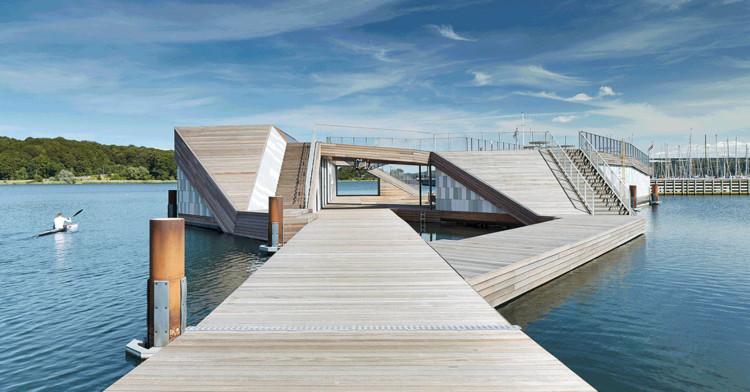
Off the Mainland: Floating Architecture Projects Redefining the Built Environment

Building above water means doing away with a part of construction that is quite literally the basis of most of our built environment: the foundation. In a world dominated by water, currents, and shifting levels are variables that simply cannot be ignored, which is why the most emblematic feature these projects share is their adaptability.

Instead of robust, deep bases – such as piles or caissons – designed to anchor architecture into the earth, floating structures frequently employ solutions like concrete pontoons or plastic drums to prevent the building from sinking. These are typically paired with anchoring systems to "fix" the structures, even if only temporarily, to a specific location.

Off the Mainland: Floating Architecture Projects Redefining the Built Environment  - More Images+ 23

Understanding Soft Architecture: The Shift from Monument to Moment

Audio available

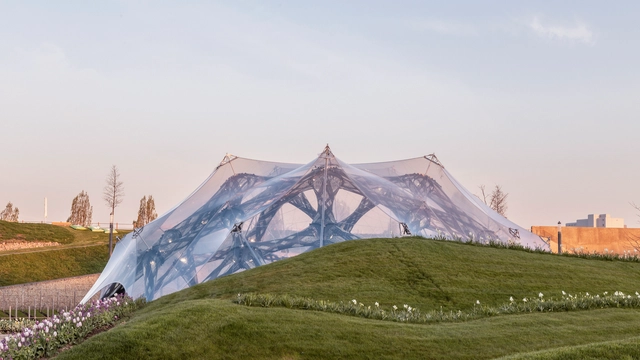
In recent years, architecture has increasingly embraced adaptability, flexibility, and responsiveness as core design principles. This evolution reflects a shift from traditional notions of static, permanent structures to dynamic environments that can adjust to changing needs and conditions. Central to this transformation is the concept of "soft architecture", which leverages pliable materials and innovative systems to create spaces that are functional, sustainable, and user-centric. Soft architecture takes shape through membranes that breathe, façades that move, structures that inflate or fold, and surfaces that bend rather than break. It involves designing for transformation — not only in how a building performs environmentally, but also in how it can accommodate shifting functions, user interactions, or temporary occupations. This approach to building challenges traditional notions of durability and control, proposing instead a more responsive and open-ended architecture. It reflects a growing awareness that buildings, like the societies they serve, must be able to evolve.

Understanding Soft Architecture: The Shift from Monument to Moment - More Images+ 53

Why Doesn't Floating Architecture Sink?

Subscriber Access | 

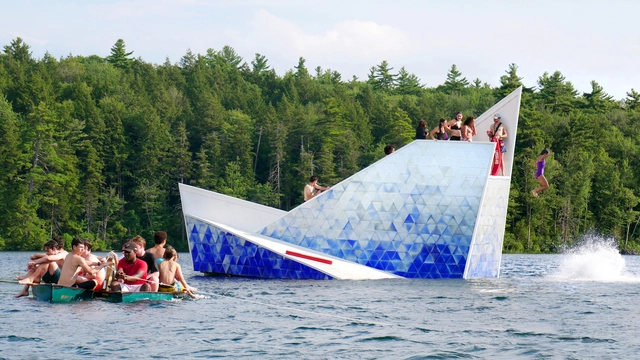
The aquatic environment has always fascinated dreamers and researchers. Around 1960, in the midst of the fierce space race of the Cold War, French explorer Jacques Cousteau developed equipment such as the Aqualung to unravel the depths of the sea, which remained as unexplored as outer space itself. He even stated that in 10 years we could occupy the seabed as “aquanauts” or “oceanautas,” where it would be possible to spend long periods extracting mineral resources and even growing food. Sixty years later, the seabed is still reserved for few, and mankind has been more concerned with plastic in the oceans and rising sea levels than colonizing the ocean floor. But being close to a body of water continues to attract most people. Whether out of interest or in response to risks of flooding and over-population, some have turned to utopian proposals and floating architecture, examples of which have been featured in the ArchDaily project archive. But what are the fundamental differences between building houses on land versus on water, and how do these buildings remain on the surface rather than sinking?

Why Doesn't Floating Architecture Sink? - More Images+ 10

Does Urban Development Drive Gentrification?

Subscriber Access | 
Does Urban Development Drive Gentrification? - Featured Image
Photo by Miguel A. Amutio on Unsplash

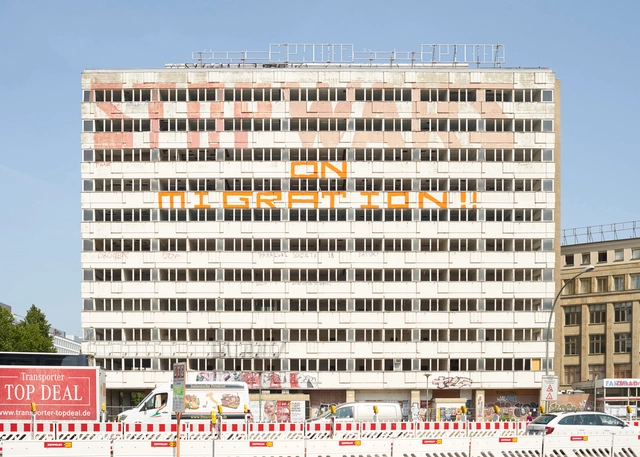
Urban environments are in a constant process of social evolution, political and economic transformation. Attached to the idea of urban renewal is gentrification, a complex phenomenon circumscribing a variety of issues, from the improvement of the built environment and strengthening the local economy to displacement and demographic change. On the one hand, redevelopment means revitalizing neighbourhoods, improving the built environment and infrastructure and boosting the local economy, and on the other hand, gentrification drives up property prices and cost of living, forcing out low-income communities. Is the displacement of local communities a "collateral damage" of urban development? Does redevelopment intrinsically drive gentrification, and can urban environments be revitalized more ethically?

In this Editor's Talk edition, editors from Argentina, Lebanon, Brasil, Chile, Tanzania share their views on gentrification.

Does Urban Development Drive Gentrification? - More Images

Leona Lynen Explains How to Fight Gentrification in ReSITE Podcast

Design and the City is a podcast by reSITE, raising questions and proposing solutions for the city of the future. In the fourth episode entitled Fighting Gentrification, Leona Lynen, a city-maker advocating for the collaboration between civil society and administration, talks about the case of Berlin and her new co-operative project.

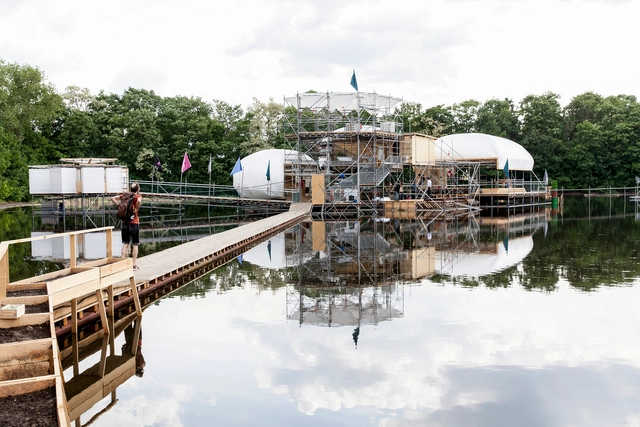
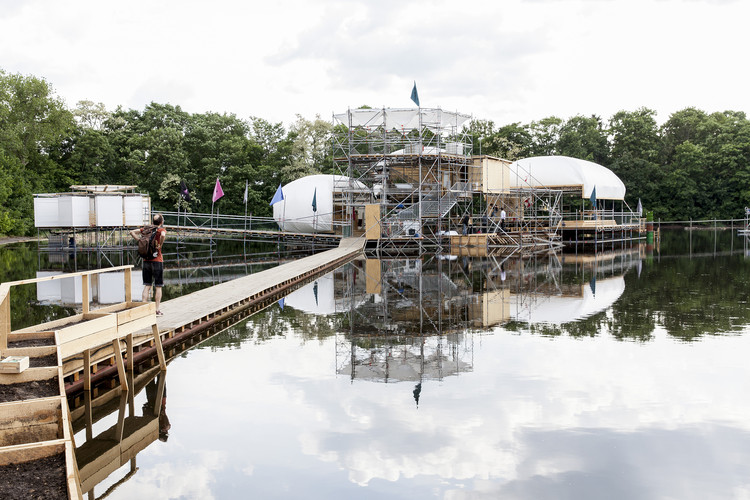
How Berlin's Floating University Charts the Course for Future Architectural Education

This article was originally published on Metropolis Magazine as "How a DIY Floating Universiity in Berlin Could Be An Unorthodox Prototype for Design Education."

On the north side of Tempelhofer Feld, an airport-turned-park in southern Berlin, lays a large ditch. Surrounded by lots and bungalows and noticeable only to those in the know, this 19th century basin holds rainwater drained from the airport’s defunct runways before it is fed into Berlin’s canal network.

How Berlin's Floating University Charts the Course for Future Architectural Education - More Images+ 11

Floating University Berlin / raumlabor berlin

Floating University Berlin / raumlabor berlin - More Images+ 7

  • Architects: raumlabor berlin
  • Year Completion year of this architecture project Year:  2018
  • Manufacturers Brands with products used in this architecture project
    Manufacturers:  LAYHER, LDPE