SITU Studio

BROWSE ALL FROM THIS PHOTOGRAPHER HERE
↓
Subscriber Access

Inequality and Informality in New York: SITU Studio's Proposal for MoMA's Uneven Growth Exhibition

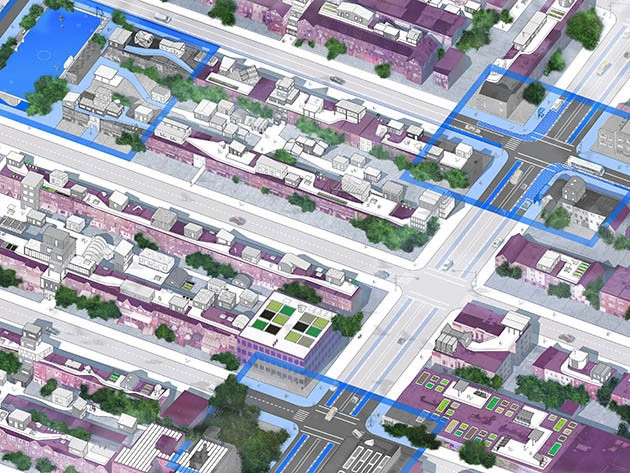
When it comes to discussing informal housing, it's usually cities in developing nations that take the spotlight - however, as revealed by SITU Studio's contribution to MoMA's Uneven Growth exhibition, issues of informal housing are indeed present in cities across the spectrum of development. In this interview, originally posted on Arup Connect as "Inequality and informality in New York," Sarah Wesseler speaks to SITU Studio principle Bradley Samuels about their unconventional proposal to address an issue that is frequently overlooked in New York city policy.

Uneven Growth: Tactical Urbanisms for Expanding Megacities, a newly opened exhibit at New York’s Museum of Modern Art, focuses on the complex relationship between urbanization and inequality. Over the 14-month period leading up to the launch, six interdisciplinary teams explored how these issues are playing out in different parts of the world, each developing an architectural response for a specific city.

Architecture firm SITU Studio (together with Cohabitation Strategies [CohStra]) was tasked with studying its home city, New York. (Arup transport planner Michael Amabile also consulted with the team.) We spoke with SITU principal Bradley Samuels about the project.

Inequality and Informality in New York: SITU Studio's Proposal for MoMA's Uneven Growth Exhibition - More Images+ 5

Six Teams Studying Uneven Growth to Exhibit Proposals for Expanding Megacities at MoMA

As the culmination of a 14-month initiative to examine new architectural possibilities for rapid growth in six megalopolises - Hong Kong, Istanbul, Lagos, Mumbai, New York, and Rio de Janeiro - the Museum of Modern Art is preparing to open Uneven Growth: Tactical Urbanisms for Expanding Megacities on November 22. The exhibition will present mappings of emergent modes of tactical urbanism from around the globe alongside proposals for a bottom-up approach to urban growth in the highlighted cities by six interdisciplinary teams made up of local practitioners and international architecture and urbanism experts.

Curator Pedro Gadanho, in collaboration with the Austrian Museum of Applied Arts (MAK), states: 

“The exhibition features design scenarios for future developments that simultaneously raise awareness of the prevailing inequalities in specific urban areas and confront the changing roles of architects vis-à-vis ever-increasing urbanization. Each team in the exhibition was asked to consider how emergent forms of tactical urbanism can respond to alterations in the nature of public space, housing, mobility, spatial justice, environmental conditions, and other major issues in near-future urban contexts.” 

A synopsis of each team’s work, after the break.