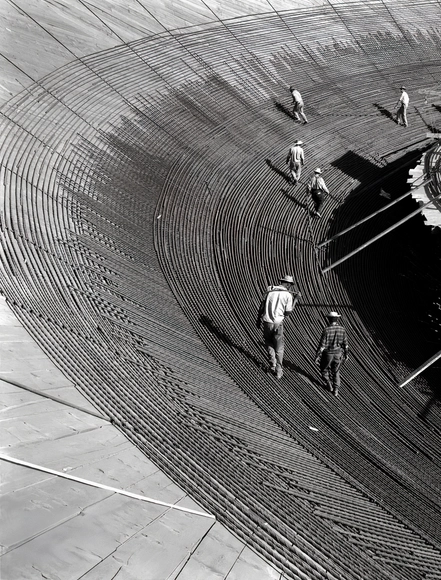
Nicholas Iyadurai

BROWSE ALL FROM THIS PHOTOGRAPHER HERE
↓
Subscriber Access

Formal and Material Experimentation: Key Lessons from Modernist Architecture Pioneers

Wars, decolonization, economic crises, civil movements, and industrial-technological revolutions: the 20th century was a period of radical and far-reaching transformations. These upheavals reshaped societies and redefined how people expressed their evolving aspirations, with architecture leading the way. Machines and industrialization promised technological progress and modernization, advocating for a clean break from the ornamented, historically rooted styles of the past while embracing a vision focused on functionality, efficiency, and innovation. This shift, embodied by modernism, introduced new concepts, methods, and material uses—all shaped through experimentation.

AD Classics: Mill Owners' Association Building / Le Corbusier

Le Corbusier was commissioned by the president of the Mill Owners’ Association to design the organization’s headquarters in Ahmedabad, a city historically active in India’s textile trade. The building is a physical manifesto representing Le Corbusier’s proposal for a modern Indian architecture. Constructed in 1954, the Mill Owners’ Association Building is considered the first of four completed commissions in Ahmedabad.

AD Classics: Palace of the Assembly / Le Corbusier

AD Classics: Palace of the Assembly / Le Corbusier - More Images+ 7

One of Le Corbusier's most prominent buildings from India, the Palace of the Assembly in Chandigarh boasts his major architectural philosophies and style. Le Corbusier's five points of architecture can be found within the design from its open plan to the view of the Himalayan landscape. The program features a circular assembly chamber, a forum for conversation and transactions, and stair-free circulation.