

-
Architects: José Antonio Molina, Marià Castelló Martínez
- Area: 3337 ft²
- Year: 2021
-
Manufacturers: ELEVATE, Rothoblaas, Bulthaup, Diabla Outdoor, Fragments d'Arquitectura, +4
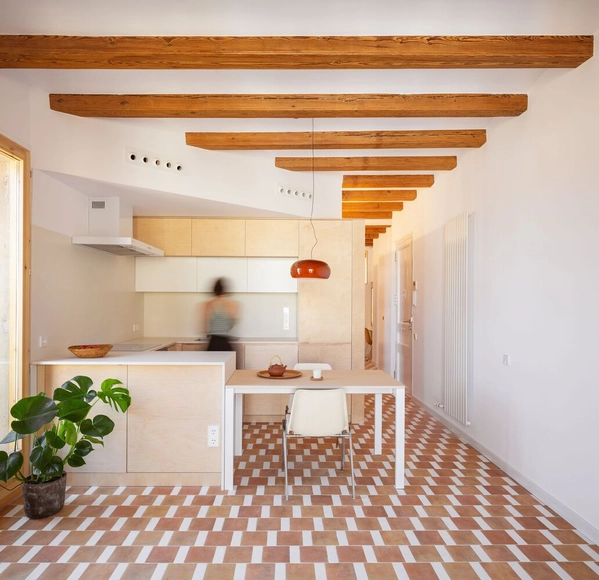
In Spain, the implementation of integrated kitchens in homes has become increasingly common in contemporary architecture. Although there are various configurations and designs that are applied according to the customs and cultures of societies, as we saw in Argentina or Uruguay, the essence of conceiving the kitchen space as a hub of activities and a gathering space among its inhabitants and visitors is a common factor. This has led architects to try to find innovative ways, technologies, or materials that achieve an aesthetic and harmony capable of providing functionality, spaciousness, and flexibility to homes.

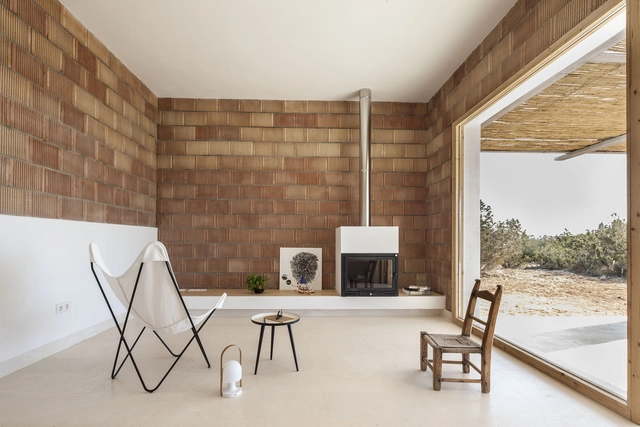
Generally, termoarcilla blocks are ceramic bricks made from clay and secondary aggregates (typically expanded polystyrene beads or other granular materials). These secondary aggregates play a key role in manufacturing: during firing (at temperatures exceeding 900 °C), they undergo a gasification process that creates pores in the material, reducing the block's density and making it lightweight (hence why in some countries they are commonly called lightweight clay blocks). This porous structure enhances the block's thermal and acoustic insulation performance, offering significant advantages over similar materials.