Manuel Bougot

BROWSE ALL FROM THIS PHOTOGRAPHER HERE

Icons at Risk: An International Initiative to Protect Endangered 20th-Century Houses

Icons at Risk: An International Initiative to Protect Endangered 20th-Century Houses - Image 6 of 4
Casa Sperimentale [At Risk]. Image © Stefano Perego Photography

Icons at Risk is an international initiative led by the organization Iconic Houses that seeks to protect and preserve residential projects—private homes, housing developments, and residential complexes—considered of high architectural relevance as representative examples of the ideas and principles of the Modern Movement. The initiative is based on the premise that many iconic homes around the world are currently disappearing—either falling into irreversible neglect, being radically transformed, or ultimately demolished—due to a lack of protective legislation. Because they are part of recent history, many of these structures—particularly houses from the second half of the 20th century—are not yet recognized as "heritage" and therefore lack sufficient legal protection. In many cases, these works serve as physical manifestos that reveal the aspirations and creative pursuits of 20th-century architects and designers within each country's specific urban landscape, making their historical significance clear.
Designing Without a Client: 6 Houses Created by Celebrated Architects for Themselves

Examining the houses that architects designed for themselves can provide insight into their design process, priorities, and philosophy. While often reduced in scale, these personal residences offer a peek into the architects' mindsets and the way in which they translate their ideas into lived spaces without having client-imposed restrictions on the end result. The structures also reflect their creators' personal values, lifestyles, and aesthetic preferences.

These projects are often experiments and testing grounds for their own design principles, pushing the boundaries of architectural expression. From Ray and Charles Eames, who ended up spending their lives in an experimental house created for prefabrication, to Frank Gehry, who used his Santa Monica Dutch colonial house to test out the ideas of deconstructivism that would later come to define his career, these projects represent showcase a different face of the design process of world-renowned architects.

Designing Without a Client: 6 Houses Created by Celebrated Architects for Themselves - More Images+ 18

The Myth of Pure White Architecture: How Architects of Modernity Used Color

Given that the architects of modernity were in search of purity of form, it stands to reason that the image of this modern architecture is almost inevitably rendered in white in the collective imagination. Relieved of superfluous decorations, modern architecture became associated with the predominant use of white surfaces to highlight the volumetric composition. Combined with the concept of “material truth” first articulated by Victorian critic John Ruskin, white-colored architecture is often understood as straightforward, clear, and sincere.

The Myth of Pure White Architecture: How Architects of Modernity Used Color - More Images+ 9

Eileen Grey's Controversial E-1027 Villa is Restored and Open to the Public

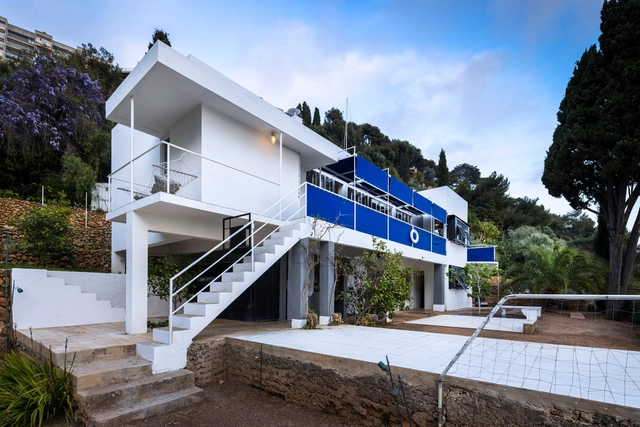
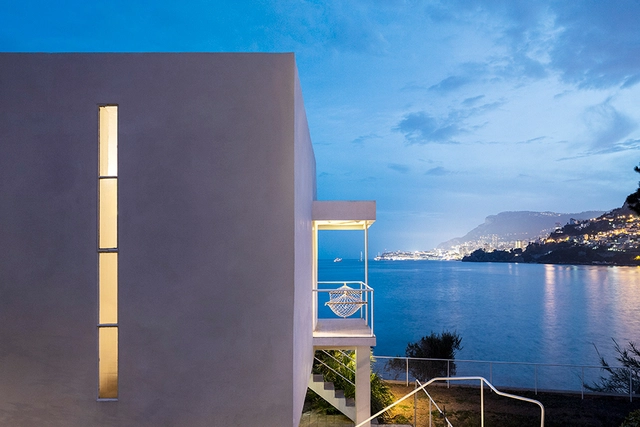
Association Cap Moderne have announced that the restoration of Eileen Gray’s modernist villa E-1027, along with other projects on the Cap Moderne site, such as Le Corbusier’s Cabanon and Unités de Camping, and l’Etoile de Mer restaurant, have been completed and are now open to visitors. The site is listed as a UNESCO World Heritage Site, and is considered as one of the must-see places to discover in the region, welcoming more than 10,000 visitors a year.

Eileen Grey's Controversial E-1027 Villa is Restored and Open to the Public  - Image 1 of 4Eileen Grey's Controversial E-1027 Villa is Restored and Open to the Public  - Image 2 of 4Eileen Grey's Controversial E-1027 Villa is Restored and Open to the Public  - Image 3 of 4Eileen Grey's Controversial E-1027 Villa is Restored and Open to the Public  - Image 4 of 4Eileen Grey's Controversial E-1027 Villa is Restored and Open to the Public  - More Images+ 4

Eileen Gray, Le Corbusier, and the E-1027 House: A Tale of Architecture and Scandal

This article was originally published by Metropolis Magazine as "The Sordid Saga of Eileen Gray’s Iconic E-1027 House."

It’s fair to say Eileen Gray’s E-1027 French villa hasn’t lived a charmed life: It has survived desecration by Le Corbusier, target practice by the Nazis, a stint as drug den and orgy destination, and near dereliction. However, of late, the infamous house’s future is looking more optimistic: Cap Moderne, a non-profit dedicated to rehabbing and opening the building as a cultural destination, recently launched a crowdfunding campaign to continue the building’s restoration. Over the last few years, the conservationists’ work had focused on the recreation of the building’s Eileen Gray–designed furniture. The latest efforts focus on a particular dining alcove. How that alcove—and the entire house—lost its furniture and fell into disrepair is a long story, with many twists and turns.