Javier Deyheralde

BROWSE ALL FROM THIS PHOTOGRAPHER HERE
↓
Subscriber Access

Architects. Masters of Space: An audiovisual catalog of Argentine women who speak through their work

Arquitectas. Maestras del espacio [Architects. Masters of Space] is a recent series from Encuentro. Over the course of two months, the weekly episodes built an engaging audiovisual catalog of the historical work of eight Argentine architects.

The second installment of this architecture series is once again presented by actor Rafael Spregelburd, who reminds us of the importance of highlighting the lesser-known creators behind the country's celebrated architectural projects.
Subscriber Access

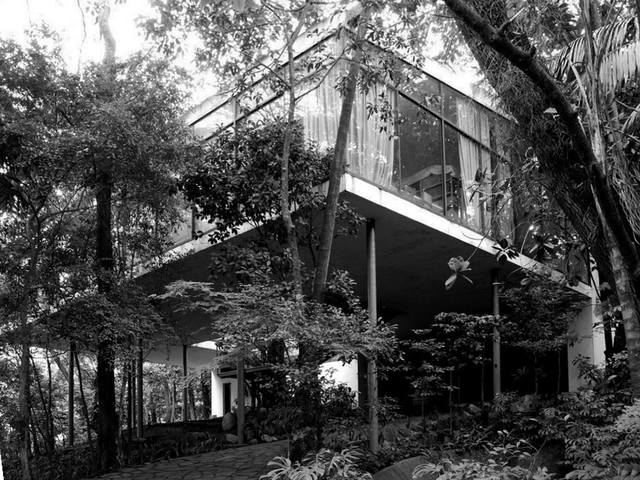
Architecture Classics: Modern Housing on the American Continent 1930-1960

Much of the production of modern architecture on the American continent was based on the model of European architects who, with their works, projected the fundamental premises and ideas for modern living. These pillars of architecture were transferred and consequently adapted to the American territory, introducing, at the same time, their own characteristics according to the territorial, socio-cultural and economic context. 

We understand that good architecture is that which serves as a model for solving problems inherent to the discipline of architecture in general. This is why certain references that we consider today as "classics" are examples of good architectural practices that have been appropriated by other architects, taking the pertinent and necessary elements to achieve a result in accordance with the particular context. 

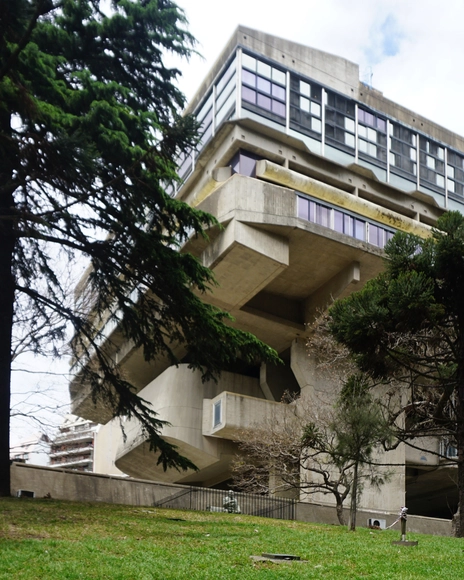
Architectural Classics: Mariano Moreno National Library / Clorindo Testa + Francisco Bullrich + Alicia Cazzaniga

In the central Recoleta neighborhood of Buenos Aires, in a large lot between Austria Street, Agüero Street, and Del Libertador Avenue, stands the current building of the Mariano Moreno National Library, designed by architects Clorindo Testa, Francisco Bullrich, and Alicia Cazzaniga.

Built on the basis of the project that won first prize in a national competition in 1961, and completed in the early 1990s, it has become a landmark of modern Argentine architecture and an example of the variant of 20th century expressionism known as "brutalism".

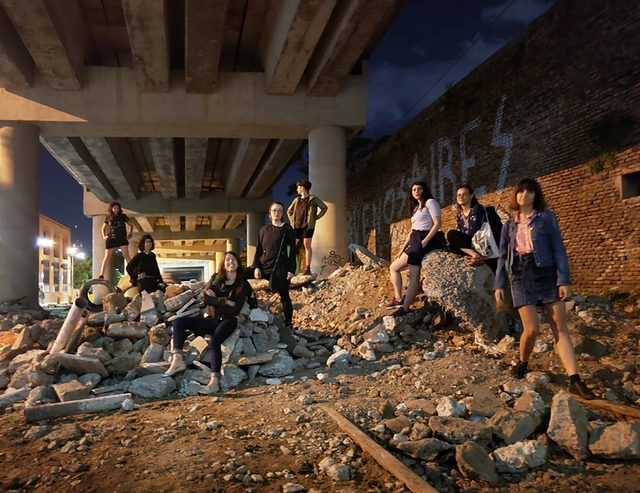
Urban Essays: Opening of the Intervention at Playa Centenario, Bariloche

Ensayos Urbanos en el Campo Expandido is a course within the Gropius Chair that brings together students from various disciplines at the Faculty of Architecture, Design and Urbanism of the University of Buenos Aires to collectively build 1:1 scale interventions.

For this edition, the group held a summer workshop in the city of San Carlos de Bariloche, Argentina, where they explored landscape intervention using local materials—stones, willow branches, and water. The project is located at Playa Centenario on Lake Nahuel Huapi, at the mouth of the Ñireco—one of the area's most polluted urban streams—to create a gathering space and highlight the sector's urban conflicts.

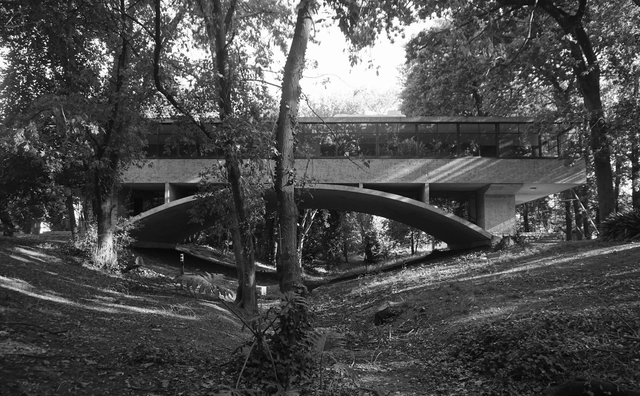
Architecture Classics: House on the River / Amancio Williams + Delfina Gálvez Bunge

Located in a particularly natural setting in the city of Mar del Plata, the "Casa sobre el Arroyo" (House on the River) - known as the "Casa del Puente" (The Bridge House) - is considered a paradigmatic component of 20th-century architecture and an obligatory reference of the Modern Movement in Argentina and Latin America.

The house designed by the Argentinean architect Amancio Williams, commissioned by his father, the musician Alberto Williams, is constructed evidence of the capacity to establish a link between the modern rationality of human beings with nature and its topography.

Subscriber Access

Women in Ibero-America: Articles and interviews reflecting on the present and future of architecture

Women in Ibero-America: Articles and interviews reflecting on the present and future of architecture - More Images+ 3

It is well known that since its inception, the field of architecture has been predominantly composed of white, cisgender men, who to this day continue to occupy some of the most prominent positions in both architectural practices and prestigious awards. For this and many other reasons, the struggle to bring visibility to women in architecture has always been present, responding to the specific demands of each era and winning increasingly significant battles. However, inequalities persist, making it a challenging profession for women—and even more so for women of color, Indigenous women, Latinas, and those from disadvantaged economic backgrounds.

Color in Argentine Architecture

It is said that when Le Corbusier arrived in Greece, he was struck by its architecture—the Hellenistic temples, their regulating system of proportions, and their monochromia. Many of these elements went on to influence his work. What would have surprised the architect, however, is that Greek temples were actually not monochromatic; in fact, they were far from it. Blue, red, green, and even gold: these were the vibrant colors that enveloped Greek buildings. Friezes, pediments, colonnades, and even sculptures—every inch was coated in color derived from pigments. The passage of time, wars, exposure to the sun, rain, and wind, along with the perishable nature of the pigments, caused the surfaces to fade, leaving the cold marble exposed.