Dan Gamboa Bohórquez

BROWSE ALL FROM THIS PHOTOGRAPHER HERE

The Illusion of Lightness: Designing Civic Voids for Public Life

In our current cities, urban density and rising land values often force a choice between large-scale civic buildings and open public space. Traditionally, plazas have been treated as areas surrounding a building's footprint, but this strategy was modified when pilotis were introduced by the early 20th-century modernist movement. While the original intent was to create a sense of lightness that would allow circulation and light to flow beneath a structure, contemporary requirements for seismic loads, fire egress, and heavy occupancies render thin columns insufficient for the needs of current large-scale civic projects.

However, the pursuit of architectural lightness is not a strictly contemporary phenomenon. Following the modernist introduction of pilotis, several mid-century projects began experimenting with the illusion of suspension to achieve civic transparency. In 1953, the National Congress of Honduras in Tegucigalpa, designed by Mario Valenzuela, applied these principles to a legislative setting. The building consists of a solid assembly chamber elevated on a series of slender columns. Because the site sits on a terrace at the end of a sloping street, the resulting void does more than just provide circulation; it frames views of the city, creating the impression that the heavy legislative mass is lightly suspended above the urban fabric.

The Illusion of Lightness: Designing Civic Voids for Public Life - More Images+ 11

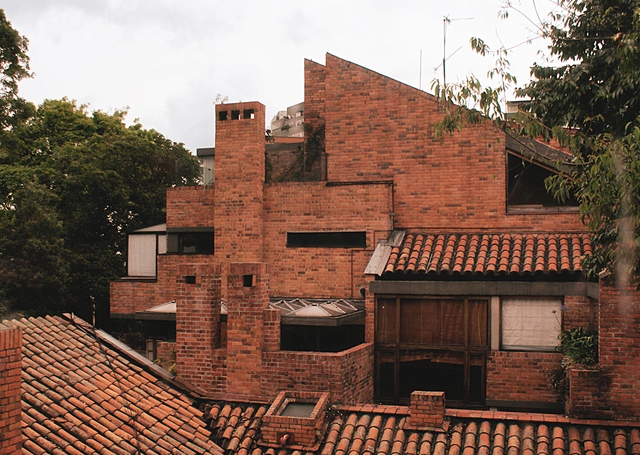
Architecture Classics: Ciudadela Colsubsidio / Germán Samper

In the western part of Bogotá, between Calle 80 and the Juan Amarillo Wetland, lies one of the most interesting urban and architectural projects in the history of Colombia: the Ciudadela Colsubsidio. Created in 1983 as a response to Law 21 of 1982, which required social security organizations to provide housing for their members. Colsubsidio, the project manager, hired Germán Samper to tackle a 130-hectare plot located between two well-established neighborhoods (Santa Bárbara and Bolivia). The challenge was to connect these neighborhoods while creating a citadel that would consolidate various essential services for a population that, due to its geographical location, was distant from the center of Bogotá.

The challenge Samper faced was to develop a clear urban structure that would articulate the existing neighborhoods along the east-west axis and, along the north-south axis, connect the Juan Amarillo Wetland with Calle 80, the main road that would serve the entire neighborhood. From the initial design, it was evident that the architect was concerned with creating and developing a spatial experience for the residents, where the neighborhood itself would be the manager of spaces that directly integrate daily life with architecture, responsible for defining the spatial boundaries they aimed to create.

Architecture Classics: Luis Ángel Arango Library / Germán Samper

In the mid-20th century, in the heart of Bogotá, Colombia, one of the greatest architectural landmarks in the history of this city was taking shape. At that time, Luis Ángel Arango, the manager of the Banco de la República, began to work on establishing a library to house the collection of books that the bank had been acquiring over 30 years and which continued to grow. It was then that the firm Esguerra Sáenz and Samper appeared on the scene, to whom the design of this space was attributed, created in several stages over a span of twenty years.

Germán Samper is one of the freshest minds in the country, despite his advanced age. Even after all these years, it is possible to see with great skill how his genius remains as relevant today as it was half a century ago, and the Biblioteca Luis Ángel Arango is a perfect example of the aesthetics, urban integration, and respect for scale that characterize this architect so much.

Architecture Classics: Gold Museum / Germán Samper

Talking about the Gold Museum means discussing an ambitious project resolved through simple design principles and sobriety. Inaugurated in 1968, this building, located on the eastern side of Santander Park, aims to establish itself as a humble capsule that intrigues visitors and takes them on a captivating journey through the world of Colombian artisanal skills.

The Gold Museum establishes an architectural parallelism with the Church of San Francisco de Asis (1567) located across the street, conveying the raw purity of the material in front of the city through the expression of its facades,  ultimately leading to the radiant burst of light that emanates from the very heart of the volume.

Architecture Classics: Gold Museum / Germán Samper - More Images+ 20

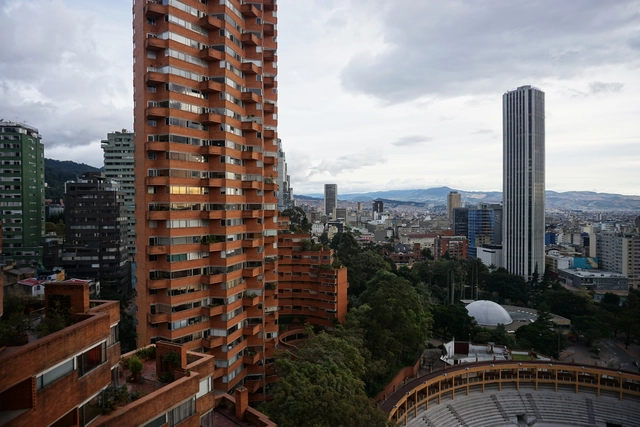
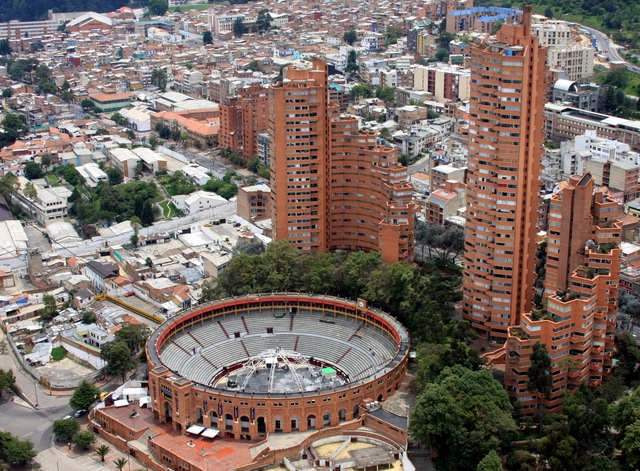
Bogotá Architecture Guide: 30 Places to Discover in Colombia's Capital City

Subscriber Access | 

Bogotá is a metropolis that celebrates the convergence of different architectures, reflecting a significant part of Colombia's diverse culture and geography. Limited by the Eastern Hills, it is not only one of the highest capitals in the world, reaching almost 2,600 meters above sea level, but its history dates back to its foundation as the center of the New Kingdom of Granada in the year 1538.

This guide aims to provide an overview of its colonial, modern, and contemporary architecture, highlighting its main buildings and architectural points of interest. From its civic spaces to renowned public projects such as museums, libraries, and cultural centers, this list of 30 sites showcases works by modern architects like Rogelio Salmona and Germán Samper, as well as contemporary ones like Equipo Mazzanti and TAB. We hope it helps you get to know the city!

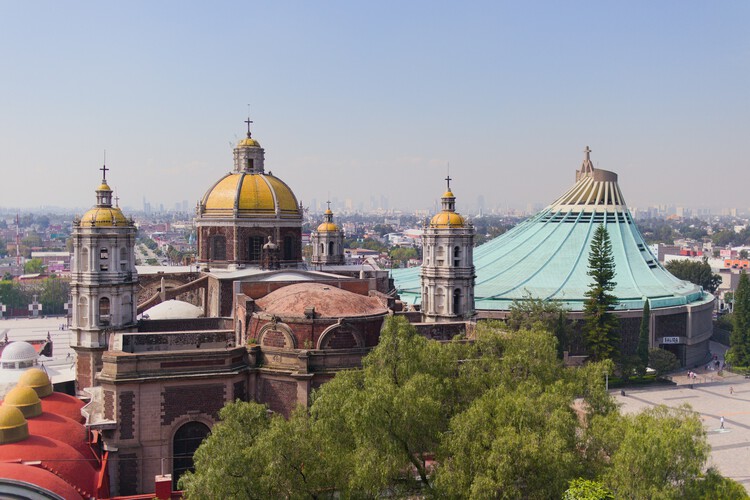
30 Sites Every Architect Should Visit in Mexico City

Subscriber Access | 

Though the idea of a vacation in Mexico usually brings to mind images of margaritas on white-sand beaches, it seems the country is slowly but surely gaining recognition in other aspects as well. Among the most populated urban cities in Latin America and the world – not to mention The New York Times' number one "Place to Go in 2016"Mexico City offers a particular cultural diversity evident both in its traditions and in its architecture. Considering it's the main tourist, educational, cultural, economic and political center of Mexico, it makes sense that it's the perfect scenario for the social encounters of its multicultural inhabitants and tourists.

The sites of architectural interest alone are worth the visit, with prehispanic, classic, modern and contemporary examples ranging from Juan O'Gorman and Luis Barragán to Felix Candela and David Chipperfield. Add to that the fact that its gastronomic scene has garnered much praise and attention in recent years, and you've got a perfect combo. Below is a carefully curated list of 30 sites that every architect should know and visit.