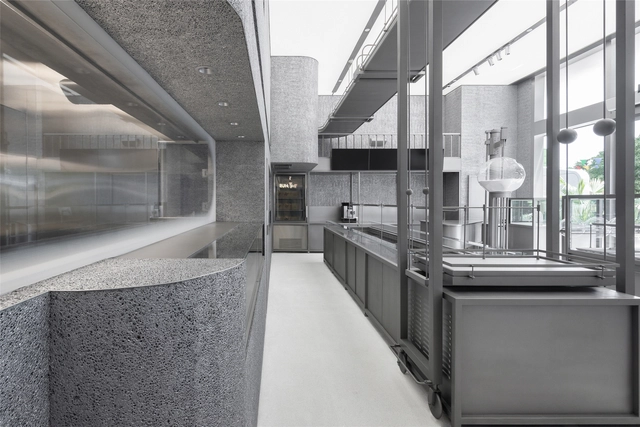
Stabilized Aluminum Foam is a unique looking material that combines the aesthetics of aluminum (its texture, shades and brightness) with a spongy, porous appearance. It is produced by injecting air into a cast aluminum alloy with stabilizing agents, which after curing, creates a porous and lightweight, yet highly resistant and rigid cellular structure. Because of its mechanical and thermal properties, it is particularly useful in applications in various industries, such as automotive, aerospace and marine, especially for energy absorption, thermal insulation, and sound dampening.
With the opening of the Fondazione Prada art galleries in May, OMA showed a different side to their practice, one focusing on preservation and assemblage rather than the iconography and diagrammatic layout that many associate with the firm. In this interview, originally published by Metropolis Magazine as "Koolhaas Talks Prada," Rem Koolhaas explains the reasoning behind this new approach, and how they attempted to avoid falling into the clichés of post-industrial art spaces.
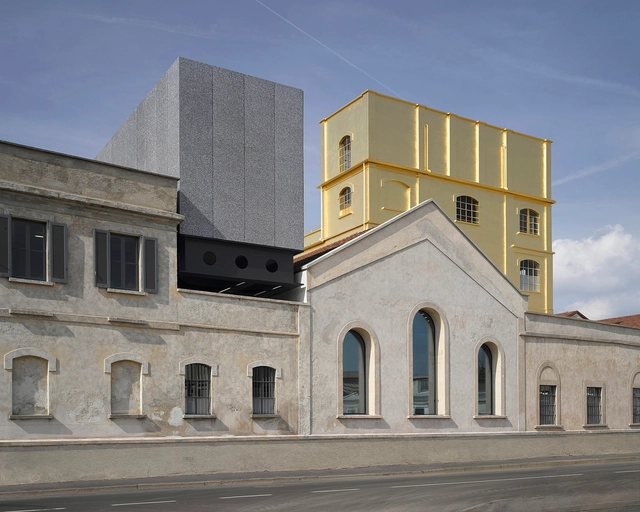
When the Fondazione Prada opened its doors to a new permanent home in Milan dedicated to contemporary culture, it not only placed the Italian city firmly at the forefront of today’s global art world, but also introduced an ambitious new way of thinking about the relationship between architecture and art. The location—an original 1910 distillery in a distinctly gritty part of the city—comprised seven spaces including warehouses and three enormous brewing cisterns with a raw industrial quality that the architects, Dutch firm OMA, retained while adding three new buildings made of glass, white concrete, and aluminum foam. One, the centrally located Podium, is intended for temporary shows, while another—still under construction—is a nine-story tower that will house the foundation’s archives, art installations, and a restaurant. The third, a theater with a mirrored facade, features folding walls that allow the building to open onto a courtyard. In total, the collection of buildings provides nearly 120,000 square feet of exhibition space, more than twice that of the new Whitney Museum of American Art. Metropolis correspondent Catherine Shaw visited the site with Pritzker Prize–winning architect Rem Koolhaas to find out more about the challenges of creating a new cultural paradigm.


.jpg?1438347714&format=webp&width=230&height=230&crop=true)
.jpg?1438347662&format=webp&width=230&height=230&crop=true)