Camille Fatier

BROWSE ALL FROM THIS PHOTOGRAPHER HERE
↓

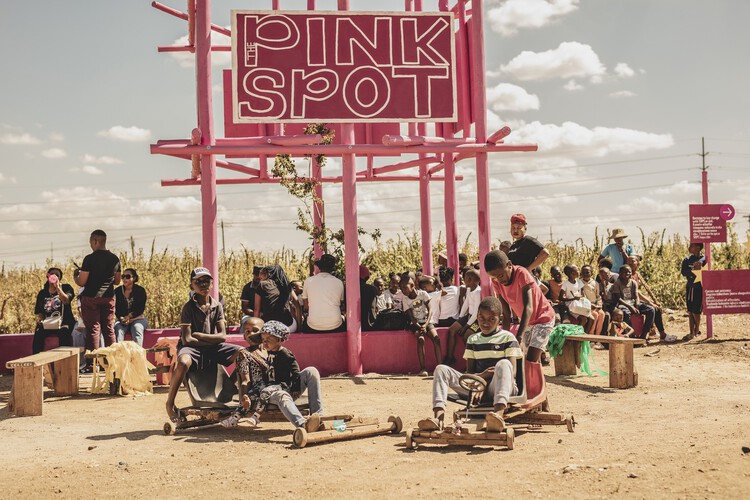
The Role of Urban Design in Women's Safety: Lessons from Four Public Spaces

Subscriber Access | 
Audio available

Public space is often intended to be perceived as universal, but access is unevenly experienced. For many women, moving through the city involves a continuous assessment of exposure, visibility, proximity to others, lighting, transport access, escape routes and the likelihood of harassment. These calculations are shaped by spatial conditions as much as social ones. Safety is a question of urban form, maintenance, mobility, governance and the distribution of public investment. While the built environment may not cause gender-based violence, it can intensify vulnerability and normalize unequal access, especially to public spaces.

For architects and planners, there is a critical distinction between designing for security and designing for safety. Security strategies tend to focus on surveillance, control, policing and the management of movement, while safety depends on whether people can see and be seen, if routes are legible, whether public spaces support activities throughout the day, and how long-term maintenance is supported. The role of design is to alter the conditions under which public life takes place.

The Role of Urban Design in Women's Safety: Lessons from Four Public Spaces - More Images+ 30

Community Growth Through Architecture: Maximizing Limited Resources for Positive Impact

Limited resources are becoming an increasingly common challenge in architecture. Today, regardless of the region, projects are affected by the availability of resources, which are now compounded by environmental considerations. This situation, far from being restrictive, prompts us to explore new possibilities in how we conceive the built environment. In this context, it is crucial to understand that resources are not only limited to the economy but also include technological, material, and spatial aspects. Thus, we can enhance our creativity and efficiency by broadening our considerations when approaching architectural design and its challenges, doing more with less.

At the community level, the challenge becomes even more significant when we consider that our projects must not only be designed to overcome these "constraints," but also to positively impact their communities. Therefore, contemporary projects must present different strategies to overcome limited resources and materials depending on the context, always aiming to achieve a positive impact and become powerful and ingenious proposals while democratizing access to architecture.

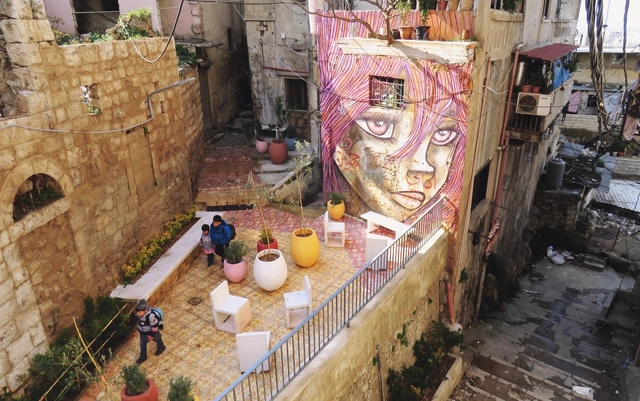
Charaani Public Stairs / Emergent Vernacular Architecture (EVA Studio)

Charaani Public Stairs / Emergent Vernacular Architecture (EVA Studio) - More Images+ 11