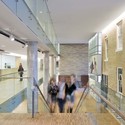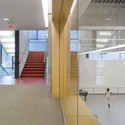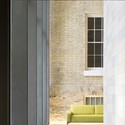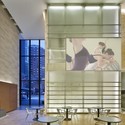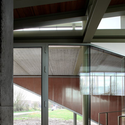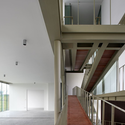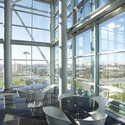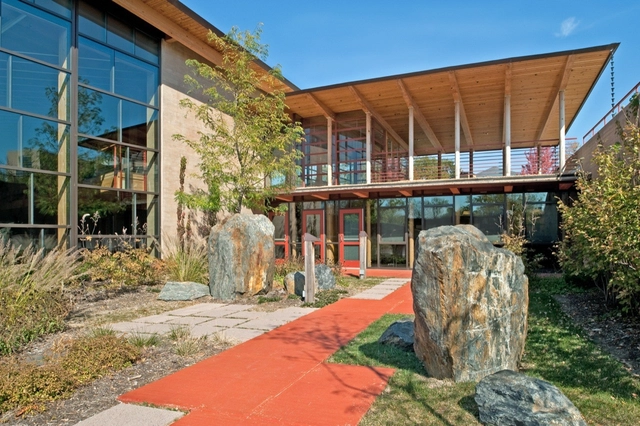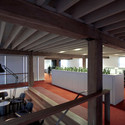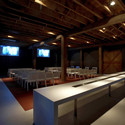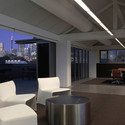

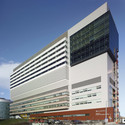
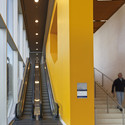
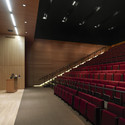
Richard Meier & Partners is pleased to announce the anticipated reopening of the Richard Meier Model Museum in Long Island City on Friday, May 13, 2011. Offering a rare glimpse into the process behind his distinguished 40-year career as an architect, Mr. Meier is once again unveiling his vast breadth of works to the public for its fifth consecutive season.
Five projects from 2009, including the winner of the 2009 Building of the Year, Public Facilities category, for our seventh round up. Check them all after the break.
National Tourist Route Trollstigen / Reiulf Ramstad Architects The project will enhance the experience of the Trollstigen plateau’s location and nature. Thoughtfulness regarding features and materials will underscore the site’s temper and character, and well-adapted, functional facilities will augment the visitor’s experience. The architecture is to be characterised by clear and precise transitions between planned zones and the natural landscape (read more…)
Hangzhou urban planning bureau has announced MVRDV winner of the international design competition for the China Comic and Animation Museum (CCAM) in Hangzhou, China. MVRDV won with a design referring to the speech balloon: a series of eight balloon shaped volumes create an internally complex museum experience of in total 30.000m2. Part of the project is also a series of parks on islands, a public plaza and a 13.000m2 expo centre. Construction start is envisioned for 2012, the total budget is 92 million Euro.
More images and architect’s description after the break.
As one of the country’s most sought after architectural accolades, the Houses Awards celebrate Australia’s best residential projects in seven categories, which will culminate in the announcement of the 2011 Australian House of the Year. The Australian House of the Year Award winner stands to win a $5,000 cash prize, while winners of individual categories will each receive $1,000. Winners will be announced on July 15th. More images and information after the break.
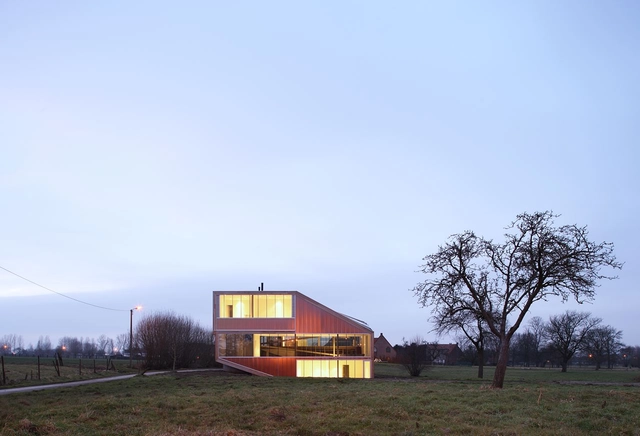
In search of the origins of architecture, Laugier presented a primitive hut using the three basic elements of architecture – the post, the lintel and the gable. Semper’s pursuit of the origin resulted in a primitive dwelling that was comprised of four basic qualities – earthwork, hearth, framework/roof, and enclosing membrane. While Laugier’s list of basic elements stemmed from the obsession with disciplinary origins, Semper‘s meditations were a vehicle to essentialize that which was previously seen as superfluous, namely the building enclosure. Semper wanted to put ornament to work. Butterfly House is an exercise in re-working three ubiquitous elements – window, door and roof – until they exceed their functional value and lead the way to new architectural effects. Butterfly House builds upon Laugier’s primitive hut as a model of fitness, updated to reflect a post-bubble economic climate rather than mythical origins, as well as Semper’s interest in the productive capacity of the apparently unnecessary. Our conceptual hut uses a limited quantity of elements to solicit rich qualities and characteristics and uncovers a zone of enchantment between the essential and the excessive.
Back in August, we featured Henning Larsen Architects’ winning proposal in an invited competition to design the Batumi Aquarium in Georgia. Today, we are happy to announce that the Danish architects received the “Architecture of the Year” award by the 2011 International Design Awards in Los Angeles. Congratulations!
Storefront for Art and Architecture, the New Museum, and New York City’s Department of Transportation (NYCDOT), are pleased to announce that a team of emerging New York City-based designers from the studios Family and PlayLab have been selected as the winners of Storefront’s StreetFest international competition to re-envision temporary outdoor structures. The StreetFest competition asked for designs that envisioned street tents not only as shelters but also as active elements within the collective construction and understanding of the city.
More on the results of this competition after the break.
AIA New York celebrated their 30th year of the annual design awards program which recognizes projects located in New York City or design by architects practicing in New York City. Three projects received “Best in Show”: the Hypar Pavilion Lawn and Restaurant by Diller Scofidio + Renfro in collaboration with FXFOWLE, Tod Williams Billie Tsien Architects’ David Rubenstein Atrium, and another collaboration by Diller Scofidio + Renfro with FXFOWLE and Beyer Blinder Belle’s Public Spaces.
A special exhibition featuring all of the winning projects will be on view through June 25th at the NYC Center for Architecture. The complete list of AIA New York 2011 Design Award Winners following the break.
Looking back at the Easter Pilgrimage 2011 at Ruta del Peregrino, the most important event of the year, we are pleased to announce the final step of the second construction phase (you can check the complete project over here).
This year, for the first time, the pilgrims were able to use the finished viewpoint by HHF Architects, offering a new way to experience the site.
The sanctuary by Tatiana Bilbao and the viewpoint by Christ&Gantenbein are under construction; their presence will mark the completion of the entire Ruta within a few months.
All images by Iwan Baan and you can check his website for the full coverage.
Melvin and Bren Simon Director and CEO Maxwell Anderson holds a conversation with 100 Acres Project Manager Dave Hunt and Architect Marlon Blackwell about the Indianapolis Museum of Art Visitors Pavilion. This Director’s Journal from Art Babble discusses the structure, site, geothermal, and the program of the pavilion.
Almost 47,000 photos of the most amazing architecture photography from our readers in our Flickr Pool! As always, remember you can submit your own photo here, and don’t forget to follow us through Twitter and our Facebook Fan Page to find many more features.
The photo above was taken by aspheric.org in Abu Dhabi, UAE. Check the other four after the break.