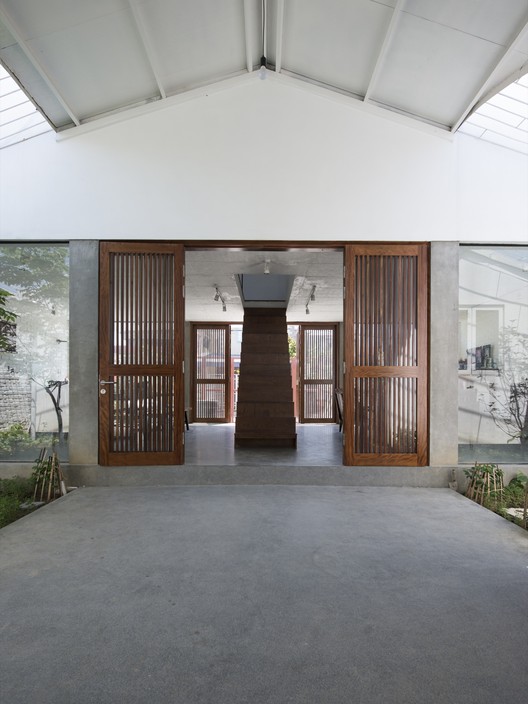
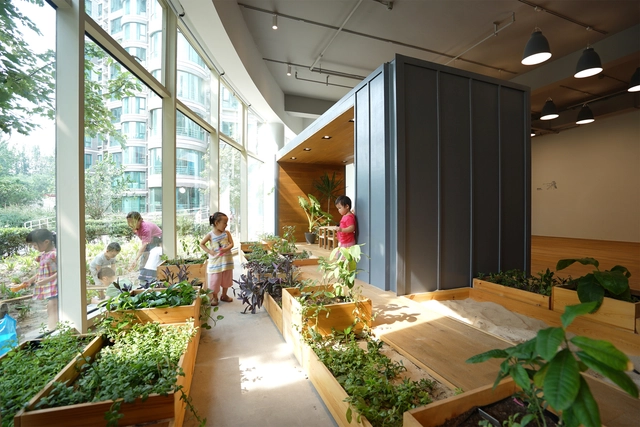
The Royal Institute of British Architects (RIBA) has announced the shortlist of four finalist projects in the running for the 2018 RIBA International Prize. A biennial award open to any qualified architect in the world, the International Prize seeks to name the world’s “most inspirational and significant” building. Criteria for consideration include the demonstration of “design excellence, architectural ambition, and [delivery of] meaningful social impact.”
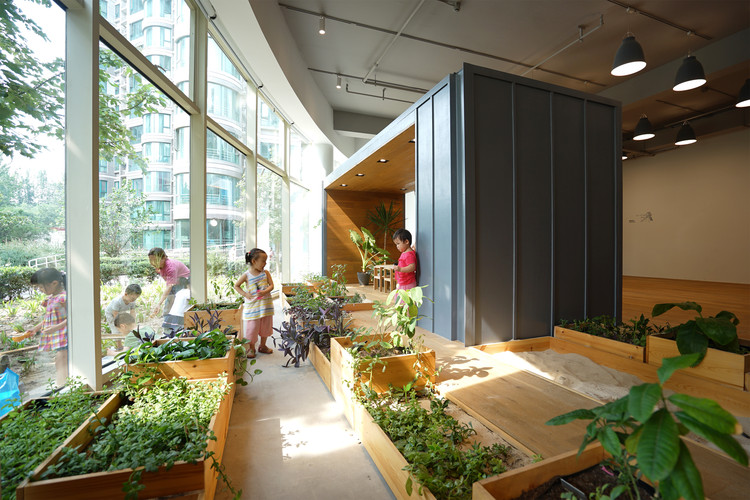
Within the architecture field, the relationship between design and education has gained prominence, especially when it comes to children’s education. The relationship between architecture, philosophy, and sociology is well known. Frequently, when designing, issues introduced by these fields work as tools to reflect upon the relationship between the space and the user. When we consider children’s education, we must go beyond ergonomics and think of architecture as an educational tool.
It is 2018, and it should be clear to everyone in the AEC industry that BIM is the future of building, infrastructure design, construction, and maintenance. There are millions of marketing dollars spent by BIM software companies each year trying to convince you that Building Information Modeling can’t happen without their product. They will try to convince you that their product is the “real BIM.” Of course, we live in an open, capitalist society where this behavior is expected. However, if you and your firm are making the move to BIM, this background noise may be concerning... and if it’s not, it should be.
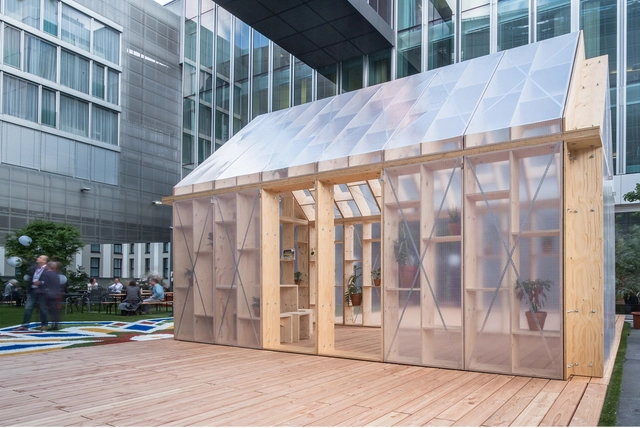
A team of architecture students at the CODE department of the TU Berlin have built PLUG-IN, a pavilion addressing the Home not Shelter! Initiative. Built as a collaborative process between students and refugees, the pavilion was realized under the direction of Prof. Ralf Pasel and his team. PLUG-IN physically expands the living space to creates a responsive project that goes beyond housing needs. The project was specifically proposed and built for the Dutch Embassy in Berlin.
The project Cyber Physical Macro Materials was developed at the University of Stuttgart's Institute for Computational Design and Construction (ICD) to demonstrate a tangible vision of a new dynamic (and intelligent) architecture for public spaces. The agile and reconfigurable canopy is enabled by a combination of distributed robotic construction and programmable matter. Reconfigured using drones, the canopy was created with modular components that could respond in real-time to the climate or sun angles.
























.jpg?1536534289&format=webp&width=640&height=580)


.jpg?1536534289)