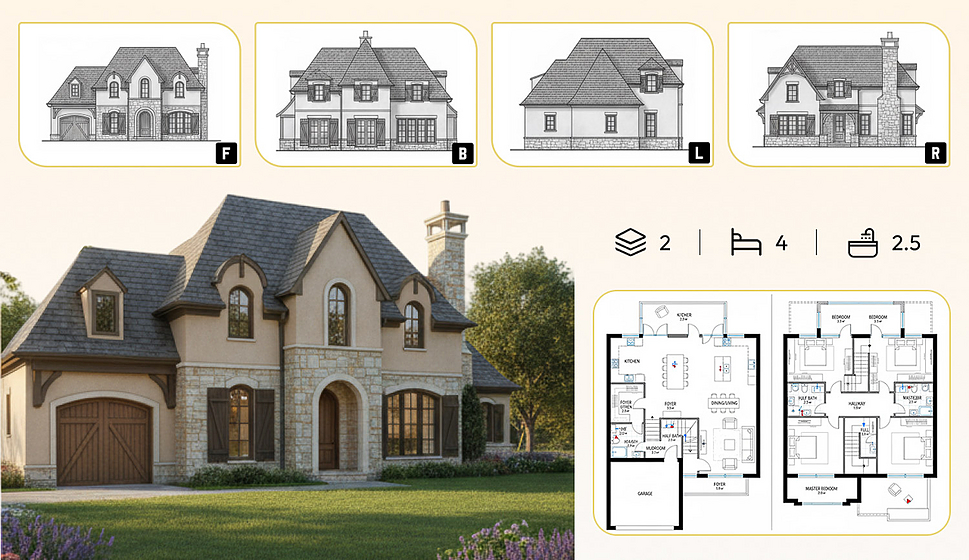
This guide covers a workflow that moves from project parameters to generated floor plans, 3D perspective views, exterior design exploration, and site context visualization, using AI tools in place of preliminary CAD and rendering work.
This guide covers a workflow that moves from project parameters to generated floor plans, 3D perspective views, exterior design exploration, and site context visualization, using AI tools in place of preliminary CAD and rendering work.
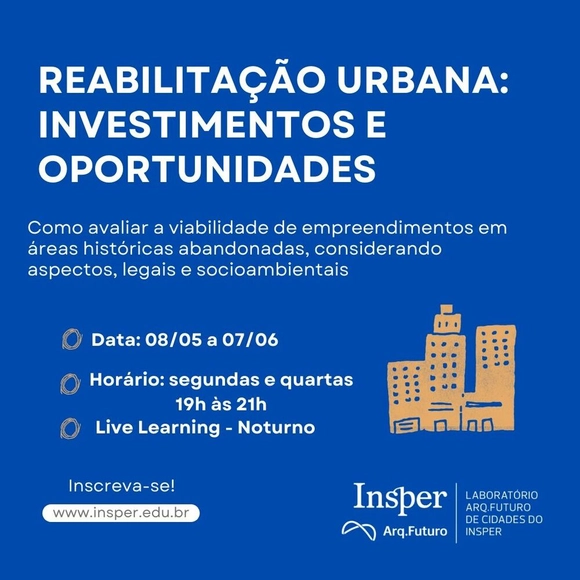
Insper, through the Arq.Futuro Cities Laboratory, has opened registration for the first cohort of the online course Urban Rehabilitation: Investment and Opportunities, which begins on May 8. In this course, students will learn to identify the factors that determine the obsolescence of an urban area, as well as rehabilitation strategies capable of transforming such environments into vital new spaces. The course is led by architects Samuel Kruchin, principal of Kruchin Arquitetura—one of the first private firms to work in the field of preservation and restoration—and Cristiane Gonçalves, principal of Cambota and a professor at FAU-Mackenzie.

Known for its impressive architecture, Dubai could add a 93-kilometer city-wide bike path to its list of mega-projects. Designed by architecture studio Urb, the mega-structure would be a covered pathway designed exclusively for cyclists and pedestrians, aiming to encourage Dubai's three million residents to swap their cars for more sustainable and healthier modes of transportation.

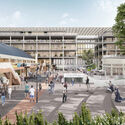
In December 2022, the Government of the Republic of Costa Rica launched an architectural and urban ideas competition for the area where the first phase of Ciudad Gobierno will be developed—an urban renewal project in downtown San José that aims to transform nearly four city blocks of the capital with office, retail, and public spaces.
At the end of February 2023, the winning proposal was announced from among 28 submitted designs to serve as a model for the building complex that will house 18 public institutions west of Plaza González Víquez. Designed by Venezuela-based Micucci Arquitectos Asociados, the winning project is titled "Metropolitan Civic Park."
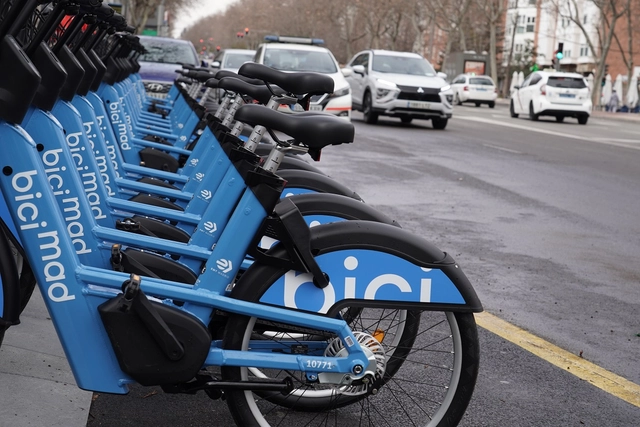
The Madrid City Council aims to encourage bicycle use as a means of transportation. To this end, the city has operated BiciMAD since 2014—a public bike-sharing system integrated into the Spanish capital's transit network. Now, the program will be free for trips of up to 30 minutes.

When monitoring the outcomes of a newly built plaza in Porto Alegre, one data point stood out: after playing children, the main users of the space were women caring for them. Set in a vulnerable area of the city, this situation highlights an activity often ignored by urban planning: caregiving.
The monitoring project in Loteamento Santa Terezinha aimed to assess the profile of the users, their perception of the space and its amenities (recently upgraded by several organizations), and the surrounding school routes. Conducted by WRI Brasil in partnership with the Volkswagen Group Foundation, the study showed that children represent 89% of the plaza's users, and that adult women frequent the plaza 4.5 times more than men—usually accompanying the children.
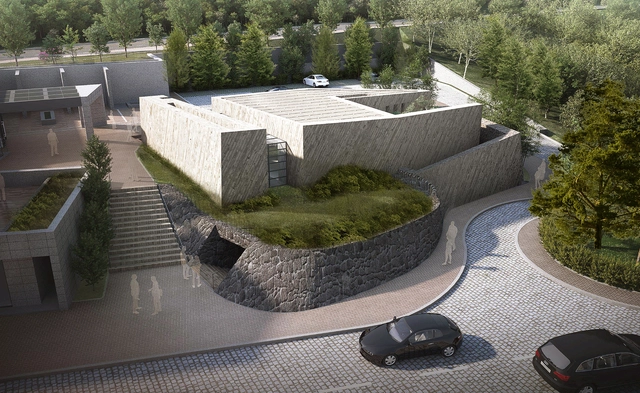
On Jeju Island in South Korea, Spanish architect Fernando Menis is designing the Park Seo Bo Museum of Contemporary Art, dedicated to the legacy of the Korean artist. Inspired by both his introspective work and collection and the volcanic nature of the site, the building aims to merge with its surroundings. Built mostly underground and utilizing local materials, natural light and shadow combine to form the essence of its interior spaces.

Today is the day to meet the finalists of ODA2023, the award celebrating the best architecture in the Spanish-speaking world. Our expert jury—you, the readers—has selected 15 of your favorite projects from nearly 1,000 architectural works built across Latin America and Spain.
Now in its fifteenth year, this award has become a true tradition. It is an open invitation to all our readers to recognize the projects published in 2022 that inspired them and that represent the identity of their local contexts in a globalized planet—shaping how architecture is made in Latin America and Spain within an increasingly heterogeneous and multicultural world.

Much has happened since countries met in Paris in 2015 and established an agreement to combat climate change. To date, more than 196 countries have ratified or otherwise joined the Paris Climate Agreement, representing more than 96% of global greenhouse gas emissions. Alongside this, 57 countries—including the United States, Japan, Canada, Germany, and Mexico—have also developed long-term plans to decarbonize their economies.

A recent article by law professor Richard Schragger invokes the book The Death and Life of Great American Cities, by Jane Jacobs, in defense of zoning. Schragger writes that, according to Jacobs, city neighborhoods flourish due to the “diversity of land uses in space” and zoning must protect these neighborhoods' qualities through “zoning for diversity,” which requires “limiting development, controlling density, and preserving historic structures.”

Habitat for Peace is an urban, architectural, and technical proposal that captures the expectations, dreams, and needs of a community of former FARC guerrilla combatants in the process of reintegration, aimed at the management and construction of a new settlement.

Solar energy is one of the fastest-growing energy sources in the world. Going beyond rooftop installations or large power plants, various innovations are emerging to harness the power of sunlight. One such recent initiative is being developed by startup Sun-Ways, which will install removable solar panels along railway tracks in Switzerland.
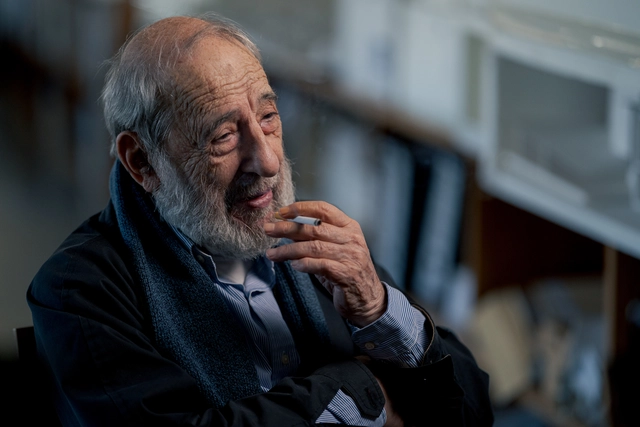
Álvaro Siza, the first Portuguese Pritzker laureate, is undeniably a figure of major importance in the history of contemporary architecture, with projects that have shaped the urban landscape of numerous cities around the world. While his name and work are widely recognized, Siza remains a deeply private and introspective figure who prefers to keep his personal life out of the spotlight.
Directed by producer and director Augusto Custódio, the documentary Siza offers an intimate, personal look at the renowned Portuguese architect. The film covers his childhood, his relationship with his wife, his passion for sculpture, and his appreciation for classical music, exploring both his influences and his professional journey.
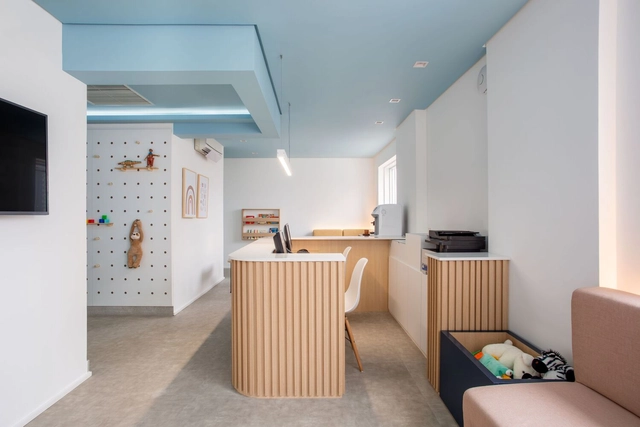

We are pleased to present the finalist projects for the 2023 Obra do Ano Award. After two weeks of nominations, our readers have chosen their favorite projects from hundreds of works built across Portuguese-speaking countries. Our jury of experts, made up of our very own readers, has once again done an outstanding job of selecting these 15 finalists.
From today until April 3 at 11:59 PM (Brasília time, GMT-3), you can vote once a day for the projects you consider to be the best examples of contemporary Portuguese-speaking architecture. The winners will be announced on April 4.

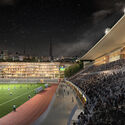
The renovation project for the Pacaembu Complex was named among the winners of the AR Future Projects awards, organized by the British magazine The Architectural Review. The announcement was made on March 14, and the official awards ceremony will take place in London in early June. Featured in the “New and Old” category, the project was among the three “highly commended” entries among this year’s winners.