

Educational Landscape is a data visualization project featuring an interactive interface based on a dot-density map that represents the population aged 25 or older, classified by educational attainment.
Educational Landscape is a data visualization project featuring an interactive interface based on a dot-density map that represents the population aged 25 or older, classified by educational attainment.
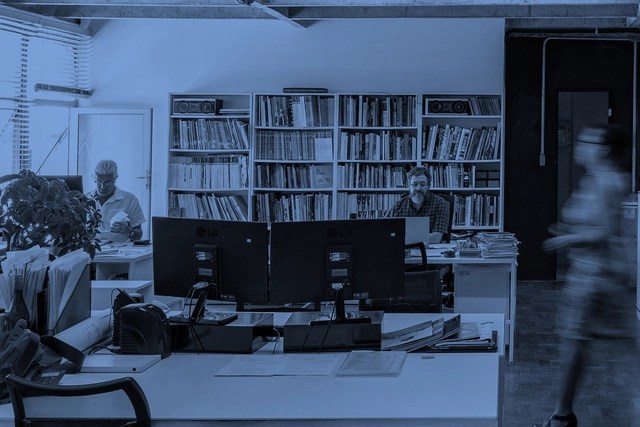
A new episode of the Arquicast Interview is now live, this time featuring Bacco Arquitetos Associados. Operating for 25 years, the firm defines itself as a multidisciplinary practice that seeks to balance its business operations with a studio atmosphere, fostering an environment rich in discussion and critical reflection. Their portfolio spans a diverse range of typologies, from logistics hubs to residential and industrial buildings.

Most architecture schools in Brazil also focus on the study of the city. This is only logical, considering that architecture and urbanism can be seen as the same discipline viewed from different scales. However, career opportunities at the urban scale may not always be clear. Consequently, Anthony Ling shared an article on ten ways to work in urbanism.
.jpg?1560971183&format=webp&width=640&height=580)
The transparency of the Glass House, the residence where Lina Bo Bardi and her husband, Pietro Maria Bardi, lived for forty years, is the subject of the work Casa de vento, by the visual artist Lucia Koch, native to the state of Rio Grande do Sul. Koch is known for employing filters, screens, photographs, and videos in her investigations of light, spatiality, movement, and time, in close dialogue with architecture. Her intervention in Bo Bardi's house is another of her works that aims to shift our understanding of built reality through the superimposition of other layers of reality.
.jpg?1568210846&format=webp&width=640&height=580)
The transformations in the civil construction production model historically proposed by housing movements through self-managed *mutirões* (mutual-aid efforts) in Brazil, compared to market-driven production modes, are not limited to the labor force responsible for undertaking construction. That is, it is not merely a swap of wage labor for decommodified mutual-aid work. Instead, these innovations span various spheres, from architectural design—conceived from a collective perspective and as a common good that positions the mutual-aid builder as "author, producer, and future user"—to the production mode itself. Unlike the traditional model, in this framework "it is not possible to increase productivity through increased exploitation, precarization, overtime, and layoffs, but only through the invention of new procedures and construction techniques." This theme is a subject of debate for many architects, both in the theoretical arena and in practice and experimentation, where the construction site becomes the stage for efforts toward rationalization, optimization, and horizontal processes.
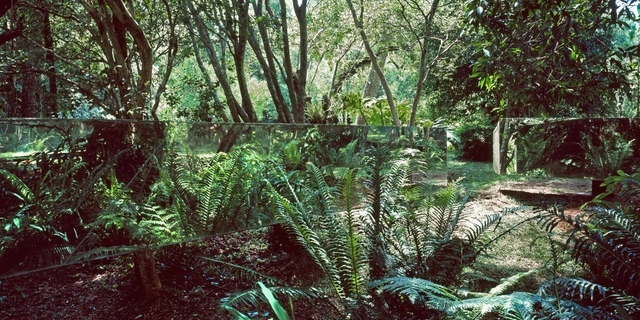
“Whatever is repeated endures, and is eternal, therefore, is sacred. That is why Sunday soccer is sacred; that is why sex is sacred; that is why having dinner with my mother on Saturdays is sacred. This builds within me a bond with the permanence of everything—all human beings, all dreams, all lives that, at this moment, cross my existence.”
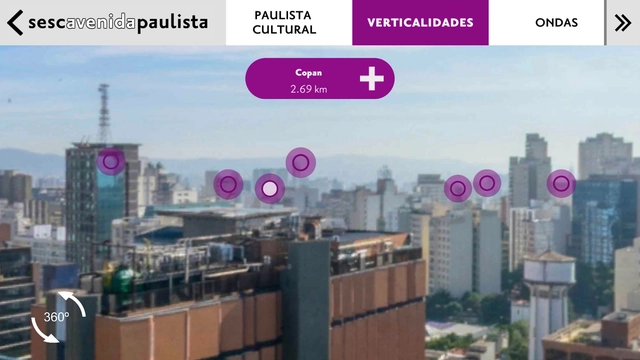
Recently, Sesc Avenida Paulista launched an app allowing users worldwide to immerse themselves in the panoramic views from the venue's Lookout, explore georeferenced tours covering topics as diverse as local cultural centers and native tree species, listen to audio tours about the avenue or the Brazilian artworks exhibited on-site, play a composition game inspired by the building's facade, and access the full events calendar, among other features and functionalities. The app is available for free download here and in the official Apple and Google stores.
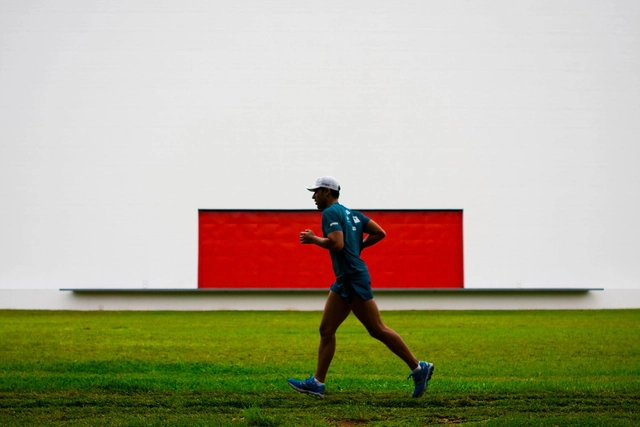
The São Paulo Court of Justice today cleared the concession of Ibirapuera Park, the largest in the state capital, to the private sector. According to reports by Folha de S. Paulo, the process had been suspended since March of this year, after being challenged by the Public Prosecutor's Office and Green Party council member Gilberto Natalini.
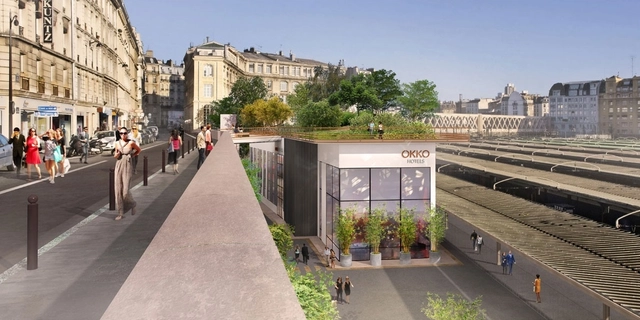
On Saturday, September 21, the City of Paris inaugurated the Marielle Franco Garden in honor of the Brazilian councilwoman assassinated in 2018 in Rio de Janeiro. Located in the city's 10th arrondissement, next to the Gare de l'Est, one of the French capital's main train stations, the project was led by the European Network for Democracy in Brazil (Red-Br) association with the support of the collectives Autres Brésils, France Amérique Latine, Amnesty International France, Coletiva Marielles, Ligue des Droits de l’Homme, Inter LGBT, and Amis des Sans Terre.
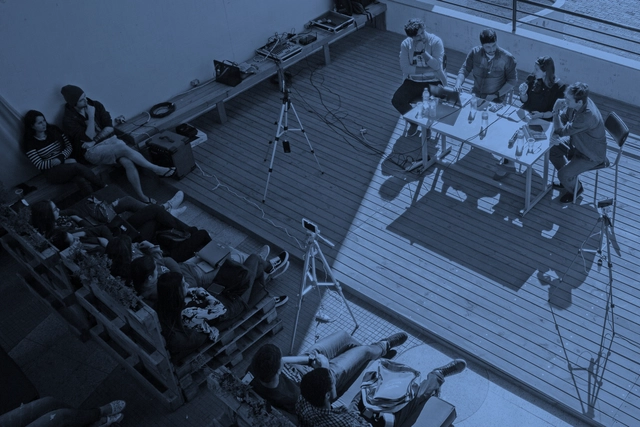
Taking the opportunity of our participation in the 9th Architecture and Urbanism Week of the Architecture and Urbanism program at the Centro de Ensino Superior de Juiz de Fora (CES/JF), we at Arquicast recorded this biweekly episode based on the event's theme: Scales and Places. Held in May, the week-long event was organized by the program's students and featured a series of lectures and activities, including this special episode. We address the relationships regarding the importance of scale and place in design education and practice across their various dimensions. Our guest was architect and professor Frederico Halfeld, who shared his experience as an educator alongside other insights on the topic.
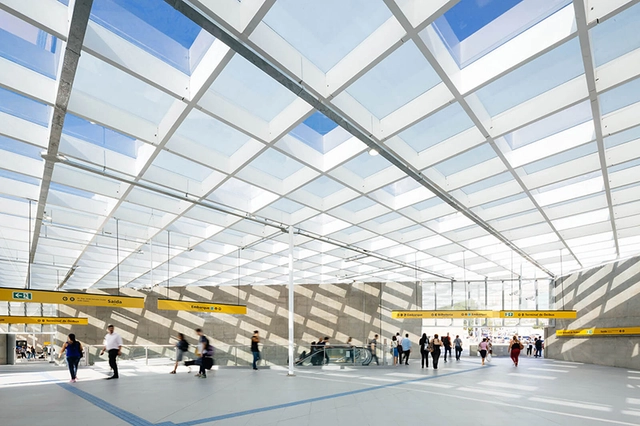
The São Paulo Association of Art Critics (APCA) announced yesterday the list of winners for the 2019 APCA Award. The awards are divided into ten categories, encompassing architecture, visual arts, cinema, literature, fashion, popular music, radio, theater, children's theater, and television.
Since 2010, APCA has included architecture critics, who this year presented seven awards: best architectural work; environmental resistance; promotion of architecture in public debate; appreciation of architectural heritage; career dedicated to public university and academic research; urbanity; and urban appropriation.
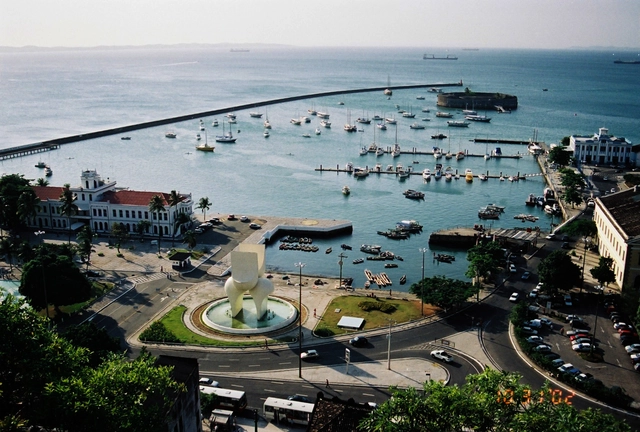
The City of Salvador is launching the second phase of the "Eu Curto Meu Passeio" program, which aims to promote the renovation of poorly maintained sidewalks that pose a risk to the public.
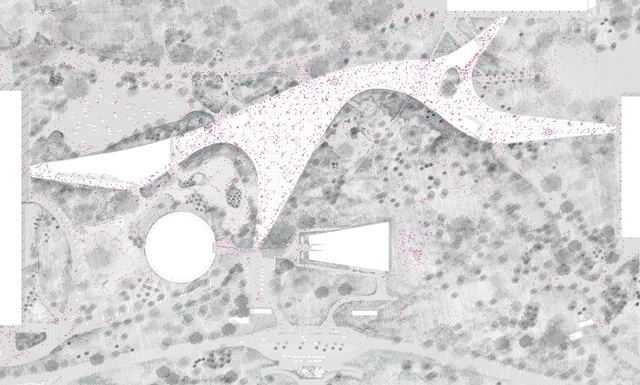
In his research presented in 2014, Eduardo Gurian begins the introduction by posing the following questions: "Could the greatness of an architectural work be defined solely by the brilliant gesture and capacity for synthesis of its author? Or should we take into account its utility and its capacity to meet the needs for which it was designed? Or even listen to those who actually use the space and question their satisfaction?" With these questions in mind, the researcher analyzes the evolution of the uses and occupation of the Ibirapuera Park Canopy, designed by Oscar Niemeyer. The master's thesis was advised by Professor Helena Aparecida Ayoub Silva, PhD, within the graduate program at FAUUSP. Read the author's abstract below.
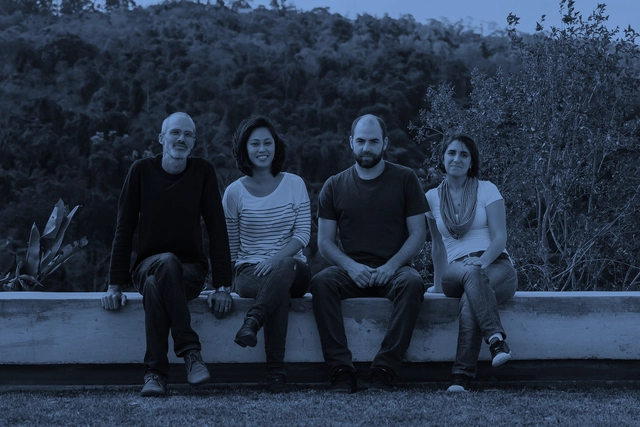
This week's Arquicast Interview features a São Paulo-based firm with four partners who understand the value and importance of an architectural project to the client. With diverse experience across various typologies and project scales, they seek to research and develop new ways of practicing architecture, resulting in a contemporary body of work. Their projects have been exhibited at Biennials in Venice, Rotterdam, and Quito, and have won several national and international awards. One of the most iconic projects in the firm's history was a house built for a very special client: Dona Dalva, who saved money from years of hard work to build her home in Vila Matilde. The guest for this interview is Danilo Terra, from Terra e Tuma Arquitetos Associados.
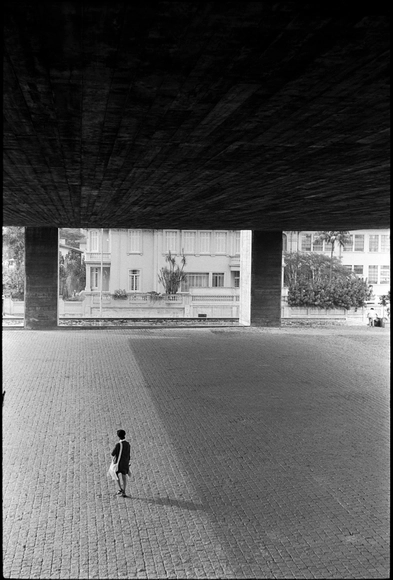
Human figures take center stage over buildings and streets through the lens of photographer Carlos Moreira, 82. Urban space is depicted through framings suggested not only by historical monuments (which are indeed there) but, above all, by the body and its actions. What emerges is an emotional, living vision of cities, capable of triggering a sensory expansion of spatial portraits.
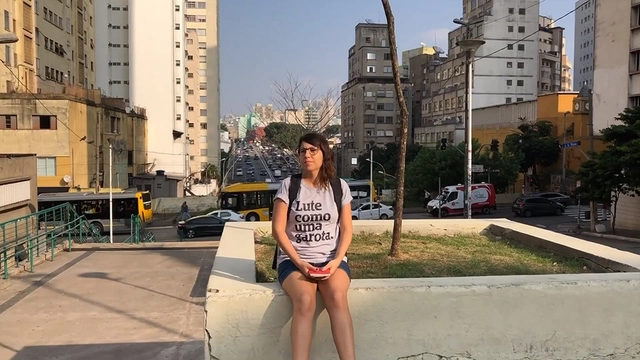
A crowdfunding campaign is now open to fund the creation of the "Mulheres na Cidade" guide. Conceived by Carmen Guerreiro and Fernanda Carpegiani, communicators and founders of Formiga-me, the guide will map locations in São Paulo that value, welcome, and bring together women's learning and experiences in the capital.
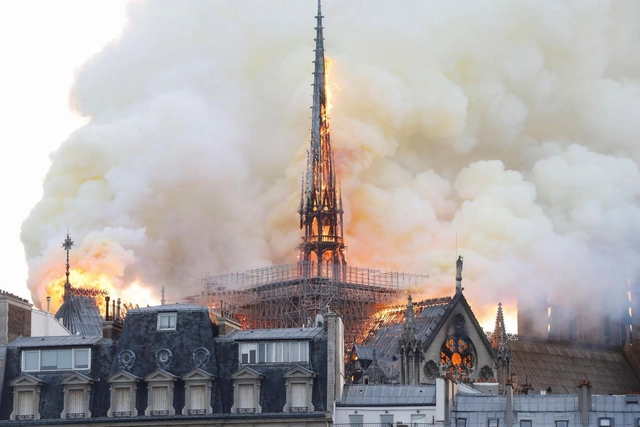
The restoration and reconstruction of Notre-Dame Cathedral—one of the most well-preserved examples of Gothic architecture, tragically devastated by a fire this week—will take several years (five, according to French President Emmanuel Macron's promise) and hundreds of millions of euros. Meanwhile, Patrick Chauvet, rector of the famous Parisian icon, has proposed building a "temporary" wooden cathedral to welcome worshippers and tourists.

Given that 90% of cities are built without architects and urban planners, who are the real architects imagining and building the world we want to live in? What modes of production, materials, and forms of relationship and social reproduction are practiced by these collectives, pointing the way toward possible, inclusive, diverse, just, and ecological futures? What architectures exist to foster freedom, collaboration, co-responsibility, and care—for oneself, for others, and for the spaces we inhabit?
.jpg?1556661663)
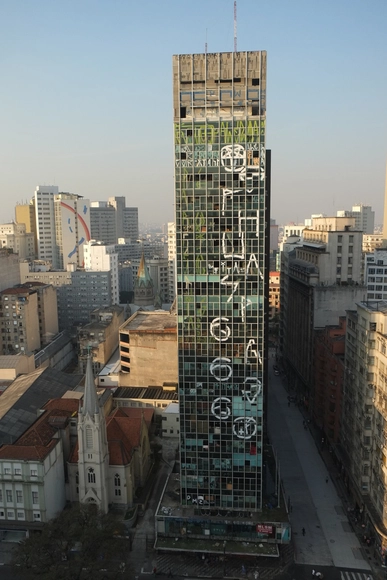
One year after the tragedy caused by the fire at the Wilton Paes de Almeida Building, we share this text originally published in 2018 in the newspaper "A Escola e a Cidade," produced by the publisher of Escola da Cidade.
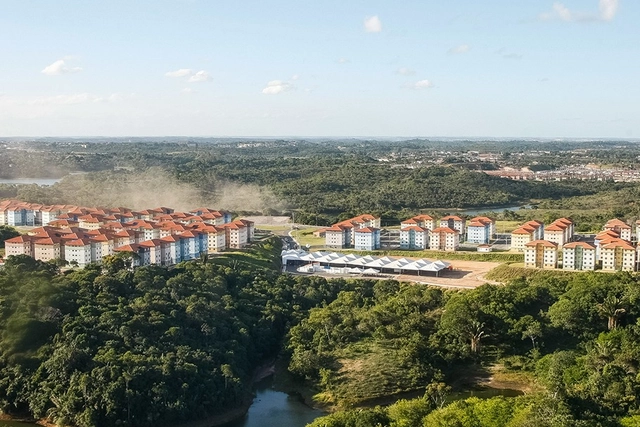
The Minha Casa, Minha Vida (MCMV) program was a cornerstone of federal housing policy under recent administrations. By financing new affordable housing, MCMV incentivizes developers to build in areas far from urban centers. This occurs because performance metrics focus solely on the number of units delivered, creating a strong economic incentive for developers to build far from downtown areas, where land is cheaper. Consequently, many of these developments are distant from job opportunities and basic services, as well as isolated from public mass transit networks, which are structurally unsuited to serve low-density peripheral areas.
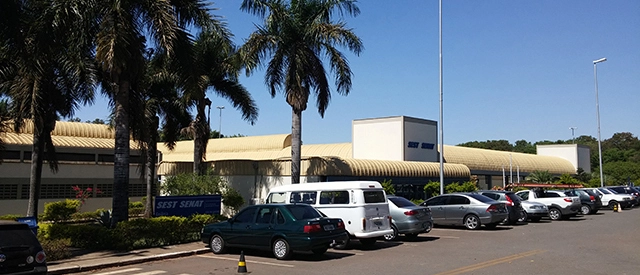
The Court of Justice of Bahia has ordered the payment of copyright royalties and moral damages to an architect and urban planner whose designs were reproduced in 39 projects built across several Brazilian states. The Social Transportation Service (SEST) and the National Transportation Learning Service (SENAT), which used the designs without authorization in Integrated Care and Professional Centers for Transportation Workers (Capits) nationwide, were ordered to pay not only the inflation-adjusted copyright fees for the 39 projects, but also R$ 100,000 in moral damages. Furthermore, they must publish in a major newspaper, for three consecutive days in a prominent layout, the credit of architect Daniel Colina as co-author of the Capits' architectural design.

Casa Lacerda, one of the main architectural heritage sites in the Lapa region (Paraná), will soon be revitalized. Currently operating as a museum and Heritage House—with rooms styled to recreate the home of a traditional local family—the space will be expanded with the construction of an annex. On Wednesday (18), the National Historic and Artistic Heritage Institute (Iphan) and the Paraná Department of the Institute of Architects of Brazil (IAB-PR) announced the winning proposals of the national design competition for the new building.
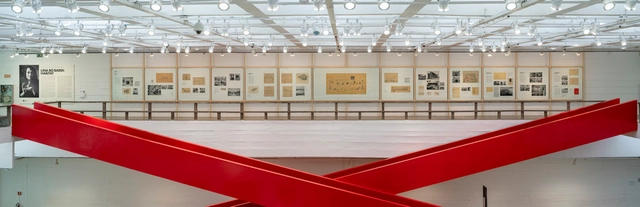
For three years, the Museu de Arte de São Paulo (MASP) has dedicated its program of exhibitions and seminars to annual themes. In 2016, the museum presented Histories of Childhood; in 2017, Histories of Sexuality; and in 2018, Afro-Atlantic Histories, which drew record attendance and was named "Best in Show" of 2018 by The New York Times.
In 2019, however, MASP is focusing on women with Women's Histories, Feminist Histories. The year began with two solo exhibitions by female artists, Lúcia Laguna and Sonia Gomes, at the intersection of both themes, closing the cycle of Afro-Atlantic Histories and launching Women's Histories.

Starting November 5, bus riders in Vargem Grande Paulista will be exempt from paying fares. The city is the first in the São Paulo metropolitan area to offer free public transit.