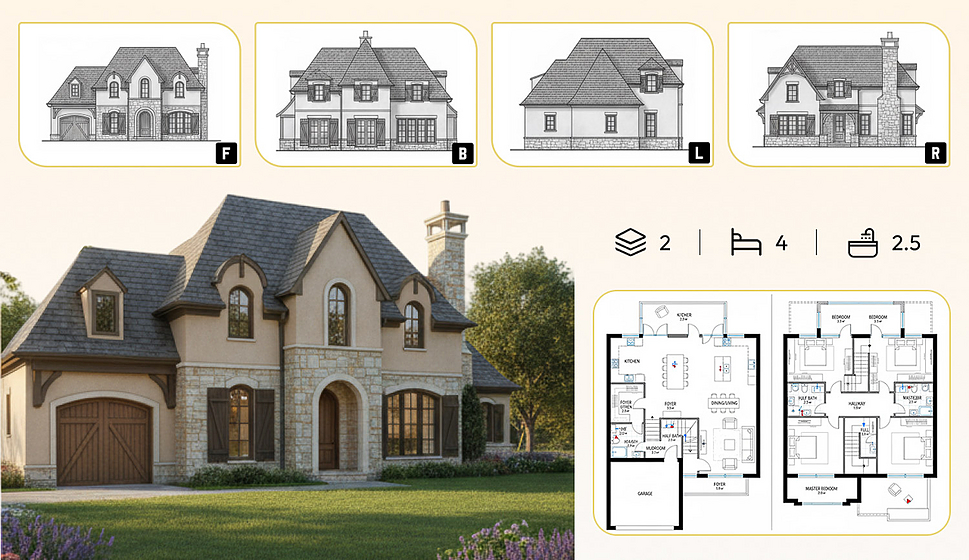
This guide covers a workflow that moves from project parameters to generated floor plans, 3D perspective views, exterior design exploration, and site context visualization, using AI tools in place of preliminary CAD and rendering work.
This guide covers a workflow that moves from project parameters to generated floor plans, 3D perspective views, exterior design exploration, and site context visualization, using AI tools in place of preliminary CAD and rendering work.
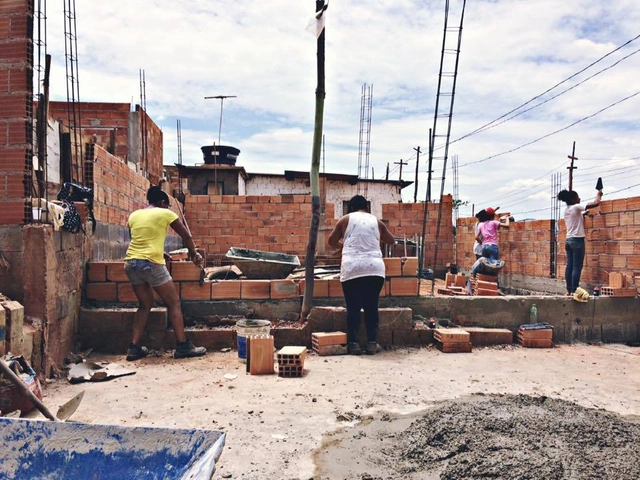
The spirit of the women participating in housing rights movements in Brazil is remarkable. Predominantly active in land occupations, they vigorously coordinate the organizational and political practices of the settlements and the construction of popular housing. It is no coincidence that many occupations of the MST (Landless Workers' Movement) or the MTST (Homeless Workers' Movement) bear the names of women, such as Dandara, a leader from the colonial period.
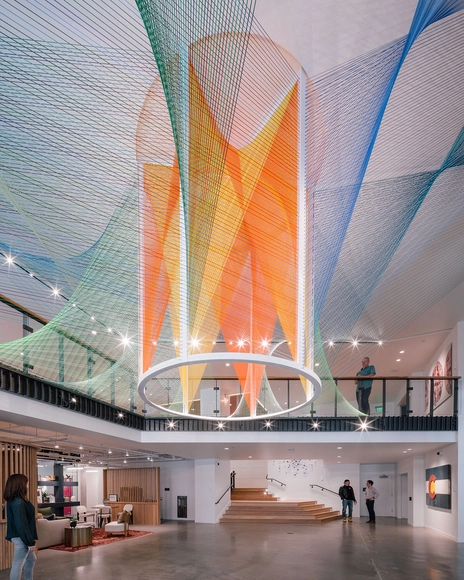
The artwork Corolla by artist Inés Esnal is inspired by the rich and vast natural landscape of Colorado, where it is currently on display at The Coloradan building in Denver. The installation interprets Colorado's state flower, “the blue columbine,” as a network of vibrantly colored cords, where warm central tones and cool hues at the outer edges evoke the flower’s pollen and petals. Viewers are invited to explore the piece through their own movement, which triggers and unfolds multiple perspectives and optical effects.

The Bubble Creation is a collection presented by Herman Miller at the MAIA gallery, located in Mexico City's Roma neighborhood. The exhibition brought together 14 Nelson Bubble Lamps—one of the brand's most recognized products—reimagined by Mexican architects, designers, and interior designers.
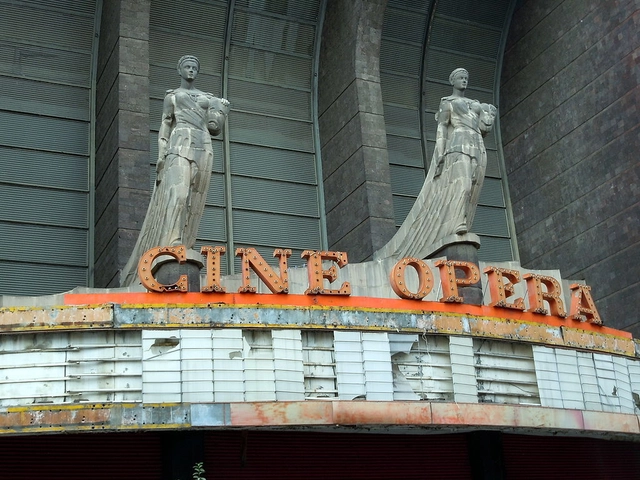
The history of Cine Ópera dates back to 1949, when the iconic venue—designed by architect Félix T. Nuncio with interiors by set designer Manuel Fontanals—held its first screening, quickly becoming one of Mexico City's most popular movie theaters. Located at 9 Serapio Rendón Street in the San Rafael neighborhood, the Art Deco building features a facade framed by a large window with two stone-carved sculptures depicting the comedy and tragedy masks.
_07.jpg?1577130518&format=webp&width=640&height=580)
Antonio Lamela's Torres Colón is "an unprotected Madrid icon set to change completely." The twin buildings by the Spanish architect—who also designed the renovation of the Santiago Bernabéu stadium and Terminal 4 of the Madrid-Barajas Airport alongside Richard Rogers—will undergo a renovation that adds four new floors and a new facade by 2022.
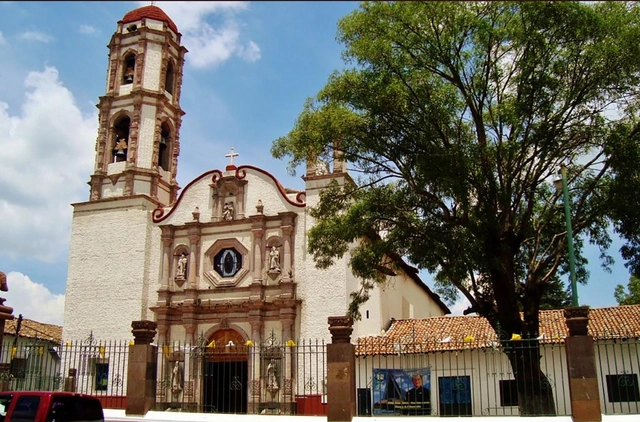
The Latin American Coordinator of Architecture Students (CLEA Latinoamérica) has confirmed on social media that the 2020 edition of the Latin American Social Workshop (TSL) will be held in San Felipe del Progreso, Mexico.
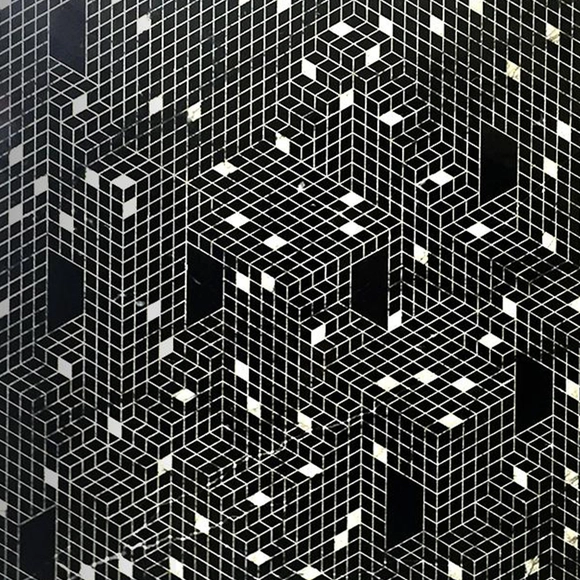
1989 is a digital illustration project founded in 2015 by Chilean architect Fabiola Morcillo. Her work has been exhibited at the Casa Gris Architecture Gallery and Galería Cima, and is also part of the group exhibition "Lights of Chile," on display until May 13 at 193 Gallery in Paris. Her projection mapping work and ephemeral architectural creations earned her a nomination for the next YAP Constructo 2020 pavilion, the results of which will be announced at the opening of the 2019 pavilion.

What little we know about the architectural profession is broken. It is no longer applicable to the second millennium, as evidenced by the unsustainable reality facing the vast majority. The experiences of previous generations were unique, tied to a specific historical moment. Today, we must learn to read our own historical moment and reprogram our vision to find the paths forward that currently remain hidden.

The conventional city model establishes very clear and concrete boundaries between the public and the private. Within this model, what is defined as “urban” has always corresponded to the public realm, whereas “domestic” defined the boundaries of the private. Yet societies are not immune to change and evolution, and neither is urbanism. Those traditional concepts of the urban and the domestic are becoming obsolete, transformed into expanded and more updated understandings. It is precisely around this blurred boundary—between what appears urban and what appears domestic—that the new public sphere is being constructed.
This is the leitmotiv driving the ‘Dom Project’ intervention: to establish a gradient of spaces where the urban and the domestic are not clearly demarcated, but instead colonize one another, bringing certain public uses and programs to the surface within the ‘Housing Block.’ The project was submitted to the international architecture competition ‘Open International Competition for Alternative Layout Designs in Standard Housing’, organized by the Ministry of Construction, Industry, Housing and Infrastructure of Russia alongside the Unified Development Institution in the Housing Sector and the firm Strelka KB, winning second prize.
As part of the 16th edition of the MUTEK Festival, which has been held in Mexico City since 2003, the participation of the 404.zero collective has been announced. This duo of audiovisual architects is dedicated to designing immersive experiences that blend A/V installations with live performances, driven by an uncontrollable fascination with the unknown, the cosmos, and death.
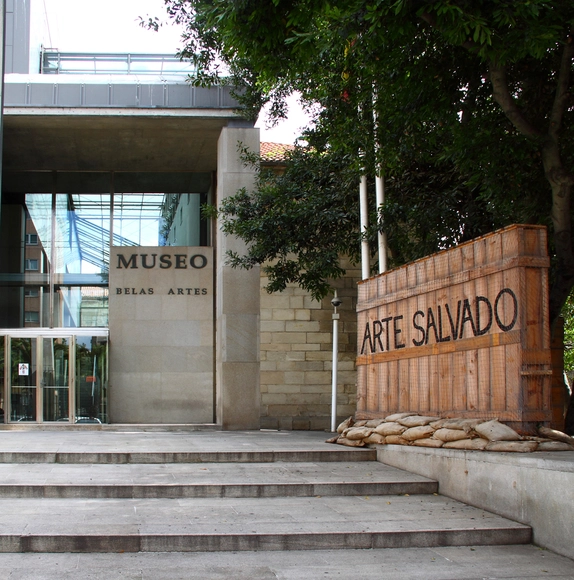
I first encountered Manuel Gallego's work in Valencia, introduced to it by José María Lozano. There, at the school where I was studying, they had organized a symposium on Galician architecture.
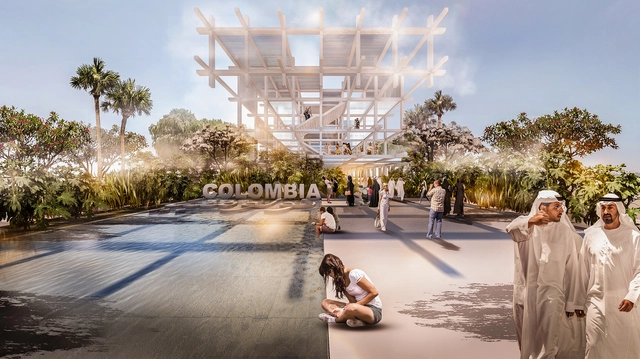
Under the theme “The Rhythm That Connects the Future,” the Colombian government, in partnership with the country's public and private sectors, will participate in the global collaboration and business platform Expo Dubai 2020. The nation's pavilion was designed by Pacheco Estudio de Arquitectura in collaboration with the creative agency Buen Tipo Anchor.
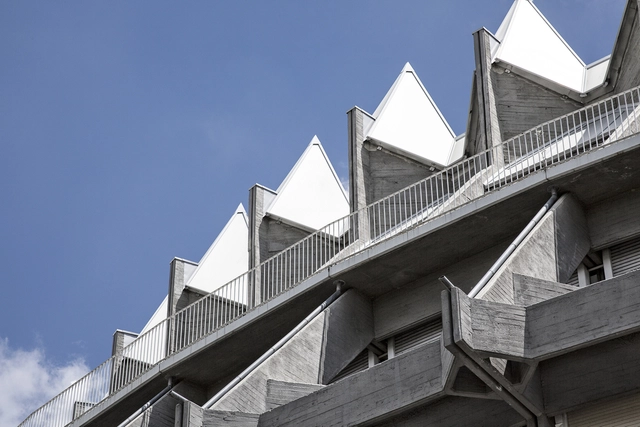
Iconoclast, painter, musician, photographer, visionary, genius… and architect. Fernando Higueras [Madrid, 1930-2008] left his mark on the history of Spanish architecture in an emotional way, showcasing architecture in its most essential quality.
Born in Madrid on November 26, 1930, Fernando Higueras was, like many others, a key exponent of late architectural modernism in 1960s Spain. Far from being merely novel or exceptional, his approach reiterated the timeless lesson of the creative process: talent and grace were not enough; they had to be accompanied by immense perseverance and, above all, passion.
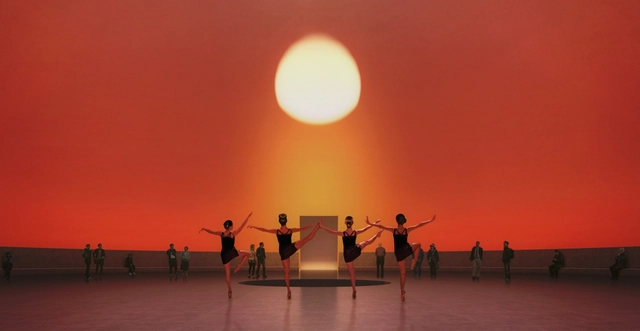
As part of the Museo Jumex’s fall programming in Mexico City, internationally acclaimed artist James Turrell will illuminate two of its galleries with immersive installations from his new body of work—one of the most significant series of his career—which engages viewers with the limits of human perception. These two installations will offer contrasting experiences, transforming the spaces to blur the boundaries of the horizon in both light and darkness.
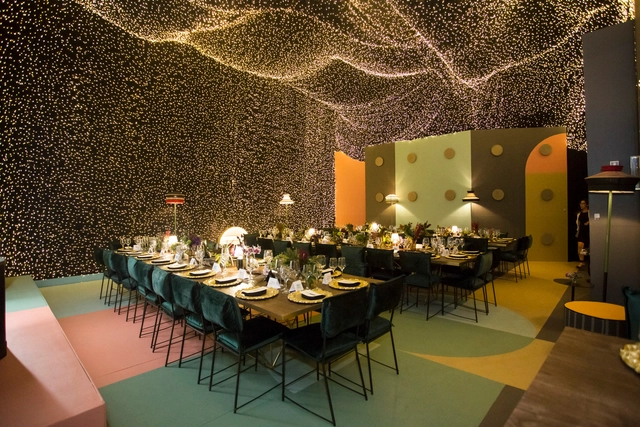
As part of Design Week Mexico 2019, Diez Company opened Maison Diez Company to the public. Led by Rodrigo Fernández, this dedicated design and lighting project brings together various elements to create an environment centered on illumination. This unique project in Mexico returns with a renewed concept, showcasing new proposals in a house in the Juárez neighborhood, aimed at those who enjoy architecture, design, hospitality, and construction.
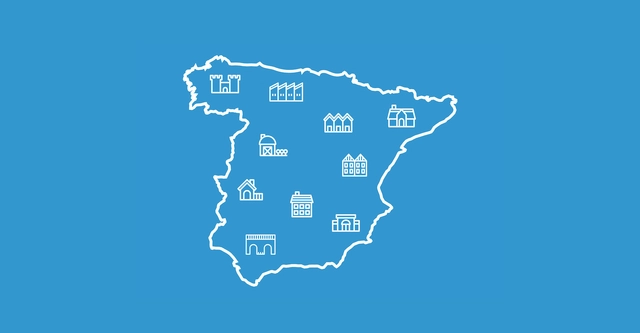
Beyond its vast and diverse geography, the Iberian Peninsula is a map of architectural examples that have successfully adapted by reinterpreting materials, technical methods, and human needs.
In this regard, vernacular architecture in Spain—referring specifically to traditional dwellings—might not be as robust today as in its heyday; nevertheless, numerous examples still stand, some even continuing to serve as viable living spaces.
Below is a selection of the most representative traditional houses across Spain's diverse regions, offering a journey through the territory to inspire new architectural perspectives.
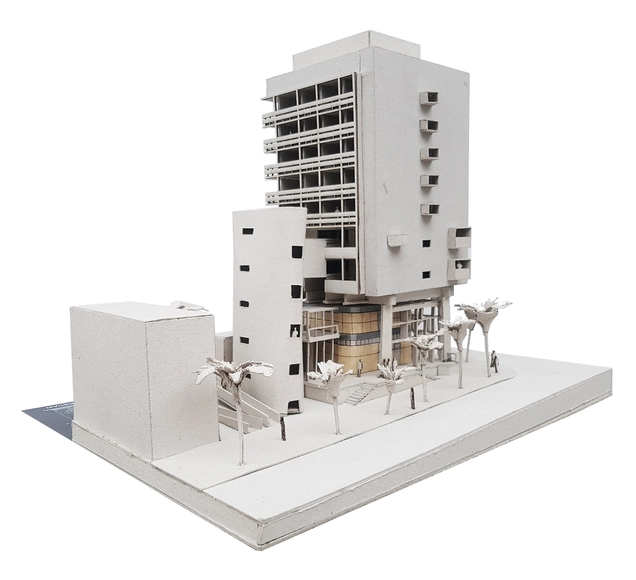
We often think of heritage as a collection of valuable assets inherited by an individual or a group. While we sometimes identify fully with its meaning and the legacy passed down to us, we all too often squander its benefits.
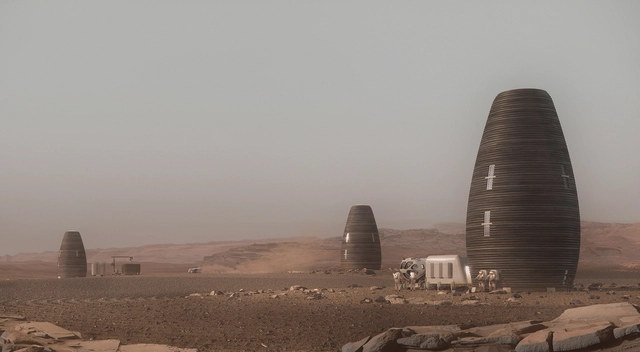
Open House Madrid has announced the winners of the 2019 City Awards, a new accolade highlighting the most innovative, socially engaged, and committed proposals shaping the future of cities. According to its founders, "these awards recognize both innovation and design as essential factors in improving citizens' quality of life, aiming to foster a culture of design and innovation in Spain."
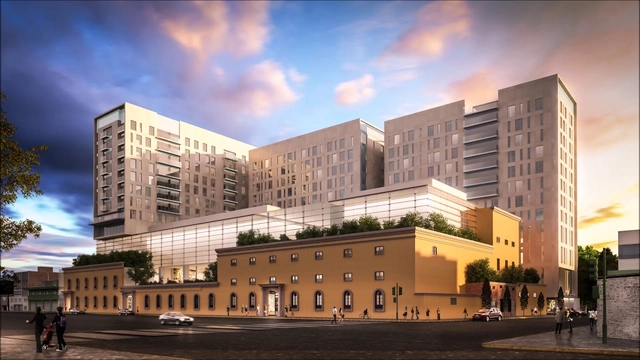
Paseo Molino is a new complex—comprising residential and corporate towers alongside a commercial zone—set to open soon at the Antiguo Molino de La Unión in Toluca, State of Mexico, a site with over 220 years of history. Designed by architect Samuel Chávez, the project involved restoring the historic structure using traditional construction techniques, including adobe, masonry, and reclaimed antique timber.

In 2018, Chilean researchers Teodoro Dannemann, Boris Sotomayor-Gómez, and Horacio Samaniego published the results of a study in Royal Society Open Science that, by anonymously tracking the "footprint" of 350,000 mobile phones during working hours, visualized urban segregation in Santiago.
_8575.jpg?1568928556&format=webp&width=640&height=580)
As part of the 2019 Chicago Architecture Biennial, the Graham Foundation hosted Tatiana Bilbao's exhibition, "Unraveling Modern Living," featuring an immersive installation that transforms a former domestic space to explore new forms of collectivity. Through this intervention, Bilbao reconfigures the existing architecture to create a garden, a space for knowledge, a space for dialogue, and a space for gathering, in collaboration with the Sweet Water Foundation, Colectivo 1050°, MAS Context, and Lurie Garden, among others.
More than 10,000 readers nominated their favorite projects from nearly 1,000 built works in Latin America and Spain: the day has come to meet the finalists of ODA19.
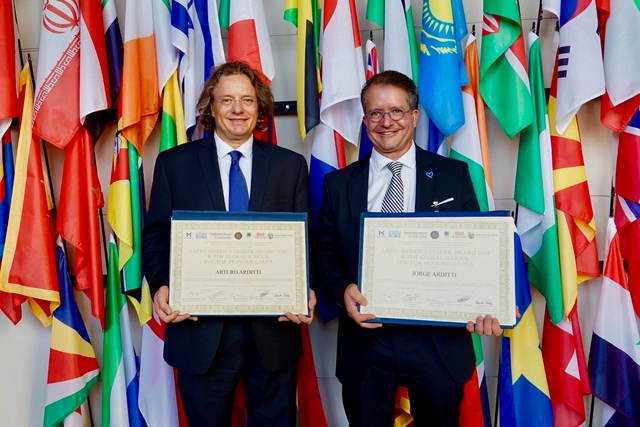
On Wednesday, December 4, Mexican architects Arturo and Jorge Arditti received the Honorary Doctorate Latin America Leaders Awards 2019 at the United Nations headquarters in Vienna. The distinction was awarded by The Global School for Social Leaders in collaboration with 1MillionStartups, The Ban Ki-moon Centre for Global Citizens, the Humanist World Foundation, and the Analysis and Opinion Research Group (GIAO).
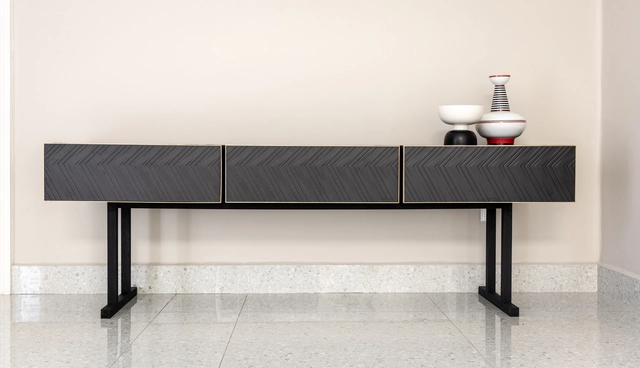
On August 8, as part of Expo Arte-Objeto—an exhibition commemorating the 60th anniversary of Llano de la Torre— Firenze invited architect Ricardo Casas to reinterpret the use of porcelain tiles with playful, exclusive designs.



















.jpg?1553787777)


_8568.jpg?1568928579)
_8548.jpg?1568928532)
_8569.jpg?1568928567)
_8576.jpg?1568928544)
_8575.jpg?1568928556)