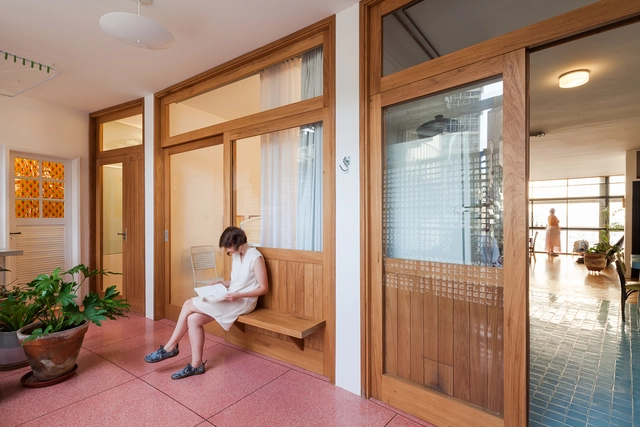
In times of pandemics, such as the one we currently face with COVID-19, quarantine is a vital measure to mitigate risks to the public and prevent overloading the healthcare system. During these periods of confinement, it is common to reassess our habits and question the way we live. As architects, one of our profession's key challenges is to design spaces that satisfy basic human needs while also catering to individual specificities, ensuring that homes can accommodate everything required for daily life for an indefinite period.
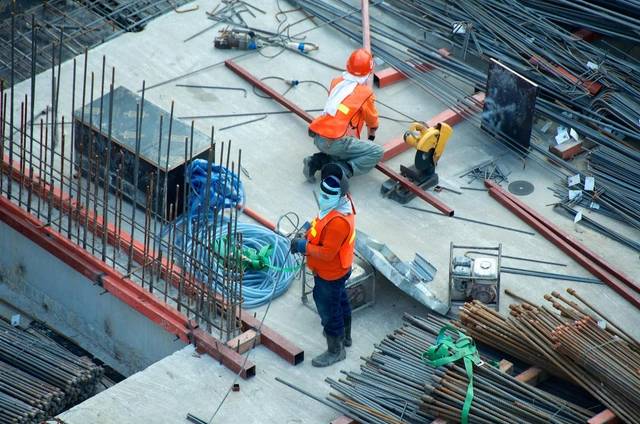
The Council of Architecture and Urbanism of the Federal District – CAU/DF will release a series of posts on its social media channels featuring essential information for architects, urban planners, and other professionals working on construction and renovation sites who, for some reason, cannot temporarily halt their work.
When discussing acoustics, we usually think of architectural projects where sound takes center stage, such as concert halls, auditoriums, and schools. However, acoustic issues and their impact on the quality of spaces are much broader, extending to cities and less complex buildings, and can either enhance the spatial experience or make it increasingly stressful. Arquicast brings a fresh perspective to the importance of acoustics in our lives, interviewing architects Marcos Holtz, a specialist in architectural and environmental acoustics, and Ernani Machado, who holds a PhD in environmental comfort.
In an interview with ArchDaily, Rio de Janeiro-born architect Thiago Bernardes, founder of the firm Bernardes Arquitetura, discusses his projects in Brazil and Portugal, as well as the complexities of leading a practice with offices in Rio de Janeiro, São Paulo, and Lisbon.
How accurate (or not) does that statement sound? While writing this article, my digital text editor flagged the opening words of this very sentence, suggesting an incorrect grammar fix. It was wrong; the sentence was perfectly correct.
Although construction is primarily based on technical principles, which at first glance seem to follow only pre-established designs and specifications, there is a deeper dimension related to the nature and essence of the materials used. These materials do not only perform a utilitarian function; they also transcend their mere purpose, evoking the notion put forward by Pablo Neruda: "There is a rigor in materials that limits excessive whim and the struggle to infuse them with humanity."
Among the range of existing materials, there is perhaps none as universal as brick. Its versatility and aesthetic honesty have made it a widely used resource in the construction of diverse spaces worldwide. Within Chilean architecture, the broad possibilities this material offers have been highlighted, having been exceptionally utilized by numerous architects. Furthermore, it has gained renewed relevance in architectural discourse, as exemplified by the book "Arcilla. Materia y Obra en Arquitectura." This is reflected throughout the history of Cerámica Santiago and its joint collaboration with the Faculty of Architecture and Art at UDD to promote the Brick Architecture Prize.
https://www.archdaily.com/1136376/matter-clay-and-construction-the-use-of-ceramic-brick-in-chilean-architectureEnrique Tovar
Archaeological remains of the Forte São Francisco Xavier site. Photo: Jaime Oliveira/Iphan Collection
The historic drought affecting the Amazon region has revealed four archaeological sites in the state of Amazonas, three of which were completely unknown and are of great importance. The National Institute of Historic and Artistic Heritage (Iphan) has implemented an emergency action plan, involving inspections and educational initiatives in partnership with various public agencies and social organizations, including the Soka Institute of the Amazon, which voluntarily dedicates itself to the preservation of local cultural and environmental heritage.
https://www.archdaily.com/1135966/drought-reveals-three-new-archaeological-sites-in-the-state-of-amazonasArchDaily Team
Designing and constructing homes is a complex process involving a variety of factors. Within this process, considering the various design elements is essential—including underlayments, ceilings, partitions, claddings, structures, and facades—alongside selecting the right materials for each. This choice must align with user preferences as well as indoor and outdoor conditions, prioritizing durability, energy efficiency, and aesthetics.
To simplify the design process, Volcan develops Volcanboard fiber cement building solutions for different construction elements. Available in a variety of thicknesses to adapt to various applications, these fiber cement boards stand out for their fire and moisture resistance, as well as their long-term durability and versatility. Below, we explore various applications of Volcanboard in residential design.
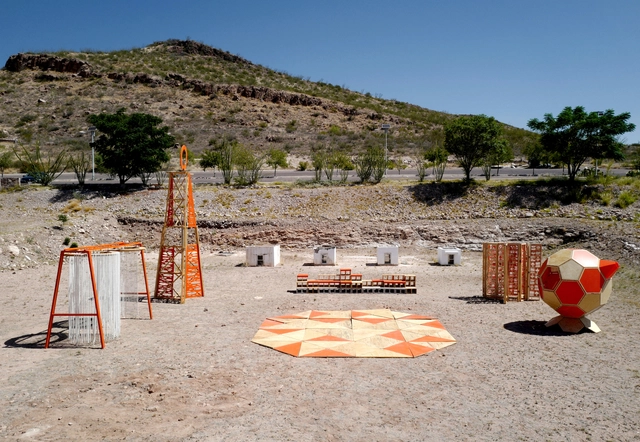
As part of an initiative by the ISAD School of Architecture and Design in Chihuahua, the Taller del Desierto (Desert Workshop) has been running for several years, fostering various projects to stimulate student learning. For this edition, a pavilion was built, conceived as an assembly of pieces with a theatrical narrative. This pavilion was created as a collaboration between ISAD and Teatro Bárbaro, a local independent cultural forum led by Luis Bizarro. Consequently, the pavilion was designed to serve as a traveling venue for performances created or adapted specifically for this space, which consists of pieces designed during the four-week summer workshop in 2023.
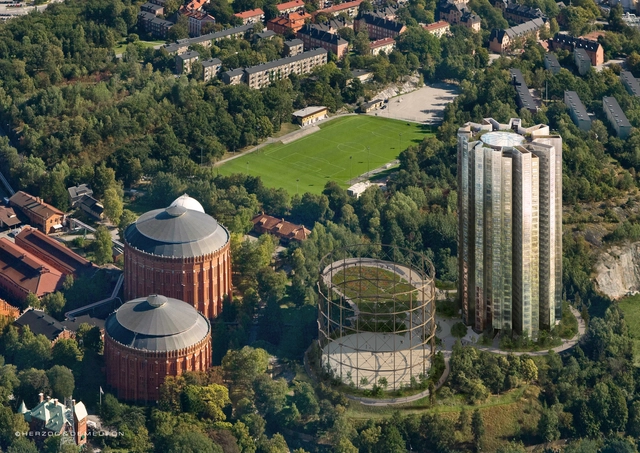
Considered landscape landmarks due to their imposing dimensions, gasometers emerged during the Industrial Revolution and were present in many cities around the world, accompanying their urbanization process. With shifts in gas generation and distribution during the second half of the 20th century and the emergence of new technologies, gasometers were gradually decommissioned. Although many have been condemned to demolition in recent years, many also still remain within the urban fabric, standing as testaments to an industrial past. Their potential for architectural, artistic, and landscape interventions prompts us to question what possibilities lie ahead for their future.
We invite you to participate in the 2020 Obra do Ano Award. In its fourth edition, we are giving our readers the responsibility of recognizing and rewarding the projects that have made the greatest impact on the profession. By voting, you become part of an unbiased network of jurors recognizing the most significant projects built in Portuguese-speaking countries over the past year. There are only a few days left in the nomination stage, which will select the 15 finalists from over a thousand projects.
Remember, registered users can nominate their favorite project once per day. The nomination stage ends on Tuesday, March 24 at 11:59 PM (Brasilia time, GMT-3). Thank you once again for helping us democratize architecture.
The São Paulo Department of the Institute of Architects of Brazil (IABsp) has made a series of videos of lectures, classes, and debates available on its YouTube channel. The videos cover topics such as urban mobility, architectural heritage, design competitions, urban policy, housing, environmental sanitation, and exhibition design.
In an interview with ArchDaily, architect Gui Mattos discusses the beginning of his career in Ubatuba, on the northern coast of São Paulo, and his current projects across various scales, ranging from high-rise buildings to product design. Best known for his residential designs, Mattos heads his namesake firm, which features a team of over 25 architects.
BIM can be an important tool for construction site organization. Photo by Jamie Street, via Unsplash
The Brazilian Association of Architectural Offices of Rio Grande do Sul (AsBEA-RS) has released more than 40 hours of videos on its YouTube channel, featuring lectures and discussions on BIM, sustainability, technical standards, and other architecture-related topics.
All Brazilians working in the management, preservation, appreciation, and promotion of Cultural Heritage can apply for the Rodrigo Melo Franco de Andrade Award. Organized by the National Institute of Historic and Artistic Heritage (Iphan) since 1987, this is the largest national award in the field of cultural heritage and aims to recognize those working to preserve the country's cultural assets.
About 14% of the population of Porto Alegre, nearly 200,000 people, live in favelas, classified by IBGE as "subnormal agglomerations." These residents typically lack guaranteed property rights and do not have access to basic public utilities and services such as sanitation, drainage networks, or street lighting. Around 4,000 people experience homelessness. The city's public transit system, which carries over 20 million passengers per month, is facing the worst crisis in its history, with unsustainable operations. Our public spaces are dominated by cars, whose drivers enjoy the privilege of parking for free on public streets. Dumpsters, which are meant to receive only organic waste and non-recyclables, end up filled with all kinds of trash, undermining proper waste collection in the city.
Amid the bustle and majesty of Mexico City, the iconic buildings that adorn its skyline boast not only imposing architecture, but also stories and secrets that spark curiosity. During this month dedicated to architecture, we bring you some of the curiosities and myths surrounding CDMX's buildings, which serve as the pillars of multiple narratives.
From the competition for the Gabriela Mistral Cultural Center to the competition for the restoration of Palacio Pereira, architectural competitions have enabled the design and construction of many iconic buildings in Chile's history. To recognize architectural competitions as a platform for professionals and students to not only showcase their creativity and skills, but also to secure the preliminary design that best meets a building's requirements, we have selected some of Chile's most successful architectural competition results.
Wind farm in Mölsheim, Germany. Photo by Karsten Würth via Unsplash
A study released by Project Drawdown shows that at this very moment, we have immediate access to at least 76 solutions to curb climate change. The proposed solutions are relatively simple, and the cost of implementing them is less than the cost of inaction.
Designing for comfort—especially acoustic comfort—is a somewhat thankless task, as we typically only notice it when it fails to function properly. Common complaints abound: hearing a conversation from the next room more clearly than the one in your own space, having to shout to be understood by someone right next to you, or dealing with excessive echoes that make staying in a room exhausting. This last issue in particular is very common in spaces with exposed structures that lack finishing materials. Because materials like concrete, glass, or metal are typically not acoustically absorbent, spaces with industrial aesthetics often suffer from high reverberation times. This means that emitted sounds take longer to dissipate, continuing to bounce off surfaces and merge with other sounds, which creates disruptive noise and reduces speech intelligibility.
Extremamente versáteis, não só por sua variedade de cores e padrões, mas também por suas possibilidades de aplicação, os ladrilhos hidráulicos podem ser encontrados, nos projetos residenciais, em ambientes que vão desde áreas molhadas a salas e quartos. A orientação das peças e a área em que são aplicadas também são fatores que contribuem para a diversidade de conformações possíveis no uso do ladrilho hidráulico: quando são restritos a determinada área de um ambiente, por exemplo, podem funcionar como “tapetes” fixos.
The Lisbon Architecture Triennale has released the Talk, Talk, Talk debate series on its Vimeo channel. The series was held as part of its 5th edition, curated by Éric Lapierre. Divided into five major exhibitions, the Triennale explored architectural imagination in one of them—the theme of the Inner Space exhibition and of the debates featured here.
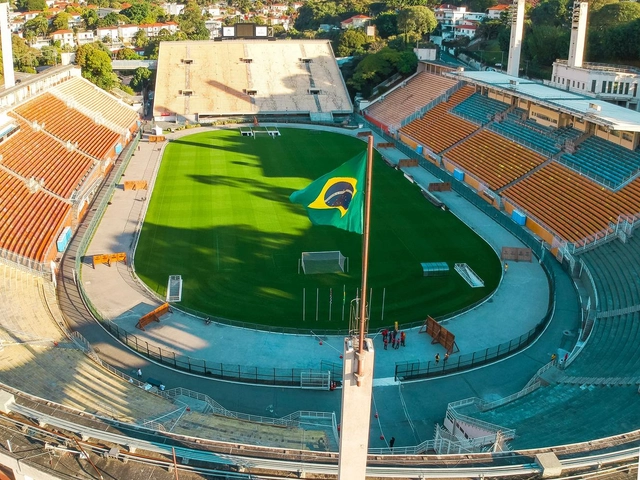
Pacaembu Stadium, São Paulo. Photo by Sergio Souza, via Unsplash
The field hospital at Pacaembu, set up on an emergency basis to meet the demand caused by the COVID-19 pandemic in São Paulo, will begin receiving patients on Wednesday, April 1st. The hospital facility will operate inside the stadium located in the central region of the city and will have a capacity of 200 beds for low-complexity patients.
Amid a period of restrictions and isolation, it is not only social life that has been subjected to distancing. The habit of visiting museums and exhibitions has also been disrupted. Although experiencing art in person always offers an unparalleled way to absorb the impact of an image, the opportunity to explore exhibitions and museum buildings online provides a way to keep this space alive in our daily routines. Virtual tours are also valuable because they democratize access to art and culture. Furthermore, they can engage those who do not typically participate in these activities, sparking a new interest that, once physical spaces reopen, will foster active engagement with the local museum and art scene.



.jpg?1584740374)