In its most widely accepted definition, sustainable development is understood as meeting the needs of the present generation without compromising the ability of future generations to meet their own. While often associated with environmental and natural resource issues, sustainable development goes further, encompassing social and economic aspects such as justice, inclusion, and poverty eradication.
Registration is now open for the second edition of the self-paced course “Heritage Education, Diversity, and Environment in the Federal District.” Open to the general public, the course is part of the work plan under a cooperation agreement signed between the National Institute of Historical and Artistic Heritage (Iphan) in the Federal District (DF) and the State Secretariat of Education of the DF (SEEDF).
Something is deeply wrong when the most beautiful streets in Brazil would be forbidden from being built today. Indeed, the vast majority of Brazilian master plans prohibit any of us from building houses and buildings with the very characteristics that led these streets to be voted the most beautiful in the country.
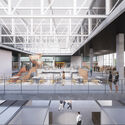
Seeking a more noble purpose for its Municipal Market, the municipality of Ponta Grossa, Paraná, launched a national design competition in September 2021. The site, previously filled with debris and hoarding, will be redeveloped to accommodate 180 commercial stalls, a food court, and parking. Last December, the jury announced Austral Studio, a Curitiba-based office led by architect Henrique Wosiack Zulian, as the competition winner.
No País dos Arquitectos is a podcast created by Sara Nunes, who also runs the architectural film production company Building Pictures. The podcast aims to introduce the professionals, projects, and stories behind landmark contemporary Portuguese architecture. With just over 10 million inhabitants, Portugal is a highly compelling country in this professional field, with an architectural output that far exceeds what its population or territorial scale might suggest.
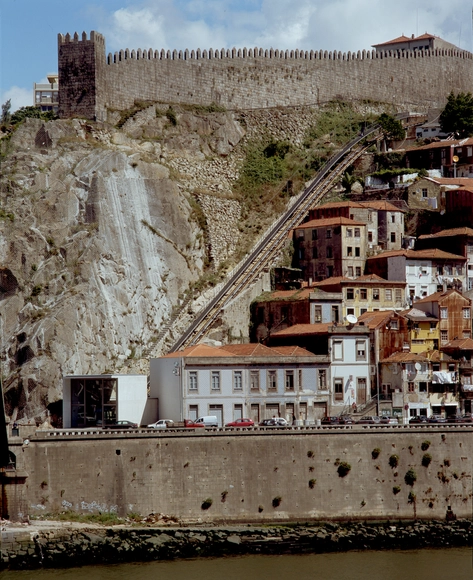
In this episode, Sara talks with architect Adalberto Dias about the Guindais Funicular project in Porto. Listen to the full interview and read an excerpt of the transcript below:
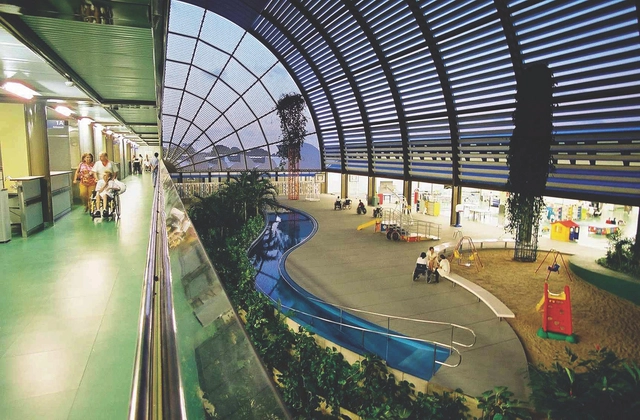
Sarah Fortaleza Neurorehabilitation Center, 2001. Photo: courtesy of EC, via Betoneira
With a deeply social body of work dedicated to public use, João da Gama Filgueiras Lima, known as Lelé, became one of the key figures in Brazilian architecture. Over his 60-year career, he built hospitals, schools, transit terminals, bus shelters, courthouses, government offices, and other administrative headquarters.
Across all these projects, he combined a meticulous care for materials and the workforce with technical and artistic excellence. He understood, like few others, how to leverage natural light and ventilation to promote energy efficiency and user well-being.
Photo: Priscila Pacheco/WRI Brasil Sustainable Cities
The Covid-19 pandemic hit public transit hard. Initially, global ridership dropped by up to 80%, and by the end of 2020, public transit was still operating with only about 20% of its pre-pandemic passenger volume. The concern is that, if public transit does not recover, people will increasingly opt for private vehicles.
https://www.archdaily.com/1132004/3-ways-to-transform-public-transit-with-a-focus-on-climate-health-and-equityBen Welle, Rogier van den Berg e Claudia Adriazola-Steil
Photo: Daniël Bleumink/Flickr. Courtesy of Caos Planejado
Over the last few decades, discussions on addressing climate challenges have unfolded even as we experience their effects. Although cars and motorcycles are the primary emitters of pollutants, buses also play a significant role in greenhouse gas emissions and the rise of illnesses related to air pollution. In this regard, adopting new technologies, such as electric buses and alternative fuels, is essential to reducing their impact on public health and the environment.
https://www.archdaily.com/1132188/electric-buses-can-make-our-cities-more-sustainableITDP Brasil
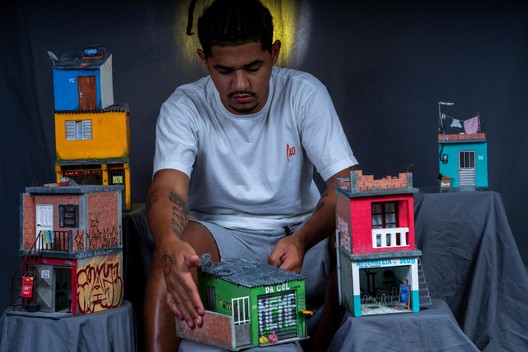
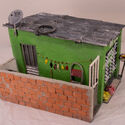
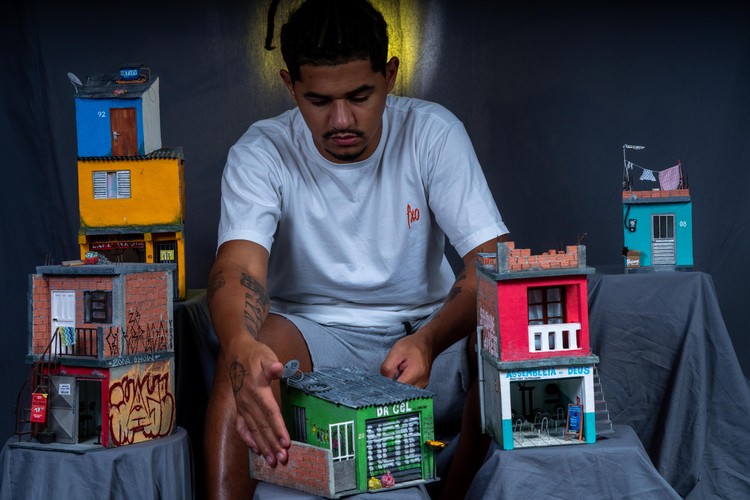
Marcelino Melo, also known as Nenê, is a multimedia artist who works with audiovisual productions and has recently gained recognition for his work with miniature house sculptures that depict life in the peripheries. Born in Alagoas, Nenê arrived in São Paulo in his early teens and discovered Hip Hop, a moment he considers fundamental to the development of his work. The sculpture project, known as Quebradinha, is featured in the Carolina Maria de Jesus exhibition at the Instituto Moreira Salles in São Paulo, while also amassing over 190,000 followers on Instagram, with videos and posts exceeding millions of views.
In 2020, US-based startup Zoox revealed the prototype of its autonomous electric vehicle. Now, the robotaxi is entering an advanced testing phase in California.
Resembling a minivan, the vehicle is tall, boxy, and features sliding glass doors. Its large wheels and rounded corners stand out, giving it a cartoonish appearance.
No País dos Arquitectos is a podcast created by Sara Nunes, who is also responsible for the architectural film production company Building Pictures. The podcast aims to profile the professionals, projects, and stories behind leading contemporary Portuguese architecture. With just over 10 million inhabitants, Portugal is a highly fascinating country in this professional field, and its architectural output far exceeds what its small population or territorial scale would suggest.
In this episode, Sara talks with architect Eduardo Souto de Moura about the Braga Municipal Stadium. Listen to the full interview and read a partial transcript of the conversation below:
For the first time in history, the global urban population has surpassed the rural population. Today, 55% of people live in urban areas, and projections indicate this figure will reach nearly 70% by 2050—an increase of 2.5 billion urban dwellers. This prompts us to ask: what model of urbanization do we want for the coming decades? The answer depends on understanding rising urbanization rates as a challenge not only for cities but also for rural and peri-urban territories, whether productive or natural.
When we think of healthcare, we think of doctors, nurses, surgeons, radiologists, and anesthesiologists – the people who treat illnesses and save lives.
Yet we often overlook a large group of people who make saving lives possible – medical coding specialists, healthcare service managers, hospital architects and engineers, and others working behind the scenes to deliver positive health outcomes.
São Paulo's downtown area clearly displays the contradictions of our cities. On one hand, vacant properties sit idle in areas well-served by urban infrastructure; on the other, the number of people experiencing homelessness is growing, sheltered in tents and precarious, makeshift structures.
For the sixth time, we are giving our readers the responsibility of recognizing and rewarding the projects that have made the greatest impact on the profession through the ArchDaily Brasil 2022 Building of the Year Award. By voting, you become part of an unbiased network of jurors recognizing the most outstanding projects of the past year.
Over the next three weeks, the collective intelligence of our readers will filter through hundreds of projects from Portuguese-speaking countries—Brazil, Portugal, Mozambique, Angola, Guinea-Bissau, East Timor, Equatorial Guinea, Macau, Cape Verde, and São Tomé and Príncipe—published in 2021, selecting the best works built in Portuguese-speaking territories.
From hundreds of projects published in 2021, readers will choose their favorites, and the 15 projects with the most votes will move on to the second stage of the award.
In 2021, the average London driver spent 148 hours in traffic jams—double the national average, according to a new report by Inrix, a road traffic analytics company. These findings led to a BBC report that attributed this new, alleged status as the world's most congested city to an increase in bike lanes, implemented across London to ensure social distancing during pandemic travel. This analysis seems to overlook the fact that congestion in 2021 was practically the same as in 2019.
To understand what is happening, we must remember that the amount of time available to each of us limits how much we can travel. There are many things we need to fit into 24 hours and, on average, we spend only one hour commuting. This limits the accumulation of congestion in cities.
The Glass House, located on Ponus Ridge Road in New Canaan, Connecticut, was designed and built in the late 1940s as the home of its architect, Philip Johnson. Considered an icon of modern architecture, the house explores the boundaries between interior and exterior. One year after its completion, its mimesis, the Brick House, was built 25 meters in front of it, sharing the same length but only half the depth of the glass house.
https://www.archdaily.com/1132105/exhibitionism-and-seclusion-the-glass-house-complex-of-philip-johnson-and-david-whitneyHelena Ramos e Rafael Baumer
Metrocable in Medellín. Photo: EMBARQ Brasil | WRI Brasil Cidades Sustentáveis, via Visualhunt
UX Design, or user experience-centered design, is not, as is commonly thought, a field focused exclusively on the digital world, screens, and visual interfaces. Rather, it deals with the "complex networks of relationships that users have with one another and within the system itself," whether virtual, graphic, architectural, or urban. This is according to Cuca Righini, an architect who graduated from FAUUSP and a specialist in UX design, design thinking, and the pedagogy of cooperation.
No País dos Arquitectos is a podcast created by Sara Nunes, who also runs the architectural film production company Building Pictures. The podcast aims to profile the professionals, projects, and stories behind benchmark contemporary Portuguese architecture. With just over 10 million inhabitants, Portugal is a highly compelling country within this professional field, and its architectural output far outstrips what its population or territorial scale might suggest.
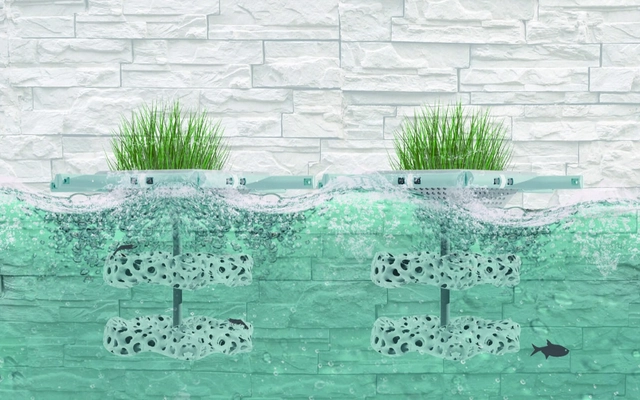
Students at Tunghai University in Taiwan have designed a type of artificial coral reef. The proposed structure is made of 3D-printed eco-friendly ceramic to help revitalize urban rivers.
While natural corals are irreplaceable and essential to ocean health, this 3D-printed structure has a specific mission: to provide shelter for aquatic organisms. This alone can help sustain various species.
The impacts of human-induced climate change have already caused loss and damage to people and ecosystems. These impacts are most severe among marginalized urban populations, such as slum dwellers. In the most vulnerable regions, the number of deaths from droughts, floods, and storms was 15 times higher over the last decade than in the least vulnerable regions.
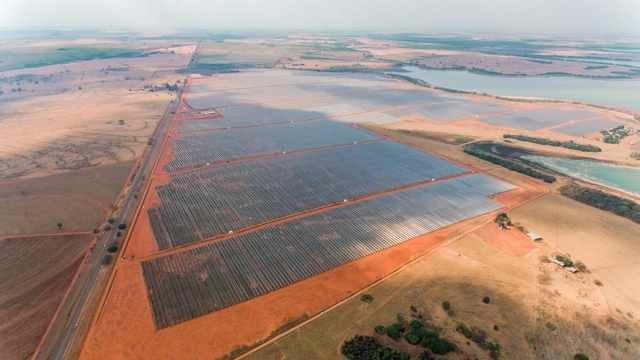
Pereira Barreto solar photovoltaic complex in the state of São Paulo. Image courtesy of EDP Renováveis
Brazil has just surpassed the historic milestone of 14 gigawatts (GW) of operational solar photovoltaic capacity, combining utility-scale plants and distributed self-generation systems on rooftops, facades, and small plots of land. Consequently, solar power now surpasses the installed capacity of the Itaipu hydroelectric plant, according to data from the Brazilian Association of Photovoltaic Solar Energy (ABSOLAR).
Panoramic view of the Kennedy neighborhood in 1964. It was renamed that year, having previously been called Ciudad Techo. ArchDaily. Image Courtesy of Felipe Cardona
Across a 350-hectare site, 24 superblocks organize the ten thousand housing units of the Ciudad Kennedy complex in Bogotá. Built between 1961 and 1963, its construction embodies an urban vision embedded in a social, political, and ideological framework that specifically involved Colombia, yet was shared to some extent across Latin America during the Cold War.
Videos
Niterói, RJ. Photo by Nayani Teixeira on Unsplash
The postgraduate course Cidades em Disputa – pesquisa, história e processos sociais, at Escola da Cidade, hosted Tainá de Paula, who delivered the open lecture “Body and Territorialities: The Necessary Debate on the Non-City.” Raised in one of the favelas of Praça Seca, in the West Zone of Rio de Janeiro, the architect and urban planner defines herself as a Black woman, mother, and activist for urban struggles, particularly in the peripheries and favelas. During her talk, Tainá—who has also served as a city councilor since 2020—discussed subalternized territories and the “non-city,” which excludes and segregates, while stressing the urgent need to build an agenda to break away from these conditions through racial, class, and gender emancipation.
https://www.archdaily.com/1132097/taina-de-paula-talks-about-the-body-territorialities-and-the-non-cityEscola da Cidade