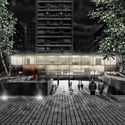
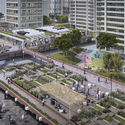
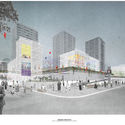
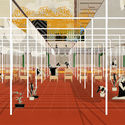
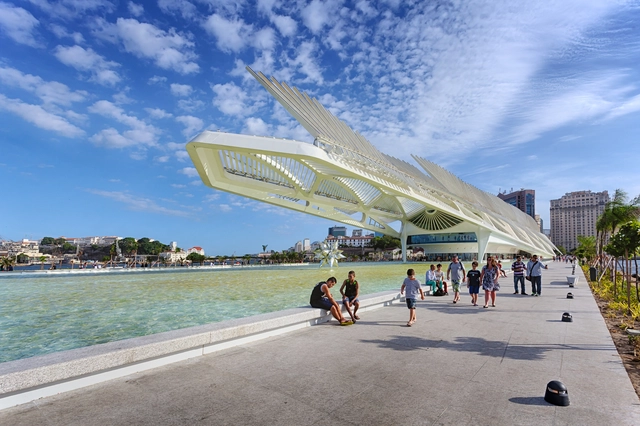
What do the arrival of the Portuguese royal family, Brazil's largest slave trade market, the murder of student Edson Luís during the military dictatorship, and the R$52 million bribe received by Eduardo Cunha have in common? They all took place in Rio de Janeiro’s port area and can now be (re)discovered through the Museum of Yesterday (Museu do Ontem), an app launched by Agência Pública that aims to rescue these stories and foster a new relationship with this important urban territory.
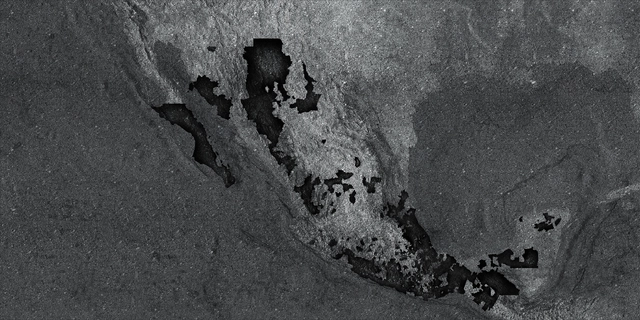
The Mexican Pavilion presents a creative process in which architecture embraces geographic sensitivity and diversity. The exhibition visualizes the territory, its layers, and cultural expressions through sixteen murals that showcase architectural abstractions, intentions, and contextual appropriations for each work.
Curated and designed by Gabriela Etchegaray and Jorge Ambrosi, the exhibition establishes sequences that reveal a dialogue between natural phenomena, geographic formations, and design solutions. Each stone panel shapes the space, highlighting cross-cutting readings: a country vulnerable to natural disasters due to its geological conditions; a highly diverse architecture in terms of scale, site, and integration; and a critical reflection on architecture's role in relation to the Freespace theme of the 16th International Architecture Exhibition at the Venice Biennale.
https://www.archdaily.com/1114006/echoes-and-territory-mexico-at-the-venice-biennalePabellón de México
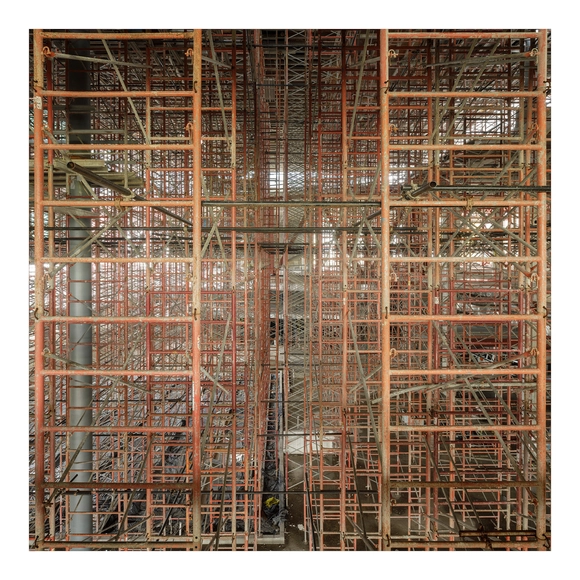
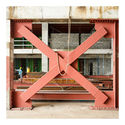
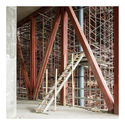
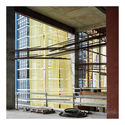
Spanish photographer Fernando Alda explores the construction of the Pacific Center building in Panama, designed by local firm Ventura Arquitectos, in his most recent photo essay. Titled "An Aesthetics of Disappearance," Alda's work was exhibited in the Panamanian firm's pavilion during the inaugural Expo Modii 2018 in Panama City.
Scaffolding, energy dissipators, shoring, electrical installations, and safety netting define the temporary spaces that make up this photo essay. These compositions center on spaces rendered invisible while awaiting the real spaces. "In Pacific Center," writes architect Silvia Escamilla, "he freezes this temporal lapse and the ephemeral elements that inhabit it, those that go unnoticed by us, granting them a new aesthetic value."
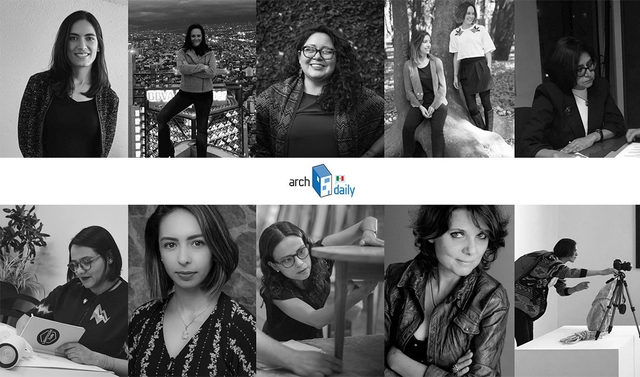
In this edition of International Women's Day, we have joined forces with the Colombian print publication de-Arq (Universidad de Los Andes) to explore the work of five contemporary Colombian architects. These practitioners represent distinct, complementary approaches within our discipline: design, research, teaching, and experimentation.
Today, we feature Ana Elvira Vélez, an architect from the Architectural Association School of Architecture, who has distinguished herself through her extensive career in social housing in Colombia. "I have designed and built more than 2,000 low-rise collective housing units in Medellín and the Antioquia region, both privately and publicly," Vélez says. "Each project defines a new neighborhood through a sequence of spaces that reinterpret our region's ways of living," she adds.
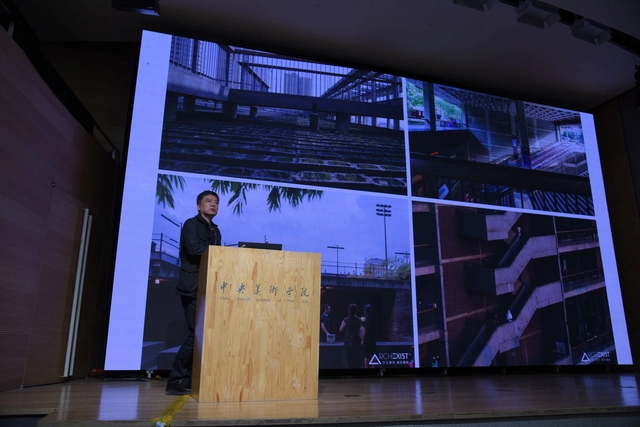
On November 2–3, the Central Academy of Fine Arts (CAFA) hosted a major academic forum titled "Challenge: Re-examining Architectural Thought, Education, and Practice." Numerous domestic and international figures and deans of renowned institutions participated in the discussions, including Arata Isozaki, Rem Koolhaas, and Wang Shu. On the afternoon of November 3, acclaimed Chinese architect Liu Jiakun, principal of Jiakun Architects, attended the forum as a guest speaker. With his characteristic warmth and humor, Liu spoke on the core principles of architectural practice, focusing on his West Village Basin project in Chengdu.
2018 was a busy year for ArchDaily Brasil. We had the opportunity to publish a wide range of content—articles, news, and projects—specially curated for you, our daily reader. Beyond our platform, our Instagram account served as a daily hub for sharing content through stories, IGTV, and, above all, the dozens of photographs shared each week.
With nearly 150,000 followers on our Brazilian profile (@archdailybr) who follow us daily and show their support for the best architectural photography of projects by Brazilian and Portuguese architects, we decided to put together a year-end roundup of the 15 most-liked photos. Check out the list below!
Vertebrado-Arquitectura Paisajista B + Godó Diseño (CAMMEC)- Museo de la Industria
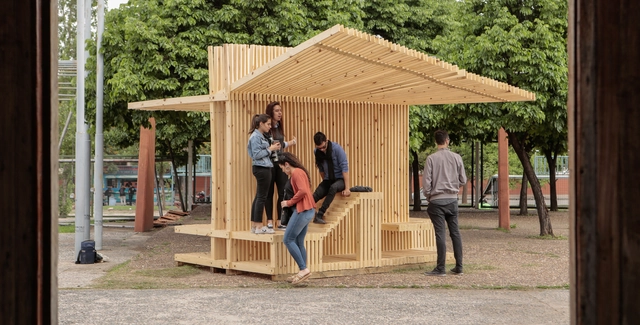
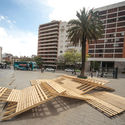
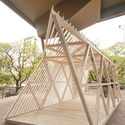
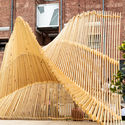
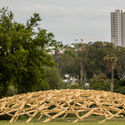
Jointly organized by the Cámara de la Madera, Mueble y Equipamiento de Córdoba (CAMMEC) and the Faculty of Architecture, Urbanism, and Design at the Universidad Nacional de Córdoba, the 'Toco Madera XL'workshop emerged within the framework of the Second Design Biennial in Córdoba, Argentina, with the primary goal of promoting the use of wood.
Nine teams made up of more than 200 students and 50 professors designed installations using this material exclusively, which were then placed in various public spaces across the city. The initiative sought to showcase and highlight the regional timber industry, positioning the city as a benchmark for local and international design.
This year's jury is composed of Spanish architect Ángela García de Paredes of Paredes Pedrosa (1999 AR Emerging Architecture Award winner), Indian architect Gurjit Singh Matharoo (2010 AR House Award winner), and Ronald Rietveld of RAAAF (2013 AR Emerging Architecture Award winner).
With the launch of ODA18, this year we celebrate the tenth anniversary of the Building of the Year Award (ODA), the premier award in the Spanish-speaking architectural world where the winners are chosen by popular vote. Starting today, Monday, March 12, and for two weeks, our readers will be responsible for determining which projects inspired us during 2017, faithfully representing the identity of our local contexts while shaping the way architecture is practiced around the world.
Over the next two weeks, the entire ArchDaily en Español network (Plataforma Arquitectura, ArchDaily México, ArchDaily Colombia, and ArchDaily Perú) will host this celebration of the best built architecture in Spain and Spanish-speaking Latin American countries.
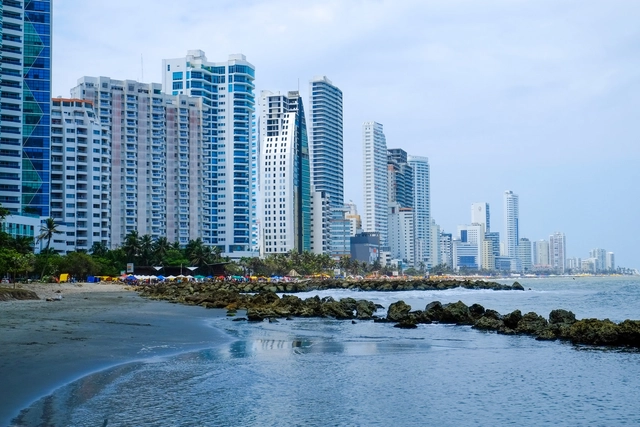
On April 27, 2017, the collapse of the Blas de Lezo II building brought to light numerous construction projects in Cartagena that violate building permits, hold forged licenses, or lack the necessary permits altogether. The tragedy claimed the lives of 21 workers and left more than 30 injured. Only then did an agreement between the Cartagena Mayor's Office and the Inspector General's Office (Procuraduría) establish a normalization plan to curb irregularities in the city's construction sector.
According to the diagnostic report, by late October 2017, 124 properties were identified as unlicensed or built using fraudulent permits. However, the controversy surrounding building permit irregularities in Cartagena resurfaced that same month when a complaint was filed against the ongoing construction of the Aquarela multi-family residential project.
https://www.archdaily.com/1114079/demolition-of-building-in-cartagena-demanded-for-seriously-violating-the-enjoyment-of-public-spaceJulián Jerez V.
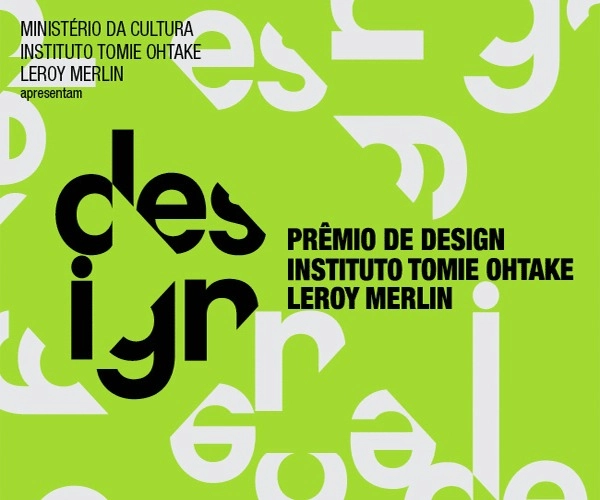
The new award, a partnership between the Tomie Ohtake Institute and Leroy Merlin, has extended its submission deadline. Until August 10, university students of any discipline can submit design projects related to products, furniture, fashion, interiors, landscaping, web, graphics, services, and other fields, under the theme SHARE.
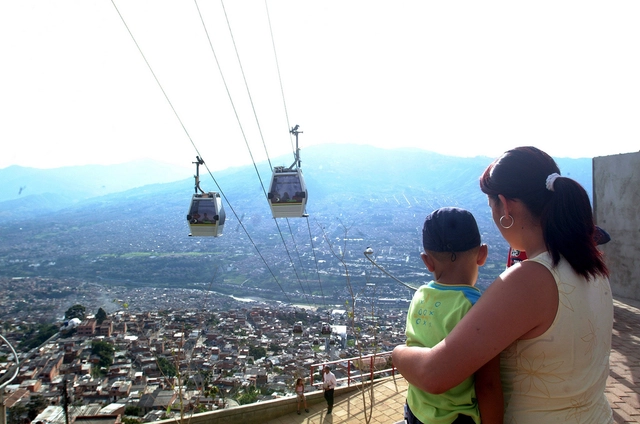
Some urban changes go deeper than the surface. These are transformative projects with the power to generate an impact far greater than aesthetic or infrastructural updates. They are initiatives that positively influence the economy, the environment, and the host community—in unexpected or even unprecedented ways.
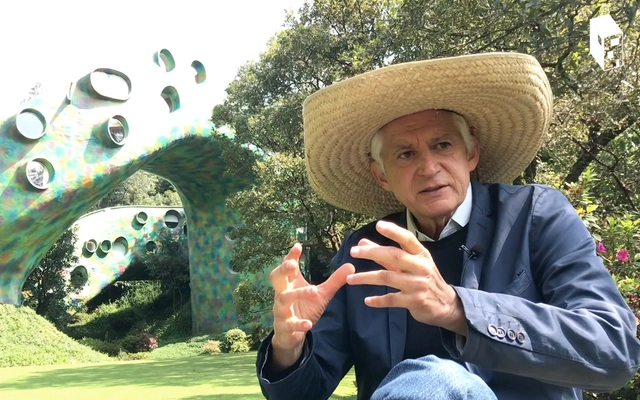
Javier Senosiain is a Mexican architect and graduate of the UNAM Faculty of Architecture whose work focuses on researching and developing organic architecture through a deep immersion in the geographical qualities of specific sites. As he notes, his work seeks to create far more human spaces by understanding how we move through and inhabit our environments. His practice draws on the research of internationally renowned architects such as Frank Lloyd Wright, Hundertwasser, and Gaudí; nevertheless, he prioritizes regional materials and solutions tailored to the specific needs of Mexico. His portfolio includes projects such as the Organic House, Nido de Quetzalcóatl, and the Amiba House in São Paulo, among others.
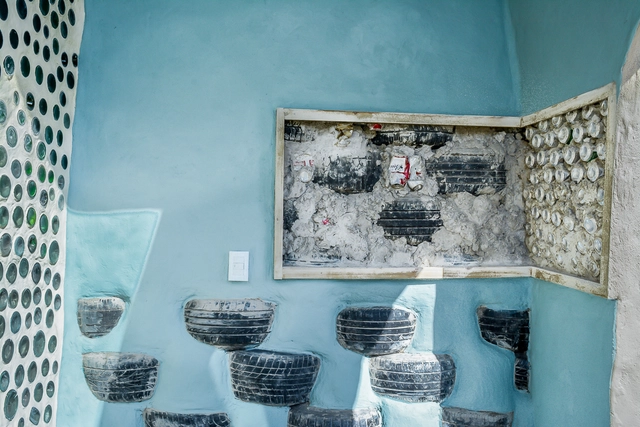
On April 19, Argentina's first sustainable public school was officially inaugurated in the town of Mar Chiquita.
The project was realized under the Una Escuela Sustentable program, an initiative by the Uruguayan organization Tagma that aims to build a symbolic regional network—with a sustainable public school in every Latin American country—in partnership with Garbage WarriorMichael Reynolds and his team at Earthship Biotecture.
Below, the organizers outline the seven core principles and the construction process of this project.
The film of the “Lake Pavilion” by depA, produced by Building Pictures, reveals the project's magical side, making viewers feel as though they have stepped into a landscape from the Brothers Grimm's fantastic stories.
However, the landscape is not German, but Portuguese. The project was built on the lake in Serralves Park and remained open between July 2017 and May 2018. It was commissioned for the exhibition “Live Uncertainty: An Exhibition from the 32nd São Paulo Biennial.”
On August 30, the press conference for the 2018 Beijing Design Week - 751 International Design Festival was held at the Geyuan space in Beijing's 751D·PARK. Wang Yudong, General Manager of Beijing Design Week, and Zhang Junyuan, General Manager of 751D·PARK Cultural Development Co., Ltd., delivered opening remarks. The event was attended by Per Boesgaard, Sector Counselor for Sustainable Urban Development at the Royal Danish Embassy, Bart Hofstede, Cultural Counselor of the Dutch Embassy, and over 40 Chinese and international media representatives.
Luken is a designer furniture brand –created and produced in Mexico by architect Paola Calzada Prats–, characterized by its use of recycled or eco-friendly materials. The collection consists of indoor and outdoor furniture that is easily assembled and resistant to sun, water, and heavy use.
Two different materials are used: recycled plastic for outdoor furniture and valchromat for indoor pieces, the latter being a 12 mm thick Portuguese wood fiber panel that, while not rainproof, is resistant to moderate humidity. No glue or nails are required for assembly. Meanwhile, the outdoor recycled plastic is made of 100% melted plastic with no added chemicals in the process. It performs exceptionally outdoors due to its resistance to direct sunlight, sea air, rain, and even heavy daily use by children.
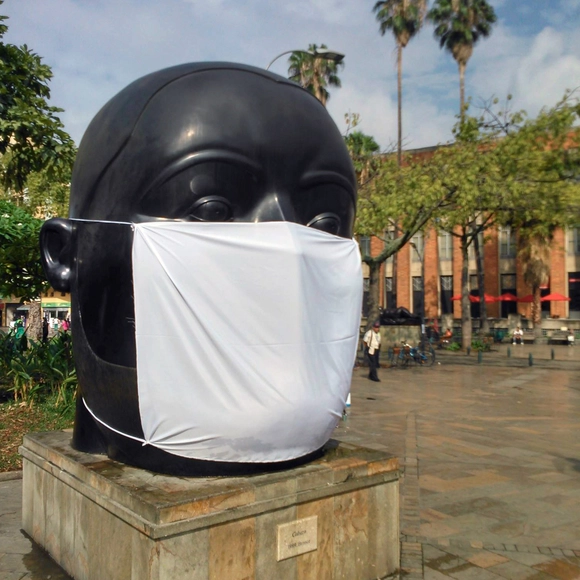
An initiative by Low Carbon City involved placing face masks on Botero's statues in Medellín, due to the current state of pollution. Image via La Ciudad Verde [Facebook]
On March 6, environmental pollution in Medellín, Colombia, triggered the highest alert levels. For three days, industrial production and driving restrictions (locally known as pico y placa) have been tightened. According to specialists consulted by the local newspaper El Tiempo, meteorological conditions are expected to make the situation “most critical” in two weeks.
In light of situations like this, air quality monitoring and control have taken on greater importance in Colombia. This is especially critical given that one in eight deaths worldwide is caused by air pollution, according to figures from the World Health Organization (WHO). In Colombia, 10,527 deaths and 67.8 million cases of related symptoms and illnesses occurred in 2015, as reported in 2017 by the National Planning Department following a study on the health costs of environmental degradation.
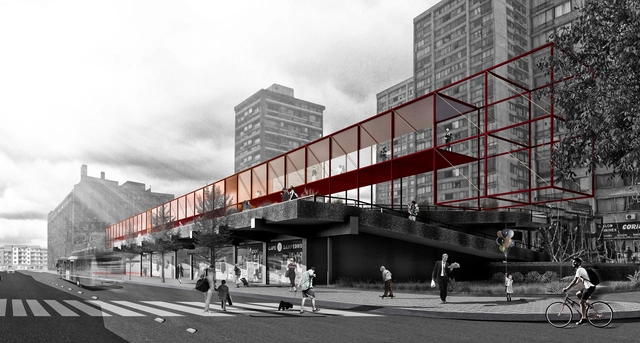
The Architecture and Landscape Ideas Competition for the Pasarelas San Borja and Surroundings announced its winning proposals during an event held on Thursday, September 6, at the National Headquarters of the Chilean Association of Architects (Colegio de Arquitectos de Chile). The main objective of the competition was to recognize, through a qualified and representative jury accredited by the sponsors, the best urban design ideas that help define intervention criteria and generate proposals for the San Borja neighborhood.
A total of 86 interdisciplinary teams registered for the competition, with 34 proposals successfully submitted and evaluated. The jury awarded first, second, and third place, along with three honorable mentions. Additionally, a Neighborhood Mention was awarded to two projects highlighted by the Neighborhood Advisory Commission during the evaluation process.
Afastado de Quem Falais a diptych short film about Adega Baía da Arruda, a project by the Portuguese-Swiss studio Barão-Hutter, built on Pico Island in 2017.
The measure is based on the principle that it makes no sense to continue applying the same rules to two such different types of vehicles.
Mayor Valérie Plante has promised improvements to the city's cycling infrastructure. Her ideas align closely with those of Councilor Marianne Giguère, who is responsible for sustainable development and transportation. Giguère believes that, under current laws, the message to cyclists is that they must be just as cautious as drivers, “even though you [the cyclist] pose much less of a danger.”
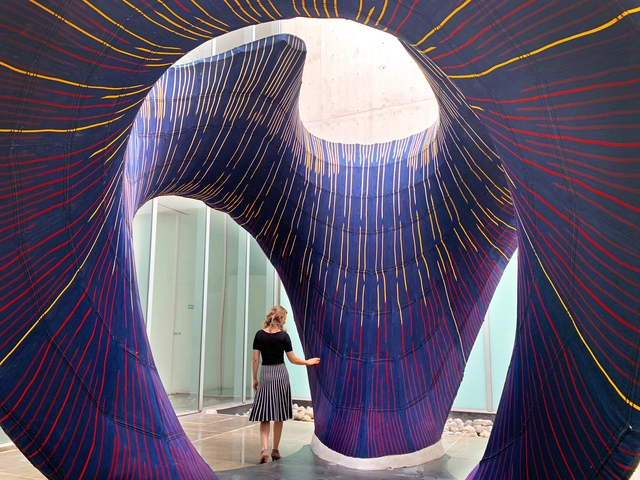
As part of Zaha Hadid Architects' first exhibition in Latin America, the Museo Universitario de Arte Contemporáneo (MUAC) in Mexico City is hosting an experimental structure that pays tribute to Mexican architect and engineer Félix Candela. "Design as Second Nature" showcases several projects by architect Zaha Hadid through models, audiovisual materials, paintings, and photographs, exploring her practice's creative process and highlighting the importance and complexity of design as the articulating axis of forms and construction processes in her work.
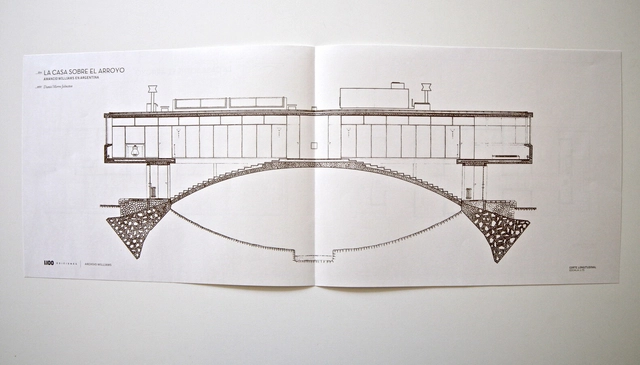
‘The smell of smoke mingled in the air, like poison,’ these captivating opening words already foreshadow a tragic end. The result of an unusual sequence of events, they demonstrate that the threads of fortunate—and unfortunate—circumstances are far more complex to weave and comprehend than a casual observer might think. The chain of stories sequenced by Daniel Merro Johnston in Casa sobre el Arroyo by Amancio Williams —published by Ediciones 1:100— does not merely outline a process and its parallel events; it highlights the singularity of the construction itself, serving as a testament to the complexity, the timelines, and the unforeseen circumstances involved in creating a ‘good’ work of architecture.
By definition, architecture is the art and technique of planning, designing, constructing, and modifying the human habitat. However, my own professional career has constantly forced me to confront the same question: if you are an architect and you don't design, are you still an architect?

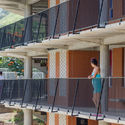
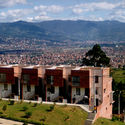
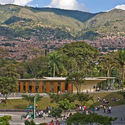
.jpg?1521121825 "Hispania Educational Park / Ana Elvira Vélez. Image © Isaac Ramírez")




.jpg?1521036848&format=webp&width=640&height=580)