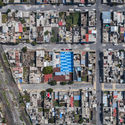
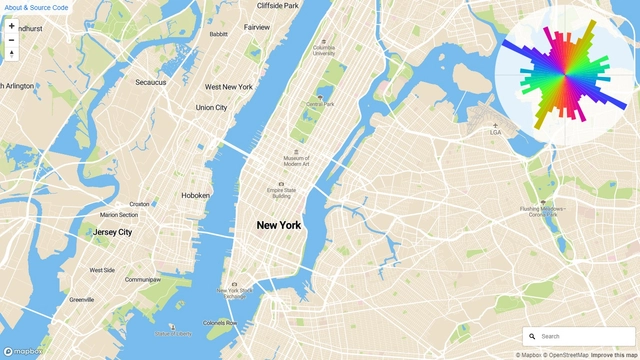
New York road expansion, according to Mourner. Image
Cities are shapeless, changing realities that expand unpredictably, driven by socio-urban and socio-economic trends. But can we anticipate these growth trends? Here is a tool that allows users to analyze road networks and calculate the percentage of streets oriented in any given direction relative to the north.
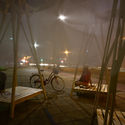
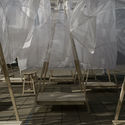
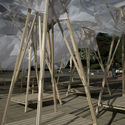
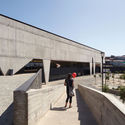
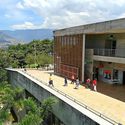
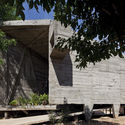
“Close your eyes and walk through the School of Architecture. Explore it, listen to the sounds, feel the textures, and try to mentally reconstruct the space.” I walked several yards blindfolded, and I still remember how my hearing sharpened, picking up the murmur of the people around me.
Although I knew the building's layout like my own home, I must confess those were perhaps the longest and most unsettling steps I have ever taken.
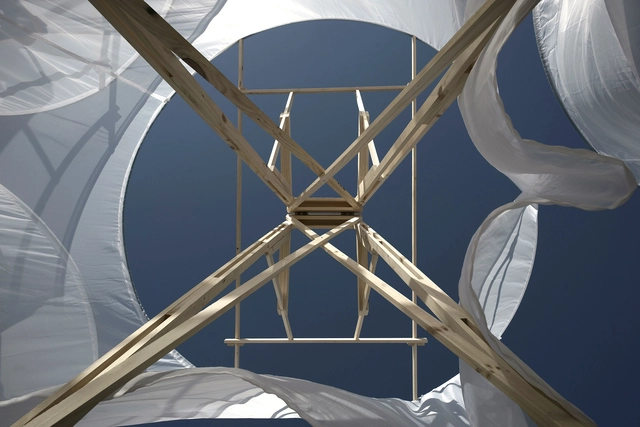
The Embraer Institute, in partnership with GRU Airport – São Paulo International Airport, unveiled the art installation “The First Breath” (“O primeiro sopro”) earlier this month. The piece celebrates both the 50th anniversary of the twin-engine Bandeirante aircraft's maiden flight and the creation of Embraer itself, which will mark five decades of existence in 2019.
Designed by Carmela Rocha and Marko Brajovic, who are responsible for the exhibition design of major showcases in Brazil and abroad, the piece will be on display until February in the Terminal 3 check-in area. Approximately 100,000 people pass through the space daily.
Arquitetura Soteropolitana is an open course of on-site architectural experiences led by the projects' designers, exploring the architectural production of the last 20 years in Salvador, Bahia. Organized by architectural photographer Manuel Sá, the course invites architects from the Bahian capital to discuss some of the city's most iconic and significant works built over the past two decades.
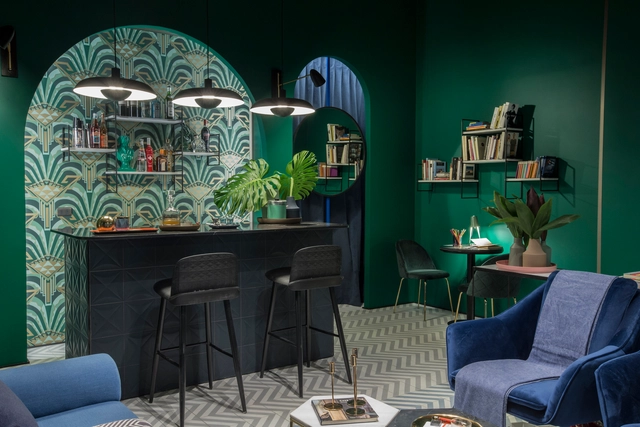
Bar en la biblioteca. Image Cortesía de Hugo Grisanti y Kana Kusen
In its third edition in Chile, Casa FOA invites architects and designers from the world of decoration and interior design to create innovative spaces for the home. On this occasion, we have compiled spaces with a common focus: the kitchen and the bar. Although both spaces are conceived for functional, everyday use, in these examples they combine different functions to bring people together.
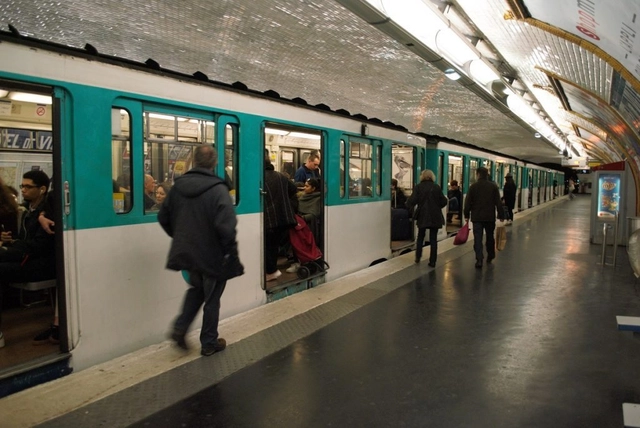
Paris is known for its efficient public transit network, which connects different modes—such as trains, subways, buses, and even bike-sharing programs—to facilitate urban mobility. Most of the population relies on public transit as their primary mode of transportation: nearly 60% of all trips in the city are made by train, subway, and bus. Yet, despite this diverse range of transit options, private vehicle use remains a persistent challenge, dominating the streets of the French capital.
Yesterday, March 26, the Chamber of Deputies debated a bill that would make the unlicensed practice of architecture, urban planning, agronomy, and engineering a crime against public health. Currently, individuals practicing as architects and urban planners without a license are penalized under Article 47 of the Criminal Misdemeanors Act, which carries a sentence of 15 days to 3 months of simple imprisonment, or a fine.
Bill 6699/2002, which was on the agenda for debate and voting, proposes a detention sentence of 6 months to 2 years for anyone practicing Architecture and Urban Planning without professional registration. If the unlicensed practice is carried out for profit, the convicted individual will also face a fine ranging from 2 to 20 times the monthly minimum wage. The Brazilian Penal Code already criminalizes the unlicensed practice of medicine, dentistry, and pharmacy.
Paparazza Moderna is a photographic project that emerged as part of the artistic work of the duo Lake Verea. Centered on the portraiture of modern architecture, the project began with Luis Barragán to showcase a perspective far removed from conventional architectural photography. If anything characterizes their approach to architecture, it is precisely this oblique gaze at space, which reveals the less obvious aspects of structures that have now become iconic.
https://www.archdaily.com/1114420/paparazza-moderna-by-lake-verea-explores-modern-architecture-through-photographyArchDaily Team
When Clorindo Testa was asked how he felt upon learning that one of his works, the Casa Di Tella, was going to be demolished, he replied: “I believe that buildings are not made to last. One can say that the Roman Colosseum will endure. They are not going to tear down Notre-Dame Cathedral, nor the Duomo in Milan. But when you design a project, you don't go around thinking it will be memorable and last forever. Works of this nature have owners, and owners change their minds. People and society also change: what was valid twenty years ago is no longer valid today. It is inevitable. Personally, it doesn't bother me in the least if they demolish a work of mine; I don't design things to last forever. You make things to function when they are commissioned, and they last as long as they need to. The Casa Di Tella was built for Di Tella, and Di Tella died. In a sense, it is no longer his house... It became part of an institute that bought it. Therefore, the functions it needs are different.” [1]
Testa's words reveal a remarkable humility that seems rare in the DNA of architects who yearn for the eternity of their work. Indeed, this desire for permanence was imposed on us almost as a mandate, a necessity. Palladio knew this well when referencing Vitruvius: “utility, perpetuity, and beauty.”
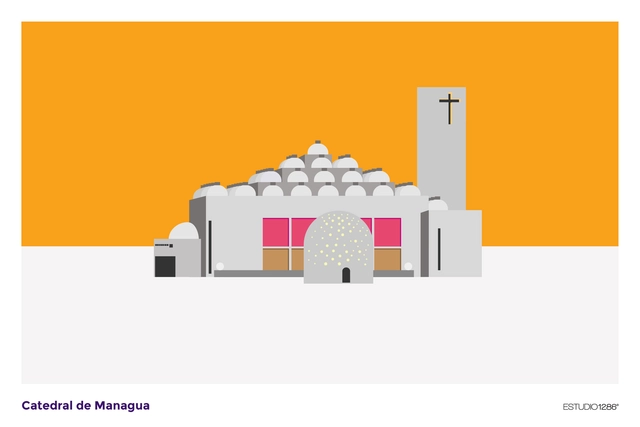
In September 2018, the Managua Cathedral in Nicaragua, designed by renowned Mexican architect Ricardo Legorreta, celebrated its 25th anniversary. To commemorate and promote this milestone, ESTUDIO1286 created a series of illustrations of the last cathedral of the 20th century.
Originally titled "FairBnB or how to prevent Amsterdam from becoming a hotel," in this article, City Makers co-founder and member of Amsterdam's Fair City platform, Sito Veracruz, delves into the urban dilemma facing the Dutch city due to tourist pressure driven by platforms like Airbnb and the subsequent rise in housing costs for actual residents.
Amsterdam is one of the few cities where renting apartments through Airbnb and similar platforms is legal and regulated. Here, it is possible to rent an entire apartment for up to 60 days a year without registration. It is also legal to rent out one or two rooms in a home with no time limit, which only requires meeting certain conditions and notifying City Hall.
Amsterdam ranks in the top ten cities with the most listings on Airbnb, with 17,000 apartments, and can boast of being one of the few cities in the world that derives a direct financial return from these rentals. The agreement signed between Amsterdam and Airbnb in 2014 obliges the company to collect a tourist tax (5% of the total booking amount), which generated 5.5 million euros in revenue for City Hall last year.
The initiative is part of the citizen forum held in January 2018 in the city of Chillán, titled “Modern Landscape, Territory in Transformation,” organized by CCE Santiago, CECAL of the Universidad de Concepción (Chillán campus), and the Heritage Unit of the Municipality of Chillán (UPA).
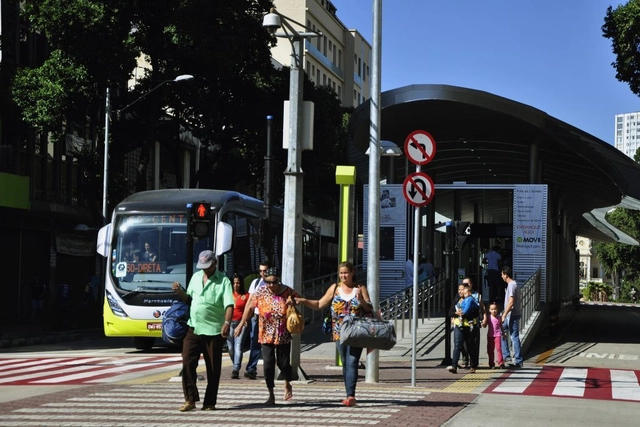
Belo Horizonte. Foto: Mariana Gil/WRI Brasil. Image Cortesia de TheCityFix Brasil
Cities are critical to the functioning of many countries. With the rapid population growth of recent decades, urban centers have had to face a series of challenges, a primary one being mobility planning. In Brazil, with the enactment of the National Urban Mobility Policy (PNMU) in 2012, Brazilian cities received new guidelines to plan and guide policy actions toward establishing more sustainable mobility. To this end, the PNMU requires the development of Urban Mobility Plans for cities with over 20,000 inhabitants as a prerequisite for receiving federal budget allocations. Ultimately, this requirement aims to transform cities and the way Brazilians commute daily.
Archivo familia Parada González. Image Cortesía de Leonardo Suárez
Various scholars link the sense of belonging to a population's social and cultural appropriation of territory. Along these lines, authors such as Spanish geographer Joan Nogué connect human societies to the places they inhabit—spaces with which they identify and bond, granting them significance as vital shapers and consolidators of identity.
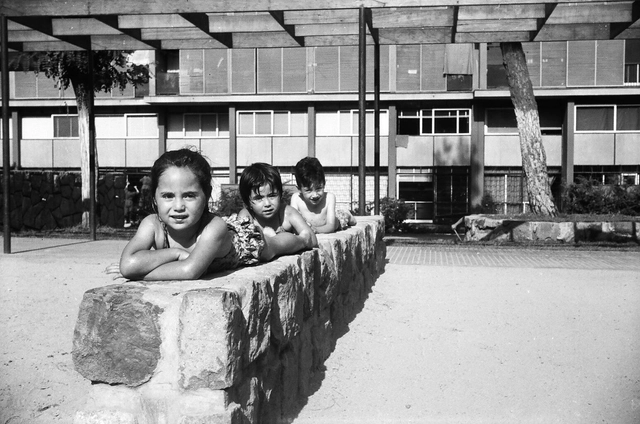
In this regard, the Matta Viel Housing Complex in Santiago, designed by the architecture firm Bresciani Valdés Castillo Huidobro, is significant for several reasons. It stands out as a remarkable example of appropriation—a model of public social housing in Chile that not only seamlessly integrates into the urban fabric but has also been fully embraced and brought to life by its residents.
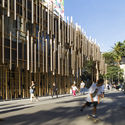
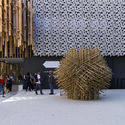
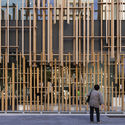
The architects and photographers of studio FLAGRANTE have shared with ArchDaily a series of photographs capturing the recently completed Japan House São Paulo, designed by Kengo Kuma in collaboration with local office FGMF.
Part of a global initiative by the Japanese government to “create a vision of contemporary Japan,” Japan House opened in May 2018, combining art, technology, and business to offer an escape into modern-day Japan.
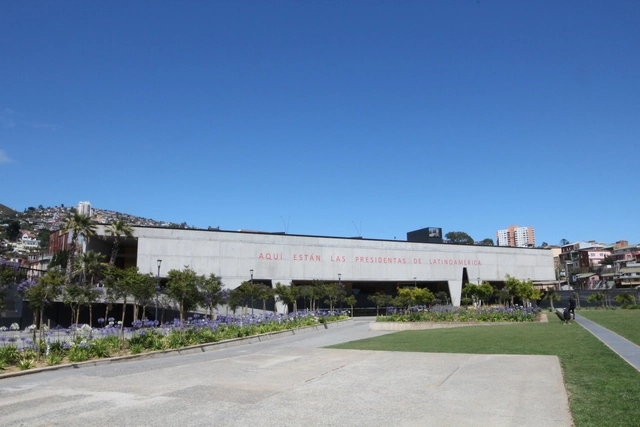
At a ceremony held on Monday, September 3, the Valparaíso Cultural Park, located in the Chilean city of the same name, was named the winner of the 3rd Rogelio Salmona Award. Organized by the Rogelio Salmona Foundation, the Latin American competition recognizes works whose architecture "clearly generates significant, open public spaces that are embraced and enjoyed by their community within a context of local and global communities."
Designed by the firm HLPS (Martín Labbé, Carolina Portugueis, Osvaldo Spichiger, and Jonathan Holmes), the Valparaíso Cultural Park is the result of rehabilitating the former Valparaíso prison, constructing a new cultural center, and converting the surrounding grounds into a public park.
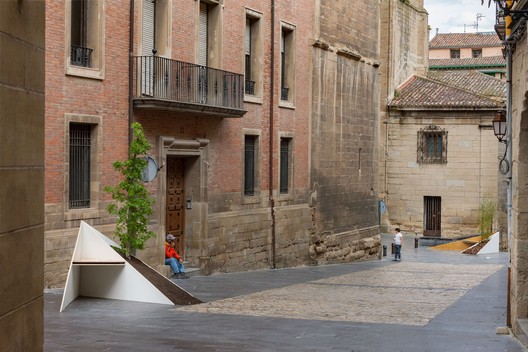
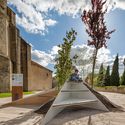
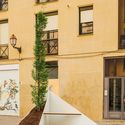
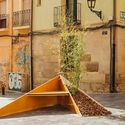
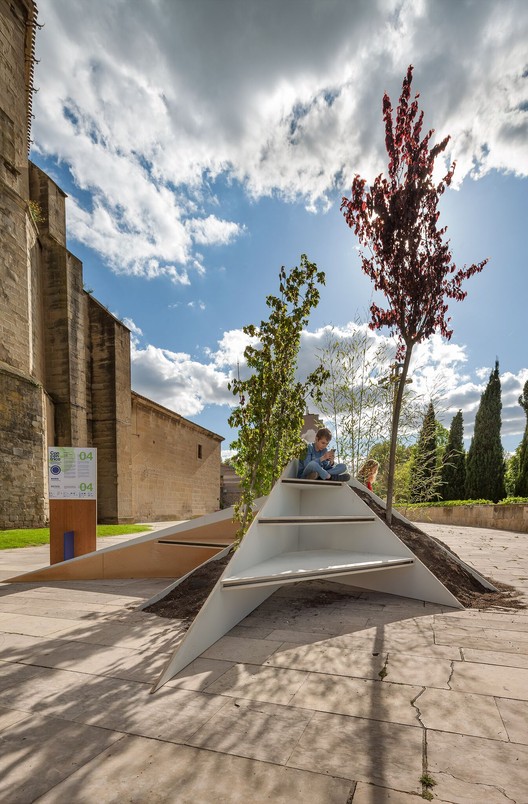
Conéntrico is an International Architecture and Design Festival that proposes reflecting on the city of Logroño (Spain) by revitalizing underutilized public spaces. Its latest edition, Conéntrico 04, takes place between April 27 and May 1, 2018, in Logroño's Historic Center. The festival invites visitors to explore the city through installations, exhibitions, meetings, activities, and performances that connect venues, squares, streets, courtyards, and hidden spaces that typically go unnoticed in daily life. Blurarquitectura intervenes in the Santiago Parish with a bench and a tree, offering a new perspective on the space.
The “Concepción Modern Architecture Guide-Map”—created by Dr. Verónica Esparza, PhD in Theory and History of Architecture from Universidad San Sebastián, alongside Universidad del Bío-Bío architects Patricio Escobar (graphic designer of the Guide-Map) and Cristóbal Caro (photographer)—was made possible with the support of the Municipality of Concepción through the 2017 Municipal Cultural Initiatives Fund (FAICC). It features a selection of 30 works, aiming to recognize and highlight iconic examples of local Modern Architecture. The initiative raises awareness about the importance of preserving this living heritage, which is often undervalued due to its relative recency. This Guide-Map is designed as an educational tool to foster recognition of a heritage deeply embedded in the daily lives of the city's residents.
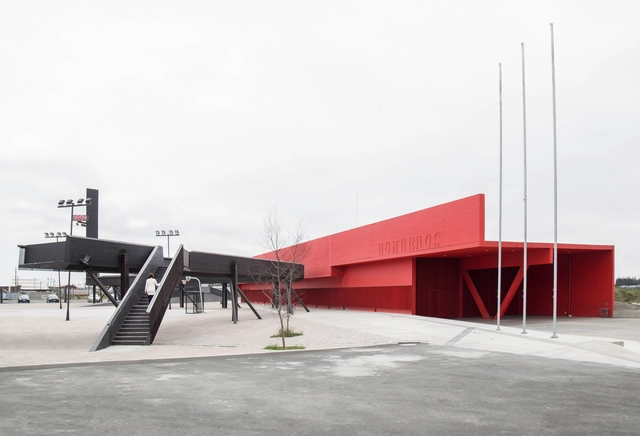
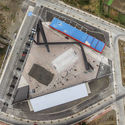
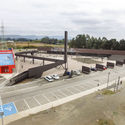
The Civic Center in Boca Sur, designed by Smiljan Radic, functions as a framework for public programs. It houses the Fourth Fire Station of San Pedro de la Paz, multipurpose rooms, a strip of small commercial shops, a library, a footbridge that serves as bleachers over the sports court, an alarm tower with a clock, sand pits, and trees, among other elements.
Framed within the *‘Quiero Mi Barrio’* (2008) community development program, the project sought to revitalize degraded and highly vulnerable areas, addressing the relationship between the immediate context and the activities occurring within it. To this end, the design process was informed by working sessions and an ongoing dialogue with the community.
The Instituto Superior de Arquitectura y Diseño (ISAD) in Chihuahua, Mexico, has announced the appointment of Julio Gaeta as its new Director, effective November 1 of this year.
Videos
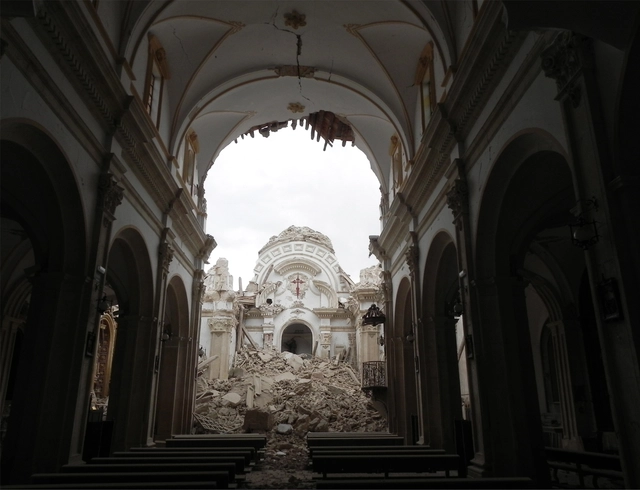
Iglesia de Santiago en Lorca, Murcia. Image Cortesía de Premio Rafael Manzano
Spanish architect Juan de Dios de la Hoz and his work reconstructing the historical heritage of Lorca (Murcia, Spain) following the May 2011 earthquake have been awarded the Rafael Manzano International Prize for New Traditional Architecture, endowed with €50,000.
The jury, comprising prestigious national and international architects, praised his mastery of traditional and historical techniques shown in many of his historic heritage interventions, particularly on those monuments requiring extensive reconstruction work.
https://www.archdaily.com/1114380/juan-de-dios-de-la-hoz-2018-rafael-manzano-prize-for-his-reconstruction-work-following-the-lorca-earthquakeJavier García Librero
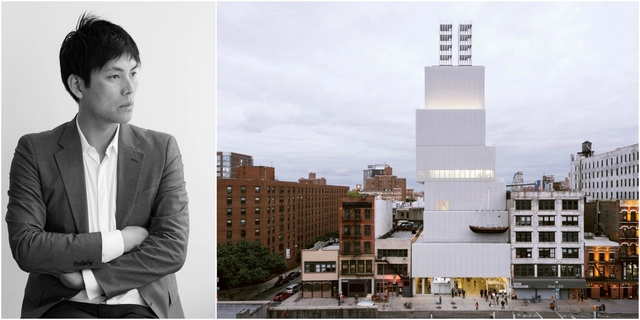
Cover OMA / Shohei Shigematsu and Rem Koolhaas will design the expansion of the New Museum in New York
The 2018 International Housing Finance Summit, organized by INFONAVIT, brought together experts from various disciplines to discuss the future of cities and the lessons learned to date. Held on May 2 and 3 at the Camino Real in Polanco, the event hosted prominent figures who discussed urban transformation processes to evaluate urban models that could guide us toward a comprehensive master plan.
The event featured Shohei Shigematsu, a partner at OMA, a firm whose global projects have established it as one of the world's leading architecture practices. OMA operates within the traditional boundaries of architecture and urbanism and works in parallel with AMO, a research and design studio that applies architectural thinking to other domains. The firm is led by nine partners—Rem Koolhaas, Ellen van Loon, Reinier de Graaf, Shohei Shigematsu, Iyad Alsaka, David Gianotten, Chris van Duijn, Ippolito Pestellini Laparelli, and Jason Long—and has offices in Rotterdam, New York, Beijing, Hong Kong, Doha, Dubai, and Perth.
Having recently turned 90, Paulo Mendes da Rocha remains active in the practice of architecture, and his ideas are as sharp as ever.
In an interview with El País, conducted by journalist Tom C. Avedaño, the architect revisits some of his works, reflects on the purpose of architecture, and speaks about "the day everything made sense."
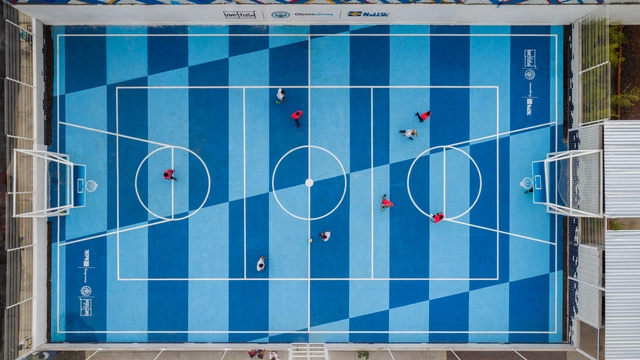
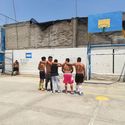
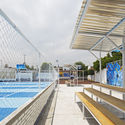
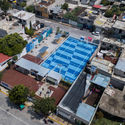
The “LA DOCE” court is a collaborative project, part of a network and a proposal for change born from the need to develop quality public spaces in marginalized areas of various cities worldwide. Soccer is one of the most beloved, widely played, and perhaps most followed sports globally. It is a way to connect with ourselves and others.
Participating, observing, and coming together are activities that allow us to look beyond the obvious and everything surrounding the sport; soccer thus emerges as a social construct, a pastime that fosters connection through play, an event that does not distinguish between social classes and grants those who take part in the moment the opportunity to unite as a team, to be part of something larger than themselves.

























.jpg?1542035926&format=webp&width=640&height=580)