Moving forward also means looking back. Fulfilling the mission of creating safe and inclusive bathrooms that meet the needs of a diverse range of people of different ages, genders, religions, and abilities requires a broad perspective. To understand how we arrived at the current "stalemate" regarding the debate over the design of these spaces, we must consider that bathrooms were and are designed within a particular social and historical context.
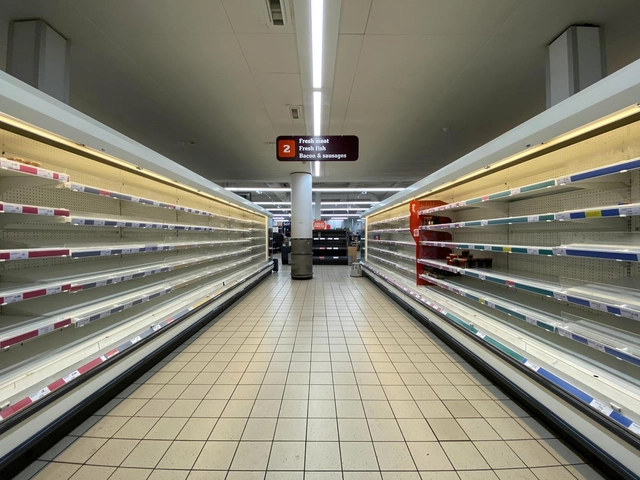
Fear of the economic recession caused by the COVID-19 pandemic left supermarket shelves empty worldwide. Photo by John Camero, via Unsplash
Cities offer opportunity, diversity, and economies of scale, which ultimately attract more residents and retroactively drive their growth. Despite decades of predictions foretelling the demise of cities due to the telephone, the internet, videoconferencing, or virtual reality, cities and face-to-face interactions continue to grow. Large urban areas continue to draw more and more people. Driven by more than just tourism, the travel industry has also grown year after year, demonstrating how much people want to be physically present where things are happening—whether for meetings, events, concerts, or simply to gather with friends and family.
The state of Querétaro is located in the north-central region of Mexico, bordered by the states of San Luis Potosí, Guanajuato, Hidalgo, Estado de México, and Michoacán. Covering an area of 11,684 km², it is one of the most expansive regions in the country. Its capital is Santiago de Querétaro, which is also the state's most populous city. Among its most popular Pueblos Mágicos (Magical Towns) are Bernal, Tequisquiapan, Jalpan de Serra, Cadereyta de Montes, San Joaquín, and Amealco de Bonfil. Additionally, the state boasts four UNESCO World Heritage sites and one entry on the Intangible Cultural Heritage list: the Historic Monuments Zone of Santiago de Querétaro, the Franciscan Missions of the Sierra Gorda, the Otomí Chapels, and the living traditions of the Otomí-Chichimeca culture, respectively.
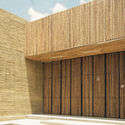
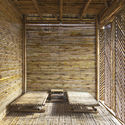
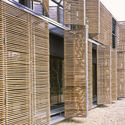
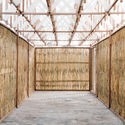
Historically, bamboo has been used as a raw material in low-resource traditional construction, serving as a substitute for other woods to build structures, enclosures, and even furniture. Today, owing to its numerous advantages related to durability, strength, versatility, and low environmental impact, it has earned the moniker "vegetable steel" and gained a privileged position within the construction industry. The ongoing search for new materials for sustainable development has generated new construction fusions that bring contemporary materials and techniques into play with traditional elements, merging and enhancing the qualities of local materials in each region.
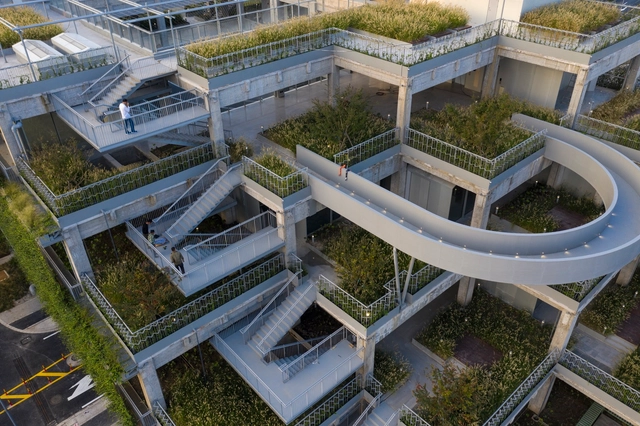
Eighteen Silos → Expert Apartments. Image Courtesy of HPP
Along with Zhongguancun Science City and Future Science City, Huairou Science City has been designated by the State Council as one of the capital's three major science cities dedicated to establishing a national center for scientific and technological innovation. With the official establishment of the Beijing Yanqi Lake Institute for Applied Mathematics in Huairou Science City, the area has become a focal point for domestic and international architectural firms. In the international competition for the conceptual planning and design of the Beijing BBMG Xingfa Cement Factory transformation project (which includes the Institute for Applied Mathematics), HPP, in collaboration with the Beijing Institute of Architectural Design (BIAD), has emerged as the winning team.
The project covers a total site area of 61.35 hectares, with a total above-ground gross floor area of 182,200 square meters. The landscape surrounding the factory has already undergone initial transformation: the adjacent quarry, retaining its excavated rock formations, has been converted into a mine park; leftover tailings from the factory's closure have been transformed into landscape walls; and a new viewing pavilion built of weathering steel has been added, infusing the mountainous landscape with a strong industrial character. Within the factory grounds, 54 structures have been designated for preservation—including cement silos, elevated pipe galleries, and red-brick workshops—totaling approximately 70,000 square meters.
https://www.archdaily.com/1123395/hpp-plus-biad-reveal-design-to-transform-huairou-cement-factory-into-the-beijing-yanqi-lake-institute-of-applied-mathematics韩爽 - HAN Shuang
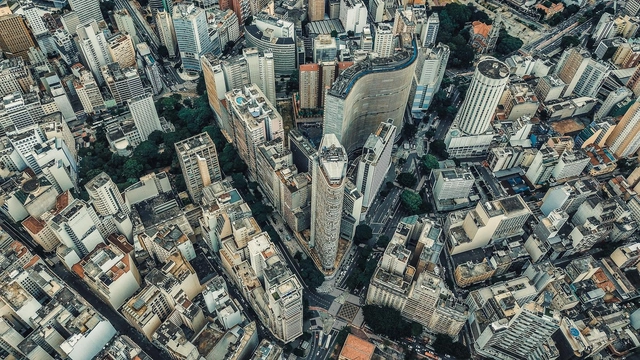
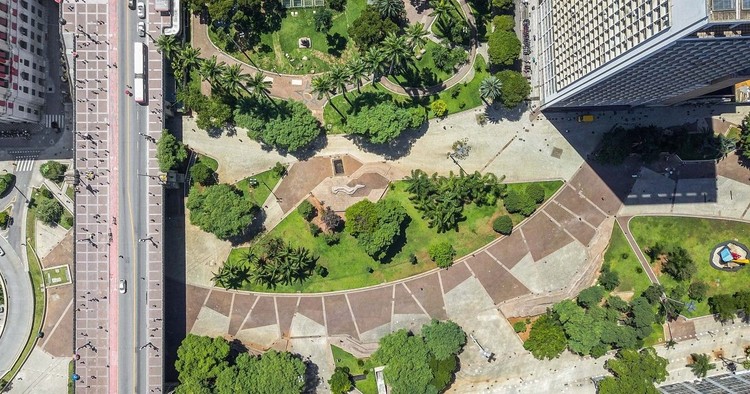
Aerial view of downtown São Paulo. Photo by Sergio Souza, via Unsplash
Why stay in the city?
For many urban dwellers, the answer is obvious: “It’s hard to find a job in a smaller town. Plus, there’s not even a movie theater, restaurant options are limited, and the schools aren’t that great.”
On September 28, 2019, the Shanghai Urban Space Art Season (SUSAS) opened along the 5.5-kilometer southern section of the Yangpu Waterfront and the former site of the Shanghai Shipyard (including the shipyards and the Wool and Jute Warehouse). Under the theme of "Encounter," this year's art season unfolded across two main sections: "Space Art" and "Planning and Architecture." In this interview, Zhang Ming, Chief Architect of SUSAS and Principal Architect of Original Design Studio, elaborates on the design of the shipyards and the 5.5-kilometer waterfront public space while sharing his broader reflections on the overall design of Shanghai's waterfront.
https://www.archdaily.com/1123391/zhang-ming-architects-move-everyone-with-their-professionalism-redefining-urban-space韩爽 - HAN Shuang
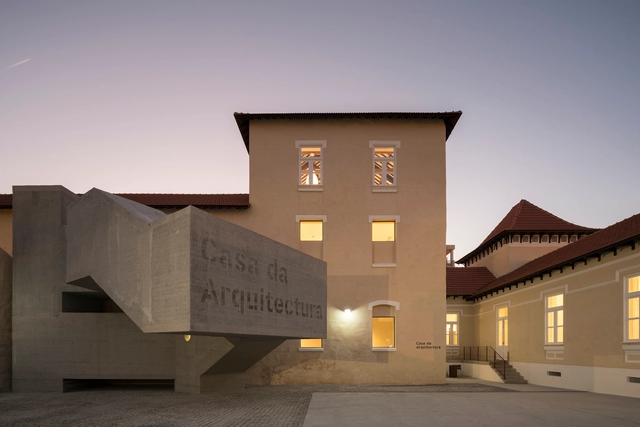
Marta Moreira, founding partner of MMBB Arquitetos since 1990 and collaborator of architect Paulo Mendes da Rocha since 1995, is the fourth interviewee of Studio Casa, an interview series produced by Casa da Arquitectura - Portuguese Center for Architecture.
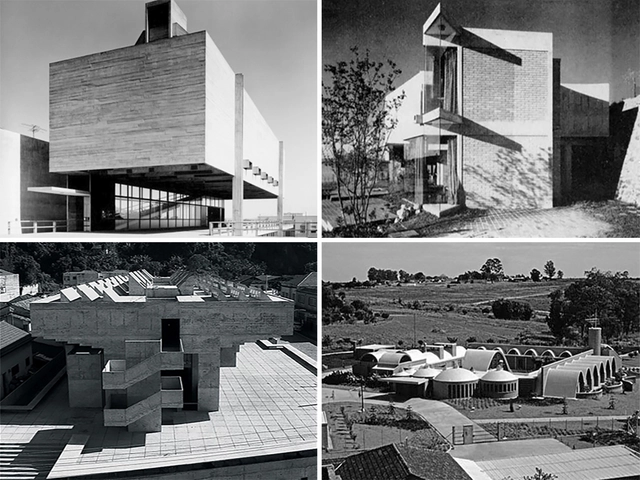
Top left, São Bonifácio Church / Hans Bross. Photo by Cristiano Mascaro. Top right, House in Jardim Guedala / Joaquim Guedes. Bottom left, Consórcio Technical School / Decio Tozzi and Luiz Carlos Ramos. Bottom right, House for Claretian Priests / Affonso Risi Júnior and José Mario Nogueira. Image via IABsp
The Institute of Architects of Brazil, São Paulo Department, has made the complete archive of the IABsp Awards, one of the most prestigious Brazilian architecture accolades, available for online consultation.
Since its first edition in 1967, the IABsp Awards have established themselves as an important platform for promoting architectural criticism and dissemination on a national scale. The award aims to recognize benchmark architectural projects and built works, identifying the advancements and challenges faced in contemporary production, as well as ingenious and significant proposals—especially those contributing to the development of technique, knowledge, and the built environment in dialogue with nature, society, economics, and culture throughout the country.
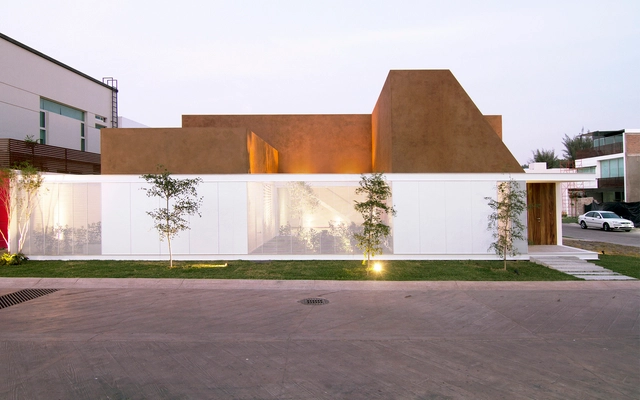
The Guadalajara region in Mexico is home to one of the country's most prominent cities, ranking as one of the most populous urban areas alongside Mexico City, Tijuana, the State of Mexico, and Monterrey. However, the exponential growth experienced by cities in the 20th century resulted in an urban sprawl that expanded far beyond traditional geographic boundaries. The capital of the state of Jalisco was no exception, ultimately leading to the definition of the Guadalajara Metropolitan Area, which integrates the key municipalities surrounding the capital.
Fachada do pavilhão de Yolana Lemos. Image Cortesia de Cabana de Arte
Still largely overlooked by the international media, Angola's contemporary architectural production faces, much like many of its African neighbors, social and economic realities that do not favor its dissemination. When the typical challenges of architecture are compounded by others stemming from an intense process of neocolonialism, taking good ideas off the drawing board and actually building them becomes a formidable task. Stretching the relationship between the physical and the digital, the Angolan collective Banga turns to virtual space to bring to life projects that blend architecture, sensory experiences, and art.
CCPM is an architecture studio founded in 2017 in Buenos Aires. With a body of work initially focused on small- and medium-scale projects—particularly renovations and additions to existing PHs—they have developed their own reflections on domestic living and urban densification, exploring various technological and material inquiries. In parallel, they have also undertaken socio-territorial research centered on water and technology, conceiving urbanity from a hybrid perspective that blurs the boundary between nature and the city.
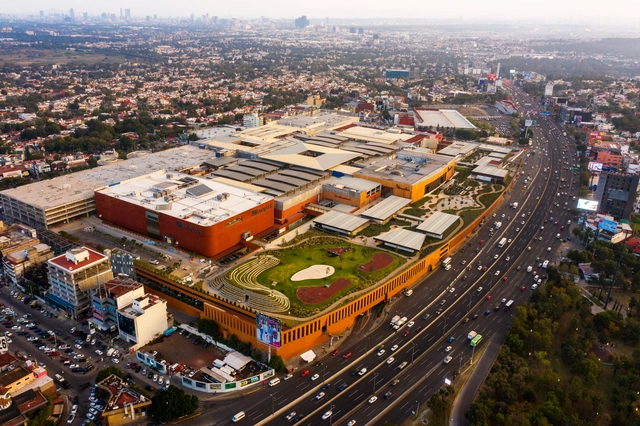
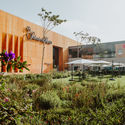
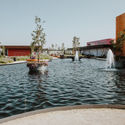
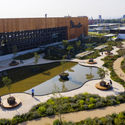
On Thursday, November 5, Mexico City saw the inauguration of a new section of Plaza Satélite—a shopping center originally opened in 1971, where renovation and expansion work began two years ago to adapt to new ways of using and experiencing space. Designed by the Mexican firm Sordo Madaleno Arquitectos, the Parque Plaza Satélite project continues this expansion, establishing a new vision for retail where commerce serves as a vehicle to create green, open-air spaces for the community.
https://www.archdaily.com/1123387/plaza-satelite-park-opens-in-mexico-city-by-sordo-madaleno-arquitectosArchDaily Team
The archive of more than 40 years of professional activity by architect João Luís Carrilho da Graça will be integrated into Casa da Arquitectura, reinforcing the national scope of the institution's collection. The signing ceremony will take place this Saturday, February 15, at 3:30 p.m., at the CA Archive premises.
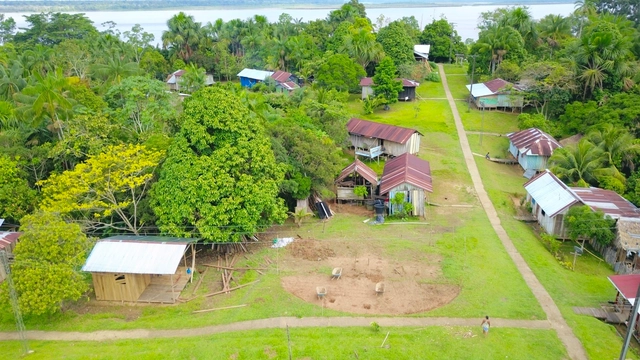
Colombia has an immense territory with some of the greatest biodiversity in the world thanks to its privileged geography, and human presence spans the majority of this territory, regardless of how far it is from urban centers. Below, Sebastian Contreras of Estación Espacial Arquitectos presents the experience and both the human and architectural challenges of building a Maloca with and for the Ticuna community deep in the Colombian Amazon.
Spring’s fallen blossoms, summer’s thunderstorms, autumn’s mountain mists, and winter’s drifting snow. Once again, our annual **yearbook** arrives as promised, and we thank you for accompanying us through another year. Time flew by: only yesterday we were talking about buildings on the verge of completion, yet construction has been delayed until next year—as if this year was stolen from us. Fortunately, we have left behind space. While we may forget the viral gossip of the internet, architecture stands as a constant reminder of the stories of our era.
On July 31, during the 103rd Ordinary Plenary Session, the CAU/BR Temporary Commission on Gender Equity released the 1st "Gender in Architecture and Urbanism" Diagnosis. Conducted online from July 2019 to February 2020, the survey was answered by 987 professionals (767 women and 208 men), with a margin of error of plus or minus 3.11%.
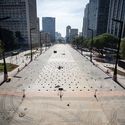
Image of the 1981 winning design for Vale do Anhangabaú. Photo: Bruno Niz, 2019
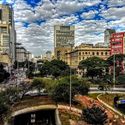
The place where we are born, where we live, and our urban reference points are part of history and shape our identity. Can we decipher what these spaces tell us? Can we express our perception of them? Vale do Anhangabaú signals an essential part of São Paulo's development and is woven into the imaginary of those who have built memories there. This article is an exercise in traversing different themes to instigate multiple possibilities—collective and individual, real and utopian—of experiencing this space.
Weeks after Casa da Arquitectura, the Portuguese center for architectural documentation, archives, and exhibitions, announced that it had received the complete collection of projects by Paulo Mendes da Rocha, we spoke with Nuno Sampaio, the institution's executive director, about the processes involved in the donation, the Portuguese team's work in cataloging and making the material available online, and the next steps in safeguarding what is one of the most valuable archives of Brazilian architecture.
As part of the feminist demonstrations that took place last weekend in Mexico, a group of Mexican women architects organized to join the march held on Sunday, March 8, in various parts of the country. The march aimed to 'take back the city' to demand direct state action to reverse the wave of violence and historical bias against women in Mexico, where numbers have reached 10 femicides a day.
https://www.archdaily.com/1123477/building-equity-mexican-women-architects-demonstrate-for-a-world-without-violenceArchDaily Team
The following article is the result of a thesis research project by Colombian architect Sebastián Rojas (Pontificia Universidad Javeriana), which explores the materialities and vernacular construction techniques across 23 prototypes from regions such as the Coffee Axis, the Colombian Amazon, the Cundiboyacense Highlands, and the North Coast.
__Wikimedia__Bajo_dominio_público.jpg?1594117881&format=webp&width=640&height=580)
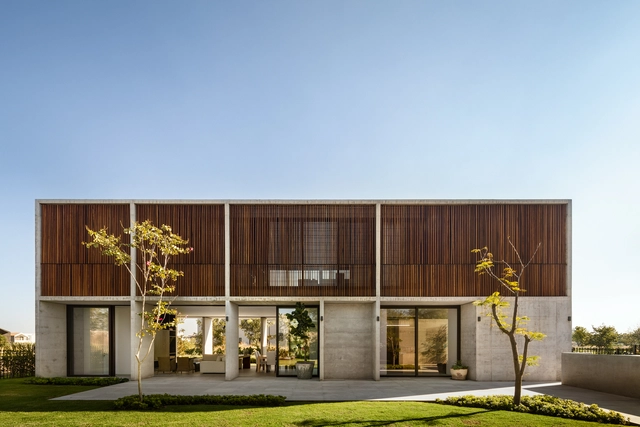
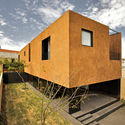
.jpg?1602009335 "Rivera House / Taller de Arquitectura Miguel Montor. Image © Onnis Luque")















.jpg?1601661919 "Espaço dedicado às maquetes. Image Cortesia de Casa da Arquitectura")
.jpg?1601662010 "Acervo de Paulo Mendes da Rocha chegando à Casa da Arquitectura. Image Cortesia de Casa da Arquitectura")
.jpg?1601661959 "Maquete em madeira de Paulo Mendes da Rocha. Image Cortesia de Casa da Arquitectura")
.jpg?1601661991 "Maquete em metal de Paulo Mendes da Rocha. Image Cortesia de Casa da Arquitectura")