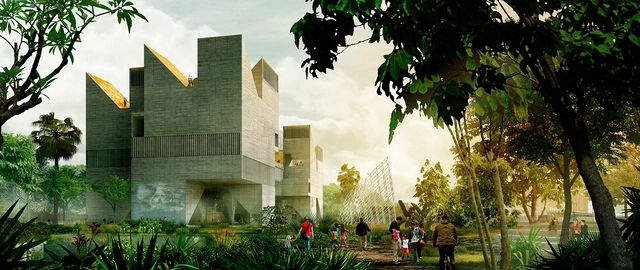
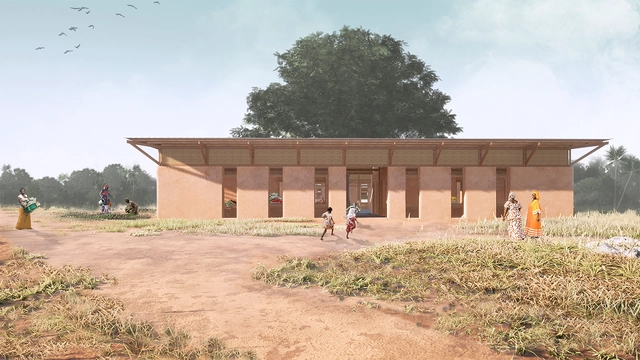
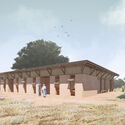
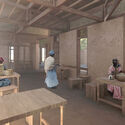
Promoting the involvement and empowerment of the women's community in Senegal was the theme of the Women's House in Africa design competition, organized by Kaira Looro International, a non-profit organization that hosts competitions open to students and young architects with the aim of promoting humanitarian projects in developing countries and highlighting new architectural talent.
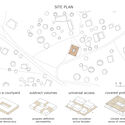
The competition, which challenged participants to design a "women's house" through symbolic, ecological architecture inspired by local traditions, awarded a special mention to the Brazilian team of students Clara Teodoro, Daniel Teixeira, Maria Isabela Neves, and Mateus Silva from the Federal University of Pernambuco. Read more about the selected proposal, accompanied by its project description, below.
As part of a new initiative to merge architecture with cinematic storytelling, the series Arquis recently premiered on HBO Max. The show offers an intimate portrait of the lives and work of six of the most renowned architects in Mexico and Latin America, including Alejandro Aravena, Mauricio Rocha, Alberto Kalach, Simón Vélez, Carla Juaçaba, and Isay Weinfeld.
"Domingos Libro" is presented by Carmelo from Enorme Studio, where every two weeks, he delves into forgotten architectural publications, books, and architecture magazines from the 60s, 70s, and 80s that have the most interesting stories behind them.
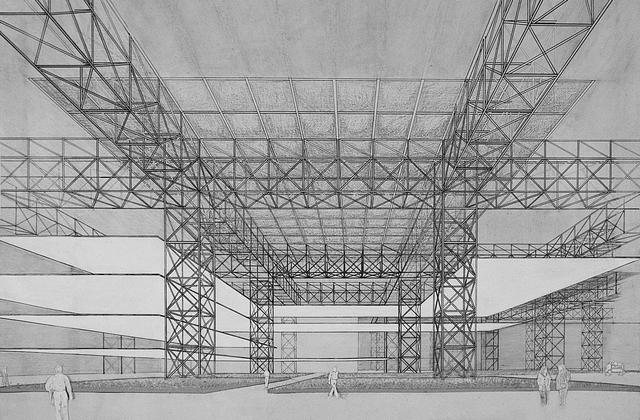
In this new episode, he discusses the catalog of the exhibition "Houses For Sale," published by Rizzoli and B.J. Archer in 1980. Through the Leo Castelli Gallery, one could purchase the designs for eight houses by renowned architects (Emilio Ambasz, Peter Eisenman, Vittorio Gregotti, Arata Isozaki, Charles Moore, Cesar Pelli, Cedric Price, and Oswald M. Ungers), upending the traditional "client commissions architect for their dream home" relationship.
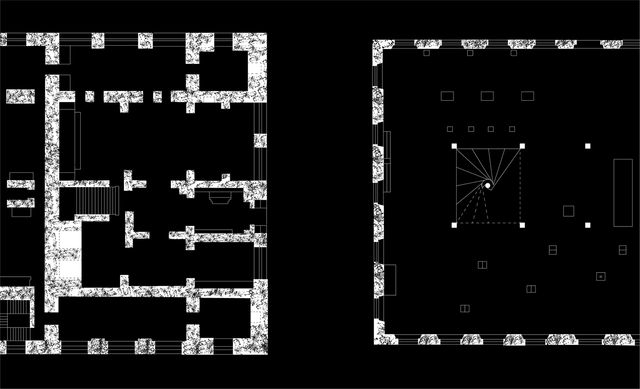
Detail of the ground floor plan of the Anahuacalli Museum (left) and detail of the ground floor plan of Solar do Unhão (right). Illustration by Beatriz Sallowicz and Teodoro Saldanha
In 1963, the exhibition “Nordeste” inaugurated the Museum of Popular Art of Unhão in Salvador. Despite the promising backdrop for Lina Bo Bardi to launch the museum project within the restored premises of Solar do Unhão, its activities were cut short after only a year. This temporary and sole exhibition open to the public relied on loans from various private collections and museum archives to present a vast assembly of diverse objects, inviting the general public to understand the value of popular craftsmanship. The exhibition, which the architect would have preferred to title ‘Civilização Nordeste’ [Northeast Civilization], exposed class attitudes that had little to do with an understanding of what she termed the "progressive attitude of popular culture linked to real problems." (BO BARDI, 1963)
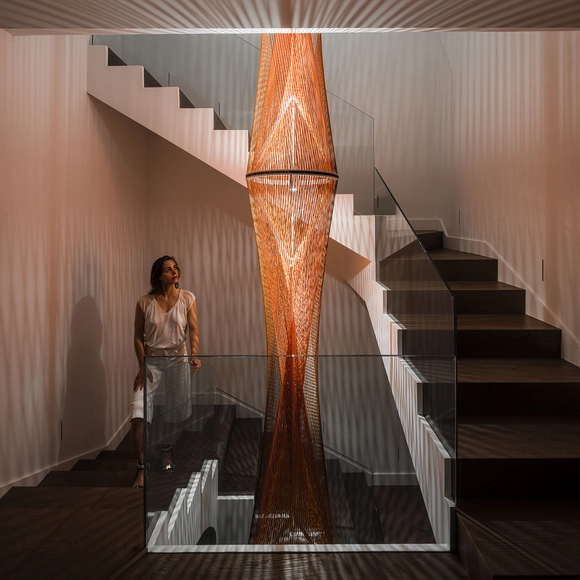
Inés Esnal has designed a sculpture specifically conceived for the stairwell of a single-family home. Her architectural training has heavily influenced her understanding of art in relation to space, from both phenomenological and geometric perspectives. By combining artistic approaches with scientific strategies in her creative process, she aims to create a work of art that is geometric yet atmospheric, logical yet experiential.
Titled Flame, this sculpture is made of polypropylene ropes on a steel frame, measuring 75 x 502 cm and spanning the three levels of a residence in La Moraleja, Madrid.
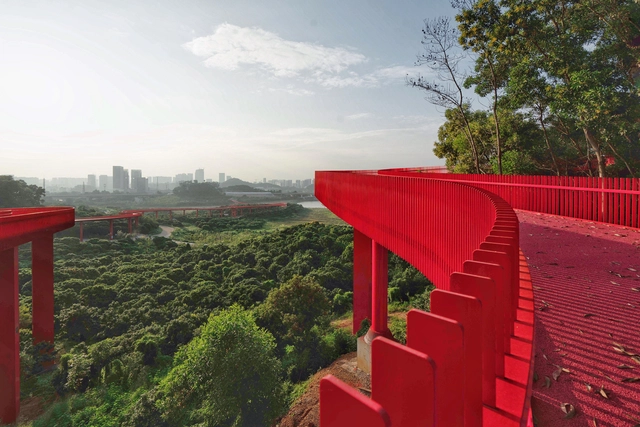
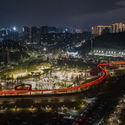
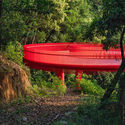
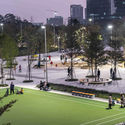
What happens when firms from different parts of the world—Bogotá, Rotterdam, and Hong Kong—unite to design a park on the other side of the globe that fosters innovation and integrates the forest landscape with the city?
Economic crises, health emergencies, and natural disasters, followed by social conflicts, political disagreements, and the search for new places to live, have historically driven the displacement of hundreds of thousands of people. The result: changes in residence, habitat, and culture.
From September 24 to 26, 2021, the seventh edition of Open House Madrid will take place. This international architecture festival offers free access to Madrid's architecture, featuring tours of more than 100 landmark buildings and spaces across the capital that are typically closed to the public. Under the theme "I don't even know where I live," the event aims to promote architectural culture, rediscover the city through its built environment, and provide an experience that helps people connect with and appreciate their surroundings.
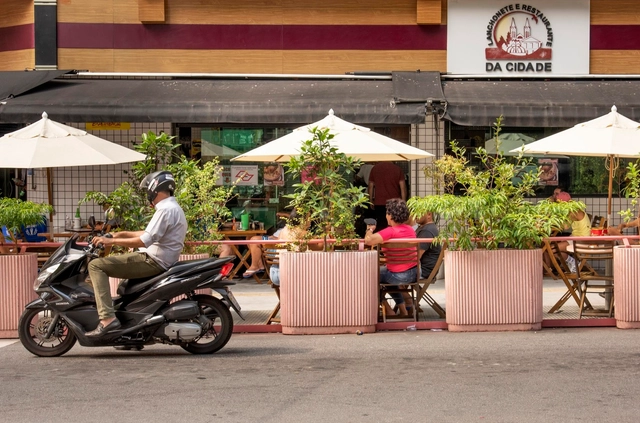
Who would have thought that residents of São Paulo, one of the busiest cities in the world, would miss the hustle and bustle of the streets? Through a simple and elegant intervention, Brazilian architects Gustavo Cedroni and Martin Corullon of Metro explain how they supported one of the areas hardest hit by the pandemic, using small architectural gestures to bring life back to the street.
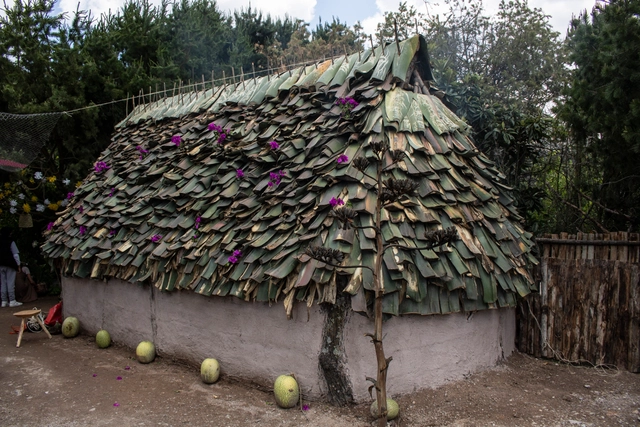
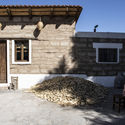
The architecture of Indigenous peoples in Mexico has a vast history that has transformed over the years, sustained by an oral heritage passed down from generation to generation. Various cultural fields are directly linked to this architecture—as it is an integral process involving diverse actors—such as gastronomy and agriculture, which play a fundamental role in shaping these communities. This makes immersing oneself in these dynamics essential to understanding how the spaces that house and connect these activities are produced.
https://www.archdaily.com/1127725/rosario-arguello-on-the-conservation-of-local-techniques-and-materials-in-rural-areas-of-mexicoArchDaily Team
Founded in July 2014, July Cooperative Company is an elite professional team that values collaboration, pursues the essence of design, and encompasses a diverse range of landscape styles. The firm also serves as the Chinese representative for Japanese landscape master Shunmyo Masuno, Uetoh Zoen, and Izumiya Stone. Combining an Eastern aesthetic with a diverse international background, we aim to leverage our resources to enhance professional exchange and cultivate valuable industry dynamics.
With the goal of getting to know the architects, projects, and stories behind landmark Portuguese architecture, Sara Nunes, from the architectural film production company Building Pictures, launched the podcastNo País dos Arquitectos, where she talks with leading names in contemporary Portuguese architecture.
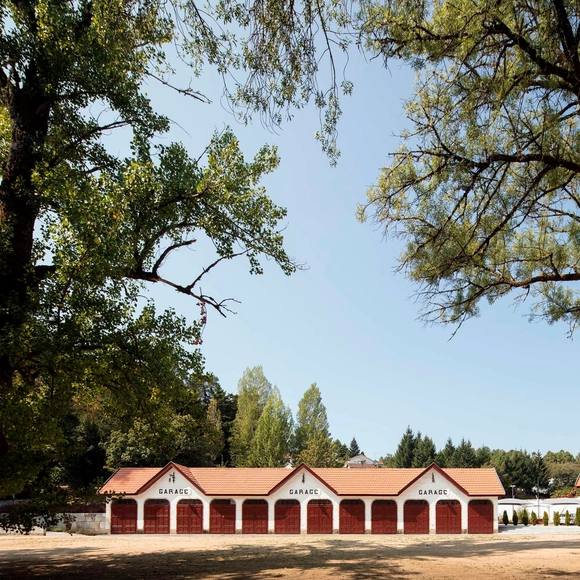
In this week's episode, Sara talks with architect Luís Rebelo de Andrade about the various buildings and renovations he designed in Pedras Salgadas, a municipality in northern Portugal. Revisit the other interviews from the podcast No País dos Arquitectos and read the transcript of the interview with Andrade below.
Orchards, gardens, skylighting, and grid systems in the "First City of Antarctica". Image via Revista rita_
This article by Fulvo Rossetti was originally published in the 14th issue of rita_ magazine under the title "Hosts and Prophets of Antarctica: Architecture, territory, and conflicting imaginaries in 'Argentine,' 'British,' and 'Chilean' Antarctica, 1961 onward" and is part of a joint collaboration for the dissemination of academic texts.
In the following text, three landmark works from the United Kingdom, Argentina, and Chile express different interests projected onto the same Antarctic territory. One is the Halley VI Research Station, located on the eastern limit of the British claim. Another is the utopian “first city in Antarctica,” envisioned near the Argentine Marambio airfield, on the northern tip of the Antarctic Peninsula. The third is the International Antarctic Center, a multifunctional building designed to strengthen the role of Punta Arenas as a gateway city to the white continent.
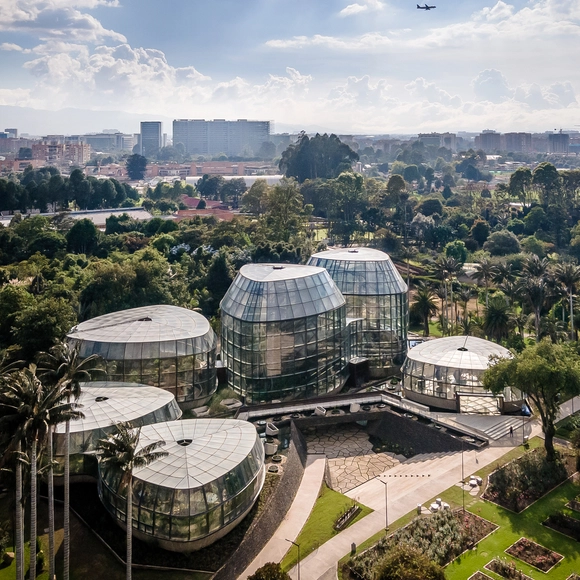
Tropicario. Image via Congreso Colombiano de Arquitectura y Urbanismo
The winners of the Award for Excellence in Sustainable Architecture were announced during the closing of the 37th Colombian Congress of Architecture and Urbanism.
"Domingos Libro" is hosted by Carmelo of Enorme Studio, where every two weeks, he delves deeply into forgotten architectural publications, books, and magazines from the '60s, '70s, and '80s that have the most interesting stories behind them.
The firms Pacheco estudio de arquitectura (Colombia) and estudio.entresitio (Spain) designed the proposal and are moving forward with the construction, which was awarded to the Spanish contractor Obrascón Huarte Lain.
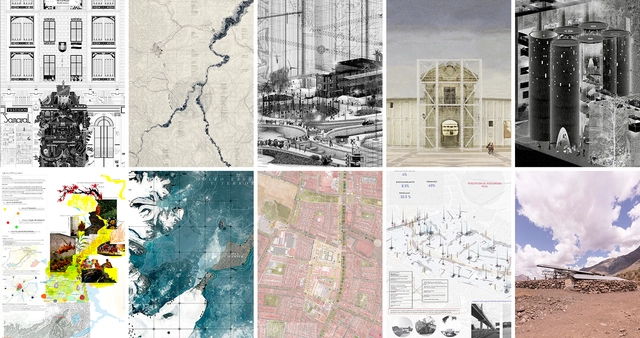
The 10 Best Student Projects in Latin America and Spain
To showcase the valuable academic production of Latin American and Spanish universities, we launched an open call this year, inviting architecture students to submit their thesis projects completed in 2020.
Following a thorough review of 305 submissions, our editorial team selected and highlighted 10 projects that demonstrate rigorous critical thinking in response to their chosen issues. The selection process not only valued projects that delivered the best possible architecture through efficient design suited to their context, program, and users, but also those demonstrating significant attention to human scale, experimentation, and novel ways of approaching architecture in cities. Additionally, we recognize 10 honorable mentions whose immense dedication and academic quality made them impossible to overlook.
Co-founded by Qi Xiaofeng and Wang Yuyang in 2018, atelier xy is a Shanghai-based design studio specializing in boutique F&B, retail, and office projects. Its practice spans the fields of architecture, interior, and product design.
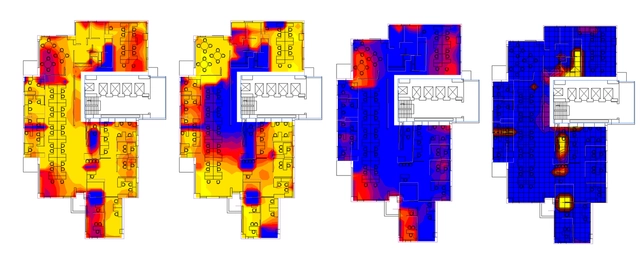
This article by Anna Gabriela Ramírez and Beatriz Piderit was originally published under the title "Post-Occupancy Evaluation of Lighting Comfort in Office Buildings" in the 20th issue of the Dearq journal on July 1, 2017 (DOI: https://doi.org/10.18389/dearq20.2017.10).
The following presents the results of a study proposing a post-occupancy evaluation methodology for lighting comfort. This methodology was validated in the offices of the Bogota Surveillance and Security Fund (Fondo de Vigilancia y Seguridad de Bogotá), confirming the importance of obtaining subjective data from users through surveys and correlating it with technical lighting information via photometric measurements and simulations.
We present this work as part of a joint collaboration to contribute to the dissemination of research, analysis, and opinions developed by the national and international academic community on architecture, urban issues, and related fields.
https://www.archdaily.com/1127813/why-a-post-occupancy-evaluation-of-lighting-comfort-is-necessary-in-office-buildingsAnna Gabriela Ramírez y Beatriz Piderit
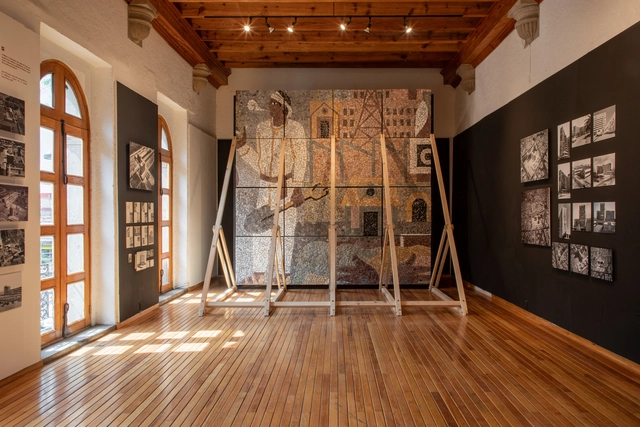
On July 28, the Azcapotzalco Borough opened the exhibition “O’ Gorman O’ Gorman 1905 - 1982” at the Casa de Cultura Azcapotzalco in Mexico City, curated by Sofía M. Provencio and Juan José Kochen. This exhibition is the result of an open call held in July 2020, which invited visual artists, designers, and architects to submit works and perspectives offering a contemporary view of the renowned Mexican artist and architect's work.
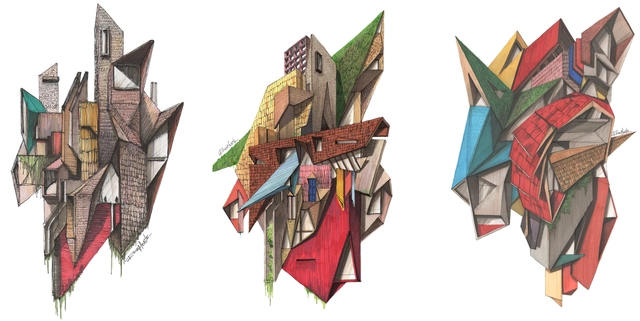
Following the release of "Architectural Classics," a series of iconic architectural classics depicted in axonometric views, Diego Inzunza—the Chilean architect and visual artist behind Rosamente—now shares a collection of 22 drawings created in 2021 in collaboration with 16 architects from five countries, including Cristian Danke, David Carcamo, Anita Catricura, Roberto Ibáñez, Rodrigo Ortiz, Charlotte Bazonnard, Javiera Muñoz, Sofía Montealegre, Juan Pablo Santamaría, Tom Gardner, Joel R, Sergio Pita, José Tello, Francisco Guerrero, José Tomás Infante, and Camilo Carrascal.
The title of this new series is “Abstract Architecture,” featuring conceptual drawings that revolve around architecture, nature, and alternative graphic narratives.
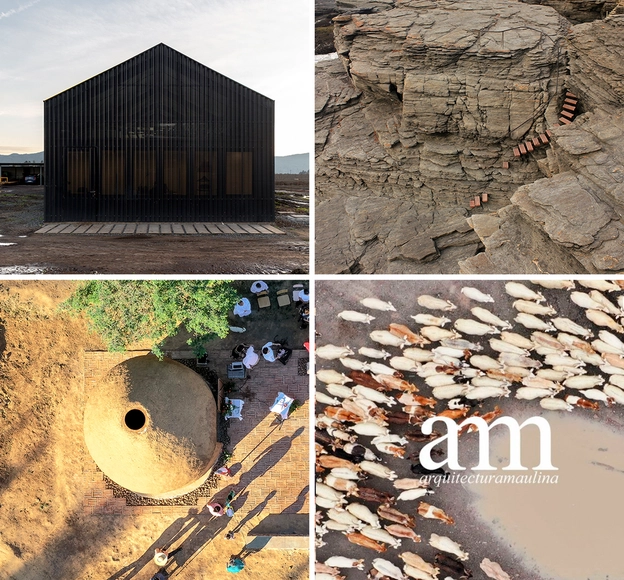
Equipamiento Agroindustrial PRISMA, proyecto de Urzúa Soler. Fotografía de Felipe Ugalde (arriba izquierda); Oratorio de la Peregrina, proyecto de Sebastián Mejías. Fotografía de Edgard Torres (abajo izquierda); Recorrido entre rocas, proyecto de Angélica Méndez (arriba derecha); Portada Arquitectura Maulina (abajo derecha). Image Cortesía de Arquitectura Maulina
For years, the Talca School of Architecture has played a major role in highlighting the architectural value of the Maule Region in south-central Chile. It is here that the new publishing project Arquitectura Maulina has chosen to continue this path, not only by showcasing some of its own productions but also by publishing articles by professionals, students, and photographers. Their goal is to foster dialogue, prompt questions, and document how we observe this territory and what we ought to do for its benefit.
In the following interview, they share their inspiration when approaching this topic, alongside reflections on academia and the discipline in the region.
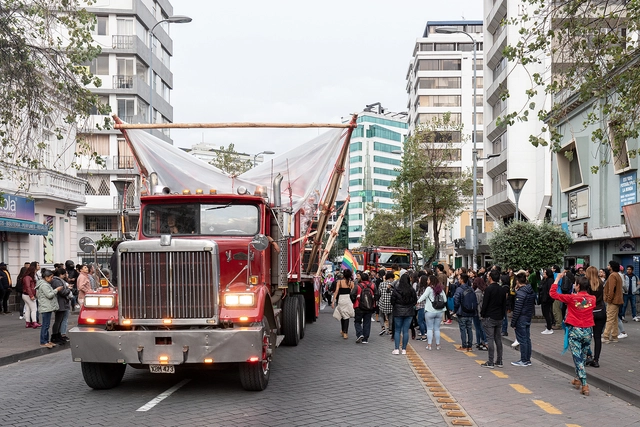
In the following article, Cuqui Rodríguez discusses the installations "La Puta Carra Loca" and the "Archivo Vivo de las Luchas Sociales" (Living Archive of Social Struggles), designed by Al Borde Arquitectos and La Cabina de la Curiosidad, presenting architecture as a vehicle of resistance against hegemony.


.jpg?1628181990&format=webp&width=640&height=580)
.jpg?1628181990)