Supported by a Graham Foundation grant, the artist explores the possibility and synchronicity of materials and processes across architecture and visual art in a new series of sculptures and drawings inspired by Miguel Fisac's innovative architectural and construction techniques.
Experience it all through the short film by Spirit of Space.
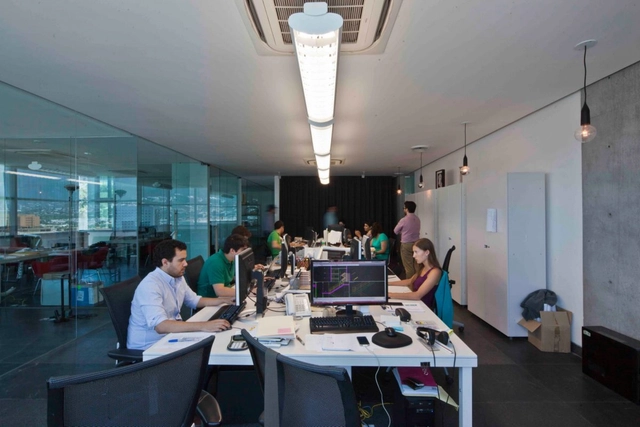
Roma 212 is a multidisciplinary studio dedicated to architectural design, ephemeral installations, interiors, and urban planning. Its philosophy centers on experimenting with new materials, forms, and processes, aiming to renew and rethink architecture as a cultural catalyst.
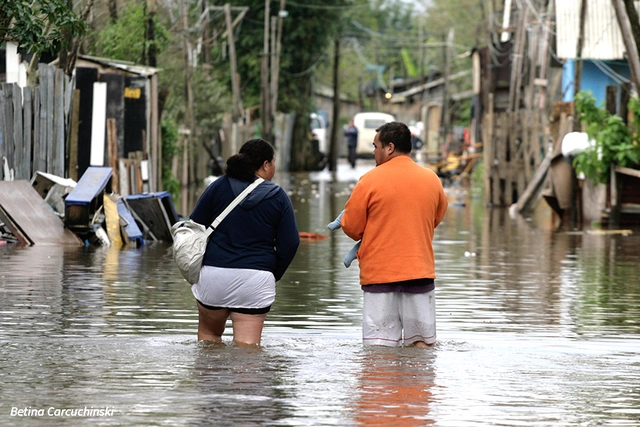
In recent days, a series of reports and articles correctly diagnosed the cause of the recent floods in the state capitals of Belo Horizonte, São Paulo and Porto Alegre, as well as in smaller cities such as Iconha, in Espírito Santo. The primary cause of these disasters was the urbanization of our cities—both planned and unplanned—which amplified the potential damage.
“Empty Spain, Full Spain. Conciliation Strategies” is the proposal by Anna Bach, Eugeni Bach, and Óscar Miguel Ares that secured the curatorship of the upcoming XV Spanish Biennial of Architecture and Urbanism (BEAU).
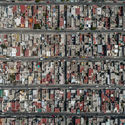
“Where the city ends should not be the question,” Alejandro Aravena has repeatedly stated in various lectures, “where it begins is the question we should try to understand.” In many Latin American countries, the concentration of wealth in urban environments has led to the explosion of cities and “metropolitan areas,” giving rise to complex challenges.
The Porto Alegre-based firm 0E1 Arquitetos has launched an e-book to help professionals design their new home workspaces. The Home Office Guide is a digital publication featuring tips to improve remote work environments, created to raise funds for local charities.
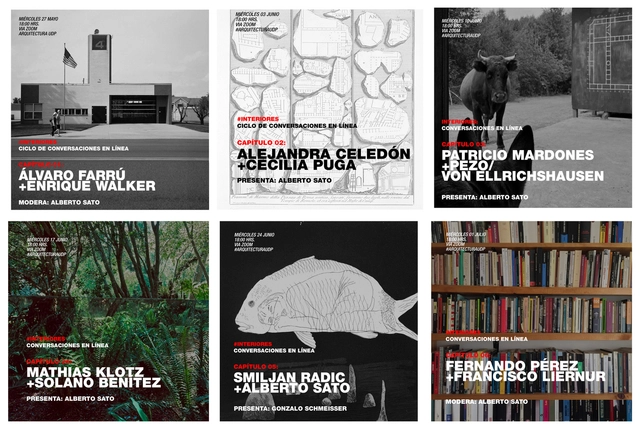
“Interiores: Conversaciones en línea” is the title of the series of virtual encounters organized by the Faculty of Architecture, Art, and Design at Universidad Diego Portales (UDP). In this first season, Professor Alberto Sato hosts meetings between renowned architects, including Álvaro Farrú and Enrique Walker, Alejandra Celedón with Cecilia Puga; Mardones with Pezo von Ellrichshausen; Solano Benítez with Mathias Klotz; Smiljan Radic with Alberto Sato; and Fernando Perez with Francisco Liernur.
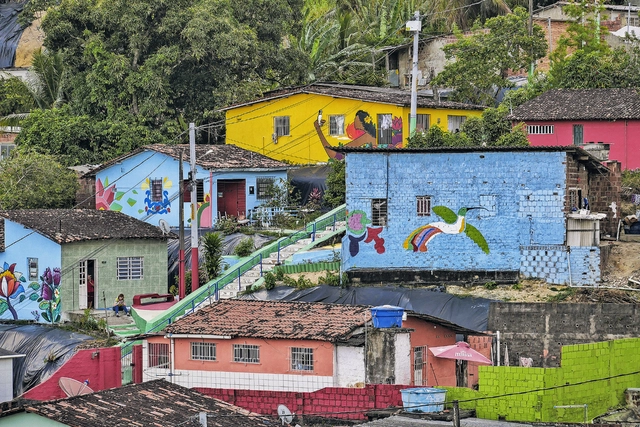
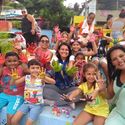
Mais Vida nos Morros is a public policy for citizenship and sustainable development in Recife's communities, conceived by the Executive Secretariat for Urban Innovation of the City of Recife. In partnership with the private sector, the program already serves residents across 49 areas in 27 communities in Recife, directly benefiting 25,000 people. Lagoa Encantada is one of the chapters in this story, shaped by a model of social cooperation.
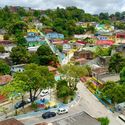
Located in the Ibura neighborhood of Recife, Pernambuco, Lagoa Encantada developed across both flatlands and hillsides. The area's topography directly impacted its urban conditions: while the flatlands enjoyed leisure spaces and infrastructure, the hillside lacked these amenities. This contrast directly influenced how residents interacted with one another and with their territory, serving as the starting point for the intervention process.
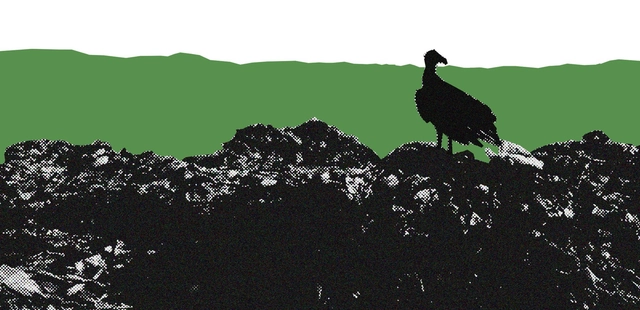
On World Environment Day, we ask you: Do you know where your household "trash" goes? How do cities deal with the tons of materials discarded daily? Should everything you throw "away" be wasted by being sent to landfills?
The coronavirus crisis has shown us that certain attitudes, policies, and practices must be abandoned if we want a different future—both socially and environmentally. However, this responsibility is not solely individual. To discuss the future of waste in cities, we must shed light on the thread of recent history: the formulation of the National Solid Waste Policy (PNRS), approved in 2010, and the challenges of its implementation.
The winners of the design competition for the Madrid Metropolitan Forest have been announced. Coordinated by the Vice-Mayor's Office and promoted by the Urban Development Department, the initiative invited architects to develop natural infrastructure to drive green growth and sustainable development in the city. Located in Madrid, Spain, the Forest will span 75 kilometers, contributing to the area's ecological rebalancing, carbon emission reductions, the fight against climate change, and the environmental and landscape restoration of degraded areas.
Eric Coufal Impartiendo Dibujo. Aparecen de izq. a der. Alejandro Zohn, Alfonso Jaubert, Carlos Guillermo Orozco, André Bellón, Humberto Macías y Job Henández Dávila. Fotografía: Libro. La fundación de un sueño. Image Cortesía de coolhuntermx
This article is part of a collaboration with the website coolhuntermx, and was originally published under the title "La Bauhaus Tapatía."
"A sort of Bauhaus" is how Mathias Goeritz, in short, tried to convince Italian architect and theorist Alberto Sartoris to come to Mexico. In 1950, through letters, he invited him to teach at the very project that had drawn Goeritz in and excited him so much: the first School of Architecture of Guadalajara, founded in 1948 by Ignacio Díaz Morales.
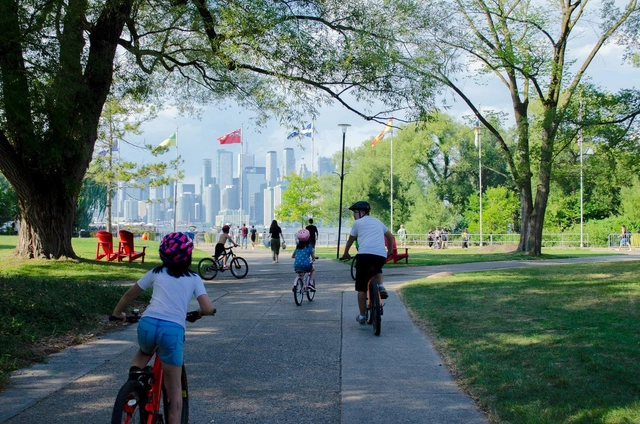
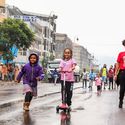
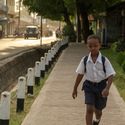
Children are often overlooked or entirely deprioritized in urban planning. Globally, it is estimated that up to 500 children die every day in traffic accidents. Thousands of others are injured in collisions or develop psychological trauma that can last for years. Whether on the streets or in public spaces, feelings of insecurity or discomfort discourage children from physical activity outdoors—at a time when 80% of children between the ages of 11 and 17 are not physically active, and another 38 million under the age of five are overweight or obese.
https://www.archdaily.com/1123822/how-to-design-safer-and-healthier-urban-spaces-for-childrenNikita Luke, Rohit Tak, Ariadne Samios e Claudia Adriazola-Steil
During a live-streamed event on an exclusive microsite created for the XXII Pan-American Architecture Biennial of Quito, organizers presented the schedule for this year's online BAQ 2020, along with the participating jurors and speakers.
https://www.archdaily.com/1123824/full-schedule-speakers-and-jurors-of-the-pan-american-architecture-biennial-of-quito-2020ArchDaily Team
São Paulo sidewalk. Image courtesy of Caos Planejado
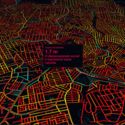
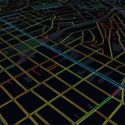
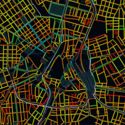
The quality of streets and sidewalks is a widely debated topic in Brazil, and the coronavirus pandemic has added another layer of complexity—public health—prompting us to question whether it is actually possible for pedestrians to practice social distancing. This concern led architecture student Conrado Freire to develop a map of sidewalk widths in São Paulo.
Adapted from Meli Harvey's Sidewalk Widths NYC project on New York City sidewalks, Largura do Passeio uses sidewalk data provided by the GeoSampa portal to visually synthesize information about São Paulo's pedestrian pathways that is not typically accessible to the general public. Based on the open-source code released by Harvey—which has also been adapted for cities like Toronto, Washington, Berlin, and Milan—Freire creates a visual mapping of what is often only felt by pedestrians moving through São Paulo's urban space.
On June 17, Mexico's Supreme Court of Justice of the Nation (SCJN) issued a landmark ruling ordering the National Institute of Statistics and Geography (INEGI) to generate disaggregated statistical data on populations in informal or precarious settlements across the country. This resolution brings to the forefront the discussion on the role that judges can and should play when making decisions that directly impact urban planning, land management, our cities, and our housing.
Rarely do we encounter an open-air fine arts museum like the Garden of Fine Arts, designed by Tadao Ando in 1994 for the city of Kyoto, Japan. Reproductions at various scales of renowned masterpieces appear among concrete columns, beams, and walls, along with ramps and glass bridges, interacting with cascading waterfalls and the background vegetation from the adjacent Botanical Gardens.
Pancho Gallardo, the Chilean architectural photographer now based in Madrid, has long admired the Japanese architect's work, particularly for, as he explains, "the use of concrete as an element that creates spaces, textures, angles, and shadows which, above all, in spaces like this open-air museum, establish a direct relationship with sunlight, where every corner becomes a dramatic composition of visual angles."
Below, he shares a series of photographs taken on-site, accompanied by more of his thoughts.
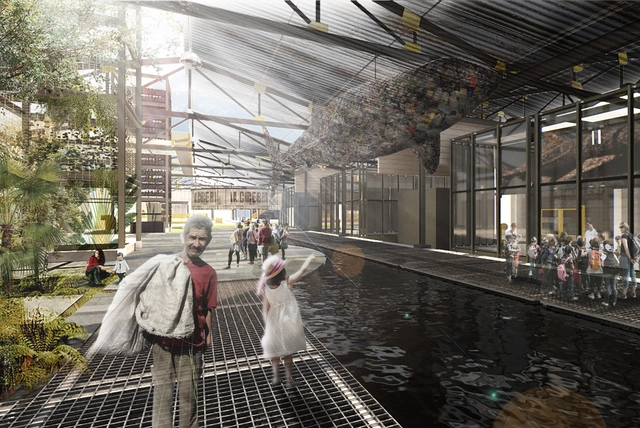
“Alternative Utility Platforms” is a project that seeks to generate spaces for social innovation in the integrated management of urban waste. According to Giulia Bianchi and Luis Morillo, the authors of the proposal, the city of Barquisimeto, Venezuela, currently generates approximately 21,147 tons of solid waste per month. Only 61.79% of this waste ends up in landfills, meaning the remaining 33.25% winds up on streets, in informal dumps, rivers, and streams, improperly disposed of. Out of this total, ultimately only 4.97% is processed by recycling companies, and the majority of that volume is sorted and supplied by street waste collectors. For this reason, and through their thesis project developed at the Central University of Venezuela, the authors propose to generate new employment models for the collection and treatment of municipal solid waste through an urban and architectural intervention.
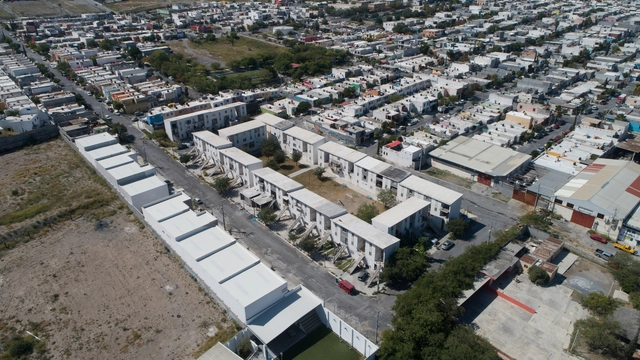
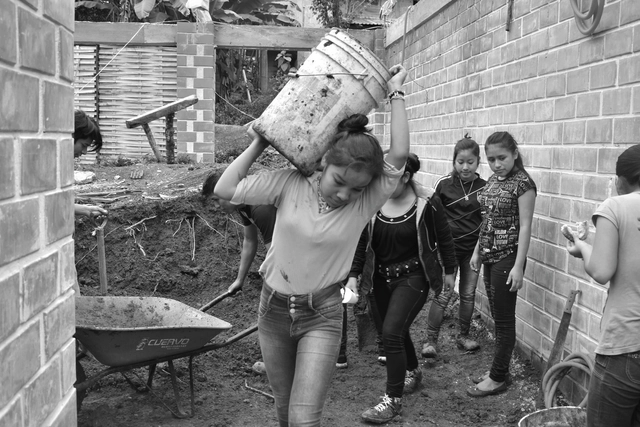
In light of recent statements by the Federal Government and the new programs announced by institutions involved in housing production in Mexico, we believe it is essential to open a dialogue and exchange ideas to better understand the concepts of self-construction, self-production, and the “Social Production and Management of Habitat” [SPMH], as well as the role of architecture in these social processes.
https://www.archdaily.com/1123823/the-role-of-architecture-in-self-construction-self-production-and-assisted-social-housing-productionMariana Ordoñez y Jesica Amescua
As the philosopher Byung-Chul Han states: every age has its signature afflictions. These illnesses have represented some of the most significant challenges in human history, bringing drastic changes not only to the healthcare sector but also to economic and political spheres, revealing humanity as a complex network negotiating its daily existence through actions that have reshaped our ways of living and relating to one another.
Mexico's National Social Distancing Campaign began on March 23, 2020. However, a couple of weeks prior—even in the face of the federal government's recommendation to continue normal activities—social media users were already opting to mirror the European model and self-isolate. Architecture firms immediately began closing their physical spaces to transition to remote work, though for others, the shift took several weeks. Yet, this period of social and physical (spatial) distancing is experienced differently in every household. Over the months of this pandemic, we have witnessed not only the inequities in access to basic needs in dense urban areas, but also the fragility of the social order itself. Whether at a macro or micro scale, all of these experiences occur within and are shaped by the built environment, positioning architecture as both an active participant and a critical arbiter in this equation.
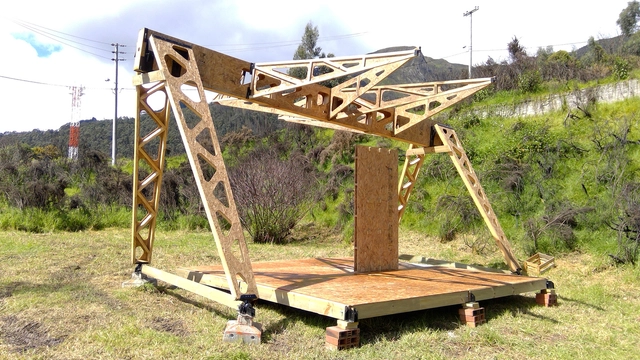
The Superintendency of Industry and Commerce has granted a utility patent for the invention "Multifunctional Self-Supporting Modular Roof System" to professors Camilo Ayala García and Christiaan Job Nieman Janssen, from the design department, and Diego Alejandro Velándia Rayo, from the architecture department, at the Faculty of Architecture and Design of the Universidad de los Andes.
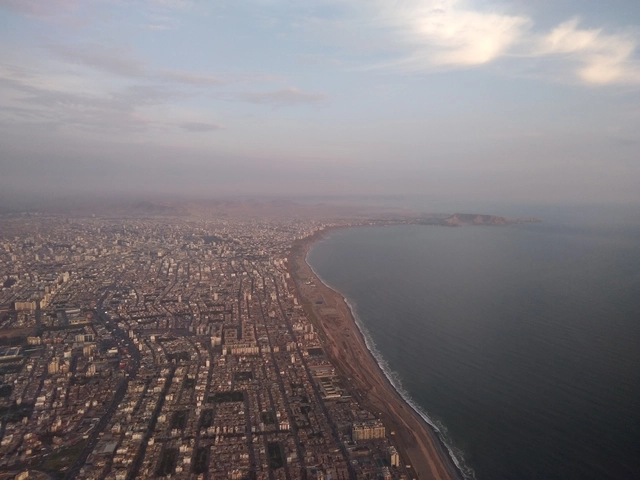
. ¿Cuándo será un gran espacio público? Costa Verde. Lima. . Image Cortesía de Humberto Viccina
After the state of emergency, nothing will return to the way it was. At that point, public and private spaces will routinely be occupied in ways that prevent transmission of a still-active virus. However, just as this situation has forced us to recognize our deficient healthcare system, it has also revealed how inadequate the spaces we inhabit often are.
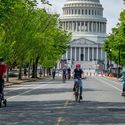
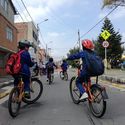
In 2018, sociologist and cycling activist Marina Harkot defended her master's thesis Bicycles and Women at the University of São Paulo (USP). To develop a qualitative methodology examining the challenges faced by female cyclists in the city, she interviewed various women: those who bike to work, those who explore the city on two wheels, and those who love tackling the capital's rolling topography.
Her methodology succeeded in revealing a common thread among these diverse cyclists: “It is the network surrounding these women that seems to prompt them to start cycling and keep them riding — as well as female role models, the women (whether known to them or not) who ride and inspired them,” wrote the researcher.
Urban infrastructure. Photo by Denys Nevozhai, via Unsplash
When reality demands complex and unprecedented answers from us, one of the most interesting methods to find them is biomimicry, which consists of asking nature questions in search of inspiration. In this light, it is worth asking: how does nature deal with emergency situations where an organism's behavior must be quickly modified?
https://www.archdaily.com/1123556/the-intubated-city-also-needs-healingBarão Di Sarno






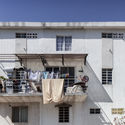
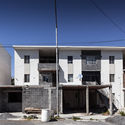








.jpg?1593472562 "Housing improvement programs in the Maya zone. Motul. Image © Onnis Luque")
.jpg?1593472682 "Soy de Azteca: peripheral aesthetics in Mexico. Image © Zaickz Moz")





_22.43.53.jpg?1597908512&format=webp&width=640&height=580)

_22.43.53.jpg?1597908512)