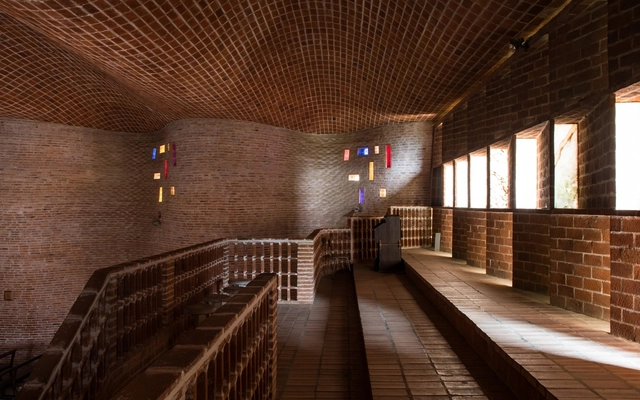
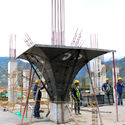
On Tuesday, July 27, it was announced that Eladio Dieste's Atlántida Church, one of his most renowned works in Uruguay, has been added to the UNESCO World Heritage List.
On Tuesday, July 27, it was announced that Eladio Dieste's Atlántida Church, one of his most renowned works in Uruguay, has been added to the UNESCO World Heritage List.
_12.59.20.jpg?1623089088&format=webp&width=640&height=580)
"Albañilas, construyendo sin patrones" (Women Masons, Building Without Bosses) is a short documentary released on May 5, 2021, produced by the Front of Organizations in Struggle #FOL. Active in more than ten Argentine provinces, the film gathers the deeply personal testimonies of Brenda, Natalia, Claudia, Isabel, Nora, Ana, and Moni, who share how they took up the bricklaying trade to construct the #FOL community hall.
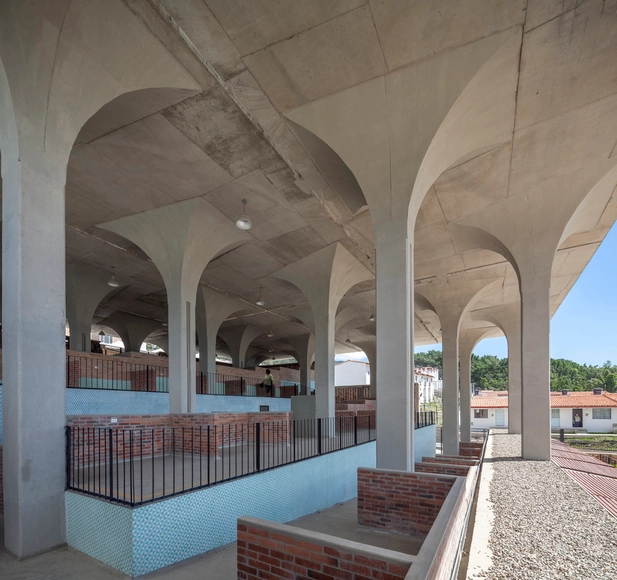
Receiving architectural recognition typically reflects best practices. This is the case for Niro Arquitectura + OAU, who have won the Building Of The Year 2021 award in the commercial architecture category with the Gramalote Market Square. This demonstrates that this pair of young Colombian practices is on par with internationally renowned firms such as Álvaro Siza, MVRDV, Heatherwick Studio, or Foster + Partners.





Around the world, both architects and designers are speculating on post-COVID spaces, offering diverse proposals championed by the utopia of advanced technology and Wi-Fi for all, alongside genuine concerns: How can we design spaces that require no physical contact? Will this mean the end of coliving or coworking spaces? How do we design for isolation? But what is happening in Mexico, considering that more than 56% of the population works in the informal economy and there is a digital divide leaving over 40% of residents without an internet connection?

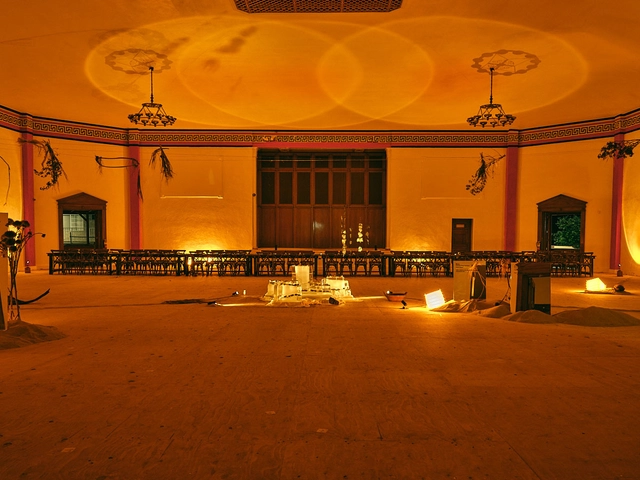
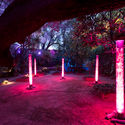
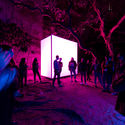
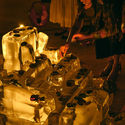
As part of a collaborative project created by creative women, "Ostras & Burbujas" emerged—an event that took place on August 28 at Cucina, Mexico City. This event was conceived around the idea of creating an immersive space that plays with visual perception, featuring lighting design and control by Paola Jose, founder of SOMBRA, powered by Lutron - Ketra technology. By altering the atmosphere through light, this was paired with a culinary experience led by chef Montserrat Garza, who brought together taste, smell, and touch through a multi-course dinner paired by Cavanegra Natural Wine Club.
.jpg?1635378996&format=webp&width=640&height=580)
The city of Puebla—located in Mexico's central highlands—is particularly known for its street layout and predominantly Baroque architecture. A UNESCO World Heritage Site since 1987, it hosts a broad cultural dynamic centered on preserving its built heritage and appreciating it from a distance, as if it were a museum piece. Consequently, on our daily commutes we notice the monumentality of its facades, while often failing to realize that behind the massive wooden doors lies what we call “the heart of the Poblan home.”
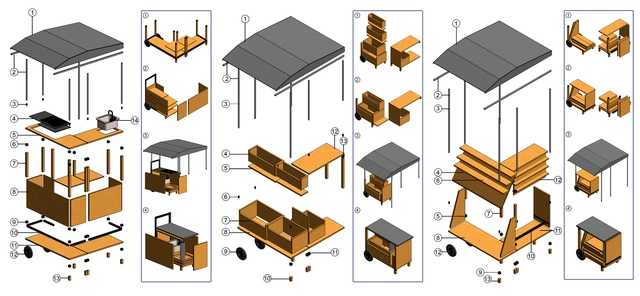
Pablo Salazar shares his research project titled "Commercial Stand Design in the La Floresta Neighborhood, Quito, Ecuador." The study addresses key issues such as the urban-scale environmental footprint of this activity, solar radiation, wind, and heliographic analysis, alongside the design and material specifications of four commercial stand models.

This week, we feature job openings at two Shanghai-based design firms: ARIZON Design and atelier tao+c. Specializing in different scales and themes, both practices are active across various architectural sectors and are looking to recruit like-minded architects to join their teams.

Since ArchDaily launched its recruitment services, we have received job postings from architectural practices of various scales across China, from Beijing to Shenzhen and Hangzhou. Highly active across diverse architectural fields with their distinct styles, these firms are looking for talented architects to join their teams. Below are six curated openings for May, along with a showcase of their representative projects. Interested candidates are warmly invited to apply.
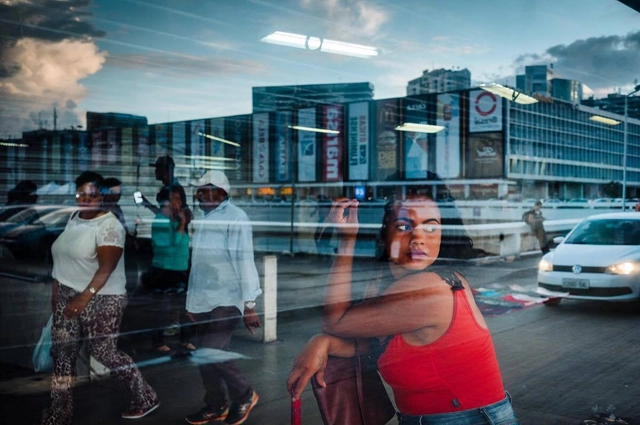
When selected by the Biennale di Venezia to direct the 17th International Architecture Exhibition, Hashim Sarkis challenged national curators to answer an urgent and far from easy question: how will we live together? Neither he, nor the curators, nor indeed anyone, expected what was to come. After a year and a half of a global pandemic, the question takes on new meanings, opening up further implications that far exceed anything the organizers could have previously envisioned.
Against this backdrop of global uncertainty, and informed by a country deeply marked by social inequality, Utopias of Common Life – the title of the Brazilian contribution developed by Arquitetos Associados in collaboration with visual designer Henrique Penha – seeks to establish a dialogue between the modern past and a possible (and better) future for Brazilian cities. We had the opportunity to speak with architect Carlos Alberto Maciel about the exhibition that will occupy the Brazilian Pavilion at the Venice Architecture Biennale. Read the interview below:
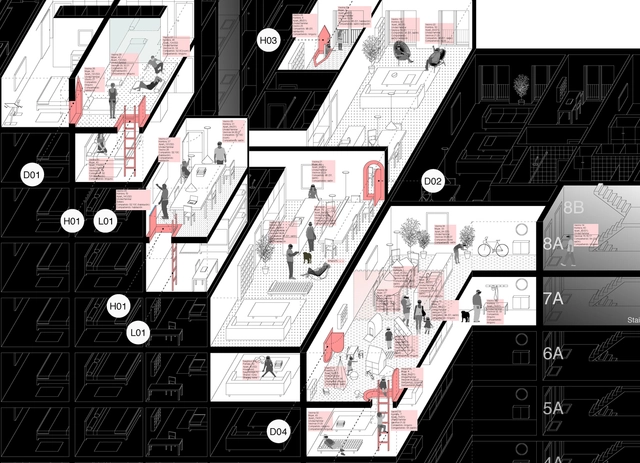
Marcos Parga, director of the Madrid-based studio MAPAa, presents a speculative essay titled "Everyday Rebellions." This is a series of reflections on new domesticities and some considerations regarding the challenges we face in architecture following the COVID-19 pandemic, focusing primarily on how to reimagine and update domestic groupings in our cities.
One of the key questions of Parga's research: What if we were provided with a new type of "retroactive" tools to recalibrate and unlock our domestic life and community interactions, exploring the hackable potential of today's housing blocks?
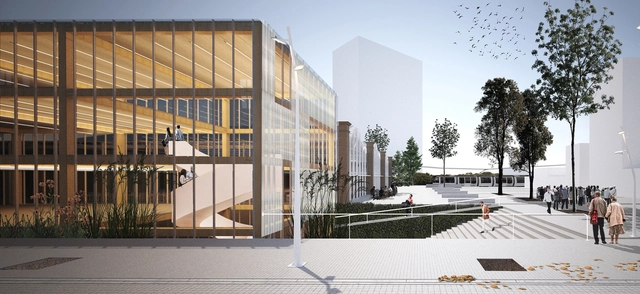
Organized by the Association of Architects of the Province of Buenos Aires – District I – and promoted by the Municipality of La Plata, the Provincial Ideas Competition “La Plata Technology District Convention Center” aims to stimulate the urban transformation of a highly potential area of the city, creating a space for creativity, technological innovation, and connection between government, academia, businesses, and institutions. Sponsored by the Argentine Federation of Architecture Organizations (FADEA), it seeks to improve citizens' quality of life, foster the competitiveness of small and medium-sized businesses, and enhance the efficiency of public administration.
The jury awarded first prize to architects Valentín Ayala, Rodrigo Ballina Benites, Luciano Del Valle, and Agustina Ronconi, members of the firm Paralelo Colectivo. Read more about the project below.
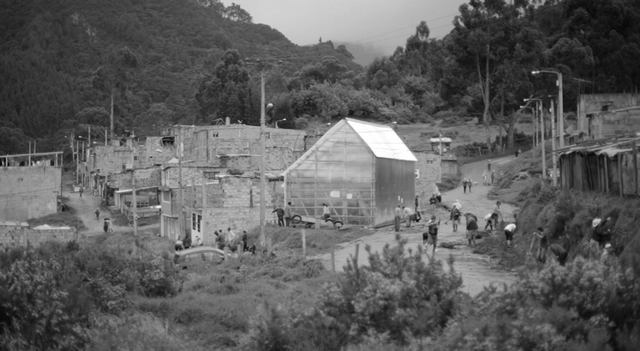
This article by Ana López Ortego (Colectivo Arquitectura Expandida) is a collaboration with Colectivo RE and was originally published on August 2, 2020, in the second edition of Huevo de pato, a publication that aims to share thoughts and experiences as a strategy toward democratizing knowledge and action.
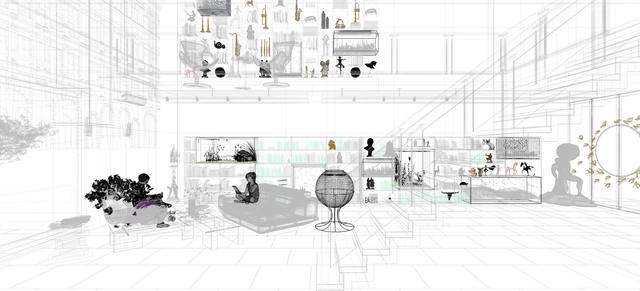
What is a render? Is it merely an image to win competitions and clients? Or is it an effective tool for a building's development?
We asked our readers, "What are the limits of rendering in architectural design?" and the volume of responses was immense. After reviewing and compiling all the feedback received from construction professionals, students, and architecture enthusiasts alike, there is a clear consensus: rendering should be viewed not just as a sales tool, but as a key element for design verification.

The results of the National Preliminary Project Competition "New Provincial Administrative Center in the City of Rawson" have been announced. Organized by the Association of Architects of the Province of Chubut (CACH), promoted by the provincial Ministry of Infrastructure, Energy, and Planning, and sponsored by the Argentine Federation of Architects' Organizations (FADEA), the call invited architects nationwide to design urban and architectural proposals for the development of public office infrastructure (institutional buildings for the various provincial government agencies) to revitalize the former Zoo site, an urban vacancy in Rawson with high development potential.
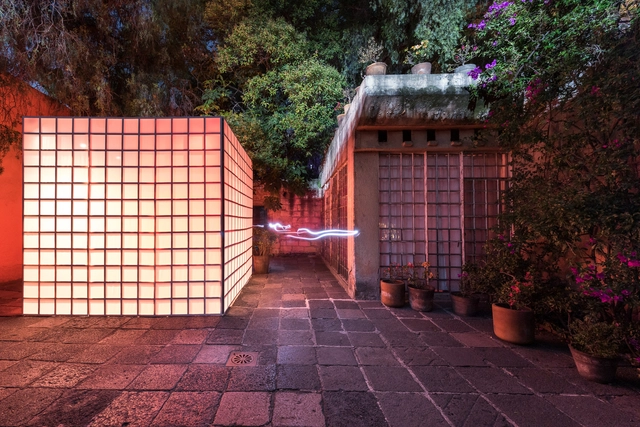
While the work of Mexican architect Luis Barragán is globally recognized and studied for its invaluable commitment to the architecture of his time and context—and, above all, built upon deeply harmonious and poetic foundations that connect with a deeply personal quest in "cosmic solitude, with Mexico as the temporary home he lovingly accepts," as the Pritzker Prize Jury described it when honoring him in 1980—until recently (and even before the launch of the Barragan Foundation website), understanding the full spectrum of Barragán's place in architectural history was somewhat difficult, as several of his works have remained private (or difficult to access) for years.
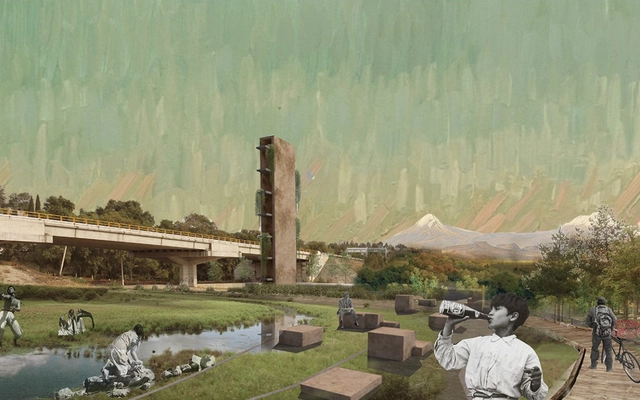
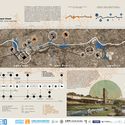
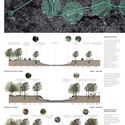
The Mexican Association of Urbanists, through its Tlaxcala chapter, called for entries for the Conceptual Preliminary Design Competition for the "Parque Integral Zahuapan 10." The competition was aimed at multidisciplinary teams in the fields of architecture and urban planning, with the goal of presenting proposals and conceptual ideas to develop a park along the banks of the Zahuapan River and revitalize its surrounding areas.
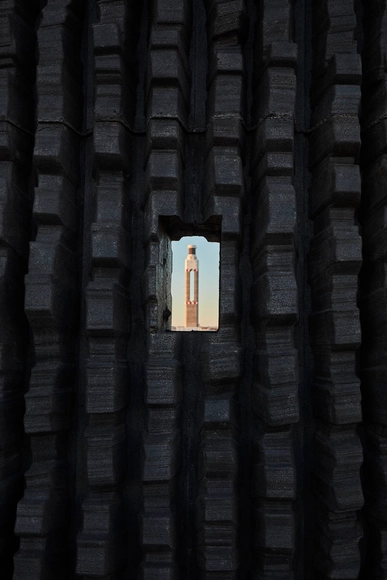
Not everyone is aware of the existence and operation of the Cerro Dominador solar power plant in the Antofagasta region of northern Chile.
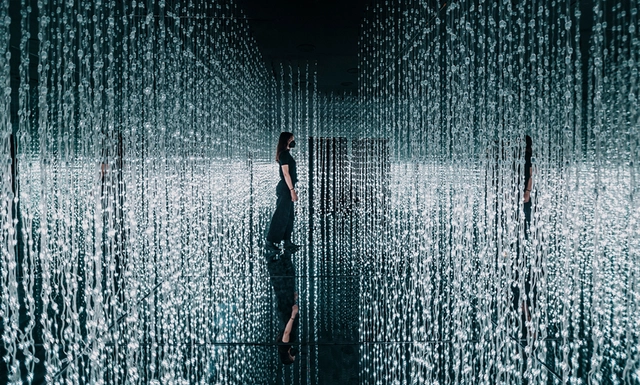
To mark the opening of its third restaurant location in the city of Valencia, Spain, the Voltereta group commissioned creative studio Vitamin to design and produce an immersive and interactive video mapping installation to offer diners a unique experience. Vitamin is a Valencia-based creative studio with eight years of experience in art and technology, developing innovative strategies and ideas to bring unique interactive experiences to life. Their focus on emerging technologies allows and encourages users to become active participants and protagonists, engaging with spaces and artworks in a personalized and dynamic way.

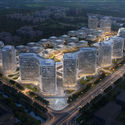
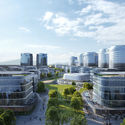
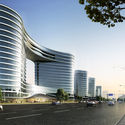
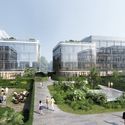
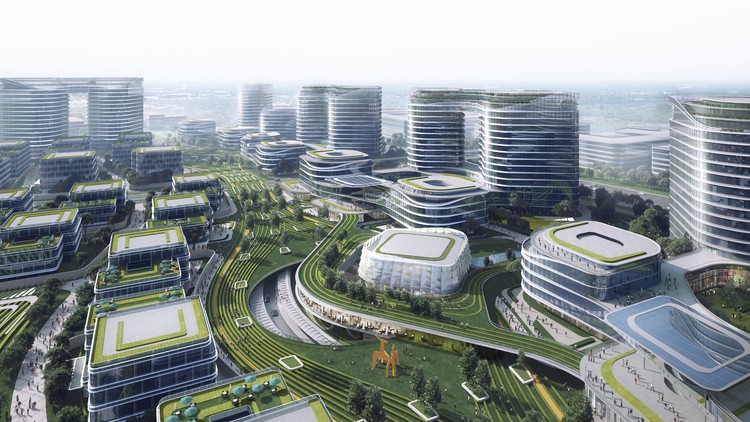
Construction recently commenced on a prominent internet company's industrial park in Hangzhou. Serving as a central hub in the enterprise’s digital ecosystem, the project will offer a one-stop office and commercial park experience for its network partners. Guided by a deep understanding of the client's vision, the design team took the corporate spirit of "shared connectivity" as their starting point, reflecting seamless partnership and brand identity through a unique master plan and architectural form.

His mother’s deep interest in architecture, a childhood in São Paulo, classes at FAU-USP, his closeness to Ernest Mange, his first projects, his teaching experience, and the development of his own repertoire. In this episode of the Betoneira Podcast, architect Marcos Acayaba recalls pivotal moments of his training and career, such as the Milan House (1972-1975).
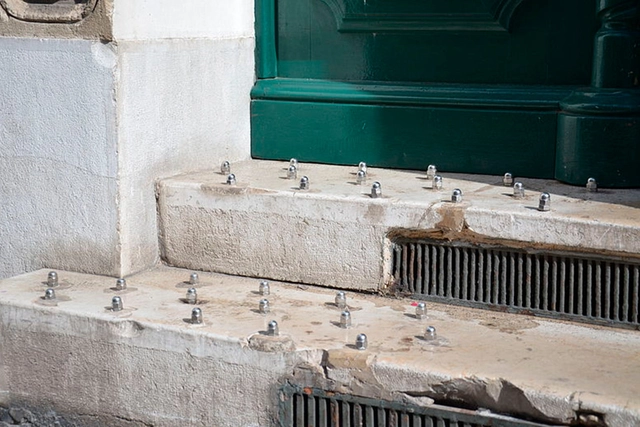
Benches with dividers and uncomfortable shapes, sharp stones under overpasses, fences surrounding plazas and gardens, walls with metal spikes, buildings without awnings or with timed water drippers, electric fences, and barbed wire. The elements and materials used to deter people from public spaces are numerous, ultimately shaping how individuals experience cities and interact with one another. Hostile architecture—a term encompassing all barriers and urban designs that seem to say “don’t make yourself at home,” as reporter Winnie Hu of The New York Times defines it—is part of the reality in most cities worldwide, sparking growing debate over the impact of these measures, particularly on social media.
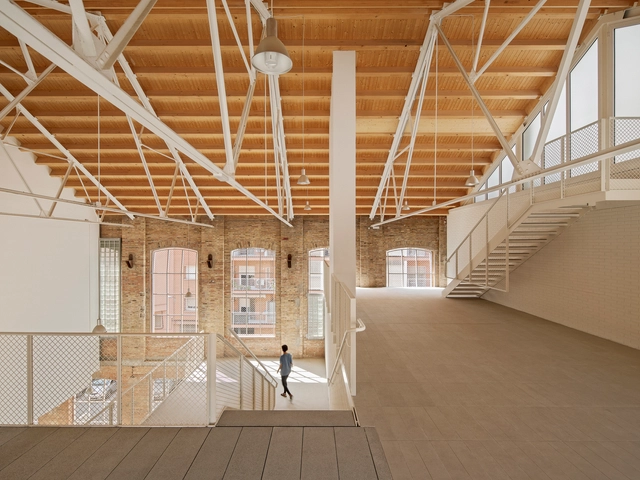
The FAD Awards, one of the most prestigious architectural accolades in the Iberian Peninsula, have announced the winners of their 2021 edition.

Since ArchDaily launched its recruitment services, we have received job submissions from architecture practices of all scales—ranging from private design institutes and independent studios to international design teams—spanning the north and south of China, including Beijing, Shanghai, and Shenzhen. Below is a curated selection of openings from four firms. Active across diverse architectural fields with their unique design languages, they are looking for talented architects to join their teams.






.jpg?1635378835 "\"Woven Memorial\". Image © Amy Bello")
.jpg?1635378789 "\"Introspection\". Image © Amy Bello")
.jpg?1635379152 "\"Witnesses\". Image © Amy Bello")
.jpg?1635378688 "\"You Are Sweetcolor\". Image © Karen Elizabeth Robles Gamiño")
.jpg?1635378996)