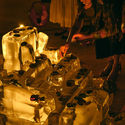
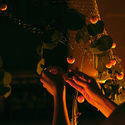
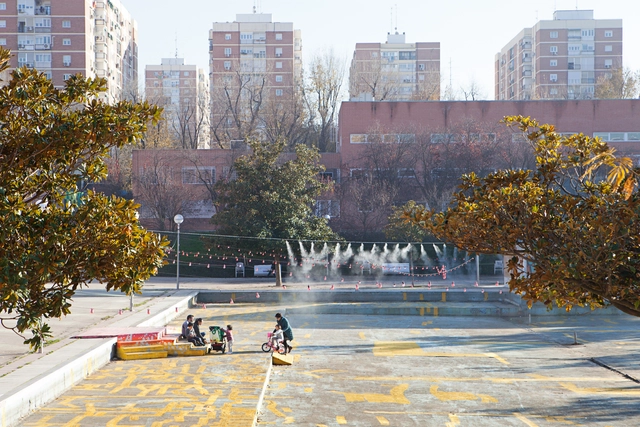
How can we reactivate the Plaza de la Vaguada within an environment where we can connect in a different way? How can we emphasize the nature of coexistence to generate new fields of complicity and empathy between residents and their surrounding environment? ‘Acciones ExtraOrdinarias’ is a public art project developed in the Parque de La Vaguada since June 2018, within the framework of the ‘Imagina Madrid’ program. In it, the artistic team—composed of Estelle Julian, Paula Valero, and C+Arquitectos, with the collaboration of Leonor Martín—aims to fill the plaza with actions ranging from performance to spatial intervention, articulating new bonds between the district's diverse communities and restoring conviviality, desire, and joy to this previously abandoned space.
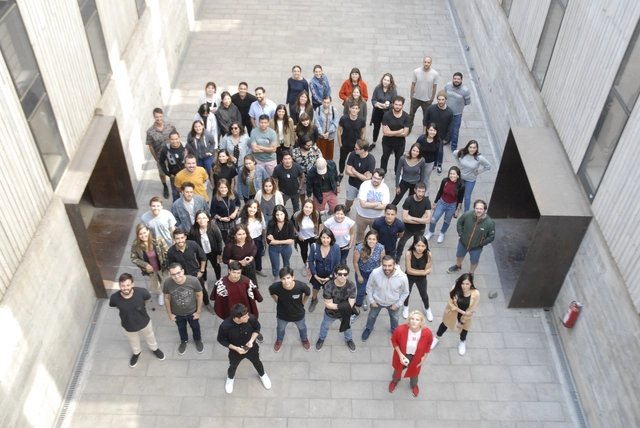
To activate disused public spaces, BASE Studio has developed a system that explores the properties of structural materials like bamboo and colihue, generating a structure that allows for the production of complex double-curvature geometries. Based on this exploration, architecture students created 'ÍCARO,' a work installed in a "pocket plaza" in the Ñuñoa commune of Santiago, Chile.
Dear readers, with your invaluable companionship, 2019 has flown by here at ArchDaily. Throughout the year, we have continued our daily mission of sharing and celebrating global architecture; along the way, we have grown, earned the recognition of architects, and enjoyed the unwavering support of our readers. Having received heartwarming holiday wishes from hundreds of design practices around the globe, we are excited to share their creative holiday cards with you here!
https://www.archdaily.com/1068599/happy-holidays-holiday-cards-from-architects-around-the-world韩爽 - HAN Shuang
Perhaps the term ‘Fiction Architecture’ means little without a context to frame it. Providing that context is one of the challenges that the team at ENORME Studio has set for itself. Their approach to architecture—probing its very limits—is rooted in a radical, disruptive attitude. Their goal? Simple: to create ‘architecture without architecture.’ In other words, to strip away the fashions and trends that clothe contemporary architecture and reveal it, without shame, for what it really is: a grand lie.
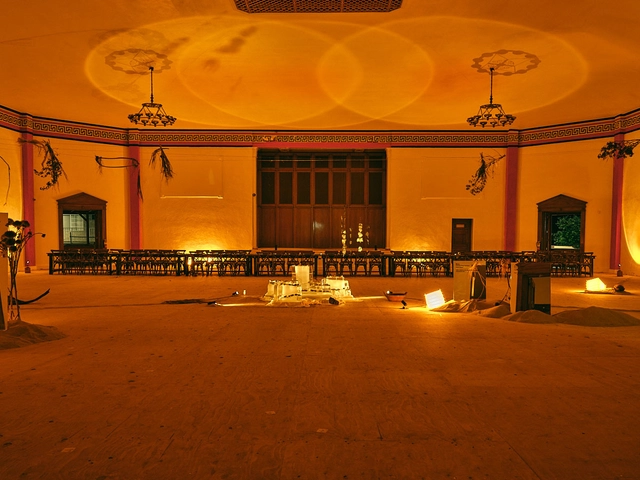
Visual artist Leonardo Portus has designed a sensory art installation inspired by the iconic COPELEC Building in Chillán. In 'Soplos de Luz' [Breaths of Light], the modern architecture of this historic monument takes on a new quality, where curved and organic forms break the orthogonal paradigm of architecture through movement generated by light projections on models.
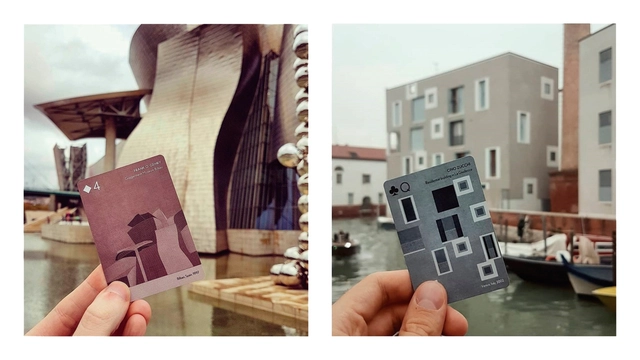
The Spanish architecture and design studio Arquitectura a Contrapelo is back in the news with the second edition of SCALA, a deck of playing cards featuring architectural motifs. This time, in addition to providing updates and improvements to the previous platform, the series includes international emerging architects such as Nicolás Campodonico, Bjarke Ingels, O'Donnell+Tuomey, and Johnston Marklee. The works depicted on the cards reflect iconic buildings of varying scales through a meticulous design process.
We’re hiring at ArchDaily! Every day, thousands of architects from around the world submit their latest projects and content related to architecture, urbanism, and construction.
The uninhabited Church of the Monasterio del Carmen Bajo de San Rafael, a designated National Monument, will open its doors to the community on January 23 and 24 to host "Sonpendular," an audiovisual concert that integrates immersive mapping, lighting, and live music.
The project is an aesthetic investigation into time and space, inviting the viewer into an immersive sound-and-light ritual rich in geometric patterns and real-time generative audio. The work explores transformation and impermanence, creating a constantly shifting portal where past, present, and future engage in a singular dialogue.
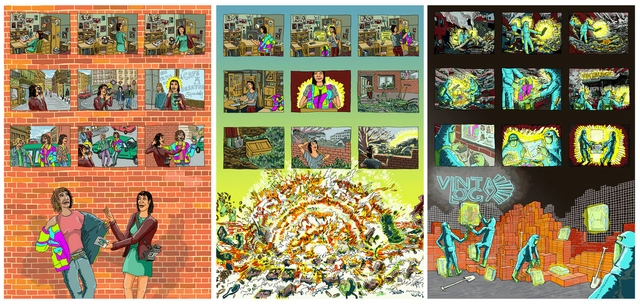
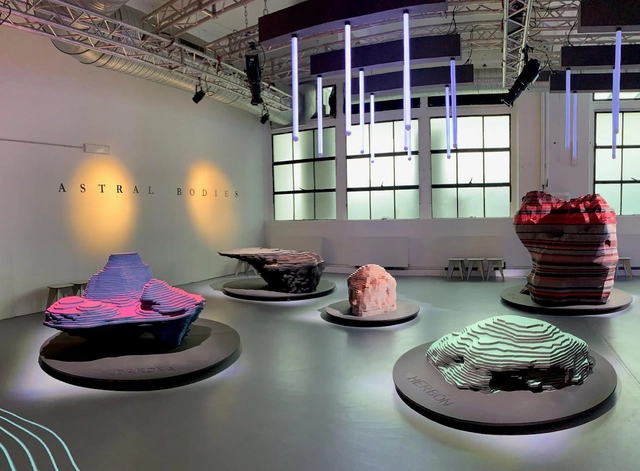
FINSA, a pioneer in the manufacturing of particleboard and MDF on the Iberian Peninsula, has chosen to collaborate with two leading Spanish studios in their respective fields, ENORME Studio and Vitamin-arte, to create a new installation recently exhibited at Milan Design Week 2019. Both studios are precursors in elevating the ephemeral—a reflection of the new trends emerging in these times of social and identity-related uncertainty. They are dedicated to developing innovative strategies that manifest as unique, interactive spatial experiences.
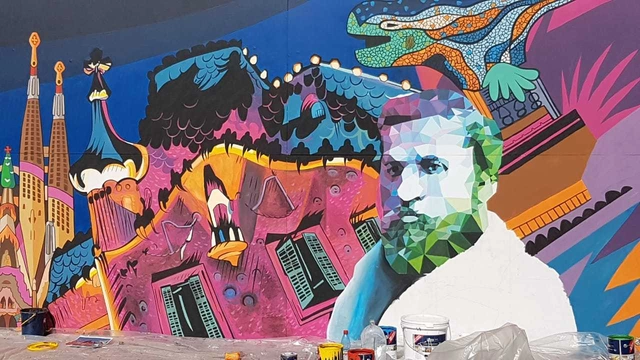
'Gaudí en Valparaíso', a project positioning the port city as a cultural hub with a focus on architecture and design, has launched a temporary exhibition featuring iconic works by Antoni Gaudí. With an artistic intervention, the Catalan muralist 'Uriginal' kicked off the official launch of this major international exhibition, which is open to the public from March 12 to May 10 at the Parque Cultural de Valparaíso.
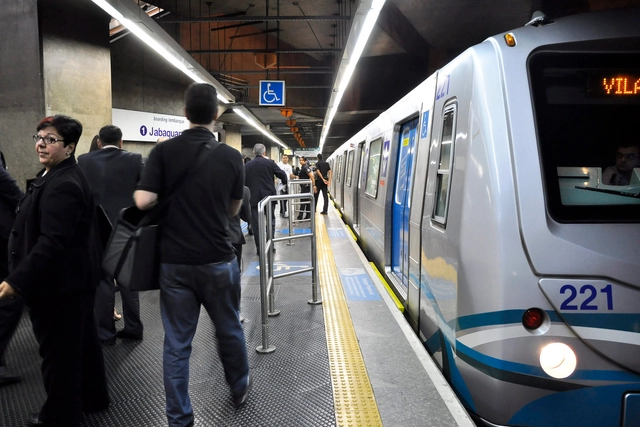
“How much does a subway line cost?” is a question frequently asked when discussing high-capacity rapid transit solutions for Brazilian cities. However, the cost of implementing rail projects varies enormously across different global geographies.
For example, a rail line in New York costs about twenty times more per kilometer than one in Seoul, reaching a budget of $6.4 billion for a segment of just 2.6 kilometers in the second phase of the Second Avenue Subway in northern Manhattan. Geographical factors, or even the high built density of the American metropolis, are insufficient to explain such a massive disparity in construction costs.
The following publication by Gehl titled 'Masterplan Framework with ecology at its heart' is an interesting case study in Huechuraba, Chile. In it, the team consisting of David Sim, Esben Neander Kristensen, Alexander Spitzer, and Tamara Kalantajevska showcase their work in the region through the creation of a specific framework for an urban master plan that puts ecology at its heart:
Favela da Maré, Rio de Janeiro. Photo by Marco Derksen, via Flickr. CC BY-NC 2.0 license
To understand how communities are confronting the COVID-19 crisis, the Caos Planejado podcast hosts Eliana Sousa Silva, director of the NGO Redes da Maré and coordinator of the campaign “Maré Says No to Coronavirus.”
Born in Serra Branca, Paraíba, Eliana holds a master’s degree in education and a PhD in social work and public security from PUC-Rio. She is a researcher in public security and a visiting professor at the Institute of Advanced Studies at USP.
As a member of the Urban Design Expert Committee of the Ministry of Housing and Urban-Rural Development, I strongly urge an immediate increase in architectural and urban design fees. This is a matter of utmost urgency, for several key reasons:
1. The current fee structure is a relic of China’s era of rapid, large-scale incremental construction, when design work focused primarily on spatial capacity and fees were strictly tied to project scale. Today, however, almost all cities have entered the era of existing urban stock. Moving forward, as the focus shifts to urban renewal, design work can no longer be mass-produced. Instead, architects must tackle an immense volume of bespoke, custom-tailored projects. Consequently, traditional fee metrics are completely out of sync with the actual workload;
2. The flaw in traditional fee calculation methods is that when project scales shrink and design complexity increases, the upward adjustment coefficients for fees remain far too low. This is especially true for small-scale projects and renovations, which are incredibly time- and labor-intensive. Architects are essentially working at a loss, driven solely by passion. This leads to the absurd reality where years of design fees might not even equal the cost of a single tree. It is truly tragic when human value is deemed worth less than material objects;
3. While the state encourages urban design—the essence of which is fostering urban diversity—achieving diversity requires architects and urban designers to invest significantly more time and labor into custom, site-specific solutions. Without a fee mechanism adapted to this level of customization, how can we support their creative work? While passion might sustain a single project or a brief moment, only a proper mechanism can ensure fair and sustainable practice. The so-called "cookie-cutter" urban landscape is, in reality, the product of a cookie-cutter fee structure.
In short, transforming Chinese cities begins with raising design fees!
Choosing high-performance BIM software is key to developing efficient projects by automating tasks that traditionally consumed time in conventional design workflows—such as documentation, calculations, analyses, and other repetitive processes.
At the time of writing this article, Brazil is facing the most severe humanitarian crisis in its history—not merely a “health crisis,” as is commonly described. By April 30, 2021, the COVID-19 pandemic had claimed 411,854 lives in the country, and only in recent days has the moving average of deaths begun to cool down once again—after reaching a peak of 3,125 in April.
Epidemiologists, microbiologists, and infectious disease specialists note that the impact of the pandemic on Brazilian cities is highly idiosyncratic: each has unique conditions to consider before we can attempt any generalizations. Furthermore, underreporting is estimated to be high (with actual cases potentially being ten times higher), a figure that also varies from city to city. Nevertheless, with these caveats in mind, what does the overall picture reveal?
CLOU architects is an award-winning international design studio specializing in architecture, interiors, and landscape design. CLOU's diverse design team is comprised of approximately 65 creative talents from around the world.
https://www.archdaily.com/1128551/shanghai-and-beijing-jobs-clou-architects-senior-architect-senior-interior-designer-senior-business-development-vfx-artistMilly Mo
How do we design spaces that are healthy for both our minds and our bodies? That is the core question we will address this March by exploring our monthly theme, “Well-Being in Interior Spaces.”
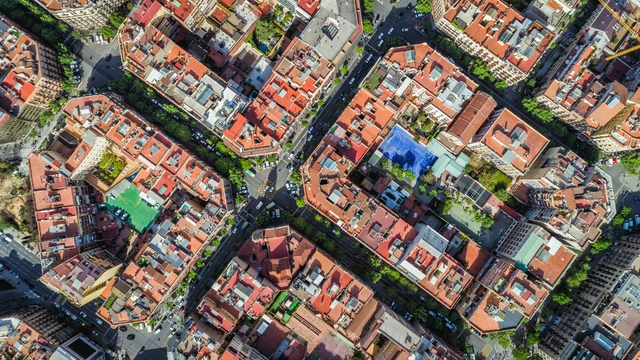
Aerial view of Barcelona, streets and buildings of the Eixample, famous urban grid. Image via shutterstock
ArchDaily is working with CityMakers to publish a series of articles, conversations, and interviews with the various actors in urban co-production behind the Barcelona CityMakers Lab 2021, an event taking place from November 8 to 12.
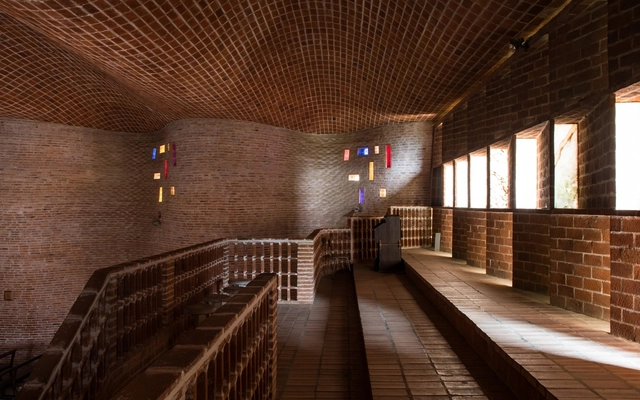
On Tuesday, July 27, it was announced that Eladio Dieste's Atlántida Church, one of his most renowned works in Uruguay, has been added to the UNESCO World Heritage List.
"Albañilas, construyendo sin patrones" (Women Masons, Building Without Bosses) is a short documentary released on May 5, 2021, produced by the Front of Organizations in Struggle #FOL. Active in more than ten Argentine provinces, the film gathers the deeply personal testimonies of Brenda, Natalia, Claudia, Isabel, Nora, Ana, and Moni, who share how they took up the bricklaying trade to construct the #FOL community hall.
As part of a collaborative project created by creative women, "Ostras & Burbujas" emerged—an event that took place on August 28 at Cucina, Mexico City. This event was conceived around the idea of creating an immersive space that plays with visual perception, featuring lighting design and control by Paola Jose, founder of SOMBRA, powered by Lutron - Ketra technology. By altering the atmosphere through light, this was paired with a culinary experience led by chef Montserrat Garza, who brought together taste, smell, and touch through a multi-course dinner paired by Cavanegra Natural Wine Club.


.jpg?1560291948)






_12.59.20.jpg?1623089088&format=webp&width=640&height=580)