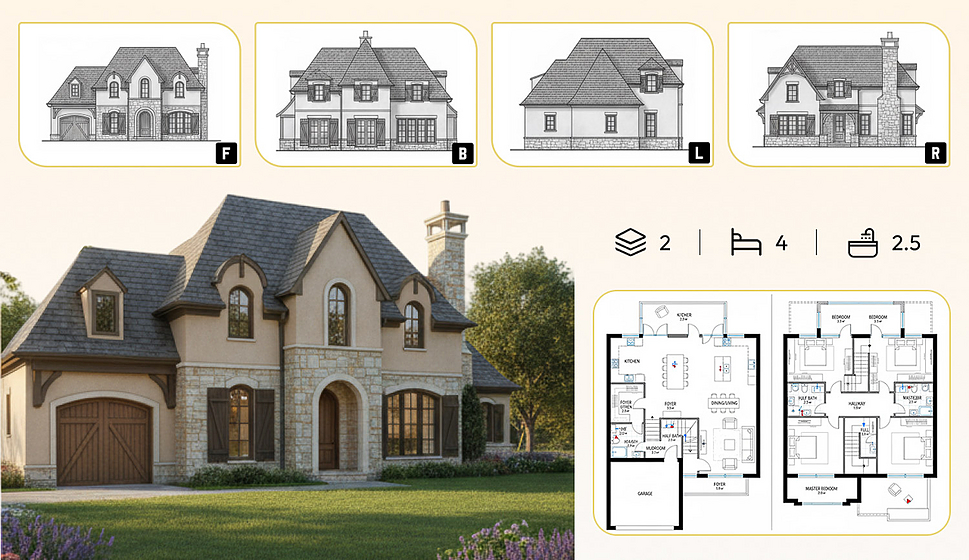
This guide covers a workflow that moves from project parameters to generated floor plans, 3D perspective views, exterior design exploration, and site context visualization, using AI tools in place of preliminary CAD and rendering work.
This guide covers a workflow that moves from project parameters to generated floor plans, 3D perspective views, exterior design exploration, and site context visualization, using AI tools in place of preliminary CAD and rendering work.
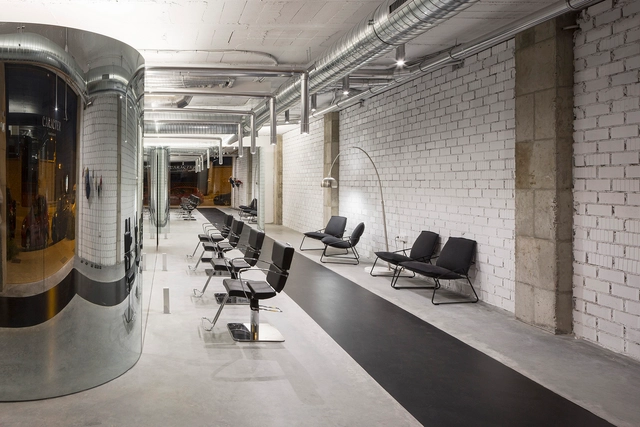
The 6th Arquia/Próxima Festival: Relevant Practices in Madrid has announced the winning projects of this edition. Aiming to provide visibility to Spanish architects during their first ten years of practice, the Arquia/Próxima cultural program focuses on disseminating, promoting, and highlighting their achievements and professional principles.
The biennial's theme, defined by its curator, Iñaki Carnicero, invited reflection "on the paradox produced by the international success of Spanish architecture, which does not correspond to the volume of architectural production in recent years, but nevertheless reflects work that is more relevant than ever," the organization explained.
The following awards were presented during the festival:

In 2017, Ramboll Studio Dreiseitl and RSAA/Büro Ziyu Zhuang were commissioned by Guangdong Zhuguang Group Co., Ltd. to create an ecologically transformative urban design and waterfront landscape along the northern bank of the Pearl River in Guangzhou's CBD. The planning phase of the project spanned nearly a year.

Walking is the most common form of transportation in the world and a basic human right. It connects us directly with our surroundings, does not pollute the city, and offers numerous health benefits, such as reducing chronic diseases, obesity, and diabetes. This is the message that the ITDP and Streetfilms convey in the film The Right to Walk, released this year.
If walking is so beneficial, why is it so difficult to do in urban environments? Rapid urban growth and car-centric planning have increasingly restricted space and respect for pedestrians. Every year, 1.3 million people are killed in traffic, half of whom are pedestrians, cyclists, or motorcyclists. Furthermore, traffic accidents result in 20 to 50 million hospitalizations annually, making them the leading cause of physical disability worldwide. More than 90% of traffic fatalities occur in low- and middle-income countries like Brazil, which has the highest number of traffic deaths per capita in South America.

_(2).jpg?1516721610&format=webp&width=640&height=580)
On December 20, the final curatorial review for the first edition of the National Essay and Research Competition, Arquitectura Escrita 2017, took place at the national headquarters of the Colegio de Arquitectos de Chile.
Organized by Grupo Arquitectura Caliente and co-organized by Ediciones ARQ, the competition awarded the 20 best essays out of 87 submissions in the undergraduate and graduate categories, representing 18 architecture schools across 9 different Chilean cities.
The competition was directed by Gabriela García de Cortázar, with a jury committee made up of 30 prominent academics and professionals.
Below is the research essay by Pontificia Universidad Católica student Francisco Cardemil, winner in the Undergraduate Category.

Jorge and Andrés Kálnay began a journey back in 1920. By that time, Argentina had already built most of its public buildings, Alejandro Bustillo was traveling through Europe, Mario Palanti was erecting his colossal Barolo Palace, and Le Corbusier would have to wait nine years before setting foot in Buenos Aires.
Little did the architect brothers imagine, when they boarded a ship bound for the United States, that they would end up in the waters of the Río de la Plata, shaping part of Buenos Aires's current architectural memory.
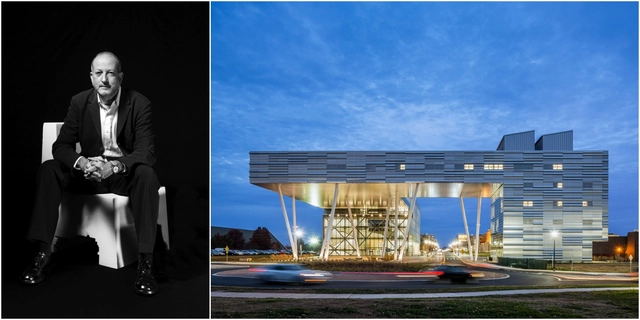
Mexican architect Enrique Norten will receive the Fine Arts Medal in Architecture, the highest honor awarded by the National Institute of Fine Arts (INBA) to individuals who have made outstanding contributions to Mexico's art and culture. With this award, the Institute celebrates his career and his contributions to the country's culture.
Born in Mexico City on February 27, 1954, Norten was drawn to the world of design and determined to pursue creative work early on. At the age of 20, he began his architecture studies at the Universidad Iberoamericana.

Dear readers,
As the end of the year approaches, we would like to thank you all once again for making 2018 our best year yet. Thanks to your continuous support and our close connection with our readers, we now reach far more architects around the world, inspiring them to create better urban environments.

Every Sunday morning, 120 kilometers of Bogotá are transformed into an extensive cycling circuit. This is La Ciclovía, a cultural and recreational initiative in which some of the Colombian capital's streets are designated as wide bike paths, allowing both residents and tourists to travel across Bogotá by bicycle.
In a radio interview broadcast by RCN, architect Jaime Ortiz recalls the origins of the ciclovía in the 1970s, when it emerged as a proposal developed alongside other architects to open up major avenues as cycling spaces every Sunday.
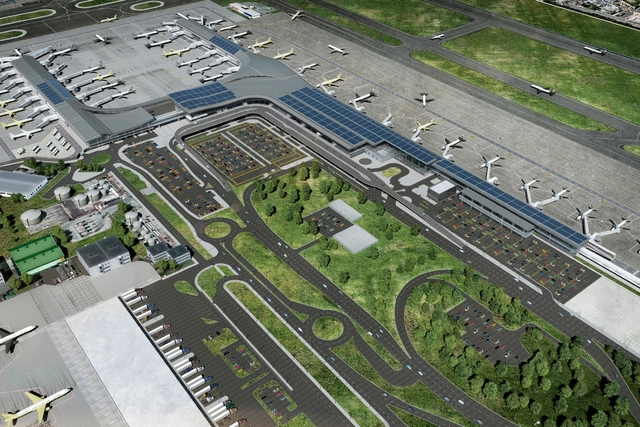
A solar energy system has been under construction since September of this year at El Dorado International Airport in Bogotá, Colombia. It is currently billed as the largest photovoltaic project in Latin America, according to local and international media outlets such as El Tiempo and EFE.
Set to begin operations in the first quarter of 2019, the installation will feature over 10,000 solar panels and have a capacity of 2,800 kWp. It will generate 3,815,000 kWh annually, equivalent to the energy consumed by 1,590 homes. Additionally, the project will use 89.4 km of cabling—a length comparable to the distance between Bogotá and Villavicencio.
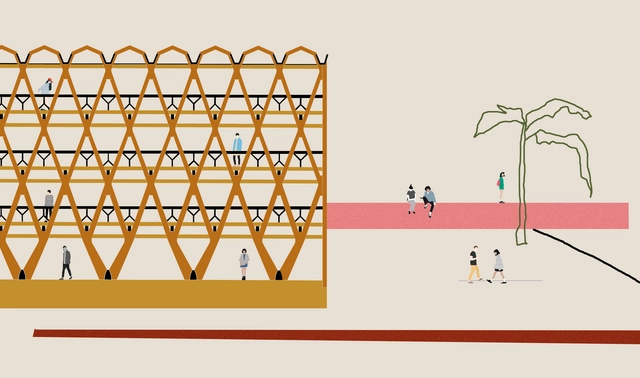
“Ensuring, through built works, that those ideas explained with these words stand up will be the best proof that those ideas are valid and these words true.”
(Campo Baeza – “The Built Idea”).
The Mendoza Association of Architects CAMZA has announced a new edition of Architecture Month MDA2018 under the theme "The Built Idea," to be held from August 28 to 31 at the Nave Cultural in the city of Mendoza.

Working hand-in-hand with a wide range of product manufacturers and suppliers allows us to access valuable information to support design and construction processes using different types of materials.
To make this knowledge readily available, we have compiled a series of guides, manuals, and tips covering everything from working with laminated wood and installing cladding, to applying protective finishes and varnishes. Read 12 useful articles below.
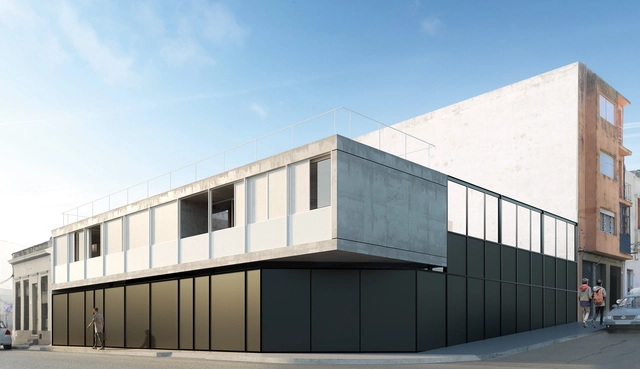
Held since 1949, the Raffle House Competition is a historic contest that has given new generations of architects at the School of Architecture, Design, and Urbanism (FADU – UdelaR) the opportunity to design and build a real project in Uruguay. The winning design becomes one of the prizes of the Architecture Raffle, an initiative through which each graduating class from the school takes a trip around the world to experience the best of global architecture.
This annual competition is open to all students at the Universidad de la República's School of Architecture, "contributing to collective construction and serving as a fundamental academic tool in the education of all students in general, and the competition participants in particular." For this edition, the brief was based on the concept of a sustainable city, utilizing existing infrastructure and connectivity while enhancing the landscape, urban, historical, and cultural heritage of Montevideo's Rambla Sur area.
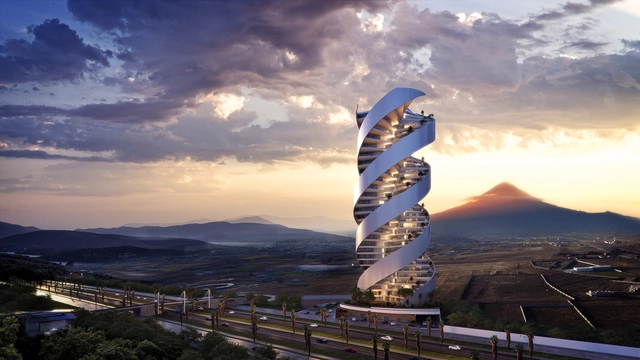
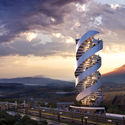
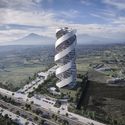
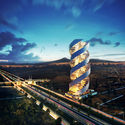
Torre Helea is a residential building designed by Bulnes Arquitectos currently under construction in Puebla, Mexico's second fastest-growing city. This project is an architectural response to the significant challenge of catering to the most demanding segment of the local real estate market. The qualities that define Torre Helea recently led it to be nominated for the 2018 World Architecture Festival in the residential category.
Featuring a geometry that stands out in its context, this 33-story tower with a stepped rise will include 93 residences and over 41,000 square meters of built area. Each floor features three rectangular apartments arranged radially like a propeller, which in turn rotates 15 degrees counterclockwise at each level as it ascends to a total height of 142.5 meters.
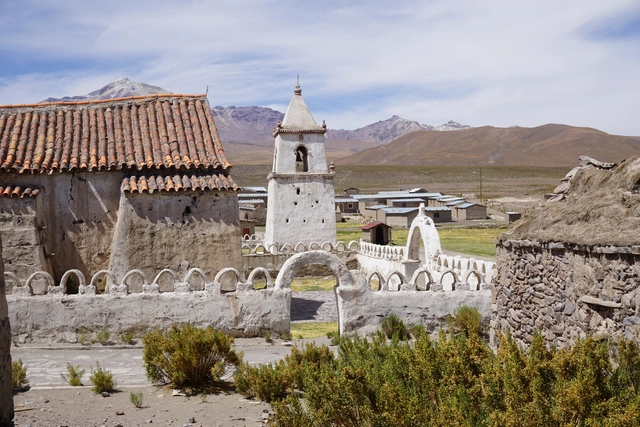
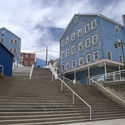
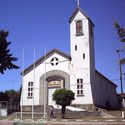
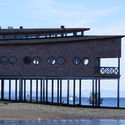
Chile's history can be read through its towns. Blending the architectural and building traditions of its indigenous peoples with the influence of European immigrants, these small localities reveal how their inhabitants have occupied and appropriated the territory according to their needs, customs, and specific contexts.
With a landscape that changes drastically from north to south, certain patterns emerge, shaped by climate and geography. From the use of adobe and stone in desert regions to meticulous craftsmanship with native woods in the south, along with the rich colonial architecture of the central valleys, these 24 examples offer significant lessons that every architect should study closely. Read on to discover them below.

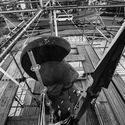
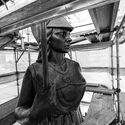
La Minerva is an iconic monumental sculpture in Jalisco's capital, created by Joaquín Arias in 1957 and commissioned by then-governor Agustín Yáñez. Years passed, and it was during the 1986 World Cup in Mexico that, following a victory by the Brazilian team, their coach gave the players the afternoon off, and the celebration ended up taking place there—at the intersection of López Mateos, Vallarta, Golfo de Cortés, and Circunvalación Agustín Yáñez avenues. Since then, La Minerva has become the preferred venue for both celebrations and demonstrations. However, weathering and traffic-induced vibrations took a heavy toll on its structure.
Heidegger wrote that humanity should dwell poetically.
Yet in a society driven by materialism, uniform residential buildings dominate the landscape. Is there a way of living that is better suited to human nature? This remains a question we cannot help but explore.
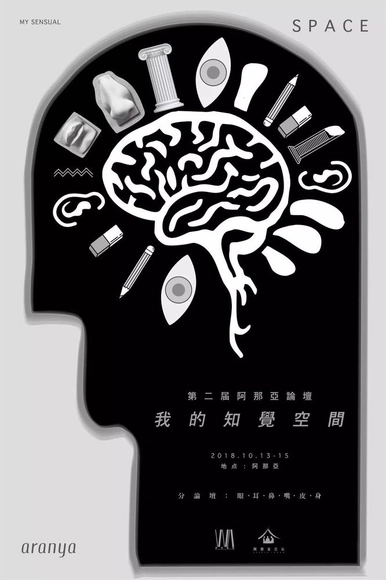
From October 12 to 15, World Architecture magazine, in partnership with Aranya, hosted the second Aranya Architecture Forum. Prominent Chinese and international architects, alongside cross-disciplinary leaders, gathered by the sea to discuss the relationship between architecture, art, life, and humanity.
Under the theme “My Perceptual Space,” the main forum was complemented by sub-forums featuring dialogues between architects and cross-disciplinary figures. The event also marked the launch of the Aranya Architect Debut Award, China’s first-ever award dedicated to architects’ debut projects. Additionally, a diverse program of cultural activities offered fresh perspectives on understanding architecture and space.
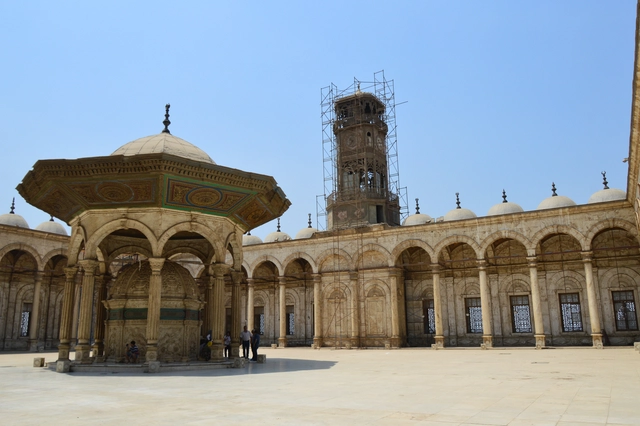
Around one in the morning in Cairo, despite the darkness of the night, everything feels yellow. Arriving in a city of 9 million people, with an airport that handles 3 million daily, is overwhelming, staggering—or, as Lovecraft might describe those lurking in the dark, indescribable and unnameable. In the gloom of a hotel room that saw its glory days long ago, I can see the Great Pyramid of Giza in the distance, shrouded behind the ever-present haze.
The relentless city devours almost everything in its path; the desert resists, tourism does its part, and, for now, the Sphinx simply watches. Restoration and archaeological work are always underway around the historic sites; you brush the dust off your feet only to uncover ancient remains. Saqqara—the Step Pyramid—is perpetually draped in massive scaffolding of dry wood, weathered from years of waiting for the next discovery that might finally let each prop rest. The heat in Cairo is stifling, and while collective memory associates the city with the pyramids and the Sphinx, its daily life breathes desert, diversity, tourism, commerce, and religion.
.jpg?1545322183&format=webp&width=640&height=580)
The waters of the Gowanus Canal in Brooklyn, New York, still do not smell good, although the problem was once much worse. They carry the remnants of years of industrial pollution and untreated sewage.
The area, which in the 19th and 20th centuries was primarily industrial, has undergone revitalization in recent years through federal investment (see here). New green spaces were created, and service-oriented businesses moved into the neighborhood. Residential property prices also rose, ultimately displacing long-time residents.

It is time to say goodbye to 2018. Following our showcase of the best architecture of the year, we have gathered the Chilean projects that generated the most engagement on our social media platforms. Indeed, in the architectural field, understanding where design is heading requires looking at its key works and observing how the public has responded to them.
Goodbye 2018, hello 2019.

Most people today live in cities, which are growing rapidly. We are living in the age of urbanization, an era that began in the early 19th century when vast masses of people decided to be closer to one another rather than close to the land. There is no doubt that sooner or later the vast majority of us, humans, will be living in cities.

“A thesis is like a pig; everything in it can be put to use,” concluded Umberto Eco in his book How to Write a Thesis. Indeed, these research projects, developed through four or five years of intense effort and sacrifice, become extraordinary tools and inexhaustible sources of information for both students and professionals looking to delve into a specific topic within their field of knowledge.
In Spain, the 2008 economic crisis triggered a notable increase in the number of architects who chose to pursue a doctoral thesis as a way to continue their academic training and expand their career options. Coupled with the rigorous training that Spanish architects typically receive, this has led to a vast body of exceptionally high-quality research, serving as an invaluable reference resource for both students and practitioners.
This article compiles 10 doctoral theses focused on major Spanish architects whose careers spanned the 20th century and who, for various reasons, left an indelible mark on the history of Spanish architecture during this period.
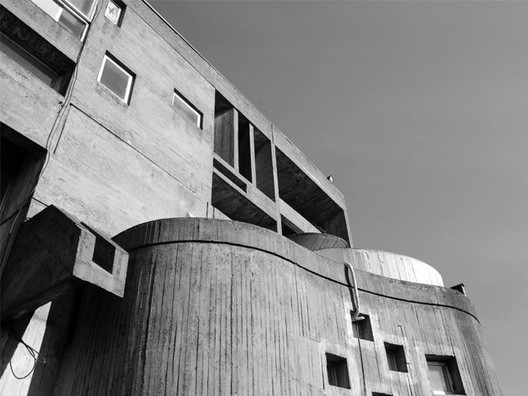

Architects Rafael Pina and Fabián B. Di Giammarino, writing for the ARKRIT Collective, offer an objective critique of a classic of Chilean architecture, the Copelec Building. As the authors of this article assert, beyond the many descriptive accounts surrounding the building, it has earned an unquestionable status precisely because it remains unquestioned.
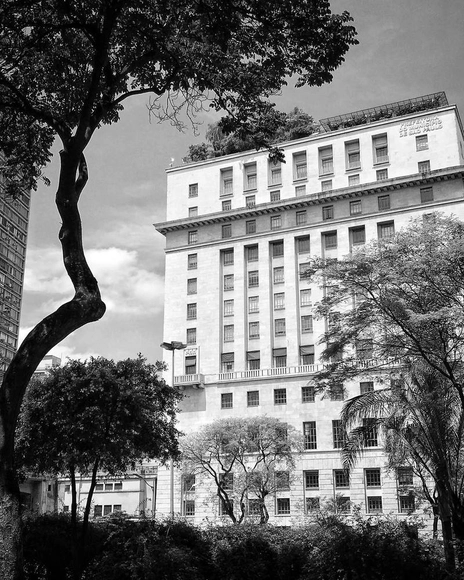
The City of São Paulo has opened a public selection process for professionals in the fields of architecture, engineering, agronomy, and geology, offering a total of 118 positions in these areas, in addition to 50 openings for organizational development and planning analysts. The positions are for roles within municipal secretariats and other government agencies.