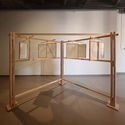
Through the construction of a narrative fiction, this work by Federico Lagomarsino, framed around the landscape, aims to depict everything that unfolds in contemporary society when a singular event occurs—in this case, the impact of the two largest meteorites detected to date in South America.
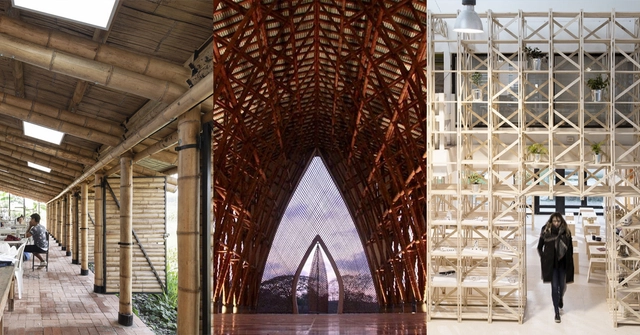
For the third time since its founding in 2002, Colombia will host the Latin American Social Workshop of Architecture Students under the name 'Tejiendo Paisajes: TSL Manizales 2022', marking the event's first edition since the start of the pandemic.
Cortesía de Pablo Senmartin (APS / Pablo Senmartin arquitectos)
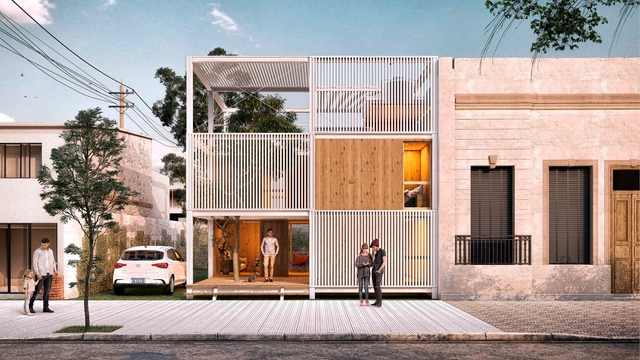
The Provincial Ideas and Preliminary Design Competition for the development of a prototype for Innovative Social, Urban, and Sustainable Housing (V.I.S.U.S.) was organized by the Architects' Association of the Province of Córdoba. Promoted by the Construction Cluster of the Province of Córdoba and supported by ADEC's Competitiveness Fund, the initiative seeks to address the growing housing deficit by fostering debate on how architects approach multi-family condominium housing as well as single-family social housing in Argentina.
Could a space be one and many at the same time? Under the name Minimum Common Multiple, Estudio BNAA has designed a space of minimal footprints—typically used for commercial premises or offices—with the unique feature of being able to transform into multiple spaces simultaneously. Located in San Luis, Argentina, the project references the mathematical concept of the least common multiple (LCM) but from a different approach and function, combining movement, flexibility, and the use of magnetism as a construction system.
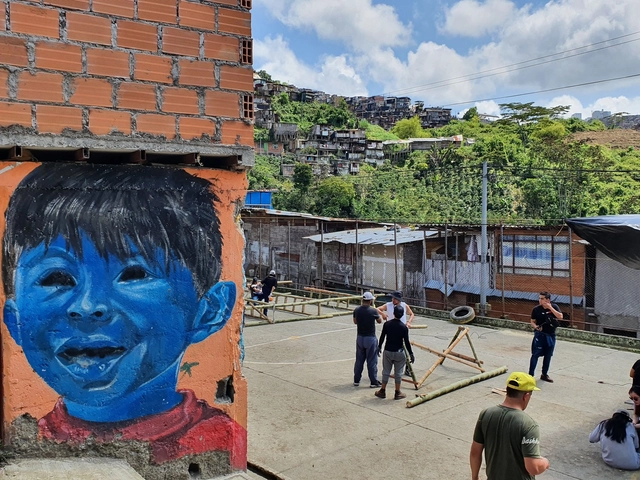
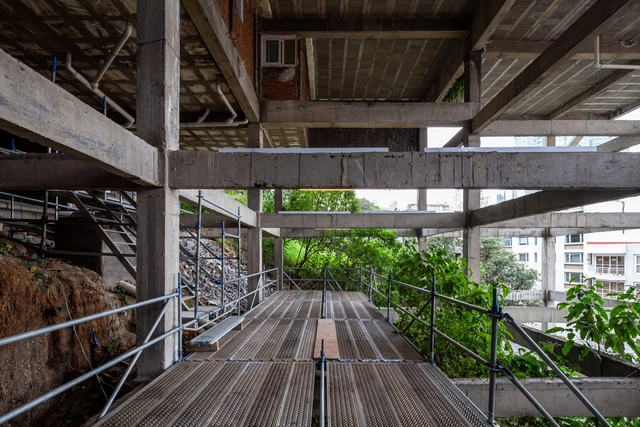
Twenty years after its first edition in Colombia, the Latin American Social Workshop returns to the South American country. In this edition, students from across Latin America, alongside architects from Colombia, Ecuador, and Chile, are intervening in three areas in the coffee-growing city of Manizales: a rural settlement in the middle of the mountain range, a self-managed park, and the slopes of an informal pedestrian neighborhood.
Here, we invite you to explore the progress made by the architectural teams participating in the 18th Latin American Social Workshop (TSL XVIII) in Manizales.
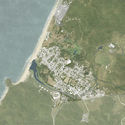
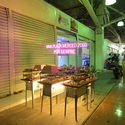
CHINAS CHINAS is a research project conducted by FLORA. It maps a trajectory through the city of Buenos Aires, Argentina, based on a typological analysis of Chinese supermarkets. Its objective is to recognize and explore the modes of appropriation and domestic micro-scales that occur within them, demonstrating that urban architecture is shaped by everyday banalities. Ultimately, architecture takes on meaning when living conditions are defined by the people themselves. Inhabiting—beyond mere functionality—is precisely about this.
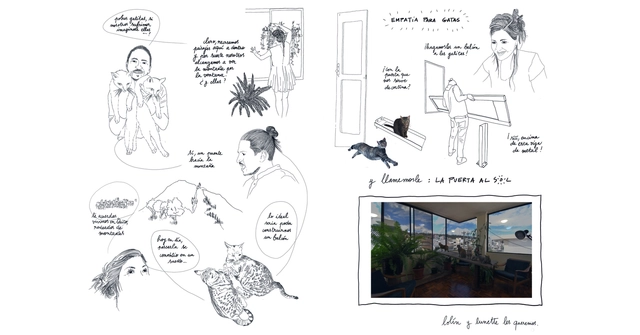
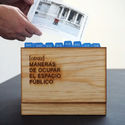
In the midst of today's information age, several Latin American architecture firms are returning to analog formats, ranging from fanzines and illustrations to manuals and postcards.
Against the backdrop of the Taller Social Latinoamericano in Colombia, we spoke with the firms Ruta 4 Taller (Colombia), Coonvite (Colombia), La Cabina de la Curiosidad (Ecuador), and República Portátil (Chile)—all of whom have, coincidentally, explored these formats in their recent work.
More than a trend, industrialization is a necessity in the construction industry. In recent years, we have witnessed its importance in increasing productivity and speed of execution—as well as reducing waste—in architectural projects. Beyond streamlining construction processes, this serial, mechanical, and standardized production increases quality and shortens delivery times. If initial project decisions incorporate the modulation of the various stages that can be industrialized within vertical and horizontal parameters, the outcome is much more efficient than if these are evaluated during construction (when it is no longer possible to reduce waste through modulation). Furthermore, by minimizing waste and reducing the consumption of energy and water resources, it also contributes to a more sustainable industry.
When designing residential interiors, architects increasingly lean toward creating environments where flexibility and space optimization provide solutions tailored to programmatic and functional needs, helping to achieve the well-being and comfort that turn a house into a true home.
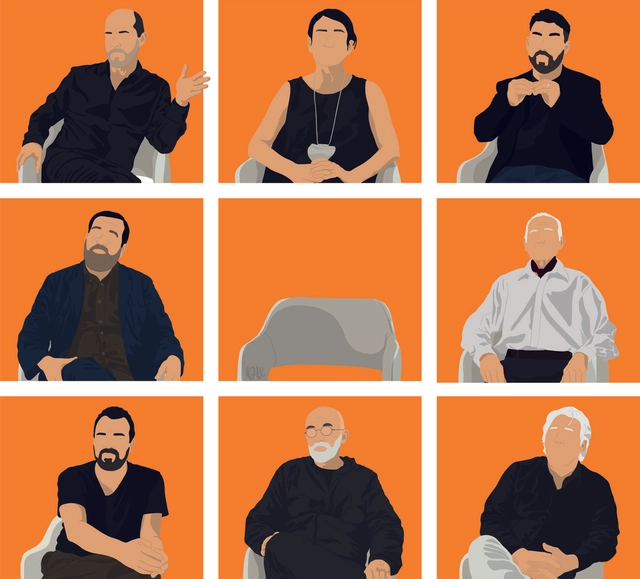
Desde la periferia is an audiovisual project directed by José Luis Uribe, PhD in architecture and professor at the School of Architecture of the University of Talca, Chile. The project consists of three documentaries to be released progressively over the next two years, exploring various aspects associated with contemporary Latin American architecture. The first installment, Volume I: Ugly, Dirty & Bad: A Contemporary Architecture in Latin America, is an audiovisual essay that gathers some of the initial thoughts on its current state through the oral accounts of a group of architects in a hotel room in Asunción, Paraguay.
Cortesía de Consejo Superior de los Colegios de Arquitectos de España
To promote the key, transformative role of architecture in improving quality of life and contributing to a better world, the Higher Council of Colleges of Architects of Spain (CSCAE) is revamping the awards it has presented since 1981 with the launch of the first edition of the ARQUITECTURA Awards.
Architects and designers, as well as psychologists and sociologists, recognize that aesthetics and its underlying philosophy have the power to change how we perceive the world around us. Consequently, a deeper understanding of what is beautiful holds the powerful potential to alter how people respond to their environment.
Exploring the different meanings of aesthetics in architecture, from 'form follows function' to the aesthetics of the metaverse, can help us understand the potential of our physical and virtual environments on the path toward a better world.
Much has been written on the subject, from Alberto Pérez-Gómez's "The Beautiful and the Just in Architecture" to Pablo Caldera's "The Failure of Beauty." Now, however, we want to open up the debate and invite you, our readers, to share your perspectives on what makes a building or a city beautiful.
Share your thoughts in the form below. Selected responses will be published in an upcoming article.
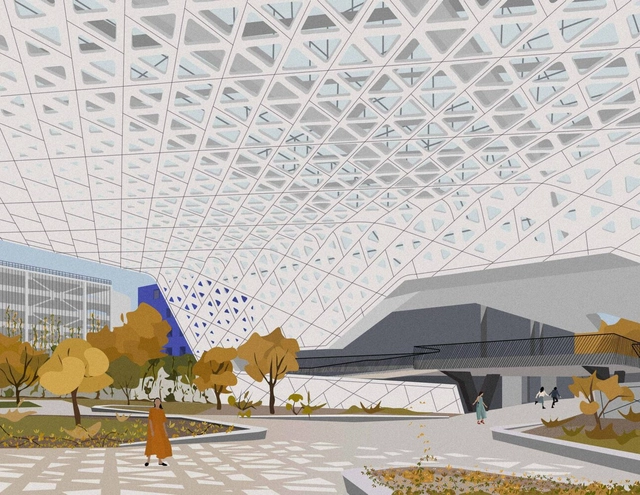
In 2019, the Governing Council of the URJC (Universidad Rey Juan Carlos) approved an infrastructure plan to remodel several of the university's campus buildings, including the classroom and departmental building on the Madrid-Vicálvaro Campus. This led to an agreement with the COAM (Official Association of Architects of Madrid) to organize an ideas competition to select the final design for the building, which was launched in February 2022.
Every year, the National Fund for Culture and the Arts (FONCA), through the National System of Art Creators (SNCA), recognizes those who represent excellence in national culture through the Jóvenes Creadores Program. By providing grants, the program supports the creative and training processes of young Mexican artists, fostering favorable conditions for the development of original, significant, and positive creative projects.
This article was originally published in La Joven Cuba on June 28, 2022.
A few weeks ago, I visited the rooftop observation deck of the hotel Paseo del Prado and marveled at its immense beauty during the sunset. Ahead, the entrance to the bay and the Castillo de los Tres Reyes del Morro; turning left, the silhouette of the Malecón; turning right, the Paseo del Prado, with the massive Capitol building crowning the perspective. Few cities in the world possess such architectural and landscape beauty, such history and monumentality.
Yet, looking back, what I saw was nothing to be proud of. Though it still held a certain beauty, it was a sad, gray sight: the vast, faded, and deteriorated expanse of the city stretching behind the facades of Prado and the Malecón.
Architectural works from around the world are the primary inspiration for Erika Moreno, the creator of HUAJJE, a digital illustration project. The project was born in 2019, a year after Moreno completed her architecture degree in Tijuana. “The project started by accident; my only goal in making these drawings was to learn how to use more Photoshop tools—it was a personal challenge.” To document her process, she decided to open an Instagram account, which has since fostered an organic community that shares and supports her work. This has encouraged her to overcome her fears and even host workshops on the subject in various formats.
For the third time since its founding in 2002, Colombia will host the Latin American Social Workshop for Architecture Students under the name 'Tejiendo Paisajes: TSL Manizales 2022'—the first edition of the event since the onset of the pandemic.
The ARQUITECTURA Awards, organized by the Higher Council of Colleges of Architects of Spain (CSCAE) and officially sponsored by COMPAC, concluded their inaugural edition with a celebration at CaixaForum Madrid, where the nine winning projects were announced. The awards recognized and celebrated social, cultural, and sustainable values in architecture and urbanism, with a particular focus on the projects' impact on human health, well-being, and safety, as well as planetary sustainability.
Cortesía de Cayetana Mercé, coordinadora de Soy Arquitecta
The professional network Soy Arquitecta, the Feminist Urbanism, Architecture, and Design Research Group, and the Observatory of Urban and Territorial Phenomena (FAU-UNT) organized the Argentine Female Architects Survey within the collaborative framework of CONICET, PICT "Design, Architecture, and Urbanism with a Gender Perspective in Argentina," and the Gender, Cities, and Territories Diploma program. The survey aimed to diagnose the employment status of Argentine female architects across the country's different regions, reflecting on the challenges they face in various professional environments and proposing new lines of action and transformation to improve their current situation.
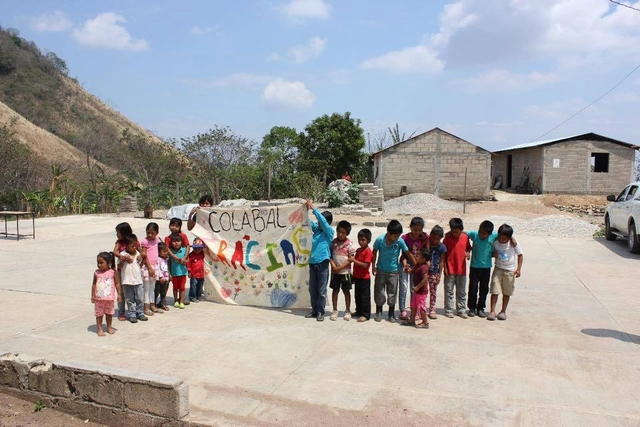
When we speak of social production, we refer to processes where community leaders are adults who represent and make decisions for their community; however, we often overlook children, who also enjoy and live in these spaces. They are the ones with limitless imagination and creativity, who create scenarios on Mars on a basketball court. They are the ones who hold the best car races in the loose sand of their backyards. They are children who, due to various family or economic circumstances, cannot write a letter, but instead express what they feel and want through the lines they draw.
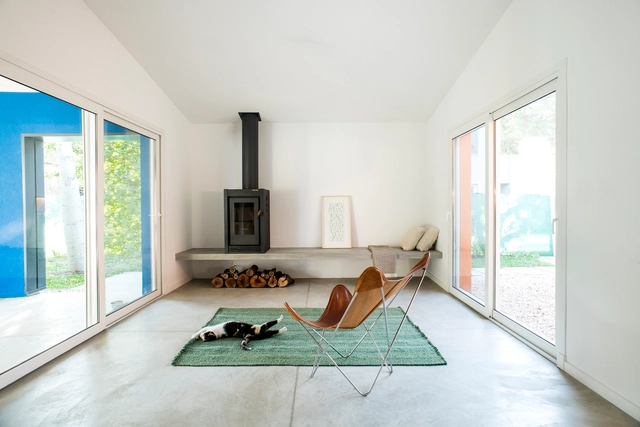
Originating as protection against low temperatures around 3,500 years ago, carpets and rugs have, over time, evolved into a true art form, reaching a high level of specialization by the 16th century. Rugs, carpets, and tapestries of various shapes, colors, textures, and patterns are integrated into different areas of the home to meet users' needs and enhance spatial comfort, sometimes extending far beyond their original purpose.
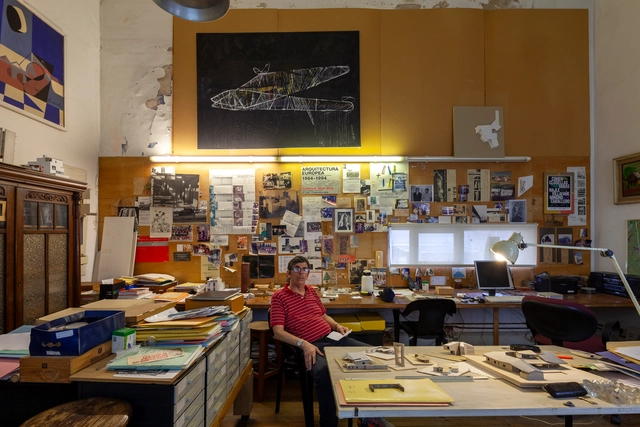
Marcelo Villafañe (1951), an architect from Rosario, passed away on Wednesday, January 26, as announced on social media by the Colegio de Arquitectos Distrito 2.
Proyectar a Conciencia 5.0. Image Cortesía de Sto Chile
Commemorating PAC 3.0 and PAC 4.0, which took place during the quarantine, and launching PAC 5.0, Sto Chile celebrated at "Casa ArchDaily" with competition partners and friends from the private, public, trade, and industrial sectors.
.jpg?1651685605&format=webp&width=640&height=580)


 .
.
.gif?1654012767)



.jpg?1656450766&format=webp&width=640&height=580)





.jpg?1642708223&format=webp&width=640&height=580)




.jpg?1653591774&format=webp&width=640&height=580)