The recent budget cuts for federal universities have reignited a debate that deserves to remain permanently active: the quality of education in Brazil. The first edition of theEncontros de Arquitetura, organized by IABsp, set out to address this theme through the lens of architecture, bringing together four professionals with extensive experience in school design: Catherine Otondo, Marina Grinover (Base Urbana), Keila Costa (+K), and Pablo Hereñú (Hereñú & Ferroni Arquitetos).
https://www.archdaily.com/1122467/architecture-and-education-the-construction-of-a-pedagogical-spaceChristina de Castro Melo, Gabriela de Matos, Marco Artigas e Romullo Baratto
Officially debuting the partnership between ArchDaily and Arquicast, episode #68 Interview: ArchDaily Brasil is now live. In this episode, three of the editors from the Brazilian platform—Pedro Vada, Eduardo Souza, and Matheus Pereira—share a behind-the-scenes look at what it is like to work for the world's most visited architecture and urbanism website. The challenges of adapting to a new kind of career in architecture, the speed of industry transformations, and the role of technology and collaboration are among the topics discussed in this casual and informative conversation, which can be accessed here!
St. Mark's Basilica in Venice. Photo: dasu_ on Visualhunt.com / CC BY-SA
Unesp (São Paulo State University), through its virtual communication channel Univesp TV, is offering a free online course in Art History. Comprising 29 video lessons, the course is aimed at undergraduate and graduate students interested in art, history, research, and culture.
Women in architecture, contemporary production in the Global South, theory and history, buildtech, new materials, recycling in construction—2019 was a year rich in investigations and reflections that approached architecture from a variety of perspectives. Fulfilling our mission to make ArchDaily a source of tools and inspiration not only for professionals and students but also for anyone interested in architecture, we published hundreds of articles on topics as diverse as the perspectives on the built environment.
This year, the Favela-Bairro Program marked 25 years since its creation. Several events and articles have reflected on the milestone, assessing the program's impact on urban housing in the participating cities. We at Arquicast also discuss the topic in episode 76, now available on our platforms.
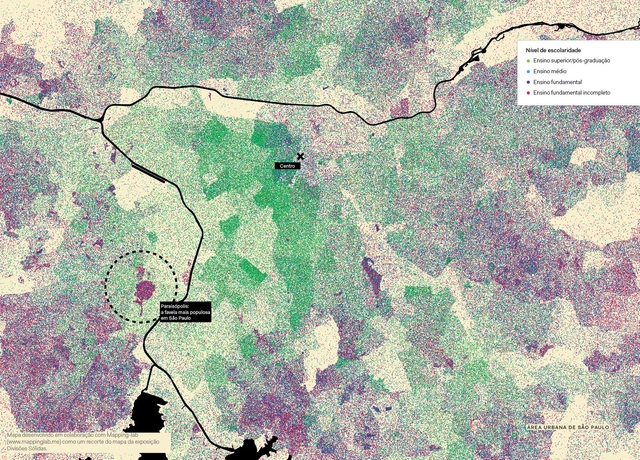
Level of education – crop from the map of the exhibition Solid Divisions
The Walls of Air exhibition in the Brazilian pavilion at the 2018 Venice Biennale presented 17 projects from different regions of the country, selected from an open call, as well as a series of large cartographic drawings addressing different aspects of the country's urbanization through the lens of architecture. In this publication, we present the series of ten maps featured in the Walls of Air exhibition catalog as excerpts from the exhibition's maps—a study developed by Mapping-lab in collaboration with the curators of the Brazilian Pavilion (Gabriel Kozlowski, Laura González Fierro, Marcelo Maia Rosa, and Sol Camacho) and their team.
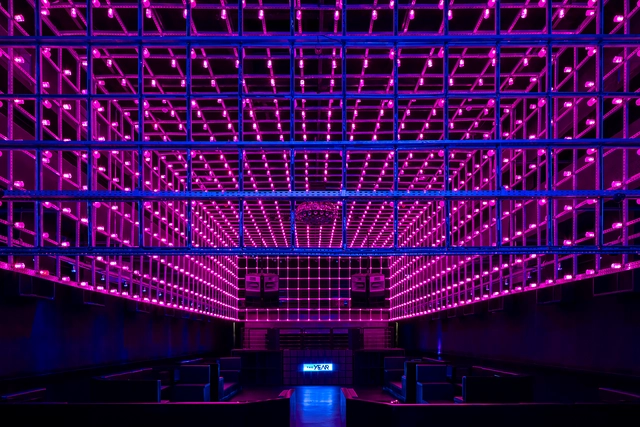
As an escape from daily worries, nightclubs are often venues for physical expression and releasing stress. Designed specifically for dancing and aiming to craft bold atmospheres, architects around the world are increasingly being commissioned to design these venues, delivering innovative concepts that range from unique material selections to unconventional lighting designs.
Green roofs retain rainwater, reducing flooding and stress on sewer systems. Photo: Kathleen Phillips/AgriLife Today
More than 600 million people lack access to clean drinking water. Droughts affect over 35 million every year. And by 2050, 1.3 billion people will live in flood-prone areas. Many believe that building dams, water treatment plants, and other built infrastructure are the only solutions to these challenges—but that is only because the many benefits of natural (or green) infrastructure have not been considered.
https://www.archdaily.com/1122313/debunking-myths-5-things-you-need-to-know-about-natural-infrastructureSuzanne Ozment e Irene Rehberger Bescos
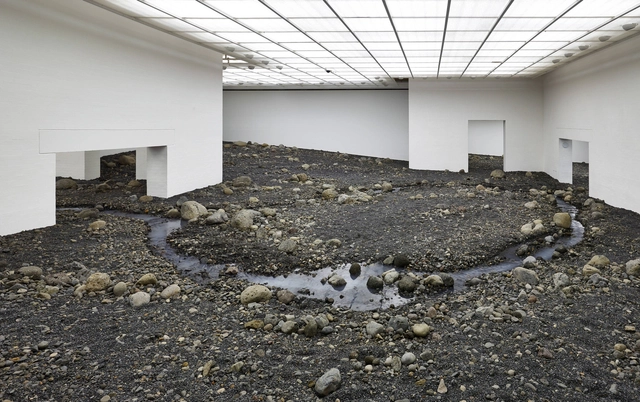
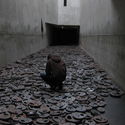
Riverbed exhibition by artist Olafur Eliasson. Courtesy of Louisiana Museum of Modern Art
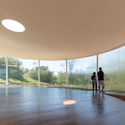
When thinking of galleries, museums, and exhibition spaces in general, the image of an enclosed, well-lit room with white walls and a neutral floor—likely made of wood—commonly comes to mind. The notion of designing exhibition spaces as "pure" environments, whether to focus on the artwork itself or to facilitate the rotation of exhibitions, has perhaps been the dominant guiding principle in the creation of these spaces over the last few decades. However, just as art transforms space, space can also be a transformative agent for art. This shifting perspective gave rise to artistic productions conceived for specific venues, widely known as site-specific installations.
Videos
Goetheanum im Winter von Osten. Image Cortesia de Trienal de Arquitectura de Lisboa
Within the scope of The Poetics of Reason, this year's Lisbon Architecture Triennale explores the nexus between Agriculture and Architecture, two complementary fields that emerged around 10,000 years ago during the Neolithic Revolution and, later, in the Anthropocene. Given the current environmental crisis, the core hypothesis of the exhibition Taking the Country's Side: Agriculture and Architecture, curated by Sébastien Marot, is that no consistent thinking can develop in the future of either discipline unless they are once again allied and fundamentally reconsidered together.
Dimensão Livre. Image Cortesia de Outros Territórios
The open call Outros Territórios – International Call for Urban Intervention Projectshas selected the seven finalists of the program's first stage. All will be presented in an exhibition at Viaduto das Artes, an intriguing cultural space in the Barreiro region installed under two overpasses and aligned with the call's general concept of exploring possibilities for activating urban gaps.
In Asunção, Paraguay, the XI Ibero-American Biennial of Architecture and Urbanism announced today the winners of the Panorama of Works section for this edition of the event, "all faithful to the spirit of the XI BIAU: inhabiting, the inhabitant," according to the organizers.
Out of 997 projects in Latin America, 17 architectural works—predominantly for collective use—built in Argentina, Brazil, Chile, Ecuador, Spain, Mexico, Paraguay, Peru, Portugal, Uruguay, and Venezuela were awarded.
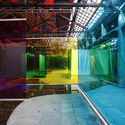
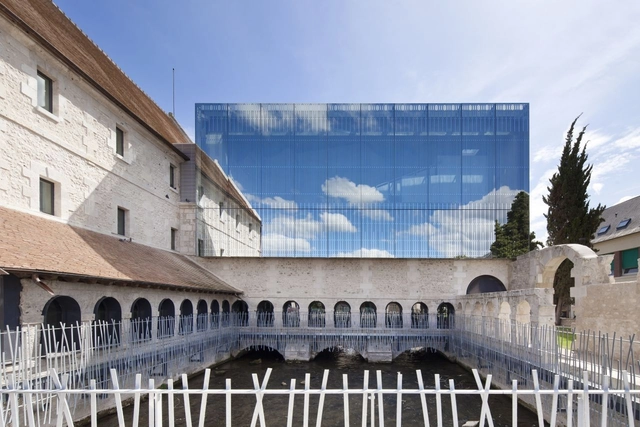
A common choice for commercial and corporate buildings, mirrored facades often evoke mixed feelings among architects, frequently leaning toward the negative. There is no shortage of arguments against them, and they generally hold merit—citing everything from the decline of modern architecture and the homogenization of its glass facades to climate concerns and a disregard for local context reflected in these surfaces.
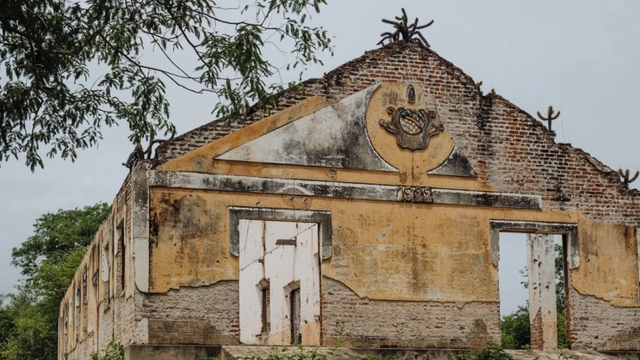
Ruins of the concentration camp in Senador Pompeu mark the struggle against hunger and the 1932 drought. Photo: Gustavo Gomes/EBC. Image via Haus
The year 1932 is a milestone in the history of Céará. One of the worst droughts ever recorded devastated the sertão, leading to scenes already immortalized in classics of Brazilian literature—such as Vidas Secas by Graciliano Ramos and O Quinze by Rachel de Queiroz: drought refugees forced to leave their homes to escape hunger and misery.
Projects working to preserve and promote Brazilian Cultural Heritage can now access the official guidelines to participate in this year's Rodrigo Melo Franco de Andrade Award. Globally recognized for its cultural diversity, Brazil is a country whose identity reflects the influence of various groups that helped shape Brazilian society. For 32 years, the Rodrigo Award, organized by the National Institute of Historic and Artistic Heritage (Iphan), has encouraged and recognized those who work to preserve the country's cultural assets.
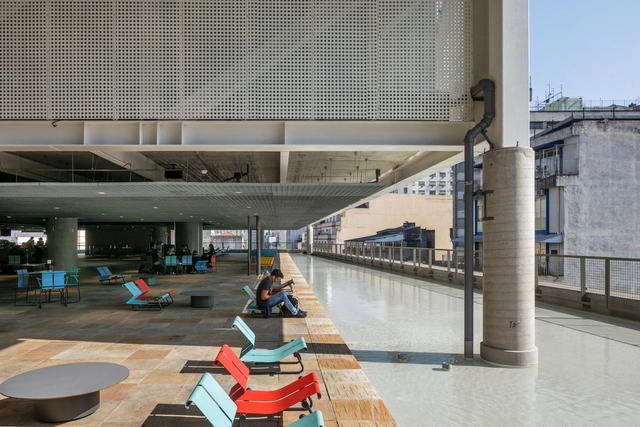
Applications are now open for the 6th Instituto Tomie Ohtake AkzoNobel Architecture Prize. The initiative continues to map contemporary architectural production by highlighting, for the sixth consecutive year, significant projects built in the current Brazilian landscape that demonstrate a commitment to their site and sustainability, as well as design and constructive inventiveness.
On October 19, a workshop on implementing an ecological sanitation system will be held. The event will take place in São Paulo's South Zone and is open to anyone interested. The workshop is organized by the social-environmental project cooperative Sapiência Ambiental in partnership with the UFABC Agroecology Center.
Videos
Katsushika Hokusai - Gaifū kaisei - Public Domain. Image via Wikipedia
Escola da Cidade has shared with us a lecture series on Japanese Architecture and Culture, which is part of the Estúdio Deriva program. This series features the following lectures: "Ambience Without Hierarchy: SANAA and Electronic Music" with Guilherme Wisnik, "Contemporary Japanese Culture" with Gabriel Kogan, "The Professional Practice of Japanese Architects" with Lourenço Gimenes, "A Graphical Analysis of Toyo Ito's Mediatheques" with Marina Lacerda, "Destroy to Build: The Impact of Tokyo's Reconstruction Plans in Akira" with Beatriz Oliveira, "Jidai no nagare, the Flow of Eras: Japanese Wood Joinery" with Heloisa Ikeda, and "The Tōkaidō Road: Travel, Woodblock Prints, and Cities of the Tokugawa Period (1603-1868)" with Fernanda Sakano. Watch all the lectures here.
https://www.archdaily.com/1122348/japanese-architecture-in-7-lessonsPedro Vada
Great ideas can change the destiny of cities forever when implemented in concrete, steel, and stone. When Saint Petersburg, Russia, was founded in 1703 by Peter the Great, he envisioned the new capital as an emblem of a modern Russian empire, inspired by Western European commercial hubs like Amsterdam. In the 20th century, Chandigarh, India, was shaped as an English "garden city" to demonstrate progress and aspirations of prosperity in post-partition India. Halfway across the world in the United States, Detroit transformed into one of the world's industrial megacities, shaped by the ideals of the American Dream and Henry Ford's visionary production.
https://www.archdaily.com/1122349/4-emerging-concepts-that-can-transform-citiesAnne Maassen e Madeleine Galvin
In highly urbanized areas, high land costs and competition for access to urban infrastructure make semi-detached buildings a common sight, particularly in residential zones. Almost always built along an axis of symmetry, they form pairs or rows of multiple homes which, besides lowering construction and design costs, optimize land use.
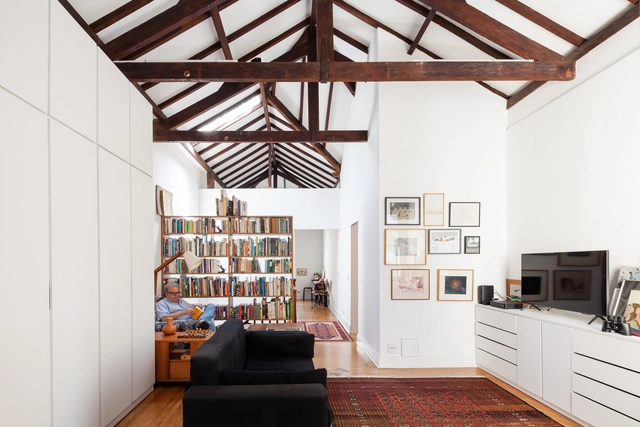
Here, we select ten Brazilian semi-detached houses that showcase different design strategies for addressing urban constraints.
In April, UMAPaz is offering a course aimed at individuals who want to learn more about sustainability applied to architecture and construction projects, including small renovations. With an introductory approach, it seeks to clarify concepts of sustainable construction for anyone interested in the topic, without requiring prior knowledge.
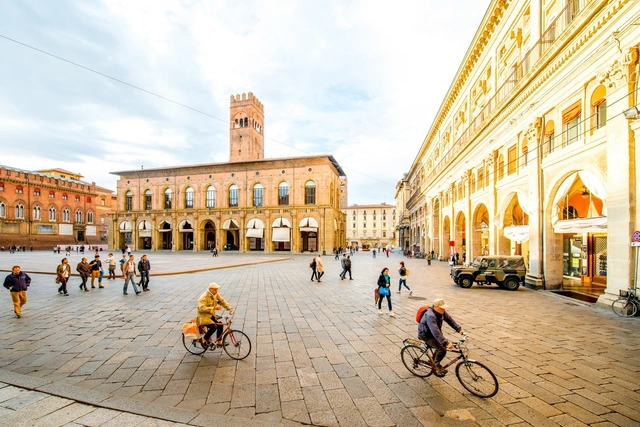
One of Italy's most important culinary hubs, Bologna is aiming to encourage its residents to adopt cycling, public transit, or simply walking as their primary means of transportation—leaving their cars at home. To achieve this, the city has launched an incentive program.
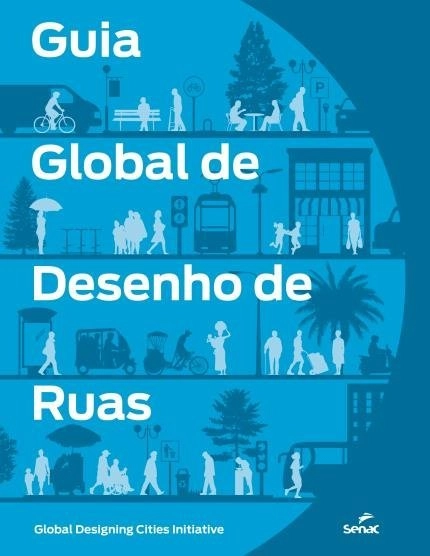
The urban public space between two architectural masses is defined as a street. It is where we establish the relationship between motorized vehicles, non-motorized transport, and pedestrians. In managing this relationship, public space requires a series of systems to guarantee active occupancy, in addition to infrastructure and safety. Consequently, the proper design of roadways and their immediate public surroundings becomes essential. Beyond what meets the eye, water, gas, electricity, and telecommunications networks are laid out beneath our feet, completely unnoticed.
.jpg?1563548779&format=webp&width=640&height=580)






.jpg?1569333854&format=webp&width=640&height=580)



_-_Google_Art_Project.jpg?1558383794&format=webp&width=640&height=580)

.jpg?1549028134 "© Alessandro Guimarães")


.jpg?1550588629&format=webp&width=640&height=580)