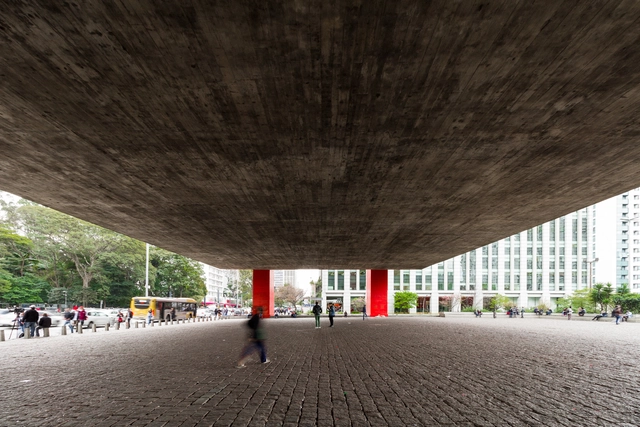
Lina Bo Bardi was undoubtedly one of the most expressive architects to ever practice in Brazil. Born in Rome, she became one of the most important figures to synthesize Brazilian culture for the world, merging architecture and politics by breaking down the barriers between high culture and popular culture.
Over the last few years, ArchDaily Brasil has published a series of articles and reflections on her material and immaterial work. To this end, we have compiled a selection of these texts to serve as a foundation for a deeper understanding of the architect:
The future of architecture is urban; there is no longer any doubt about it. Projections indicate that by 2050—that is, in just over 30 years—75% of the world's population will live in cities, while in Brazil this figure will exceed 90%. However, our discipline must concern itself with the quality of life for everyone; therefore, projects in rural contexts will continue to be on the agenda of architects worldwide.
Below, we present a selection of residential projects built in the countryside. These Brazilian houses, nestled in rural and pastoral landscapes, are designed for the daily lives of their inhabitants or as temporary retreats to decompress from urban life. One way or another, they all share a single objective: to open themselves up to their bucolic surroundings.
The Spanish word medianera carries a meaning that is often translated as "party wall" or "blind wall," yet its significance in Spanish-speaking contexts takes on a deeper cultural and urban resonance when considered in local terms. This architectural element, which simultaneously separates and connects adjacent lots in such a striking manner, is a recurring feature in Spanish-colonized cities across the Americas. In the case of Argentina, Buenos Aires took shape under the principles of those who arrived with gridiron plans and the rigor of orthogonal organization. The city developed within this logic, resulting today in an urban landscape persistently marked by the presence of these rigid, seemingly unavoidable elements known as medianeras.
Jardim Lapenna, São Miguel Paulista. Photo: Eduardo Silva/32xSP
Residents of Jardim Lapenna, in São Miguel Paulista, in São Paulo's East Zone, have created a participatory neighborhood plan in the state capital. Out of 32 urban actions planned in areas such as lighting, security, and paving, seven were selected as priorities and are currently being incorporated into the annual budget bill (PLOA) for 2019.
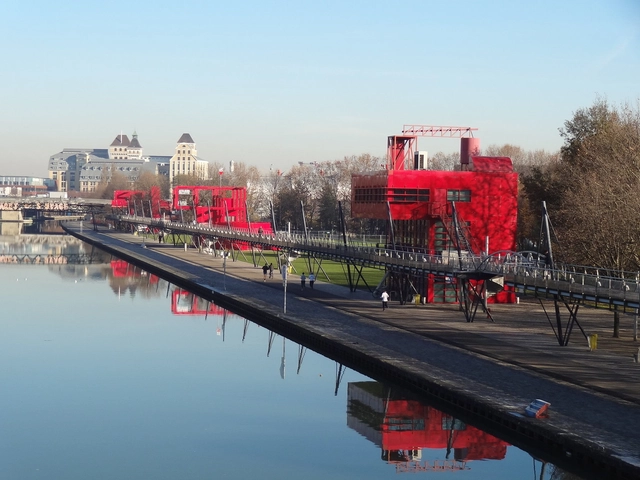
Parc La Villette. Image: William Veerbeek on VisualHunt.com / CC BY-NC-SA
In modern architecture, designing involves analyzing, predicting, and determining spaces and functions with precision, leaving no room for error. Throughout the second half of the 20th century, this rationalizing character, driven by maximum efficiency, was harshly criticized, and "erring"—in the sense of wandering, roaming without aim or destination—became recognized as an inevitable part of the human experience.
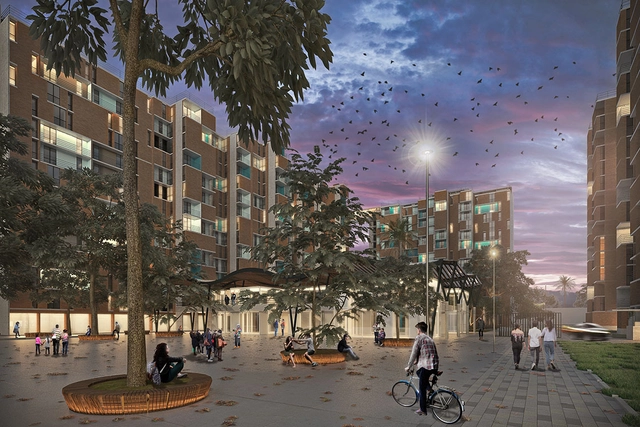
The firm Vigliecca & Associados was named the winner of an international competition in Bogotá, organized by Compensar, a Colombian social service organization, in partnership with the Universidad de los Andes. Held in two phases, the competition featured invited firms from Spain, the United Kingdom, Portugal, the Netherlands, and Belgium, as well as Colombia, and aimed to select the best proposal for a social housing complex.
In early September 2019, the Geography, City and Architecture graduate program at Escola da Cidade welcomed Canadian philosopher Mark Kingwell for a series of lectures. On Wednesday, September 4, students Pedro Perez Barroso, Lua Victor Vieira Lima, and Igor Augusto, invited by the Scientific Council of Escola da Cidade, interviewed Kingwell on issues concerning society, politics, the climate emergency, architecture, and cities.
https://www.archdaily.com/1122662/we-need-to-change-our-way-of-living-on-a-large-scale-interview-with-mark-kingwellPedro Barroso, Lua Lima e Igor Coimbra
Local é o primeiro sítio misto do Brasil, reconhecido por cultura e natureza. Image Cortesia de Iphan
Brazil has just received another World Heritage designation. Paraty and Ilha Grande (RJ) were recognized this Friday, July 5, by the United Nations Educational, Scientific and Cultural Organization (UNESCO) Committee during a meeting in Baku, Azerbaijan. There are now 22 Brazilian properties on the list of sites of outstanding universal value.
Urban intervention around the Anne Frank school in Belo Horizonte. Photo: Rafael Tavares / Octopus Filmes
In September of this year, the streets surrounding the Anne Frank School in the Confisco neighborhood of Belo Horizonte received new ground markings, featuring pedestrian crosswalks and lane boundaries to organize vehicle circulation. In addition, planters made from recycled tires, traffic cones, and street furniture for resting were installed. The following weekend, from September 20 to 22, coinciding with World Car-Free Day, motorized traffic was temporarily closed, transforming the space into an Open Street with concerts, cultural activities, and gathering spaces for local residents. The following month, in October, students aged 8 to 10 from the Anne Frank School participated in a workshop to assemble traffic signs, writing messages that would become part of the neighborhood's official street signage.
https://www.archdaily.com/1122620/tactical-urbanism-paint-cones-and-the-transformation-of-citiesITDP Brasil
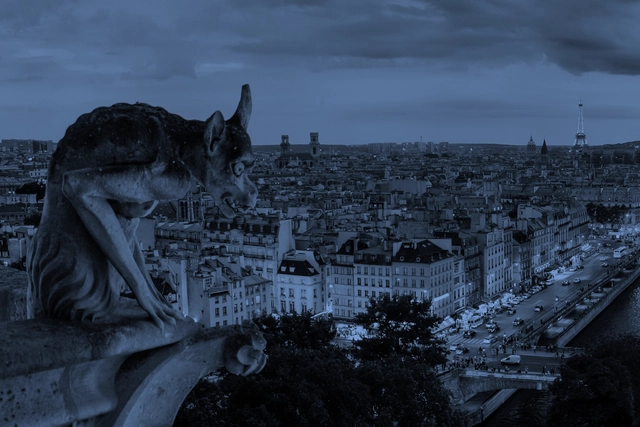
In another episode of the Architecture and Cinema series, Arquicast brings the film Paris, I Love You to the discussion. In addition to the usual podcasters, the episode features advertising professional and journalist Janaina Pereira, who holds a postgraduate degree in Cinema and contributes to various entertainment outlets. Janaina previously participated in episode #58 on the film Her. Another returning guest on Arquicast is cinematographer and cinephile Kiko Barbosa, who always brings engaging insights to our conversations.
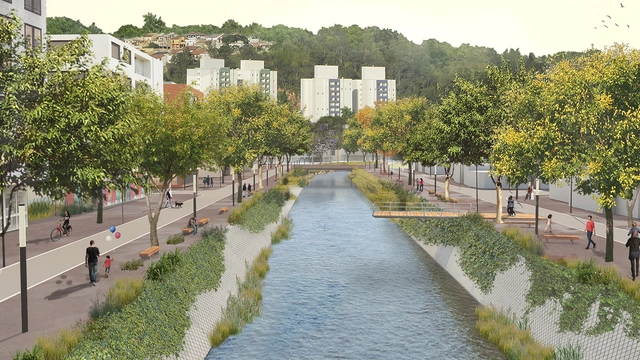
The City of Jundiaí, in partnership with IABsp, organized an ideas competition for the Jundiaí River Valley with the goal of promoting a new design proposal for the site, considering both the regional context within the urban agglomeration and its relationship with the life of its immediate surroundings.
With nearly four thousand projects published on ArchDaily Brasil in 2019 alone, and with less than a month left in the year, our curators wrap up this stimulating year for architecture with a selection of the most visited residential projects published on our Brazilian platform.
Set in urban, rural, or coastal landscapes; built using diverse structural systems, from traditional masonry to highly technological prefabricated methods; and ranging from compact dwellings to large-scale residences; this selection of 50 houses highlights the most popular projects from the past twelve months. According to our readers, these designs stood out as the most compelling in terms of innovation, construction techniques, and design challenges. Check them out below:
In episode #59 of our series on architectural figures, we invited architect and historian Renato Anelli, who is also a board member of the Bardi Institute, and architect, professor, historian, and architectural critic Ana Luiza Nobre to discuss the life and work of Lina Bo Bardi—the Italian architect who deeply absorbed Brazilian roots and translated them into her highly original architecture. Trained at Rome's traditional school of architecture, Lina went far beyond the conventional scope of the profession, also working as an illustrator, editor, designer, and set designer.
The Council for Architecture and Urbanism of Brazil (CAU/BR) has decided to deny professional registration requests from Architecture and Urbanism graduates of distance learning (EaD) programs. The resolution, dated March 29, was based on the fact that the field of Architecture and Urbanism is directly linked to the preservation of life and human well-being, the safety and integrity of property, and the preservation of the environment, with direct impacts on individual and public health.
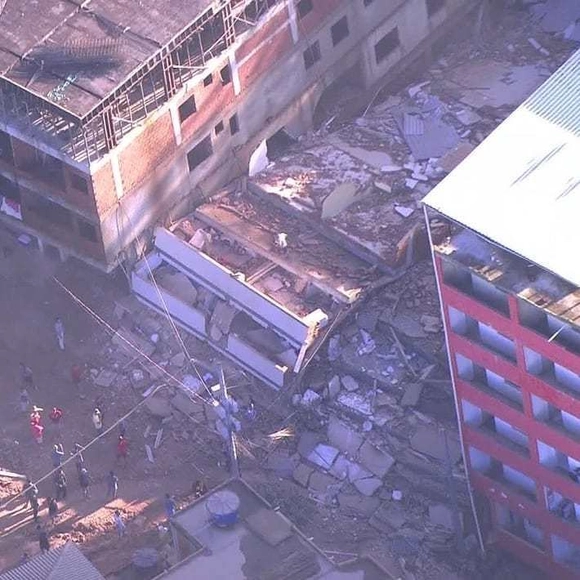
Two residential buildings collapsed this morning in Rio de Janeiro. Located in the Muzema community, in the city's West Zone, the four- and six-story structures collapsed at around 6:30 a.m. Two fatalities and three injuries have been confirmed, and another 17 people remain missing under the rubble.
Videos
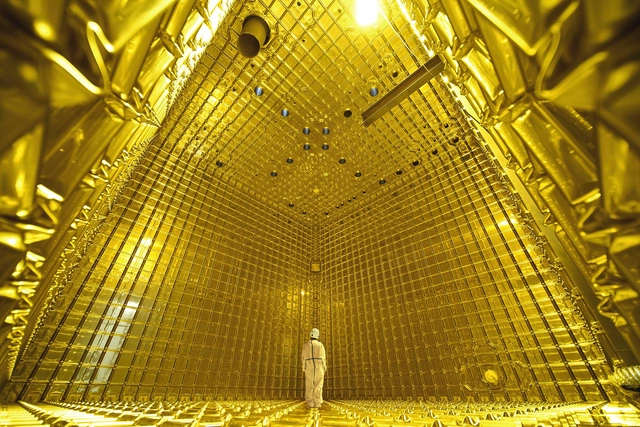
Almost Nothing: Cern Experimental City. Image Cortesia de Arquiteturas Film Festival
The Arquiteturas Film Festival (AFF) is returning to Lisbon soon and has already set its dates. From June 4 to 9, the 7th edition takes over Cinema São Jorge, centering the debate around the theme "Human Nature." Over the course of six days, the 2019 program will feature 62 films—90 percent of which are Portuguese premieres, alongside several world premieres. There will also be various parallel activities, including workshops, masterclasses, children's workshops, guided tours, collective meetings, and more.
https://www.archdaily.com/1122649/arquiteturas-film-festival-human-naturePedro Vada
Based on the 2012 book of the same name by anthropologist, poet, and essayist Antonio Risério, the documentary series A Cidade no Brasil offers an interdisciplinary and intercultural reflection on the aspects and dimensions of the urban phenomenon in the country, drawing on interviews with specialists and thinkers. Directed by filmmaker Isa Grinspum Ferraz, the 10-episode series is available to watch for free online on the SescTV website.
Opened earlier this month, the audiovisual installation A marvellous entanglement, conceived by British artist Isaac Julien, explores the life and work of Lina Bo Bardi through an immersive environment composed of nine projection screens. Featuring actresses Fernanda Torres and Fernanda Montenegro, who portray the architect at different stages of her life, Julien's work also includes a series of photographs of Lina's work.
Porto Alegre has one of the highest land-use restrictions among all Brazilian capitals. Image: Anthony Ling
Urban Brazil is deeply ugly. Why did this happen? Some blame "the absence of urban planning and zoning, manipulated height limits, and the nefarious power of contractors and builders influencing the drafting of master plans."
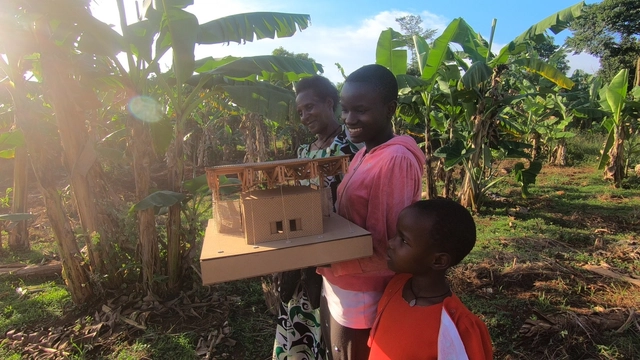
The **A Casa de Jajja **project explores the relationship between affection and architecture as an emancipatory practice. It grew out of research developed as Mariana Montag’s graduation thesis at the School of Architecture and Urbanism of Mackenzie Presbyterian University. This connection of affection emerged through her involvement in the School Project in Kikajjo, a rural village in Uganda, East Africa. There, Mariana met Jajja Imaculate, a strong and faithful 75-year-old woman, grandmother to Rose and Gift. Together, they designed and discussed what a house would look like—a home whose architecture not only shelters Jajja but also serves as an emancipatory practice challenging gender roles, with the construction process conducted through capacity-building workshops for women.
The exhibition “Organic Rational” on the work of architect Pedro Ramalho, curated by Nuno Brandão Costa and drawing on his archive recently donated to Casa da Arquitectura, is on view at the Gallery of Casa da Arquitectura – Portuguese Centre for Architecture, in Matosinhos, until September 8.
https://www.archdaily.com/1122613/organic-rational-pedro-ramalho-exhibition-at-casa-da-arquitecturaPedro Vada
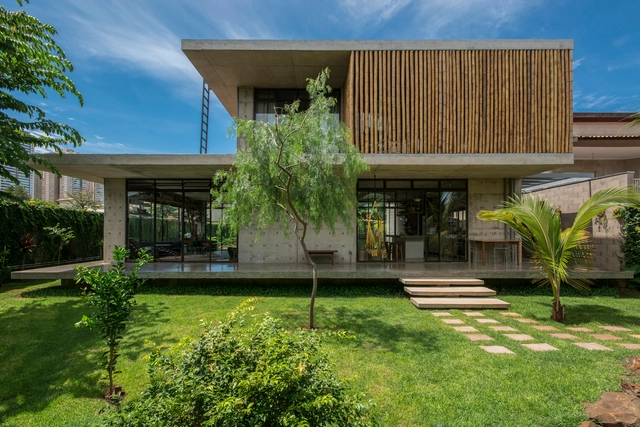
From chopsticks to religious temples, and often associated with the culture and, more specifically, the architecture of Asian countries, bamboo is a highly versatile, safe, and durable material with exceptional ecological performance. Due to its rapid growth, it is relatively inexpensive compared to other construction methods, and its most notable applications can be found in projects that leverage its unique materiality, color, and rhythm.
This week, the São Paulo municipal government resumed the bidding process for the concession of six public parks to the private sector. Suspended since July of last year due to disagreements with the state government, the project was revived by current mayor Bruno Covas.
In addition to Ibirapuera, the city's largest park at 158 hectares, the bidding process also includes the concession of Lajeado (east zone), Eucaliptos (south zone), Jacintho Alberto (north zone), Tenente Brigadeiro Faria Lima (south zone), and Jardim Felicidade (north zone) parks.
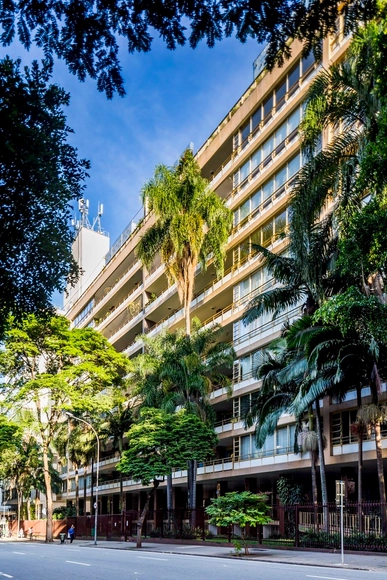
Photographer Rafael Schimidt has shared with us a recent series of photographs of the Prudência Building, designed by Rino Levi in 1944. Located on Higienópolis Avenue, near central São Paulo, "this apartment building presented, for its time, a high standard of comfort due to its dimensions—four bedrooms and large living rooms—the materials used, and central hot water and air conditioning systems, representing an initiative without parallel in its time," comments Simone Barbosa Villa in an article on Rino Levi's buildings.
.jpg?1551105554&format=webp&width=640&height=580)







.jpg?1555714480&format=webp&width=640&height=580)


.jpg?1555602176&format=webp&width=640&height=580)
.jpg?1560952279&format=webp&width=640&height=580)

.jpg?1560957484&format=webp&width=640&height=580)