
WE ARE LOOKING FOR YOU!


WE ARE LOOKING FOR YOU!

EASA Launches Call for Workshops for the Summer Assembly EASA 1:1

LOOP Design Awards 2022 is now open for entries. The third edition introduces the Best Firm Awards, Special Themed Categories and Architectural Video and has a total of 110 categories.

The Business as (Un)usual competition invites you to imagine a future Australian city that embodies a new Australian Dream for the twenty-first century.
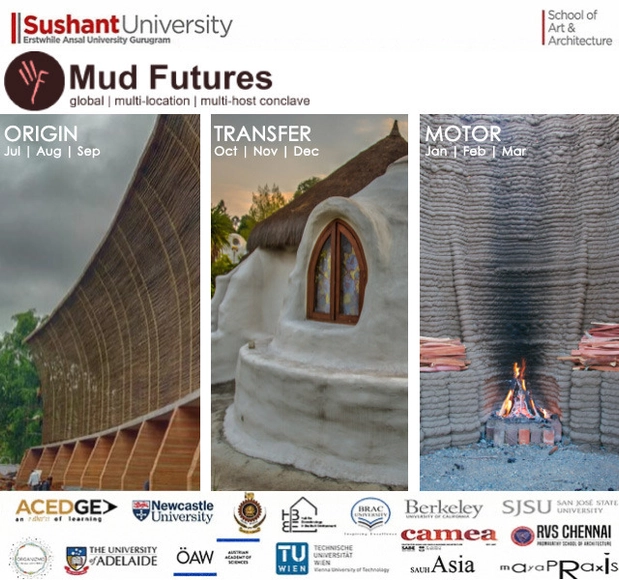
iPAC 2021-2022: Mud Futures is a year-long global multi-host multi-location conclave on the futures of mud in architecture is conceptualised and conducted by the School of Art and Architecture, Sushant University, Gurugram, India.
The conclave is an opportunity for a for ideas, thoughts, research and architectural projects centred around mud across various countries. Here, mud is considered as a material, as an approach, as a vehicle for sustainability, and as the source of an ideological imperative for the future of the built environment.
iPAC 2021-2022: Mud Futures brings practitioners and academicians together to deliberate on a material that has its genesis in the past, yet is versatile enough to respond to the technological advancements of the future.
The broad intent of the conclave is
• Take stock of innovations of its application in the urban context
• Exchange of knowledge resource through certificate courses
• Conduct workshops to experiment with new ideas
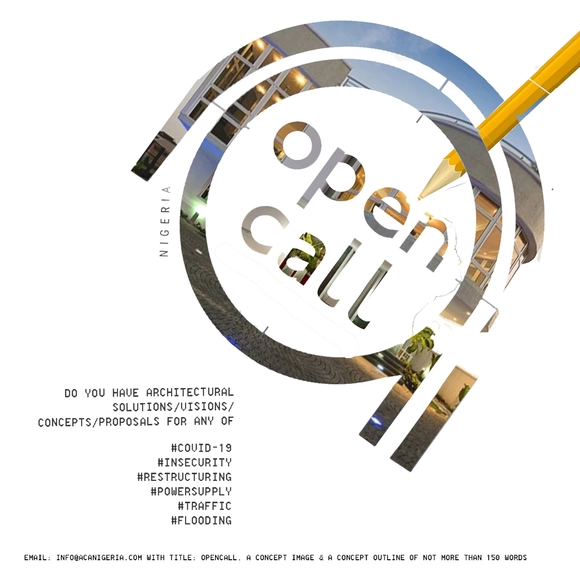
This Open Call of ideas invites architectural ideas/visions/concepts/solutions/proposals at any scale, that respond to any topical issues plaguing Nigeria's development. These include but are not limited to : COVID-19, Insecurity, Restructuring, Power Supply, Traffic, Flooding etc.
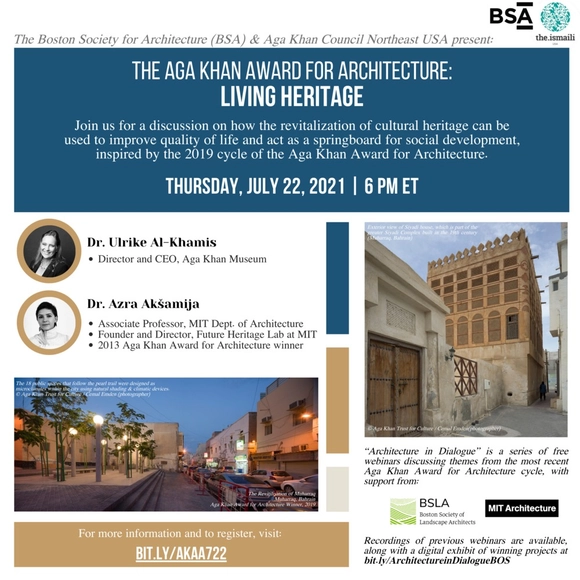
The Aga Khan Award for Architecture: Living Heritage
Helmut Jahn: Life + Architecture is a new exhibit at the Chicago Architecture Center honoring the late Chicago architect and style icon. Get to know this extraordinary man who will continue to inspire generations to come.
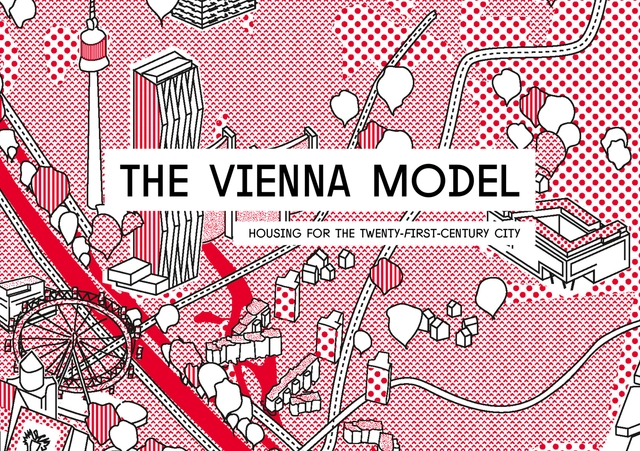
On the occasion of the exhibition The Vienna Model - Housing for the Twenty-First-Century City opening, architects Bettina Götz and Richard Manahl from the Austrian architectural studio ARTEC and architect and Professor in History and Theory of Architecture Josep Maria Montaner will give an inaugural talk on Thursday 15 July at 5 pm, followed by an open debate with the speakers.
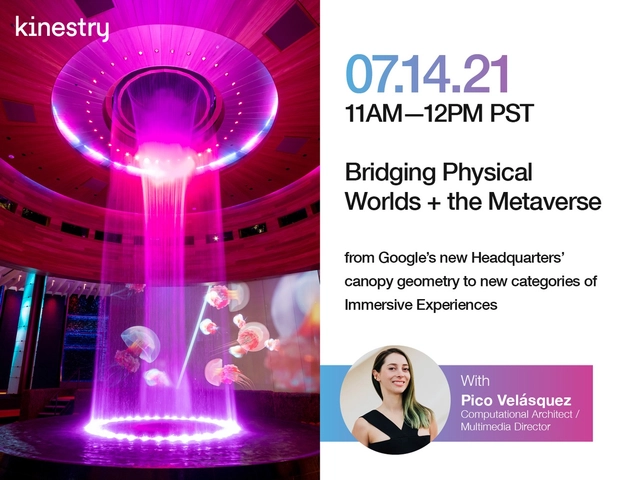
Join us in the ongoing discussion around the Future of Architecture in the emerging virtual economy.
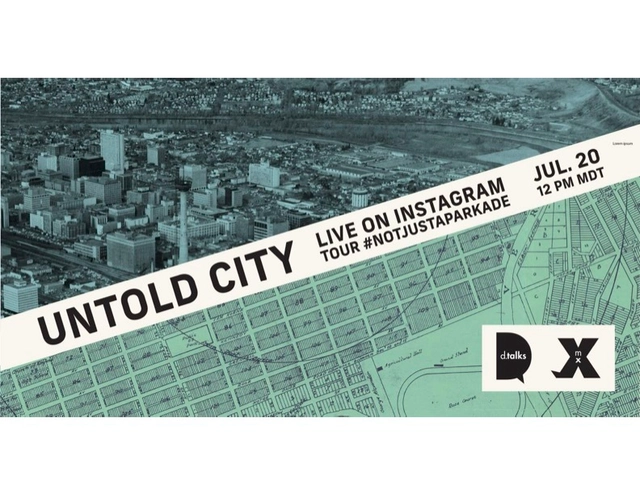
How can we design to meet today’s demand for parking in our city, while designing in enough flexibility to adapt to how we might get around in five- or ten-years’ time? We invite you to tour an innovative new building in East Village: a parkade that is designed to adapt to different uses over time.
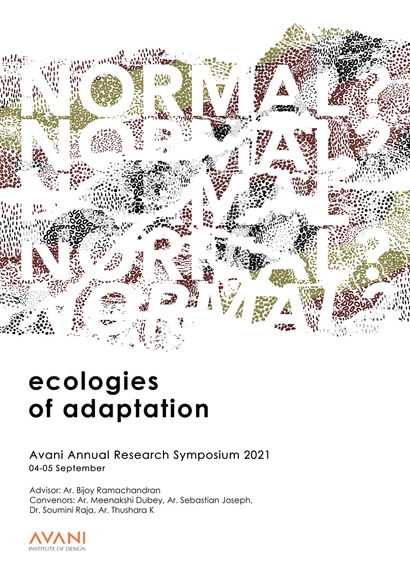
Avani Annual Research Symposium 2021
Advisor: Ar. Bijoy Ramachandran
Convenors: Ar. Meenakshi Dubey, Ar. Sebastian Joseph, Dr. Soumini R, and Ar. Thushara K

At the dawn of photography the city could only be recorded as a virtually empty stage by a camera lens too slow to fix for posterity the vitality of urban life. Even before the new art of photography – literally writing with light – was announced in 1839 in Paris, the City of Light, Daguerre had pioneered street photography by capturing a view of the Boulevard du Temple through the double aperture of his window and his camera lens. This first urban daguerreotype. captured perfectly the city’s architecture, but this man soon to be famous for portraiture left us scarcely a trace of the bustling traffic of that spring 1838 morning, all human presence was vanquished, save a blurry pair of men, a shoe shiner and a customer, who remained still long enough to be captured as a smudge on the otherwise pristine scene. By the end of the century the camera was able to capture motion even below the threshold of human perception, making it a tool for the scientific study of human and animal locomotion.
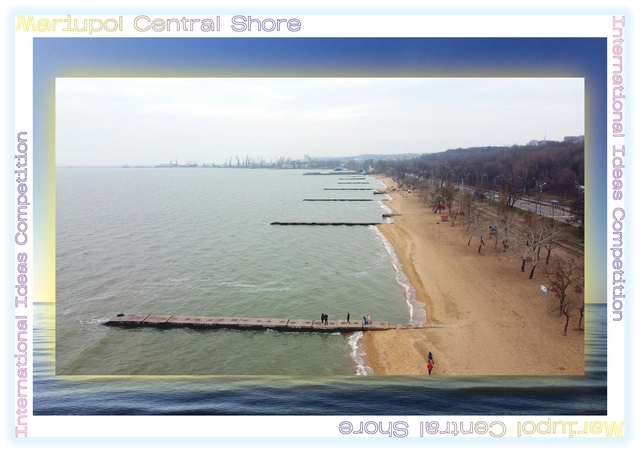
The mayor of Mariupol (Ukraine) is inviting local and international architects, urbanists, landscape architects and interdisciplinary teams to put forward a bold and contemporary design framework for the reconstruction of the Mariupol Central Shore, a centrally located territory stretching for 2.75 kilometers along the Sea of Azov, with total area of 38 ha.

Sustainability in architecture addresses the negative environmental and social impacts of buildings by utilizing design methods, materials, energy, and development spaces that are not detrimental to the surrounding ecosystem or communities. The philosophy is to ensure that the actions taken today do not have a negative consequence for future generations and comply with the principles of social, economic, and ecological sustainability.
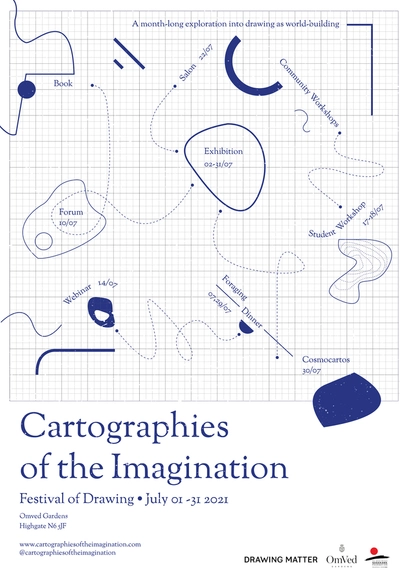
Cartographies of the Imagination is a month-long
experimental drawing festival held in the RIBA award-winning
Omved Gardens and Glasshouse in Highgate. The otherworldly
setting forms the inspiration for a series of conversations,
workshops, feasts and a growing exhibition exploring the world
of drawing between the real and the imagined.

The NUS M.Arch Show 2021 showcases the thesis projects of the graduating Master of Architecture students from the National University of Singapore; a collection of bold questions and propositions displaying the expertise obtained in architectural education. A year-long undertaking, the thesis is an arduous yet joyful journey, where conversations, critiques and references gently nudge students towards certain contemporary and relevant trajectories, organically converging into communities of practice where the works collectively resonate with one another. Convergence occurs along five discursive threads, which form the five clusters of the show: “Critical Architecture”, “History & Heritage”, “Sociopolitics & Geopolitics”, “Technologies” and “Urbanism & Environments”. Each cluster is uniquely positioned to probe the limits of the discipline, and to respond to the demands of wider society.
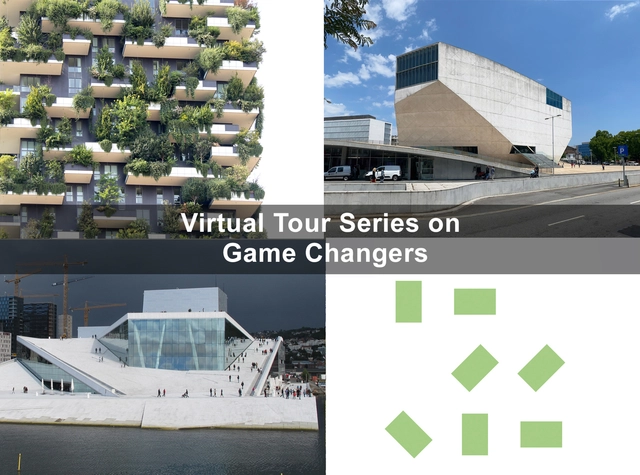
From 1 until 15 July, Guiding Architects invites you on a virtual trip to no less than eight cities all over the world.