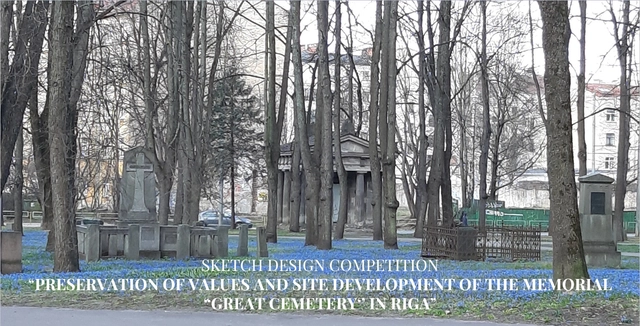
The aim of the Competition – to obtain creative ideas and proposals on how to respectfully preserve the burials of the Great Cemetery, its cultural-historical and natural values for future generations, how to implement the sustainable development of the territory and how to use the potential of the existing green infrastructure as a biologically diverse and unique landscape on the European scale, in order to improve the quality of the urban environment and the accessibility of the Great Cemetery to residents and guests of the city of Riga.
The fifth edition of the internationally renowned FABRICATE conference will take place April 4 – 6, 2024 in Copenhagen at The Royal Danish Academy - Architecture, Design, Conservation.
Co-Chaired by Professors Mette Ramsgaard Thomsen and Phil Ayres of Centre for Information Technology and Architecture, FABRICATE 2024 will build upon and extend its legacy as a prime place of exchange on the cutting-edge of new forms of design and construction and material thinking in architecture, engineering, and building. FABRICATE 2024 asks how rethinking architectural methods, technology, and construction can create a new societal position for the built environment, placing a particular focus on questions of resource consciousness and bio-based design and fabrication strategies.
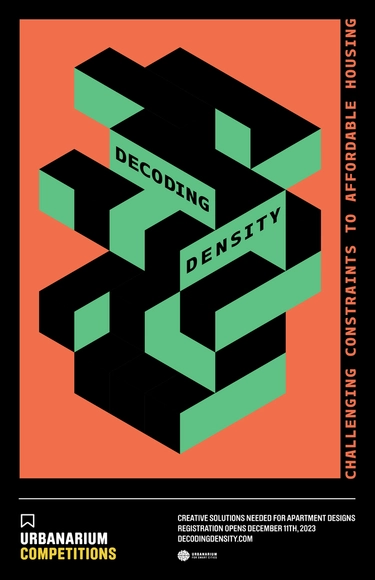
Poster for Urbanarium's Decoding Density competition
Missing Middle and Mixing Middle housing forms, the subjects of Urbanarium’s previous ideas competitions, are becoming mainstream policies. Urbanarium’s next competition again explores missing middle housing, this time at the high end of that density range.
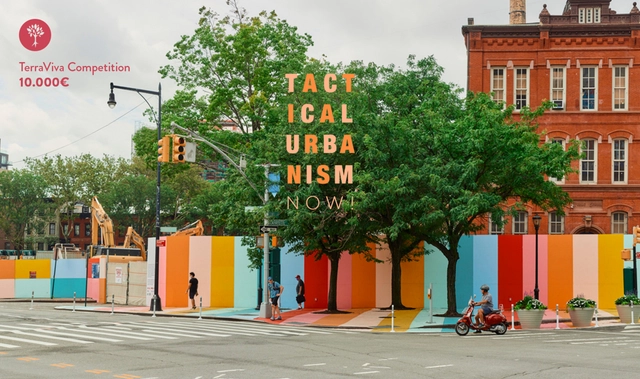
For architects, planners and designers, cities have turned into testing canvases for solutions that lead to both short and long-term changes. The paradigm shift in the built environment switches the narrative of how the public realm approaches complex challenges related to climate, urban sprawl, mobility, housing, among others. The goal of this competition is to experiment with site-specific case studies that can work as open laboratories to test novel approaches on urban transformation. Participants have complete freedom to outline the program, the overall output and the extents of their proposal. Likewise, the size and complexity of the intervention will be defined by each team according to the needs of that specific neighbourhood, plot, city or community.
Videos
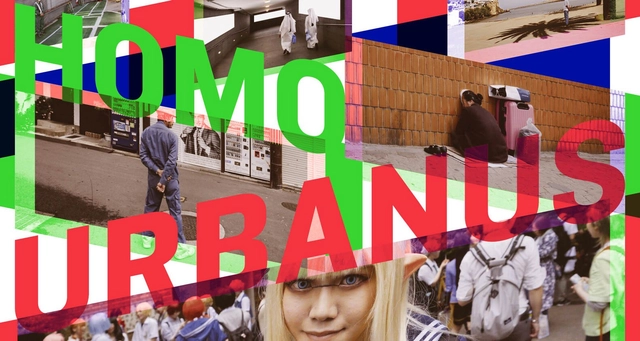
Homo Urbanus – A Citymatographic Odyssey by Bêka & Lemoine
For fifteen years now, Bêka & Lemoine have been investigating how people relate to space: how they inhabit it, how they appropriate it, and how they shape it. Their extensive, and still ongoing, film project ‘Homo Urbanus’ depicts the peculiar species of the urban dweller by exploring the daily life of ten world cities.
Please come to the Mumford Lecture in-person or virtually!
Emily Badger, the New York Times urban policy writer, will deliver this year's Lewis Mumford Lecture at The City College of New York on Thursday, April 27. Her talk, 6 - 7:30 p.m. in the Bernard and Anne Spitzer School of Architecture's Sciame Auditorium, is entitled, "Pressing Change in the Increasing Inflexible City." It will focus on how cities must change as the nation emerges from the pandemic. To watch virtually, a Zoom link is available. Badger writes about cities and urban policy for The Upshot from the Times' Washington bureau where she covers the interconnections between housing, transportation, and inequality. Her Mumford lecture discusses how cities will respond to the changing dynamics of urban life. Buildings that once housed businesses will have to be modified to accommodate the needs of those who will soon live there. Hotels, once temporary lodgings for people on the road, will have to be adapted as single-room-occupancy spaces for those who need permanent addresses. Sidewalks will turn into eateries, and parking lanes will become bus corridors. Increasingly, roads dedicated to cars will be adapted as bicycle paths and walkways for pedestrians.
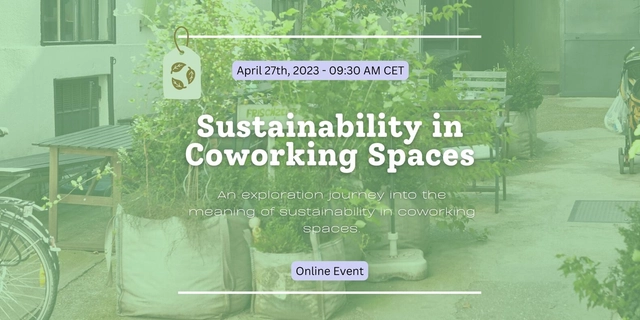
What steps are coworking spaces currently taking to begin or enhance sustainable practices in coworking spaces? On April 27th, we invite you to join us on an exploratory journey of this topic, providing you with inspiration and insights into the various approaches that different coworking spaces are taking toward sustainability.
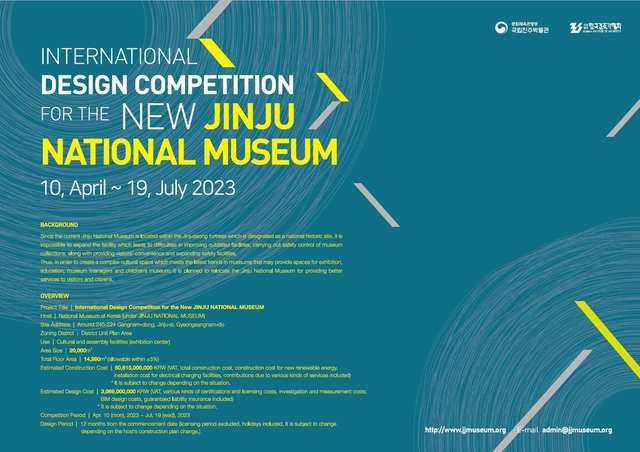
1. Background - Since the current Jinju National Museum is located within the Jinjuseong fortress which is designated as a national historic site, it is impossible to expand the facility which leads to difficulties in improving outdated facilities, carrying out safety control of museum collections, along with providing visitors’ convenience and expanding safety facilities. - Thus, in order to create a complex cultural space which meets the latest trends in museums that may provide spaces for exhibition, education, museum managers and children’s museum, it is planned to relocate the Jinju National Museum for providing better services to visitors and citizens.
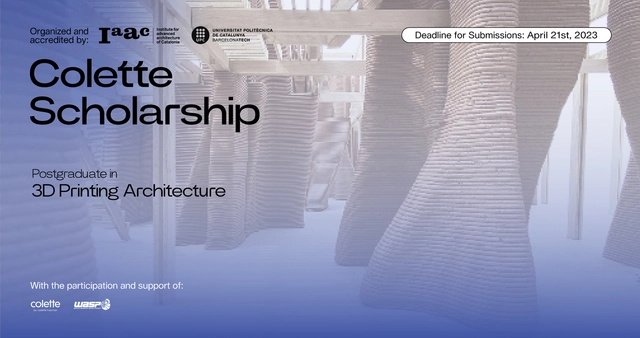
The Institute for Advanced Architecture of Catalonia (IAAC), wants to support the study of the design, development and implementation of a new wave of buildings, prototypes, technologies and design solutions of true ecological value that can be extended systematically to be part of the next urban future. For this reason, IAAC and Visoren offer a partial scholarship to study in IAAC’s Master in Advanced Ecological Buildings & Biocities which begins in October 2023!