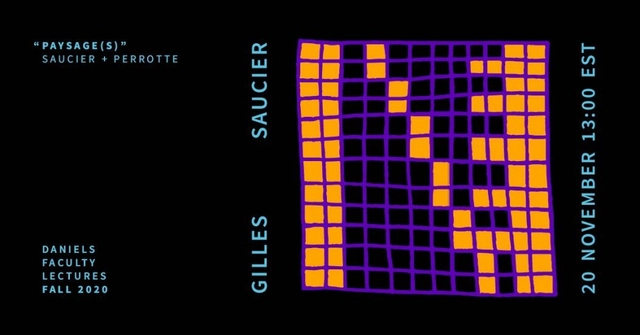
Founded in 1988 by Gilles Saucier and André Perrotte, Saucier + Perrotte Architectes is a multidisciplinary practice that is internationally renowned for its institutional, cultural, and residential projects. Saucier + Perrotte’s highly acclaimed buildings have been published the world over, reflecting the office’s status as one of Canada’s premier design firms.
The forest, the island, the mountain and the desert are engaged as non site specific spatial metaphors informing architecture. The abstracted idea of landscape as model in these drawings and projects challenges the myth of site specificity in landscape and architecture.
Nurturing Architecture: Practice, architecture education and wellbeing
The theme of Nurturing Architecture explores the discipline as both processes and constructions with an ethos of care, of providing nourishment and of supporting growth and development. Inherent in the multiple interpretations of nurturing, is the notion of wellbeing, and the ways in which architects and educators consider the wellbeing of future and current generations of users and other stakeholders, including our communities of architects and students.
Humankind is at a crossroads. A climate crisis that threatens ecosystems and rises social instability. A fast-growing population leading to Earth's resources being consumed faster than ever. A still in progress global discussion about racial and gender issues. A technological revolution disrupting societies and markets —including the design and construction field. And an economic and pandemic crisis as a stress test for all of us.
In this context, architecture has been navigating through sequential changes over the last twenty years with the rise and latter consolidation of new technologies, tools, formats, topics, scales, and interdisciplinary approaches, along with the emergence of the Internet that led towards a disruptive decentralization of the architecture production and discussion.
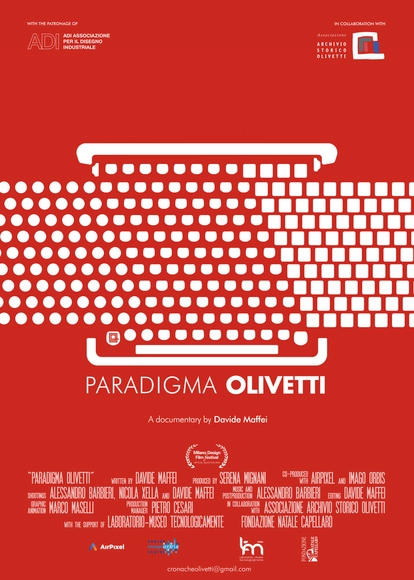
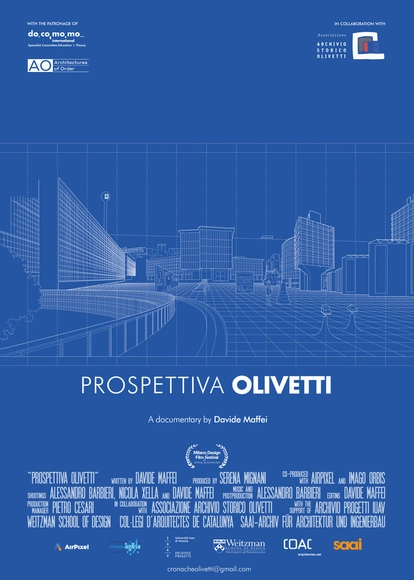
On 27 February 1960 Adriano Olivetti died. With the disappearance of the businessman-guide, the construction cycle of its industrial and social project terminated and a period of great uncertainty opened up: the company, financially fragile, underwent a forced change of ownership and strategy.
Architect Dirk Denison will virtually discuss this spectacular Lake Michigan Residence and other projects for The Dallas Architecture Forum on November 5. Photo Courtesy of the Architect.
In this pandemic period when the comfort of our homes is especially valued right now, the next architect to speak virtually to the Dallas Architecture Forum on November 5 at 7:00 pm will be of special interest. Dirk Denison is the founder of the Chicago-based firm Dirk Denison Architects which is particularly known for its award-winning residential work, which includes the interiors and furniture design.
Join a panel to discuss the role of planning, architecture and landscape design in understanding the collective memory contained in the land. From the horizon to the Cartesian grid, what have we built and how does this influence a sense of belonging that one feels? What is the relationship between memory and the land?
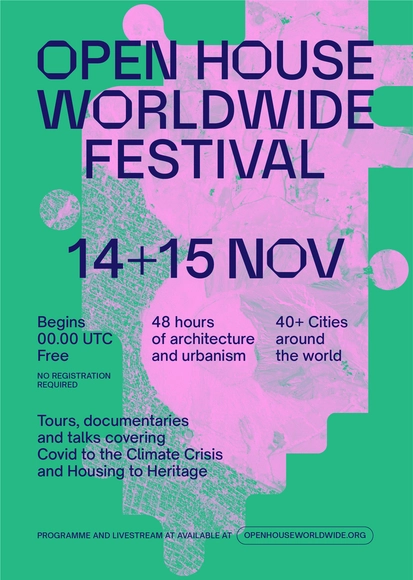
Open House Worldwide (OHWW) is pleased to announce the full programme of the network’s first collaborative event on its relaunched and redesigned website and visual identity.
Architecture, the space of human being, was for Adriano Olivetti an irreplaceable tool for the creation of communities. Ivrea and the Canavese territory were the main fields of action of an industrial policy characterised by strong social responsibility.
Nuestras Arquitectas, through this photography contest, proposes to focus and re-focus those images that have been hidden and eclipsed in order to return them to the place and the prominence those women architects deserved.
"Rome and the Legacy of Louis I. Kahn", by Marco Falsetti and Elisabetta Barizza, will be presented as part of the review ‘Books at MAXXI’, in the Sala Scarpa.
Politics, Protest + Place – The role of inclusive Urbanism in Civic Activism . Graphic Credit: Janki Shah
On June 5th when Mayor Bowser painted “Black Lives Matter” on 16th Street NW in front of the White House and as a temporary fence transformed into a makeshift billboard, it became abundantly clear that the appearance and design of public space can itself be an act of protest and speech. During the recent protest, people expressed their resentment and frustration by reclaiming space through art, text, removal of iconic statues and renaming of squares throughout the city, which brought an extraordinary transfiguration of space by symbolizing unity and hope. We seek to examine ways in which the physical environment of cities can participate and promote civic engagement, sharing in the life of the community and activism in our national capital - Washington, DC.
The Crook Point Bascule Bridge is a steel railway drawbridge that once connected Providence’s Fox Point neighborhood to the City of East Providence across the Seekonk River. The bridge—which is also referred to as the Seekonk River Drawbridge or Crook Point Bridge—is currently unused and fixed in the upright position. Since 1976, when the bridge and tunnel were abandoned, Providence residents and visitors have been fascinated by the bridge, as a symbol of Providence’s industrial past and as a sculptural element of the city’s skyline.
IE School of Architecture and Design and ArchDaily, would like to invite you to join this outstanding online masterclass by Sarah Banham, Head of Communities & Sustainability for the 42 acre Battersea Power Station project in London.
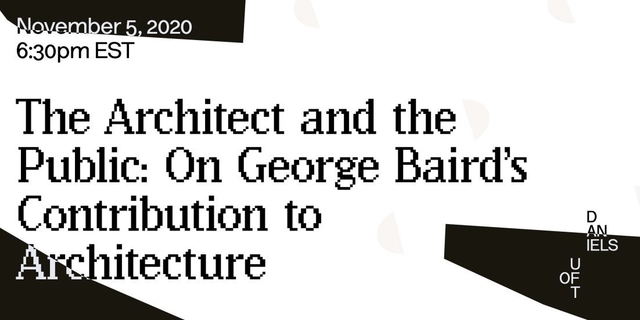
The event is the first of a series of conversations to launch the recently published book The Architect and the Public: On George Baird's Contribution to Architecture (Quodlibet, 2020). The first group of speakers moderated by Roberto Damiani, the book editor, includes Brigitte Shim as a discussant and the volume contributors Joan Ockman, Richard Sommer, Hans Ibelings, Michael Piper, and Andrew Choptiany.
Project Lari begins as an international design competition, that seeks innovative proposals for movable-urban devices in the Indian context. The pursue is to reimagine street carts, keeping in mind women as a target user group and explore the potentials of informal commerce as a legitimate economic resource, while reevaluating the possibilities it offers in the construction of public space. The objective of the competition is to select an outstanding entry in order to detail, construct and implement it in a collaboration with Chaal.Chaal.Agency, URBZ and SEWA.
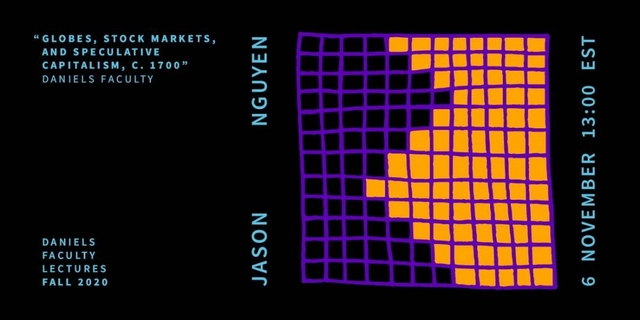
This talk looks at a small handheld globe manufactured by the British cartographer Herman Moll in 1719. Though small in size and overtly commercial in use, the object serves as a particularly useful case study for understanding the relationship between cartography, consumerism, and certain geopolitical developments that historians have seen as president of global modernity, namely speculative capitalism—including its troubling connections to colonialism and slavery. Additionally, the talk sketches the parameters of a new line of architectural research on the history of European-supported entrepôts in Asia, Africa, and the Americas as they relate to early modern shipping networks and the formalization of the modern stock exchange in Amsterdam and London.