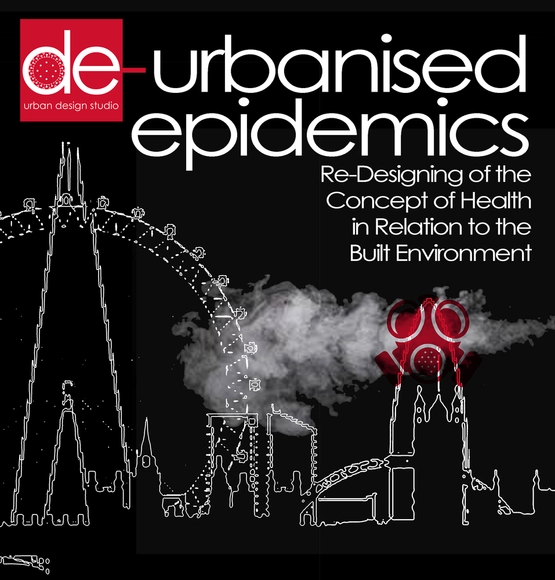
Urbanised humans are the most invasive species on Earth, consuming the majority of the planet's resources. In an endless battle with nature, the urban fosters an unhealthy condition resulting in extinctions and planetary crises, endangering the livelihood of both humans and non-humans. Meanwhile, in the contemporary urbanised world, health is interpreted as the temporal psychological and physical condition of a human body. A permanent and holistic conception of (well)being and its widened territory embracing the vitality of the entire nature are often neglected. Health in the urban environment is inscribed in infrastructures, rather than being a generative concept for a nurturing habitat. The paradigm of our times is that of treatment-an act after the damage has been done, rather than wellbeing, a sustained state of healthiness. The emergence of epidemics brings forth the significance of a new concept of health and wellbeing in relation to the built environment and beyond. It is evident from the zoonotic sources of the latest epidemics that humans have penetrated deeper into ecozones not occupied before.
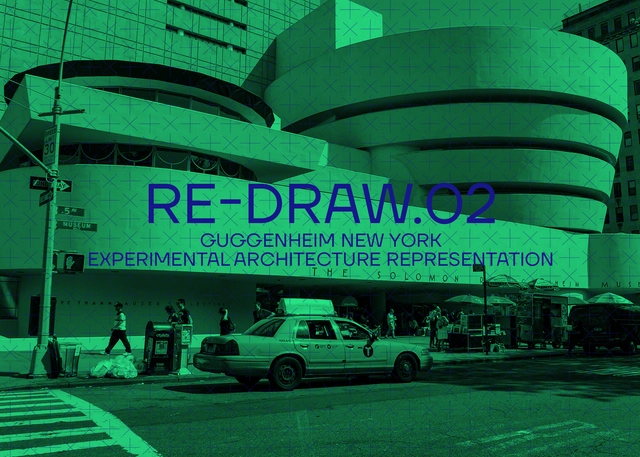
The aim of the RE-DRAW competition is to develop one drawing to ‘represent’ an iconic architecture. The participants are asked to draft one image, with absolute freedom of scale, technique and level of abstraction.
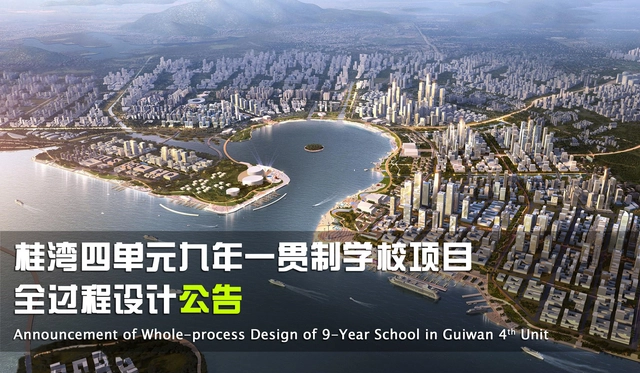
Qianhai lies in the west of Shenzhen City, Guangdong Province, sitting on the east bank of the Pearl River Estuary and neighboring Hong Kong. It is planned as a demonstrative zone for in-depth cooperation between Guangdong, Hong Kong and Macau, and a new urban center of Shenzhen.
https://www.archdaily.com/936019/call-for-entries-whole-process-design-of-9-year-school-in-guiwan-4th-unitMilly Mo
120 Hours is an architecture competition by students, for students. Each year we create a task, giving students from all over the world 120 hours to answer. Last year, 1556 teams signed onto the competition.
Things aren't going too well right now. Each new day seems to add to the uncertainty about the immediate and long-term impact of the Coronavirus pandemic. Whether you think that people are overreacting or it is truly a global health emergency, one fact is objectively true: Covid-19 has affected billions of lives: if not physically than economically and mentally.
The Arquia Foundation signs an agreement with Architect-US to expand its program to the United States and adds 2 scholarships in New York to their XXI Arquia Scholarships 2020 Call.
The Council on Tall Buildings and Urban Habitat (CTBUH) is now accepting submissions for its 9th International Student Tall Building Design Competition, which will distribute $21,000 in prizes to exceptional projects. Top finalists will also have the opportunity to present in real time for winning distinctions during the CTBUH 2020 International Conference's core programming, which will take place in Singapore from October 20–21, 2020.
For the new edition of the AUDITORIUM lecture series, Stad en Architectuur vzw is looking for curators who can create a programme centered on this edition's topic “OUTSIDE”. AUDITORIUM 20/21 will run from October 2020 to April 2021 in the STUK Arts Centre. Stad en Architectuur vzw is inviting interested candidate curators to apply.
Kreatura.zine 005 CARENESS Open Call is out! The fifth, special edition of the issue will be dedicated to the upcoming SESAM 2020 workshop, which will take place between May and June in Slavutych, Ukraine. We wanted to contribute to their great work and as their theme is POLIKLINIKA - bring some discussion around the topic of careness. We are also surprised how much this (planned ahead!) topic aligned with the situation we are all facing now, but we hope that reflections and time which everyone gained due to these circumstances will give enough excuses to send us your work! We accept both written and graphic essays! You have time until 20.04! For more information, you can contact us via email, Facebook or Instagram, or visit our website.
Plastic has a huge contribution in the making of the modern man. It has revolutionized human activity and living because of its versatility as a material. It made space travels possible. It has revolutionized medicine. Daily, it saves millions of people making food resources safe and accessible to the poorest populations of the planet. Modern life is addicted to and dependent on this versatile substance, which is found in everything from cars, planes, computers and equipment to clothes made of polyester and nylon, to the adhesive seal on most teabags.
Founded in 315 BC and named after princess Thessalonike of Macedon, the sister of Alexander the Great, Thessaloniki is a historic city that has developed through the ages. Thanks to its location at the northwest corner of the Aegean Sea, Thessaloniki became a multi-ethnic metropolis. Hellenes, Romans, Ottoman Turks, Slavs and Jews passed through the centuries, leaving their mark on the city's culture and architectural style.
ITSLIQUID Group, in collaboration with Venice Events and Ca’ Zanardi, is pleased to announce the open call for BORDERS – ITSLIQUID International Art and Architecture Festival.
open call for your impulse // www.face-the-challenge.de
CODIC throws down its „think out of the box“ challenge – let us have your impulse and your vision towards the right balance for people in their work sphere.
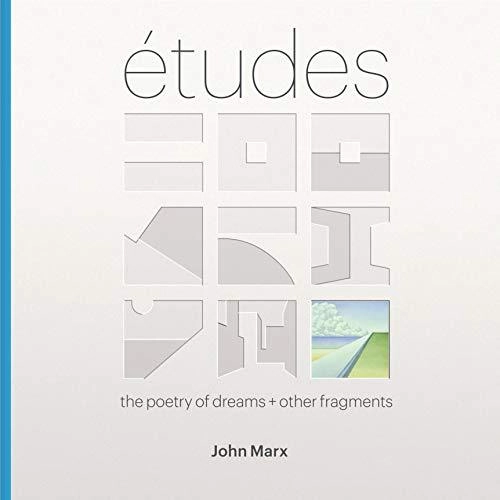
Description via Amazon. John Marx’s watercolors, first published in the Architectural Review, are a captivating example of an architect’s way of thinking. Subtle and quiet they are nonetheless compelling works in how they tackle a sense of place, of inhabiting space and time all the while resonating with the core of one’s inner being. There is an existential quality to these watercolors that is rare to be found in this medium. Something akin to the psychologically piercing observational quality of artists like De Chirico or Hopper. As architects strive to communicate their ideas, it is interesting to explore the world of Marx’s watercolors as an example of a humane approach to conveying emotional meaning in relation to our environment. Marx’s subject matter read like “built landscapes” heightening the role of the manmade yet wholly in balance with the natural world. This is a message and sentiment that is perhaps more important than ever to relay to audiences.
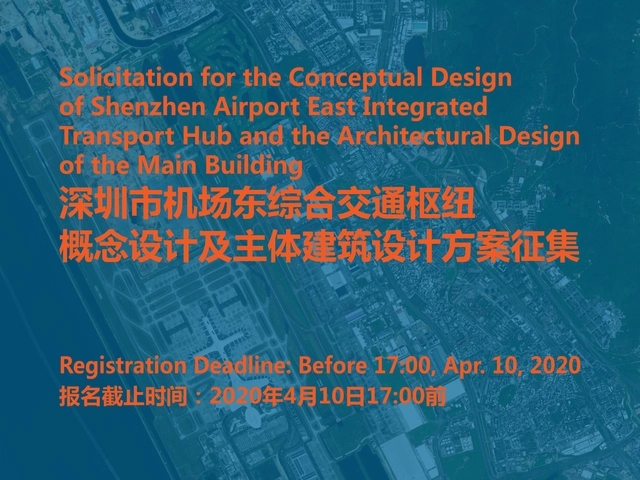
As an important part for Shenzhen to construct the international aviation hub and national railway hub, it will integrate various modes of transport, such as aviation, high-speed railway, intercity railway, urban rail transit, bus, taxis and car, etc., and take the air-rail intermodal transportation as the main development direction. Its planning and construction is of great significance to explore the mode of station-city integration and promote high-quality coordinated development among railway, aviation and the city. This Solicitation is hoping to globally solicit high-level planning and design proposals, with an aim to construct the hub into the model of deepening reform and pioneer in promoting overall utilization of urban space and make it into a world-class comprehensive transport hub.
https://www.archdaily.com/935178/call-for-entries-solicitation-for-the-conceptual-design-of-shenzhen-airport-east-integrated-transport-hub-and-the-architectural-design-of-the-main-buildingMilly Mo
“Istanbul Is Yours” is the main principle as the Istanbul Metropolitan Municipality announces a series of urban design competitions for the public spaces of the city, prioritizing a participatory approach at every stage of the process. Public spaces must be lively, accessible, free, cheerful, peaceful and secure places where people can breathe and form democratic and social relationships. The Istanbul Metropolitan Municipality will shape the design principles of Istanbul’s public spaces by consulting stakeholders, and listening to the needs and views of the people of the city at events organized under the theme “Istanbul Regains Its Public Spaces”.
Metsä Wood’s Hybrid City initiative is searching for ways to make construction more sustainable while maintaining efficiency using current building methods. Improving sustainability is imperative: construction alone uses 50% of the world’s resources. However, the transition will only happen if construction companies can maintain efficiency. The world needs a Plan B.

.jpg?1584702899&format=webp&width=640&height=580)

.jpg?1584376659&format=webp&width=640&height=580)
.jpg?1584371033&format=webp&width=640&height=580)

.jpg?1584367191&format=webp&width=640&height=580)


.jpg?1583758410&format=webp&width=640&height=580)
.jpg?1583753140&format=webp&width=640&height=580)