
The Asia Pacific Architecture Festival (APAF) has announced its return to Brisbane from 7 to 20 March 2020. APAF is a collaboration between founding partners Architecture Media and State Library of Queensland.


The Asia Pacific Architecture Festival (APAF) has announced its return to Brisbane from 7 to 20 March 2020. APAF is a collaboration between founding partners Architecture Media and State Library of Queensland.
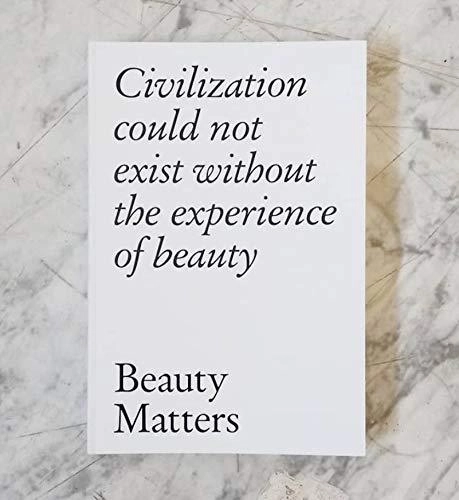
Description via Amazon. Tallinn Architecture Biennale TAB 2019 catalogue "Beauty Matters" brings together the review of the biennale's main programme, introduces the participants and their participating projects. The catalogue is curated by TAB 2019 Head Curator Yael Reisner and edited by Rebecca Collings. With an interdisciplinary interest in beauty and its symbiotic relationship with architecture, TAB catalogue has different contributors from the disciplines of neuroscience, mathematics, philosophy and architecture, but all share the belief that beauty matters. The content reports on the fresh buds of new beauties and on the relevance of aesthetics in architecture.
Our world is changing. Imagine Miami Beach permanently underwater, hurricanes constantly clashing against Manhattan, devastating droughts in London, and heatwaves that render Barcelona unlivable.
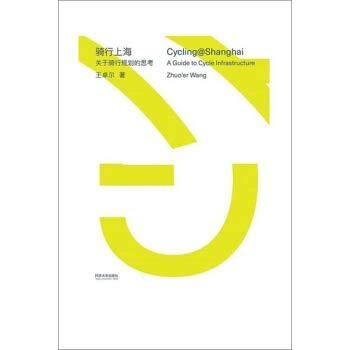
Cycling@Shanghai is an urban research book by Chinese architect Zhuo’er Wang. Starting from a brief bicycle history, the book systematically introduces the cycle infrastructure planning by comparative studies on the seven bike-friendly cities around the world, including Copenhagen, Paris, Vienna, Berlin, etc. After analyzing the current cycling conditions in Shanghai, the author proposes a specific urban planning strategy and presents the enormous potential that cycling can bring to the public space.
.jpg?1582886384&format=webp&width=640&height=580)
Advancing Computational Building Design enables forward-thinking architects and engineers to accelerate their adoption of generative, digital design tools across their projects. You’ll hear how your peers are leveraging computation and iterative design processes to inform decision making and provide the power to clients to better visualize their future asset and drive collaborative relationships with designers.
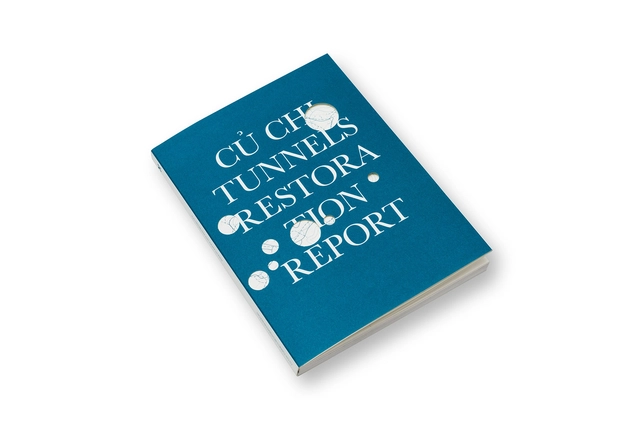
In 1981 a Polish-Vietnamese heritage conservation mission gave an impulse to transforming the partisan tunnels of Củ Chi – into a symbol. The apparently technical task of securing fragments of this obscure construction, in fact constituted part of the process of adapting the history of Vietnam War to the preferences of a modern audience – one of the most important historical policy projects of that time. After all, the secrecy and inaccessibility of the corridor network determined the character of this reconstruction – initiating the process of replacing the material remains of the past with their models. As a matter of course, the concealed underground tunnels turned out less useful than preconceptions of them.

An arms race is on in the worlds of computation and architectural fabrication research. Robots with increasingly large, fast, and powerful capabilities are available and can produce outputs with military-grade precision. The assumption is that, through the use of these advanced tools, architects will advance the production of outputs — but can these tools be developed with traditional forms of human engagement still in mind? Robots are not particularly adaptive. They do not integrate changes with ease — at least, not yet. Humans, on the other hand, exhibit great capacity for adaptation but lack the precision of robots. How could precision and adaptation be combined in architecture, specifically within the context of Japan, where imperfections are embraced as part of an ideal form?
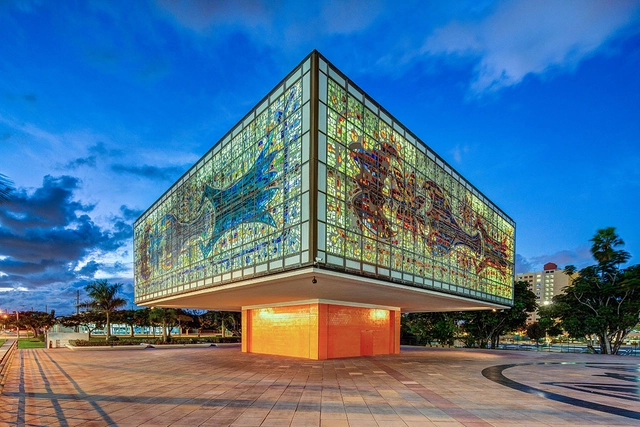
The iconic national headquarters of National YoungArts Foundation (YoungArts), formerly the Bacardi Buildings Complex, was placed on the National Register of Historic Places by the U.S. Department of the Interior in 2018. YoungArts acquired the landmark tower and museum buildings in October 2012 and has since converted the buildings into the YoungArts Campus, transforming it into a multidisciplinary arts institution while preserving its beloved structures. In celebration of this prestigious designation, YoungArts is opening its campus to tours, during which visitors can learn more about the unique architectural, historical and cultural significance of the buildings, and its adaptive reuse as a place for artists from around the world to create, develop and present their work.

An evening of inspirational talks from women who are designing differently. Whether that's combining design and another discipline, or using design to create social and environmental impact, or changing the design landscape for future generations.
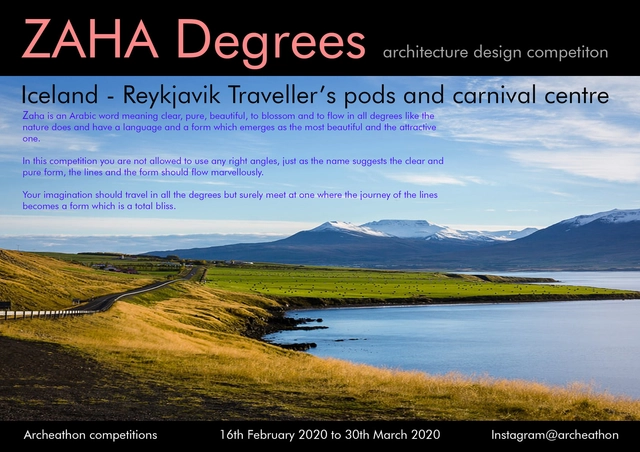
ZAHA is an Arabic word meaning clear, pure, beautiful, to blossom and to flow in all degrees like the nature does and have a language and a form which emerges as the most beautiful and the attractive one.
In this competition you are not allowed to use any right angles, just as the name suggests the clear and pure form, the lines and the form should flow marvelously.

We are happy to announce the first open international competition “Smart Garden” in the field of architecture and landscape design.
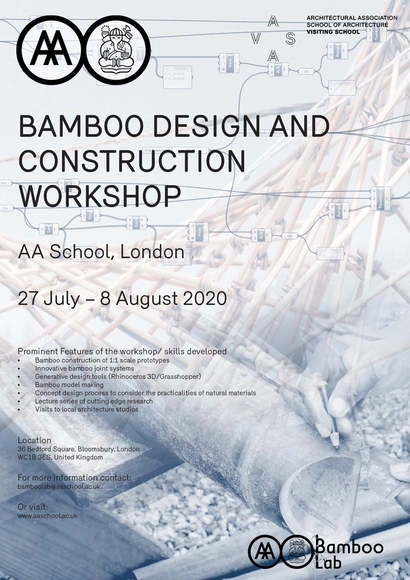
This 12 day design and construction workshop at the AA School in London, teaches a design process which synthesises computational design tools and materials with natural variability such as bamboo, informed though first-hand experience of the material and 1:1 scale bamboo construction.

The Michel Gelrubin Architecture Prize is designed to bring out new talents by giving students an opportunity for international recognition.
The collaboration of famous architects and designers such as Jean Nouvel, Ora Ito, Philippe Maidenberg, Daniel Bismut, Kobi Karp, Jean Michel Wilmotte, Daniel Libeskind, Eran Neuman, Dafna Matok and Roy Kozlovaky inspires and motivates students to present their projects to these great names involved in contemporary architecture.
Open internationally, the Prize is awarded annually to honor students whose work
demonstrates a combination of vision and talent in the art of architecture and planning.
![[Webinar] The Big Reveal: How One Firm Built America's Tallest CLT Structure - Featured Image](https://snoopy.archdaily.com/images/archdaily/media/images/5e4d/2f34/6ee6/7e0b/9d00/0c8d/slideshow/open-uri20200219-531-ad7vhk.jpg?1582116652&format=webp&width=640&height=580)
Interested in building with Cross Laminated Timber, but unsure where to start?
Kaiser+Path designed, built and developed the tallest CLT building in America and they are revealing their entire process on the new website BuildingCarbon12.com in an effort to inspire others to use CLT — a material that is at least as strong and fire-resistant as concrete, more sustainable, and less polluting. Join Carbon12 architects as they reveal the ‘secret sauce’ for building with mass timber.
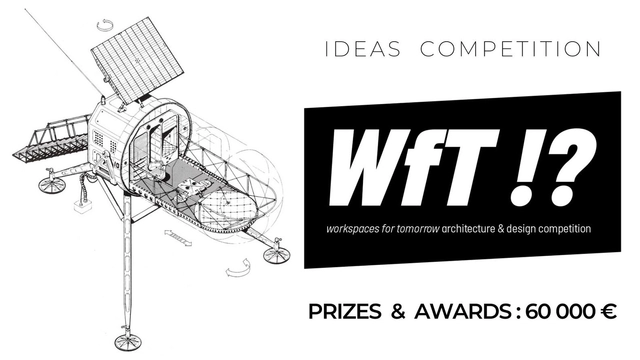
Whether we are passionate about our work or just want to earn a living; whether we work for ourselves or for someone we’ll never meet; whether we work with our hands, our heart, or our mind; whether we work sitting down, standing up, inside, outside, during the day, at night, in a business suit or in a boiler suit: work plays a central role in all our lives.
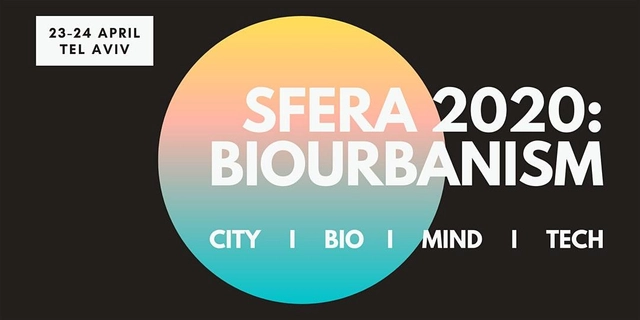
SFERA 2020: BIOURBANISM is an international conference on building better cities using knowledge about the natural world around us.

This contest aims to present 24-hour architectural responses to the problems affecting cities today and consecutively the world, with a very strong focus on sustainable and environmentally friendly measures.
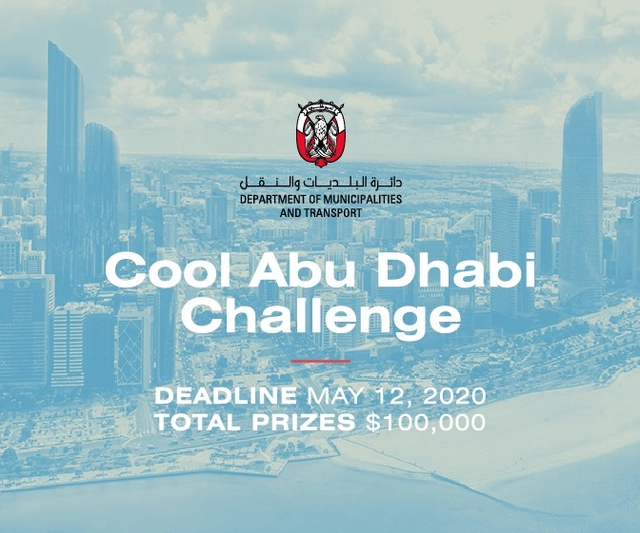
The Department of Municipalities and Transport (DMT) of Abu Dhabi invites you to participate in a global creative ideas competition to improve outdoor thermal comfort in public spaces by mitigating the impact of the Urban Heat Island Effect in the city. The competition is open to all; but is specifically looking for designers, architects, engineers, landscape architects, material scientists, educators, researchers, students, artists and/or inter-disciplinary teams from across the globe, to contribute. The winning entries will represent the most original and innovative ideas that attempt to reduce Heat Island Effect in a prototypical urban site in Abu Dhabi through design interventions or material and scientific innovations. Entries are not limited to architectural design interventions and are encouraged to work across scales, technologies, systems, and materials.