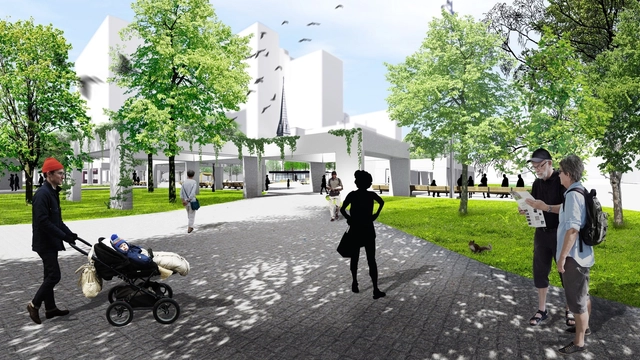
Viger Square, Montreal's first large square, is getting a makeover. The redevelopment project is being led by landscape architects NIPPAYSAGE, which will begin the first phase of redesign in 2017.
Historically, the 30,000 square foot center has always contributed to the liveliness of the city, and it was the largest square in Canada in the 19th century. Now coinciding with the adjacent redevelopment of retail and office spaces at the Viger Hotel, the city hopes for a major revitalization of the area.
The City of Montreal has selected KANVA's IMAGO as the winner of Vivre le Chantier Sainte-Cath, a competition seeking to maintain access to and usage of St. Catherine Street, downtown Montreal's primary commercial artery, as it undergoes a four-year construction period. The construction includes infrastructure developments—enhancements to underground infrastructure, new public transit systems, and increased pedestrian access—and while segments of the street will be closed to car traffic, pedestrian paths and all businesses will remain open during construction.
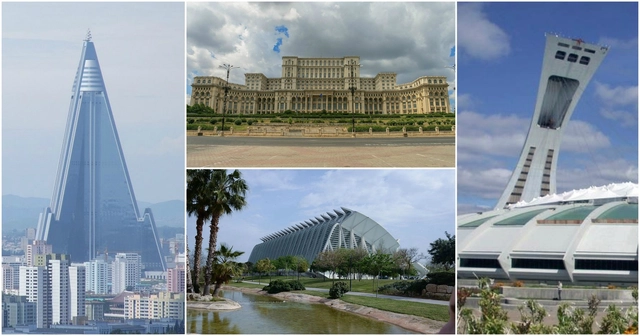
Not every piece of architecture can be an economic and social success. But there is one dreaded term reserved for only the mot wasteful of projects: "white elephants." The term comes from a story of the kings of Siam, now Thailand, who would reportedly gift sacred albino elephants to courtiers they didn't like. Refusing the gift from the king would have been unacceptable, but being sacred, these animals were forbidden from work, leading the courtier to financial ruin—a fact the kings knew all too well.
Of course, in architecture the term "white elephant" is used frequently to disparage certain projects, and whether a project is deserving of such infamy is usually a matter of perspective. Often eyesores or reminders of poorly spent funds, these projects refuse to be forgotten despite few wanting to remember them. Dotted around the world and across history, they all have the same thing in common: although they may (or may not) have once looked good on paper, they probably should have just stayed on paper.
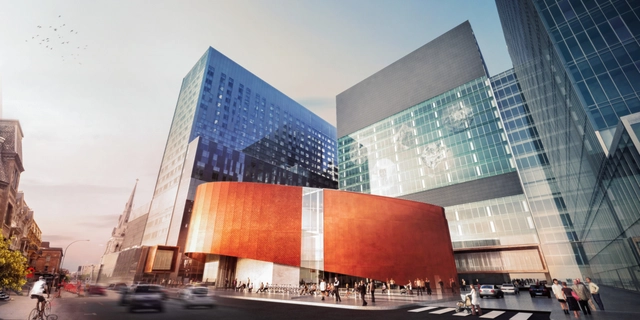
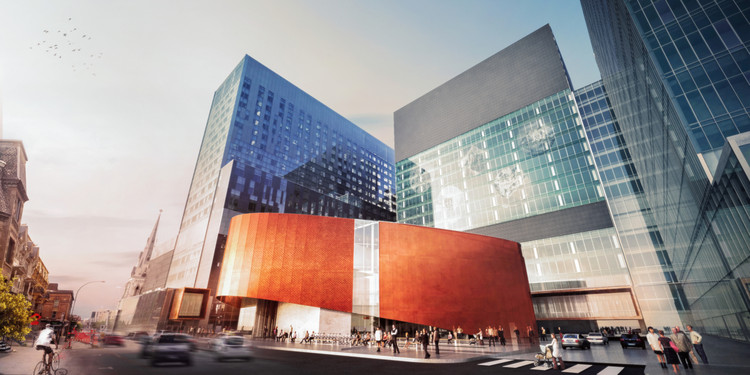
CannonDesign and NEUF architect(e)s have unveiled the design for the Centre Hospitalier de l’Université de Montréal (CHUM), the largest healthcare construction project in North America and one of the largest current healthcare projects in the world, which has been in the works for almost a decade.
Spanning over 3 million square feet, the 22-story complex will merge three aging hospitals into one, creating a space with 772 single-bed patient rooms, 39 operating theaters, and more than 400 clinics and examination rooms.
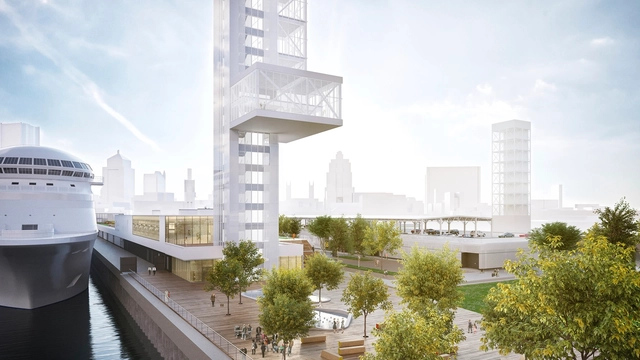
Montreal-based Provencher_Roy have released images of their designs for the restoration of Alexandra Pier and the Iberville International Passenger Terminal, currently under construction in Montreal's Old Port. The new terminal will accommodate the operational needs of the modern cruise ship, offering tourists a new entrance into the historic heart of the city, and will provide residents with a new promenade and public space integrated smoothly into the existing urban fabric.
Montréal’s CCA (Canadian Centre for Architecture), the international museum and research center which was founded by Phyllis Lambert in 1979 and is currently directed by Mirko Zardini, has launched a new iteration of its website. The organisation’s new online presence has been conceived as an active editorial project which aims for more than dissemination of information alone; rather, it will take positions and—being organised around several themes such as “The Planet is the Client,” “Origins of the Digital” and “Technology Sometimes Falls Short”—will reflect the CCA’s ongoing research interests.
This interview with Zardini has been conducted by Steffen Boddeker (currently Director of Communications at Columbia University Graduate School of Architecture, Planning and Preservation – GSAPP), who has worked with the CCA as a communications and online consultant overseeing its web presence since 2006.
“This is a recently created firm that has developed a coherent and consistent body of high-quality architectural work in a rapid time frame,” said the five-member jury. “It has achieved this while often working within limited budgets.”