Nicolas Valencia

BROWSE ALL FROM THIS PHOTOGRAPHER HERE
↓
Subscriber Access

Marianela Castro and José Orrego reveal details of the Peruvian Pavilion at the 2018 Venice Biennale

This Saturday, May 26, the Peruvian pavilion at the 2018 Venice Biennale will open, and Lima's huacas will never be seen in the same light again—or at least they shouldn't be—thanks to "En Reserva" (In Reserve), the curatorial proposal by Marianela Castro de la Borda, Janeth Boza, and Javier Lizarzaburu, which manages to synthesize 4,000 years of architecture in a 250-square-meter space.

Through a poetic reading, the curators guide us through an ancient Lima and its contested huacas as a "knot city," seeking to rediscover its infinite potential as a "living city" that develops while respecting all its historical layers. The curators' goal is to highlight the existence of 447 neglected and dormant huacas in the Peruvian capital, while simultaneously revealing their potential to become the public spaces that Lima's residents so eagerly need and desire.
Subscriber Access

Can social architecture be more than an anecdote?

On Sunday, April 1, the 15th edition of the Latin American Social Workshop (TSL) concluded in Peru. This annual workshop brings together students and architects from across the Americas to analyze, reflect, design, and build public facilities over ten days in diverse Latin American contexts.

Known as XV TSL Puno, this edition took place in Chucuito, a Peruvian town situated at an altitude of over 3,800 meters (12,400 feet) on the shores of Lake Titicaca, near the city of Puno—the folklore capital of Peru. There, 250 students divided into three teams worked on landscape, public space, and heritage restoration projects, led by ENSUSITIO + Jhony Chávez, Ruta 4, and Lucio Torres, respectively.

Following the workdays, amidst coca leaves and fried trout, a recurring question arose during our conversations with the workshop participants: how can social architecture move beyond the photograph of children drawing and adults talking in a town hall meeting? Below, we present the reflections of four Latin American practices that participated in the TSL between 2017 and 2018.

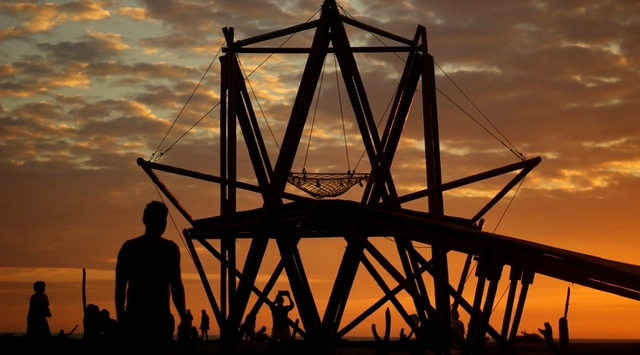
Can social architecture be more than an anecdote? - More Images+ 16

Subscriber Access

Puno Architecture Guide: 8 Places Every Architect Must Know

At more than 3,800 meters above sea level and on the shores of Lake Titicaca, the city of Puno stands as the folklore capital of Peru, where architecture, archaeology, and dance intersect. It is not only home to the Candelaria festival—declared an Intangible Cultural Heritage of Humanity by UNESCO in 2014—but also sits just a few kilometers from the vast archaeological legacy of the Pucará and Tiwanaku cultures. Additionally, visitors can travel to the floating islands of Uros, Amantaní, and Taquile on the world's highest navigable lake.

Before going any further, if you are not accustomed to this altitude, we recommend drinking coca tea regularly or chewing coca leaves, which can be purchased at any local store. Furthermore, the weather can be highly unpredictable; a single day can bring sun, rain, and hail, so keep this in mind when choosing what to wear. Lastly, in Peru, streets that are at least ten blocks long, narrow, and usually one-way are called jirones (abbreviated as Jr.).

Construction Progresses on the Three Projects of the XV TSL Puno in Peru

They say you shouldn't trust the sky of the Peruvian highlands: a clear blue sky can give way to a downpour or a hailstorm in a matter of hours. The students and workshop leaders of the XV TSL Puno—this year's edition of the Latin American Social Workshop, held in Chucuito, Peru—know this all too well. Throughout the week, they have been working to build three projects that will be handed over to the local community.

Landscape, heritage restoration, and public infrastructure are the three themes addressed by the Serpiente, Cóndor, and Puma workshops. Their projects, scattered across different parts of Chucuito, are being built at an elevation of over 3,800 meters (12,400 feet) above sea level. Organized by the Latin American Coordinator of Architecture Students (CLEA) in collaboration with the Peruvian Organization of Architecture Students (OPEA), the workshop will conclude this Sunday, April 1, with the public inauguration of the projects.

Here, we invite you to take a look at the progress of the teams participating in this edition of the TSL, the third to be held in Peru.

Subscriber Access

Fredy Massad: 'The critic has become a validator of architects'

Following his participation in the first edition of the National Architecture Congress of Ecuador (CNAE), we spoke with Fredy Massad, an Argentine architect and critic based in Spain. In a highly attended lecture, he warned of what he sees as the danger posed by starchitects—self-made figures operating beyond the practice of architecture and laden with a thick emotional layer.

At the same time, the author of Crítica de Choque described the current state of the discipline, linking populism, deglobalization, and architecture: arguing that the Pritzker Prizes awarded to Alejandro Aravena and RCR Arquitectes in 2016 and 2017, respectively, are linked to two types of political populism. According to Massad, one is associated with certain hegemonic leftist forces in Latin America over the last twenty years, while the other is shaped by the global idea of "returning to the village," citing Brexit, Marine Le Pen's National Front in France, and the Catalan independence movement as references for this latter trend.

Subscriber Access

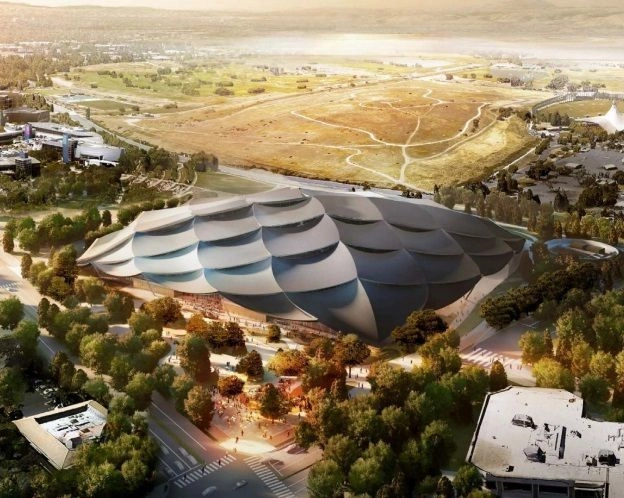
What Is Architecture Without Clients And Money? ArchDaily Editors Talk

In January, we covered an interview with Bjarke Ingels where he spoke of the role that clients play in architecture. In the article, Bjarlke Ingels mentioned that "In the world of architecture there are many more things beyond an architect's control than are under his command." The post started a debate among our readers as well as our editors at ArchDaily. Many readers bemoaned the demise of architecture at the hands of clients with big pockets. Some of us talked about how IT giants not only control our digital world, they are now also encroaching upon our urban environments. Several readers blamed big clients for creating starchitects who build grand buildings and, as they allege, cause an "infantalisation" of architecture in the process.

Here at ArchDaily, our editors got to thinking: Can architecture exist without a client? Or is it just a service, a capitalistic exchange? And really, are clients such a bad thing for the field?

We talk to some of our editors to get their perspective.