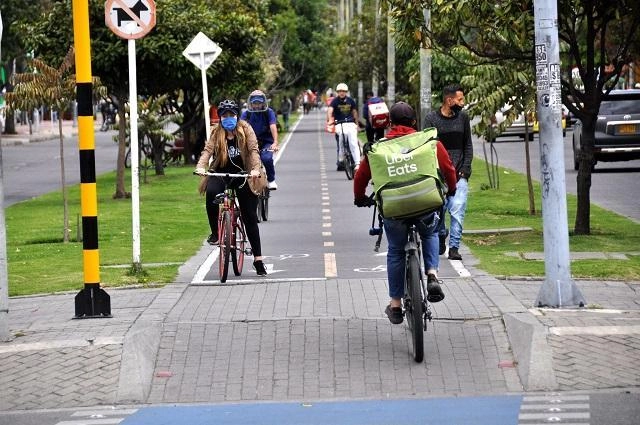
Not all pandemic-response bike lanes are built equal. Photo: Carlos Felipe Pardo/Flickr
When the Covid-19 pandemic broke out, concerns over virus transmission on public transit prompted many to opt for alternative mobility options—chiefly, cycling. Bicycles gained popularity for both recreation and transport, a trend especially evident in the United States, Mexico, Colombia, Germany, and France. In France, Germany, and the United States, the weekly average of bicycle use increased by 4%, 7%, and 20% respectively compared to 2019 figures.
https://www.archdaily.com/1127898/from-emergency-to-permanent-transforming-cycling-infrastructure-beyond-the-pandemicCamilla Zanetti, Alejandro Schwedhelm e Claudia Adriazola-Steil
The 8th edition of the Arquiteturas Film Festival, taking place from June 1 to 6 in Lisbon, explores the theme “Bodies Out of Space” through an exploration of the social construction of space, connected by a thread running through its own narratives of domination. These are also narratives of identity, which is often stripped away or forced to represent our bodies.
Each year, the festival is dedicated to presenting documentaries, fiction, animation, and experimental films relevant to promoting contemporary Portuguese architecture both nationally and internationally. The 2021 edition is no different, structured around three distinct pillars: the official selection, the competition program, and the guest country program.
International Women's Day has been celebrated worldwide since it was officially recognized by the UN in the 1970s. Broadly speaking, this date symbolizes our historical struggle as women to achieve equality with men.
In the spirit of these celebrations, as a woman and an architect, I wanted to present an overview of women's professional trajectory in architecture—particularly in Brazil—highlighting the discrepancies that persist in the field to reinforce the struggle that International Women's Day represents. This is both a call to action and a personal reflection, as well as an appeal for collaboration, urging everyone to recognize their own position and, above all, our place as women in shaping our country's architectural landscape.
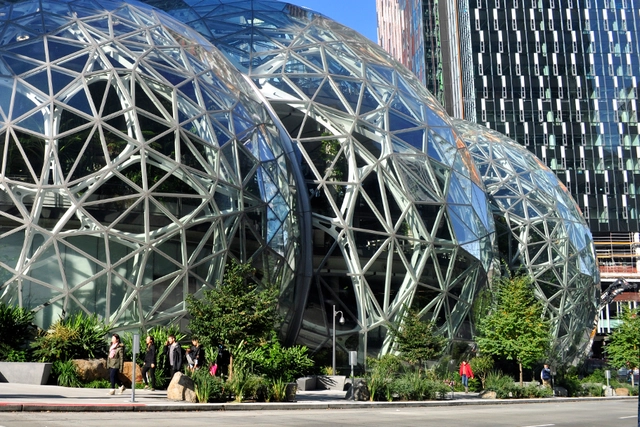
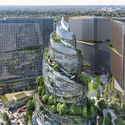
While the corporate world debates remote work, Amazon has decided to double down on physical offices. Earlier this year, the company announced plans for its new headquarters in Arlington, Virginia. The building complex will be anchored by a spiraling structure more than 100 meters tall, dubbed the Helix. In addition to 260,000 square meters of office space, there will also be 10,000 square meters of public space, including an amphitheater, a market, restaurants, and plazas. The choice of location, in the heart of the Washington, D.C. metropolitan area, stands in contrast to companies like Apple and Facebook, which built their closed-off headquarters in the suburbs.
Throughout the 113 years of celebrating Japanese immigration, discussions surrounding Japanese culture have gained considerable attention. As Brazil is home to the largest Japanese community outside the archipelago, the country's connection to Japanese cultural expressions is clear. Many cities settled by Japanese immigrants preserve their Japanese history and culture to this day; consequently, the architectural field has consolidated itself primarily through buildings that represent the political and social dimensions of Japanese immigration, fused with new technologies and construction methods.
The septic tank developed by the Municipality of Uberlândia is a compelling alternative for repurposing waste materials while also addressing basic sanitation challenges common in many Brazilian cities.
The Municipal Department of Water and Sewage (DMAE) is the agency responsible for designing the system and manufacturing the sustainable septic tanks distributed in the city. To share this knowledge more widely, however, they created a step-by-step manual so the design can be replicated anywhere.
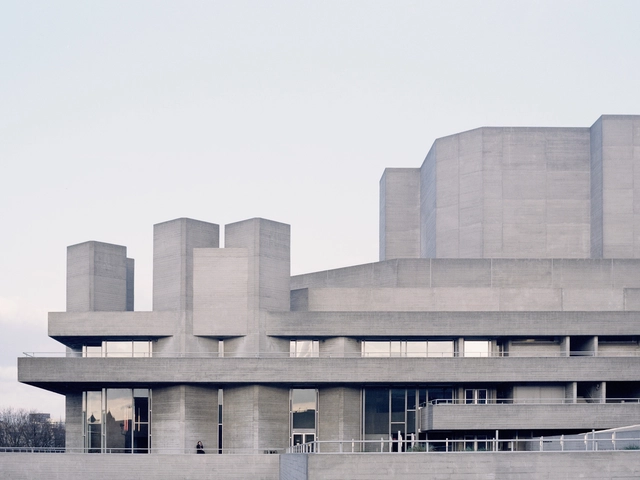
"The image provided by Brutalism, an architecture of sensual extremes, is often an extraordinary and unfamiliar experience for the city explorer. There can be something aggressive and a bold vocabulary (...) in the expressive palette that displays the truth of its materials and a disdain for the frivolous." This is how Simon Phipps [1] describes the fascination that Brutalist works still hold for us today. Yet, what does it mean to think about this architecture in 2021?
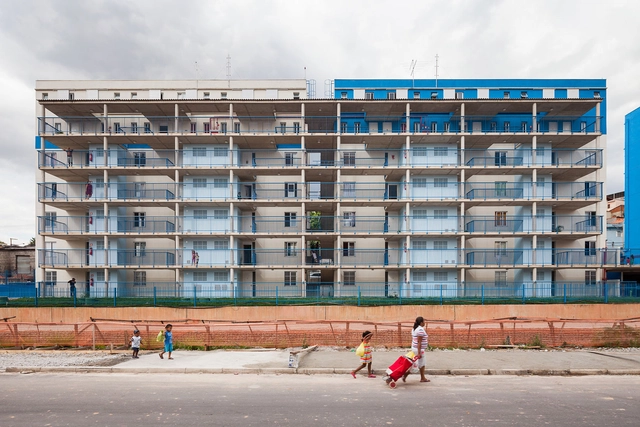
Gathering innovative, sustainable architectural designs for social housing that enable a reduction in energy consumption is the objective of the National Competition of Architectural Ideas for Energy Efficiency in Social Housing, launched this Monday (15) by the German governmental cooperation agency Deutsche Gesellschaft für Internationale Zusammenarbeit (GIZ) GmbH. Applications are open until April 26.
Pináculo magazine is the first in Brazil dedicated to architecture students. Its content is designed to support students in their Theory and Design courses, as well as to serve as a research reference. A testimonial from one of our readers:
Trend, style, and movement are some of the most common classifications used in attempts to define Brutalism—a term used to describe a body of architectural work produced between the 1950s and 1970s that shares certain characteristics, most notably the raw, exposed use of building materials. Defining Brutalism precisely, however, remains a difficult task, even though (or perhaps precisely because) the term has achieved such widespread currency, sparking numerous attempts to conceptualize it.
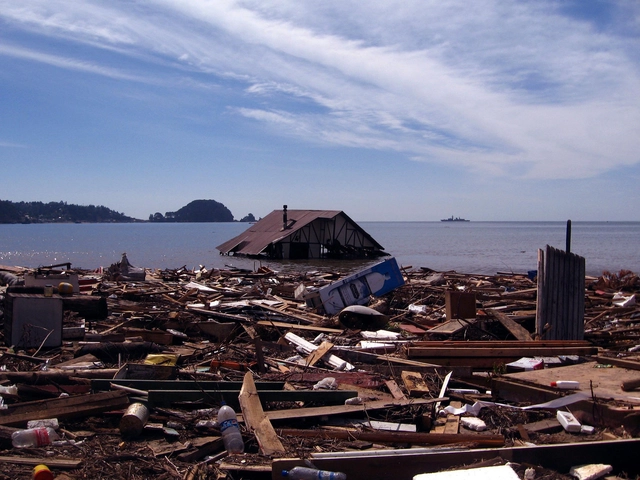
Submerged house in Dichato, Chile, after the 2010 earthquake and tsunami. Photo by El Increíble Dr. Peligro, via Visualhunt
Natural disasters, whether or not compounded by human activity, are becoming increasingly frequent in today's world.
Chile has a long history of natural disasters, many of which have occurred in recent years, underscoring the dramatic and disheartening toll on its population. It is as if the country lives in a permanent state of reconstruction.
One hundred and twenty civil society organizations (NGOs, institutes, foundations, collectives, and social movements) advocating for the right to the city sent an open letter to the Mayor of São Paulo, Bruno Covas, demanding that the Strategic Master Plan (PDE) review process be conducted by the Municipal Government in a way that guarantees full public participation, respecting the principles of democracy, popular sovereignty, and transparency, even amid the pandemic.
Videos
Berlin, Germany. Photo by Adam Vradenburg, via Unsplash
We have curated a selection of online exhibitions on urbanism—available for free on Google Arts & Culture—exploring the history of development in major cities around the world. Discover them below:
https://www.archdaily.com/1127678/12-free-virtual-exhibitions-on-cities-and-urbanismAnthony Ling e Gabriel Lohmann
Today, March 22, marks World Water Day. According to data from the UN, the organization responsible for establishing this commemorative date, by the year 2050, between 3.5 billion and 4.4 billion people will have limited access to this resource, the use of which increased sixfold over the last century and currently grows at a rate of approximately 1% per year.
In light of such concerning figures, the concept of sustainability and the importance of solutions aimed at water conservation and reuse become even more critical.
















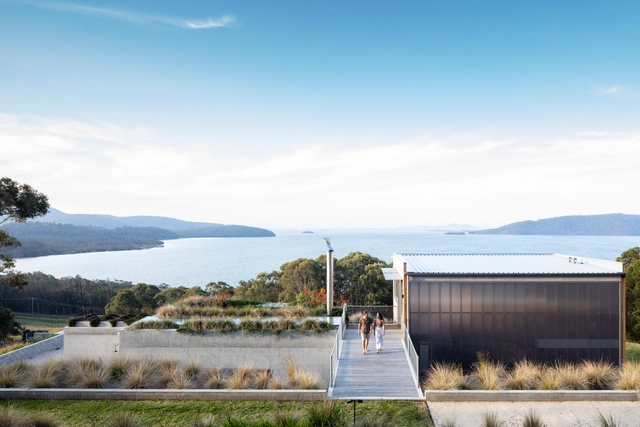
.jpg?1616416482 "Majamaja Wuorio Eco-Cabin / Littow Architectes. Image: © Marc Goodwin")