1. ArchDaily
  2. News

News

Carrilho da Graça's Archive to Be Incorporated by Casa da Arquitectura

The archive spanning more than 40 years of professional practice by architect João Luís Carrilho da Graça will be incorporated into the Casa da Arquitectura, strengthening the national scope of the institution's collection. The signing ceremony will take place this Saturday, February 15, at 3:30 p.m., at the CA Archive.

Rome Architecture Guide: 26 Works Showcasing the Diversity of Its History

Subscriber Access | 

Built over three millennia and known as the Eternal City, Rome is home to one of the world's richest built heritages, featuring works that have influenced and continue to inspire architects to this day. Perhaps its most unique characteristic lies in the countless layers of history superimposed over time.

The following list aims to showcase the full diversity of Rome's history. We have bypassed the most obvious monuments and well-known landmarks to construct a more representative and profound portrait of its architectural plurality—places where architectural authenticity can still be found, even within a setting as timeless as the Eternal City. Rome is, par excellence, the palimpsest city.

The raison d'être and the challenge to face: São Paulo and its waters

Subscriber Access | 

Every year, the rainy summer months bring a wave of media coverage detailing the devastating effects of floods on the lives of citizens and the urban territory of São Paulo. It is as if, during this period, public discourse platforms become a stage for reporting chaos and seemingly insurmountable challenges that urban centers must face in their daily relationship with water.

A no-man's land, Brazilian sidewalks reveal neglect of the pedestrian.

Subscriber Access | 

Even though one-third of all trips in Brazilian cities are made on foot, citizens who walk or use wheelchairs are not treated as a priority. In fact, the words "pedestrian" and "sidewalk" do not even appear in Law 12,587/2012, which establishes the guidelines for the National Urban Mobility Policy—a clear sign of legal inconsistency at both federal and municipal levels.

7 works of architecture that showcase the variations of Brutalism in Brazil

Subscriber Access | 

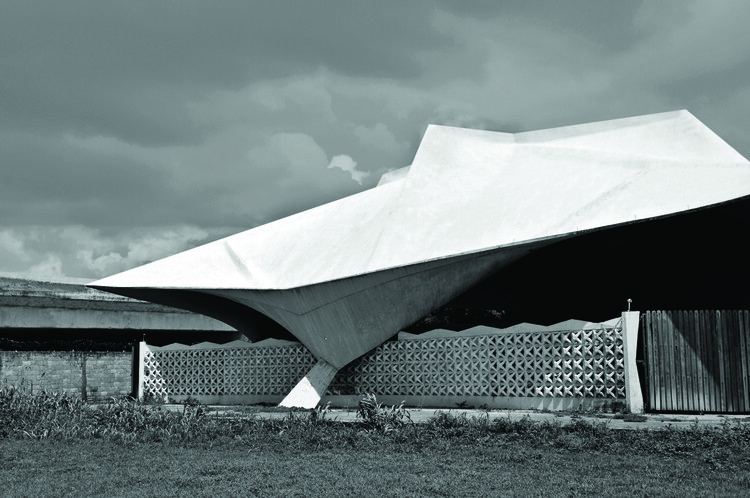
The period between the 1950s and 1970s in Brazil was primarily characterized by the production and dissemination of Brutalist architecture. Despite the lack of a unanimous definition of what constitutes this offshoot of modern architecture, the term "Brutalism" is generally used to denote buildings from the era that share a common denominator: the exposed use of construction materials, particularly concrete.

7 works of architecture that showcase the variations of Brutalism in Brazil - Image 2 of 47 works of architecture that showcase the variations of Brutalism in Brazil - Image 3 of 47 works of architecture that showcase the variations of Brutalism in Brazil - Image 4 of 47 works of architecture that showcase the variations of Brutalism in Brazil - Image 5 of 47 works of architecture that showcase the variations of Brutalism in Brazil - More Images+ 4

The best of ArchDaily Brazil on the climate and environmental crisis

We have compiled a list of our best articles, news, and proposals on an absolutely urgent topic in architecture and society at large: the climate and environmental crisis.

Winners of the XVII Jalisco Architecture Award 2023

Subscriber Access | 

Thirty-eight years ago, the Colegio de Arquitectos del Estado de Jalisco A.C. established the Jalisco Architecture Prize to recognize the work of outstanding architects and to encourage and motivate architecture professionals in the State of Jalisco. The award was also conceived to celebrate the region's rich tradition of excellence and innovation, as the birthplace of numerous illustrious professionals, including architect Luis Barragán Morfín and Fray Gabriel Chávez de la Mora—who designed the signature medal for this prestigious honor. The accolade is divided into three main categories: the Architectural Design Award, the Urban Design and Planning Award, and Distinctions, as well as the Honoris Causa Recognition.

Benefits of Activating Public Space Around the World

Subscriber Access | 

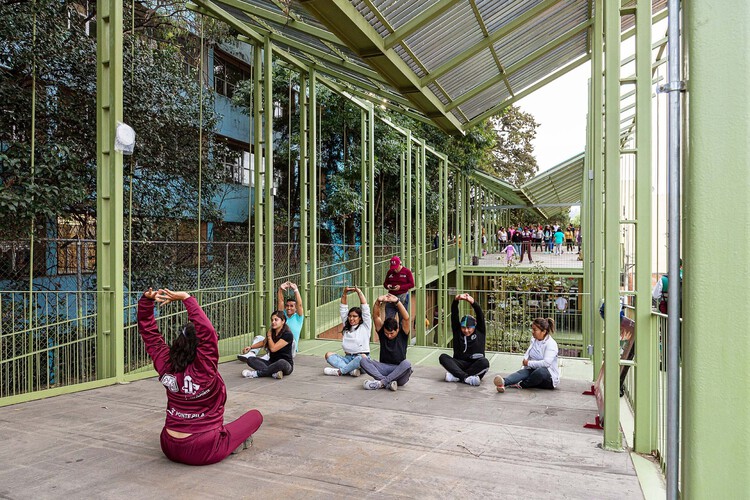
Urban public space is, and must remain, a platform for social, cultural, and political expression. Studies such as those by UN-Habitat recognize that accessible, safe, and inclusive public spaces are vital tools for mitigating urban inequality.

Moreover, when conceiving these spaces as a "living room," they should ideally be functional and welcoming to everyone, ensuring users feel "invited" to linger, use, and care for them. Over the past two decades, open public spaces (streets, intersections, squares, plazas, parks, etc.) have increasingly become the focus of strategic and tactical activations and experiments.

Benefits of Activating Public Space Around the World - Imagem 1 de 4Benefits of Activating Public Space Around the World - Imagem 2 de 4Benefits of Activating Public Space Around the World - Imagem 3 de 4Benefits of Activating Public Space Around the World - Imagem 4 de 4Benefits of Activating Public Space Around the World - More Images+ 3

Streets in São Paulo's Liberdade neighborhood will be pedestrian-only on Sundays

The Liberdade neighborhood, in the central region of São Paulo, will begin testing the Open Streets (Ruas Abertas) program this Sunday (1st). Similar to what has been done on Paulista Avenue since 2016, four streets in the area will be open exclusively to pedestrians from 9 a.m. to 8 p.m. on Sundays and holidays.

Led by the Municipal Department of Urban Development and Licensing, the initiative aims to prioritize the use of urban space based on pedestrian needs. “The goal is to foster conditions that encourage people to linger, improve walkability, and strengthen the area as a tourist and commercial attraction,” the São Paulo city government stated in a press release.

Are our cities meeting the demands of babies and children?

Subscriber Access | 

More than one billion babies and children live in urban environments. However, the way cities are planned fails to consider their needs, or those of the people responsible for their care. To support decision-makers, urban planners, and transportation professionals in improving access to urban opportunities for thousands of Brazilian children, ITDP Brasil has launched Access for Babies, Toddlers, and Caregivers, developed in partnership with the Bernard van Leer Foundation.

(Un)comfortable Rooms: Reflections on an Award-Winning Favela House

Subscriber Access | 

At the crossroads, three women with their histories and ancestries seek to overcome the challenge with a necessary padê: the construction of a narrative that attempts to purge from the epistemic rubble certain questions born from observing how people reacted to the fact that a "chic favela dweller" received an international award. The case (and tale) in question is the award in the "Houses" category of ArchDaily's international Building of the Year 2023, which was granted to "Kdu's Shack"—a house that expresses planning, design, exposed concrete, exposed brick, beauty, and poetry, but... From its inception, it has been a house "out of place"—and this caused discomfort. In this text, we address these (dis)comforts and materialities; the disputes over narratives; what is "out of place" and who does the classifying; territory; design; aesthetics; gingas; the delegitimization of self-discourse, and other intersections.
Mugak Basque Country International Architecture Biennial 2023: Rebuild, reinhabit, rethink

From October until November 24, 2023, the Mugak International Architecture Biennial of the Basque Country will take place. Now in its fourth edition, the event brings together a wide range of open, free activities across San Sebastián, Bilbao, and Vitoria-Gasteiz under the theme “rebuild, reinhabit, rethink,” encouraging debate on the impact of architecture within the context of today's multidimensional crisis—encompassing its environmental, economic, and social responsibilities, as well as its capacity for transformation and care. 

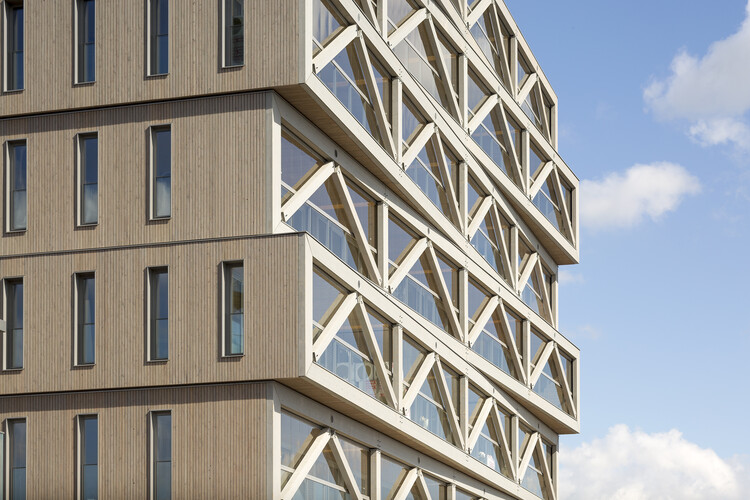
If timber is the future of urban construction, its technological possibilities will need to be expanded.
Atrium Ljungberg unveiled Stockholm Wood City in Sweden, the world's largest urban construction project in wood, and in Norway, just four years ago, Voll Arkitekter completed the Mjøstårnet Tower on Lake Mjøsa, one of the tallest wooden buildings in the world at 18 stories. On the other side of the planet, the Tamango project by Tallwood Architects is an example of the challenges and opportunities of wood construction in Chile, as it could become the first 12-story building with a prefabricated wood structure in Latin America. Meanwhile, in Peru, the Construye para Crecer project by Poggione+Biondi Arquitectos won the XIX National Architecture Biennial 2022 with a residential complex to be built mainly of wood. Nearby, Uruguay recently concluded its social housing in wood competition, paving the way toward innovation in social interest architecture. Furthermore, in 2020, Vicente Guallart won an international competition to define the standards for the buildings of a new city in China. The project, titled The Self-Sufficient City, was already a design that materialized a new urban model in wood across four city blocks.

Across the globe, sustainability and innovation in construction are constantly evolving, and wood structures are presented as a promising option. ArchDaily presented The Future of Wood as its monthly topic, opening up a discussion to explore and hear predictions and thoughts from our readers regarding the future of this material in architecture and urbanism. Is wood the key to a more sustainable and livable urban future? Or are there challenges we must address before embracing this trend? What are the implications for architecture, cities, the economy, and the environment?

Winners of the BANL XXII - Nuevo León Architecture Biennial 2023

Subscriber Access | 

The winners of the XXII Bienal del Colegio de Arquitectos de Nuevo León in Monterrey have been announced. Under the theme "Coherence," this edition's discourse proposes establishing dialogues and expressions to recognize the correct expressive and material act of architecture in practice. The biennial seeks to acknowledge how both architectural objects and urban projects operate under the following categories: social coherence, ethical coherence, strategic coherence, participatory coherence, productive coherence, and material coherence.

P+ Construction Materials Passport: A Platform for Circular Architecture

Launched in 2023 and developed by the Technological Center for Innovation in Construction (CTEC) and the Chile Green Building Council, the P+ Material Passport for Construction Platform enables the registration, characterization, and traceability of building materials and components throughout their lifespan.

Brazilian Houses: 16 Homes with Pergolas

Subscriber Access | 

Traditionally made of wood, the pergola can also be constructed from materials such as concrete, bamboo, and metal sheets. The spacing and arrangement of its horizontal elements vary across different projects, providing shade tailored to the specific needs of the space without necessarily forming a fully covered roof.

Anish Kapoor Exhibition to Inaugurate Cidade Matarazzo's Cultural Space in São Paulo

An exhibition by British-Indian artist Anish Kapoor will inaugurate one of São Paulo's largest contemporary art spaces. Located in the Cidade Matarazzo complex, Casa Bradesco de Criatividade will host the exhibition starting in September 2021.

UIA, IAB, and CAU launch call for sustainable architecture and urban development projects

As part of the UIA2020 Congress activities, the Institute of Architects of Brazil, in partnership with CAU/BR, will produce a publication featuring Brazilian architecture and urbanism projects aligned with the 17 Sustainable Development Goals (SDGs), in an effort to showcase sustainable architectural and urban planning practices.

Sustainable Transit-Oriented Development: From Theory to Territories

Subscriber Access | 

With the rapid acceleration of the climate emergency and the consolidation of an urbanized planet, the challenge of transforming cities and metropolitan areas into more inclusive and sustainable environments depends on reducing the negative impacts of transportation. Shortening the distances traveled by residents, bringing homes closer to work and opportunities, promoting the shift from private motorized transport to active or public transit modes, and creating more plural and democratic territories are the outcomes of policies aligned with addressing 21st-century global challenges. Implementing the necessary transformations across urban territories on a global scale, while also considering local particularities, is an even greater challenge—yet a vital one for a more sustainable future.

Video explores the space and everyday use in a preschool in Porto

Subscriber Access | 

The latest video produced by Building Pictures features a project by the Portuguese firm CREA, which includes the renovation of the Bom Sucesso School, the construction of a multi-sports court, and a new kindergarten. The film begins by contextualizing the school within the urban fabric. The project is located right in the center of a densely populated area, where the sounds of traffic and the city's frantic bustle can be heard.

Assembly: Foundational Chilote Architecture of Magallanes

Subscriber Access | 

Chiloé as a starting point. From here, translocal phenomena, driven primarily by sea, served as the catalyst for sculpting the southern Patagonian cone—across both Chile and Argentina—by Chilote hands during colonial times. A hybrid people of Indigenous and European descent, whose geographic and political-administrative isolation forced them to rely on the self-construction of their settlements, the cultivation and gathering of their own food, and the making of their own clothing—all from the resources available within their archipelago. Out of this emerged the unquestionable Chilote ingenuity—a skill set highly sought after in territories that, during the colonial period, were being forged under the Chilean state. Consequently, it is easy to recognize the creative hand of the Chilote people in the architecture of the southernmost towns.

Castro Abierto 2023: Journeys of Memory and Future in Southern Chile

Chiloé, in southern Chile, is a place where architecture is a tangible expression of history, culture, and the natural environment in which it sits. Its urban identity is unique, as are its inhabitants, featuring everything from the iconic colorful stilt houses suspended over the water to the wooden churches designated as UNESCO World Heritage sites. 

Inspired by this rich architectural heritage, Castro Abierto was created—a festival that brings together architecture, landscape, and local communities to connect and promote the diverse expressions of Chiloé's archipelagic culture. 

What is a Low Emission Zone?

Subscriber Access | 

Discouraging the use of private cars is a crucial step in addressing climate change, improving air quality, and reducing traffic collisions. Cities must find ways to curb traffic and prioritize human well-being, while also considering the environmental and social impacts of automobile use by offering transportation options that generate lower carbon emissions.

Recently, low-emission zones (LEZs) have become a popular strategy in several cities worldwide. The measures implemented in these areas effectively reduce car dependency by offering cleaner, more affordable, and accessible transportation alternatives.

Engine of Equality: The Residencia de Señoritas and Madrid's New Cultural Space

The exhibition "Engine of Equality: La Residencia de Señoritas (1915-1936)" will be open until October 15, celebrating a unique, iconic, and pivotal institution in promoting equality in Spain. It is housed in the Ortega-Marañón Foundation's recently opened cultural space—an expansion at the rear of the central "casa" in Madrid that joins the historic 1930s building designed by Carlos Arniches on the corner of Miguel Ángel and General Martínez Campos streets.

You've started following your first account!

Did you know?

You'll now receive updates based on what you follow! Personalize your stream and start following your favorite authors, offices and users.