1. ArchDaily
  2. News

News

Mexico City-based firm LOCUS takes fourth place in the National Museum of Carthage renovation competition

Subscriber Access | 

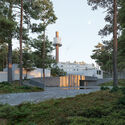
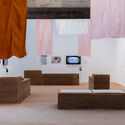
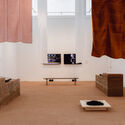
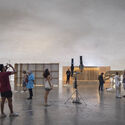
Mexico City-based firm LOCUS, in collaboration with Studio Météores and Philippe Rahm Architectes, has been awarded fourth place in the single-stage international competition for the renovation of the National Museum of Carthage for its project titled "Byrsa, Topographies of an Act of Reparation." The Ministry of Cultural Affairs of the Republic of Tunisia announced the results of the competition, which was organized by the UIA, the OAT, UNESCO, Expertise France, and Patrimonie 3000.

How to Become a BIM Manager?

The BIM (Building Information Modeling) methodology is revolutionizing the construction sector, and with it, the role of the BIM Manager. This professional is responsible for managing the building process using BIM, from initial sketches to project completion.

A BIM Manager's career path can vary based on education, experience, and professional goals. However, in general, BIM Managers tend to follow a similar career trajectory. 

Buenos Aires and the River: Meet the Winners for the Urban Regeneration of the Saldías District

Organized by the Central Society of Architects, the call for entries has been launched for the National Ideas Competition for the Saldías District, in collaboration with the Secretariat of Urban Development of the Government of the City of Buenos Aires and sponsored by the Argentine Federation of Architect Organizations (FADEA). Promoted by Autopistas Urbanas S.A., the competition aims to secure urban design proposals to transform and renew the site located in the decommissioned section of the Illia Highway, along with its immediate urban surroundings.

Wet Decks: Innovating Pool Architecture

Subscriber Access | 

The word "deck" originated in the English language to refer to a ship's deck. Today, the term is used to describe outdoor surfaces made of wooden planks that may or may not surround pools, hot tubs, and soaking tubs. These design options can be highly diverse—so much so that a new approach has emerged in the market as a growing trend: the wet deck.

Wet Decks: Innovating Pool Architecture - Image 1 of 4Wet Decks: Innovating Pool Architecture - Image 2 of 4Wet Decks: Innovating Pool Architecture - Image 3 of 4Wet Decks: Innovating Pool Architecture - Image 4 of 4Wet Decks: Innovating Pool Architecture - More Images

Refoundations: New Narratives on the Founding of São Paulo

Throughout 2019, the Minas Gerais-based architecture collective Micrópolis partnered with Museu Paulista and SESC Ipiranga to carry out the project Refundações [Refoundations]—a series of public programs that create new readings and meanings for the museum's collection, based on the desires and demands found in the urban practices of contemporary activists and thinkers in São Paulo.

Photos compare the space occupied by cars, buses, and bicycles on the Hercílio Luz Bridge in Florianópolis

Photos compare the space occupied by cars, buses, and bicycles on the Hercílio Luz Bridge in Florianópolis - Imagen 1 de 4
Comparativo do espaço necessário para a circulação de 42 pessoas. Image Cortesia de Prefeitura Municipal de Florianópolis. Programa Ponte Viva: Hercílio Luz Para as Pessoas

The City of Florianópolis organized an initiative on the Hercílio Luz Bridge that uses comparative photos to show the space occupied by different modes of transportation carrying the same number of passengers. Led by the Institute of Urban Research and Planning of Florianópolis (IPUF) and the Municipal Secretariat for Mobility and Urban Planning, the initiative is part of the Ponte Viva (Living Bridge) Program.

The right to fully experience urban space

Subscriber Access | 

The right to fully experience urban space and all the possibilities it offers has always been a distant reality for the vast majority of Brazilians. Recently, however, we seem to be drifting further and further from this reality. There is a sense that every day we witness more threats to the population's right to the city, ranging from fundamental issues, such as the freedom of movement in São Paulo, to symbolic dimensions like the presence of low-income populations in wealthy neighborhoods, as seen in Salvador. We must speak openly about these threats and name them as such (words have power!), while also imagining pathways for confrontation and political resistance. What is on the horizon at the start of 2020?

Artist celebrates Goiânia's modernist heritage with a series of illustrations

Artist André Chiote has shared his latest series of illustrations with us, this time portraying the Art Deco and modern architecture of Goiânia. Commissioned for the 31st Brazilian Congress of Dermatological Surgery, organized by the Brazilian Society of Dermatological Surgery in the state capital, Chiote's illustrations use the colors of the official congress logo to represent some of the most celebrated landmarks of Goiânia's heritage.

Architectural pilgrimages: how far do we go to experience an iconic work?

Subscriber Access | 

During architectural training and practice, we encounter countless examples of works that, for a wide variety of reasons, have shaped the history of the discipline. These examples become major references in an architect's repertoire, shaping how they view and design architecture. However, understanding a place is incomplete without experiencing it in person; therefore, when traveling, we seek out iconic works to enrich our perspective.
Yet, these works are not always easily accessible or close to established itineraries, which can turn the quest to visit them into true pilgrimages.

Argentine Residential Architecture: 15 Houses Organized Around Interior Courtyards

Courtyards are open-air areas located inside buildings, with their perimeters defined by walls or galleries. These outdoor yet contained spaces often play a crucial role in configuring and organizing the floor plan. In some cases, they function as a central lung, organizing the surrounding spaces along their perimeter. They can also be designed to organize circulation flows or as articulating elements, simultaneously connecting and separating different areas of the project.

Brazilian Houses: 10 Stone Residences

Subscriber Access | 

One of the oldest building materials, stone has endured throughout architectural history due to its strength and durability. Frequently used in protective structures such as fortifications and walls, stone has also historically served as the foundation for a variety of buildings—including residential ones, where it has been employed since the earliest shelters.

Youth in Bahia Preserve Black Historical Heritage by Listening to the Community

Subscriber Access | 

The municipality of Rio do Antônio, located about 700 kilometers from the capital of the state of Bahia, still retains remnants from the era of slavery in Brazil. This period left deep marks that remain visible in the town's daily reality, including its architecture.

17 Projects That Explore the Potential of Exposed Wood

Subscriber Access | 

Few materials respond as well to a multiplicity of uses as wood. It ranges from the smallest decorative objects to the structural elements of high-rise buildings, bringing a distinctive character to architectural designs when left exposed. Its rich variety of tones, densities, and patterns, combined with its organic nature, make wood a unique and singular element that instantly lends warmth, coziness, and hospitality to any space.
African nations call for a global carbon tax

African countries have issued a stark joint declaration calling on major polluting nations to help poorer countries develop without further destroying the planet's climate and ecosystems, as wealthy nations did. They advocate for a global carbon tax as the primary mechanism to enable sustainable investment in vulnerable countries.

What Is the Paris Agreement's Global Stocktake and How It Can Drive Action in Countries

Subscriber Access | 

This year will be pivotal for climate action. The growing impacts of climate change — from floods and droughts to hurricanes and heatwaves — are causing profound damage to human lives and economies around the world, especially in vulnerable developing countries with few resources to protect themselves.

Currently, climate actions are not even close to what is needed to keep global warming below the 1.5°C threshold and avoid the worst of these impacts — countries must significantly accelerate their efforts to get on track. The latest report by the Intergovernmental Panel on Climate Change (IPCC) warns that actions taken this decade will have impacts "for thousands of years."

Mexican architect Cristina Grappin presents Casa Nido for Tec de Monterrey's Sorteo Tec

Subscriber Access | 

As part of an initiative by Tec de Monterrey, this year's first prize for the 215th Traditional Sorteo Tec features a residential project designed by Mexican architect Cristina Grappin. With this home, the university raffle of Tecnológico de Monterrey furthers its support for the Líderes del Mañana (Leaders of Tomorrow) program, an initiative aimed at driving change, social mobility, and the development of outstanding young scholars.

What are smart cities within the Brazilian reality?

Subscriber Access | 

Smart Cities, or smart cities, are increasingly in the spotlight, yet we can hardly describe exactly what they are.

Are they cities that manage to adopt, in a decentralized way, the array of new urban service apps from various providers that are increasingly present in our daily lives?

Or are they those that hire a major corporation to manage and monitor all urban services from a massive, centralized command center?

São Paulo City Hall releases an online map of the city's archaeological sites

The City of São Paulo, through the online portal GeoSampa—an initiative of the Municipal Secretariat of Urban Development (SMDU)—has made a map of all the city's archaeological sites available. The portal maps heritage sites ranging from clandestine cemeteries and Indigenous artifacts to gold mining ruins.

CicloMapa: a collaborative map of cycling infrastructure in Brazilian cities

Throughout 2019, ITDP and the Brazilian Cyclists Union (UCB) worked together to develop a map to facilitate and expand access to data on bicycle infrastructure in Brazilian cities. In September of last year, the public voted on the platform's name, and CicloMapa was launched at the Northeastern Bicycle Forum (FNEBici) in Aracaju.

CAU/BR 2023 Elections: check the qualified electorate for the October 10 vote

On Tuesday, September 26, the National Electoral Commission released the list of architecture and urbanism professionals eligible to vote in the October 10 elections.

Check the Qualified Electoral Roll for the entire country on the CAU/BR election website.

A century of Ecuadorian architecture in Pamplona

Subscriber Access | 

Rafael Vélez Calisto, a leading figure in shaping Quito's contemporary image, closed the latest Latin American Architecture Biennial with his lecture "The Trajectory of a Life," while Seville-based architect Manuel Ramos had already opened the event three days prior with his presentation, "The Last Century of Architecture in Ecuador." In the interim, practices ranging from MCM + A Taller de Arquitectura, Surreal estudio, Arquitectura X, Duran & Hermida, Diez & Muller, Espinoza Carvajal, and Arquitectura Sur to the selected young firms Rama Estudio and Emilio López presented a glimpse of both the historic and recent architecture of the country—the guest country of honor for the BAL 2023 edition.

UN-Habitat promotes Urban Circuit 2023 to discuss the resilience of the Global South

Throughout October, more than 230 events will discuss building urban resilience in the Global South. Featuring representatives from over 20 countries in Latin America and Lusophone Africa, the 2023 Urban Circuit (Circuito Urbano) will take place from October 2 to 31. The schedule is now available on the event website.

The female pencil in the Chilean architecture classroom

Subscriber Access | 

The podcast "Lápiz femenino en el aula de arquitectura" was created by Layla Jorquera Sepúlveda, an architect from the Universidad de Chile, to bring visibility to women from different architecture institutions who have completed the Design Studio course, which carries the highest number of academic crédits.

Meet the winners of the National Wood Architecture Award - PNAM’23

The results of the National Wood Architecture Prize - PNAM’23 have been announced. In its seventh edition, the award recognized a winning project and two honorable mentions in “Sustainability and Circular Economy” and “Material Typology.”

The top prize was awarded to the renovation of Sala Projeto I - Colégio das Artes at the University of Coimbra, designed by architect Paulo Providência, with carpentry by Veiga Lopes, S.A., Carpinlux, and Brito Móveis. The University of Coimbra was the institution responsible for executing the project.

You've started following your first account!

Did you know?

You'll now receive updates based on what you follow! Personalize your stream and start following your favorite authors, offices and users.