The identity of cities lies not only in their name, geographic location, or development. It is also found in the haptic perception we have of them as inhabitants—that is, how our senses interpret the elements within the city.
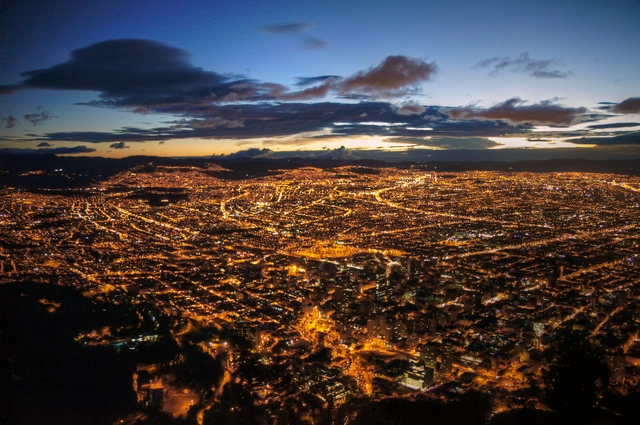
In this video, photographer Óscar Iván Núñez presents “How Does Bogotá Sound?”, an audiovisual compilation of both natural and artificial urban sounds from the Colombian capital. In it, he invites viewers to explore an area of the city in a different way, identifying everyday sounds that shape this capital's soundscape.
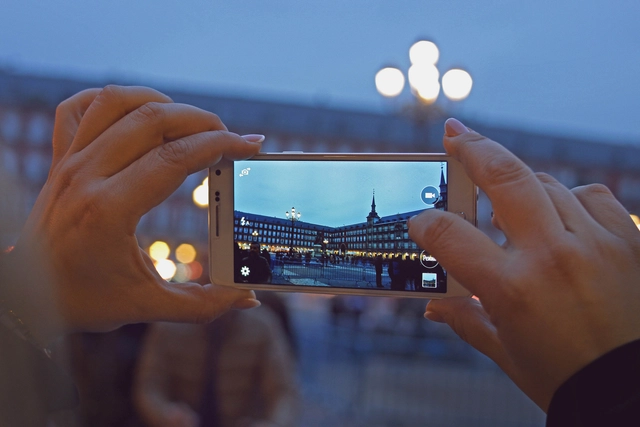
Yesterday, the Official Association of Architects of Madrid and the COAM Architecture Foundation presented the "Arquitectura de Madrid" mobile app, developed with the support of the Madrid City Council and the Foro de Empresas por Madrid.
This is arguably one of the most important and ambitious initiatives undertaken by COAM in recent years in a clear effort to connect architecture with society. In today's fully digitalized context, this app serves as a useful and powerful tool to promote Madrid's architecture, easily accessible to any citizen, student, professional, or visitor to the Spanish capital.
https://www.archdaily.com/1113732/discover-more-than-300-buildings-in-madrid-with-this-new-phone-appJavier García Librero
Wandenkolk Tinoco designed numerous projects after graduating in the late 1950s from the School of Fine Arts of Pernambuco: residences, institutional and residential buildings, as well as paintings and sculptures. Beyond his active practice, Wandenkolk taught for several years at the School of Architecture of Recife, which later became part of the Federal University of Pernambuco.
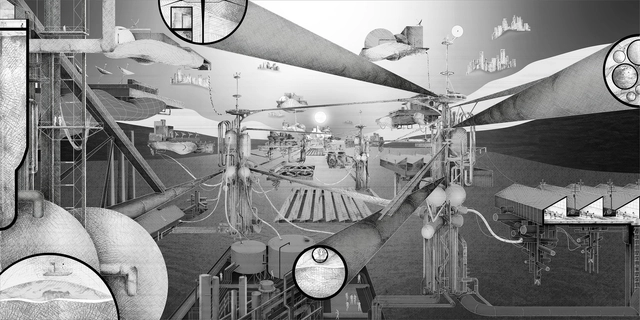
As part of the activities for Arch Days CDMX and Design Week 2018, two exhibitions titled Proyecta and Utopía opened on October 13 at Espacio CDMX, bringing together projects by renowned Mexican architects around two different conceptual frameworks.
Throughout 2018, we selected thousands of projects for publication on our site, occasionally highlighting a few for their innovative techniques and materials, their integration with their context, or their community engagement. Working daily with editors in Brazil, the United States, Mexico, Chile, China, and Northern Ireland, and thanks to the extensive network we have forged with institutions worldwide, we have the tools to gain a much broader perspective on current architectural production—not only in Mexico, but globally.
1º lugar / Estúdio Módulo de Arquitetura. Image Cortesia de Concurso Agora Tech Park
The competition called for proposals to occupy 70,000 square meters of the Ágora Tech Park complex, as well as the design of its first building, spanning approximately 4,000 square meters. It will be built on a 70,000-square-meter block at the Perini Business Park, across from the UFSC campus in northern Santa Catarina.
One of the organizers' goals was to develop the concept of "Human Smart Cities," where technological infrastructure interacts with and positively impacts people's lives. The competition jury consisted of Gustavo Cedroni, Mário Biselli, Roberto Loeb, Emerson Edel, Marcelo Hack, and Danilo Conti. The contract to develop the project has already been signed. This news renews the optimism of any architect who frequently participates in competitions, believing they are the most democratic way to secure relevant and engaging work, even for young firms like Estúdio Módulo. This efficiency demonstrates the client's commitment to bringing the project to life, unlike the vast majority of competitions. The building is scheduled to open on March 28, 2019.
Porto Alegre will host the 21st Brazilian Congress of Architects in October 2019. Organized by the Institute of Architects of Brazil, the event will serve as a preparatory meeting for the 27th World Congress of Architects (UIA2020RIO), which will take place in Rio de Janeiro in 2020. The theme of this edition is Space and Democracy.
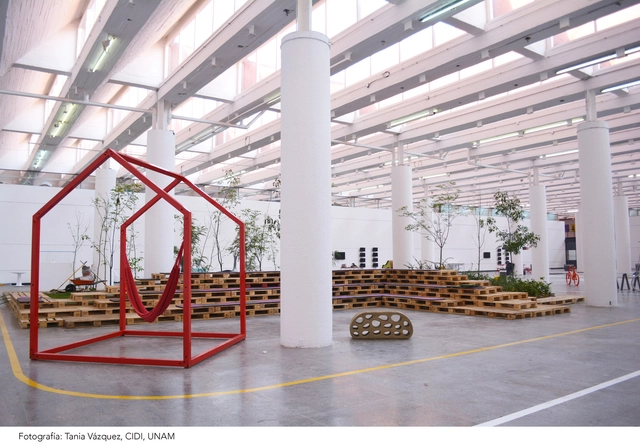
The Museo Universitario de Ciencias y Arte presents the exhibition De todos, para todos. Diseño y espacio público en la Ciudad de México [Of All, For All: Design and Public Space in Mexico City] from March 3 to April 28, 2018, as part of the cultural program of World Design Capital CDMX 2018.
The exhibition highlights how design practices, across various scales and levels, contribute to open urban public spaces, optimizing their functionality and expanding possibilities for users to enrich their experience.
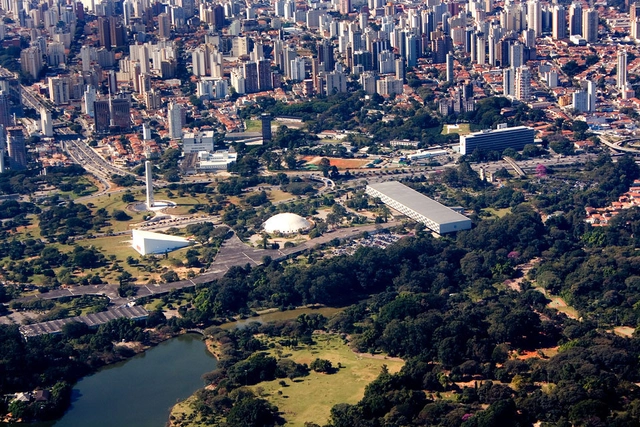
Ibirapuera Park. Photo: Fernando Stankuns on Visual Hunt / CC BY-NC-SA
Paulo Mendes da Rocha is currently the most admired and respected figure in Brazilian architecture. However, his extensive list of works narrowly missed including an intervention project for the work of another master, Oscar Niemeyer. Commissioned in 2015 by São Paulo's previous municipal administration to develop a redesign project for Ibirapuera Park, the proposal by the 2006 Pritzker Prize laureate was shelved in December of last year.
Music is a vital connection to culture. While it serves as a source of entertainment, it is also a medium for communicating ideas and expressing artistic creativity. Through romantic, social, political, or historical themes, every song evokes memories and emotions.
Although there is an endless array of genres today compared to decades past, music still allows us to travel the world without leaving home through its lyrics and music videos. With this in mind, we have compiled a list of 10 songs that not only feature the names of cities in their titles, but also, through their lyrics and visual storytelling, capture the essence of each place—whether capitals or not—bringing to life the magic of their architecture and streets.
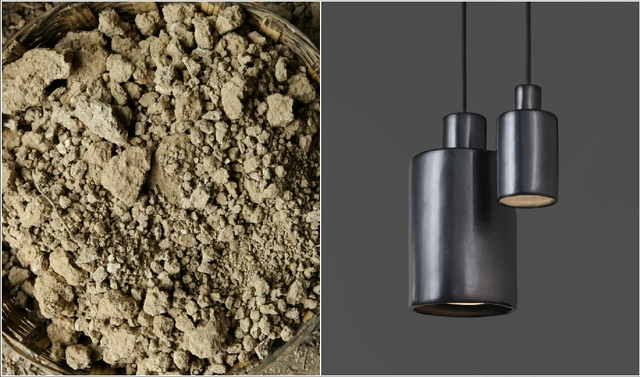
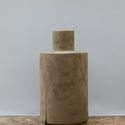
Founded in 2013, David Pompa is a Mexico City-based studio comprising designers, engineers, and makers established in Mexico and Austria. David Pompa grew up in both countries and studied product design in London. The idea of working with Mexican crafts began during a 2009 trip to Oaxaca, where Pompa first saw artisans working with “barro negro” (black clay). This inspired him to begin experimenting with the material, resulting in the studio's first collection. Since then, the studio has remained committed to Mexican culture, describing their work as an ongoing journey to create beautiful, accessible design objects.
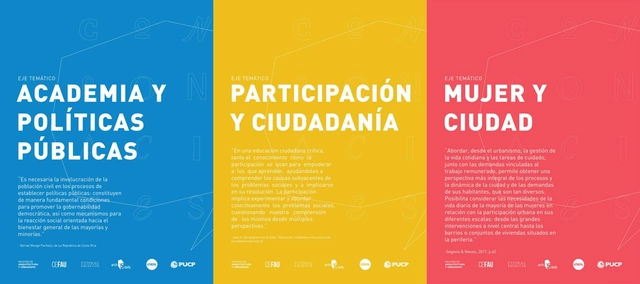
Most committed architecture students will agree that as the years of learning go by, a growing urge arises to speak up, express ourselves, and mobilize in different ways to bring the architecture we study in school to life. This spark is further ignited in a country where development is largely controlled by private interests rather than public ones, and where, above all, deep inequality persists amidst vast potential diversity. Outraged, our voices are increasingly being heard as citizens. We are stepping out of the classroom, seeking dialogue, marching more frequently, and carving out new paths to intervene in and transform our social reality. And we realize, or rather, we return to the natural understanding of our political role within architecture.
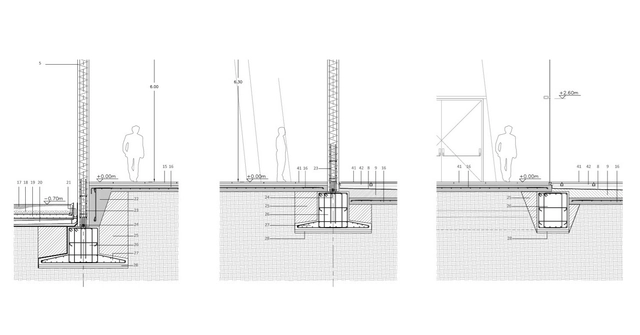
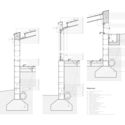
Foundations are certainly not the structural elements on which architects spend the most time during the design process. Since they are typically underground and serve a strictly technical purpose, this decision is usually left to structural engineers. However, foundations play a crucial role in construction, as they are the structural elements that transfer building loads to the ground.
"Architectural competitions represent the combination of the art of choosing and the craft of being chosen," says Roberto Fernández about an area of our discipline that is widely recognized as an excellent platform for firms and independent professionals to present their ideas as true manifestos. Meanwhile, in academic circles, competitions often serve as tools for formal, conceptual, and graphic experimentation.
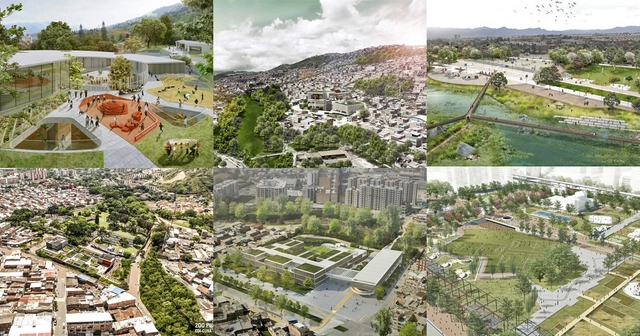
These types of commissions undoubtedly inspire not only architecture and urban planning professionals but also the public as a key player in their evaluation. Whether or not these proposals are built, they demonstrate that we must constantly champion innovation, recognizing the immense effort behind these results. With this in mind, we have selected six award-winning projects that reflect the value of architectural competitions in Colombia.
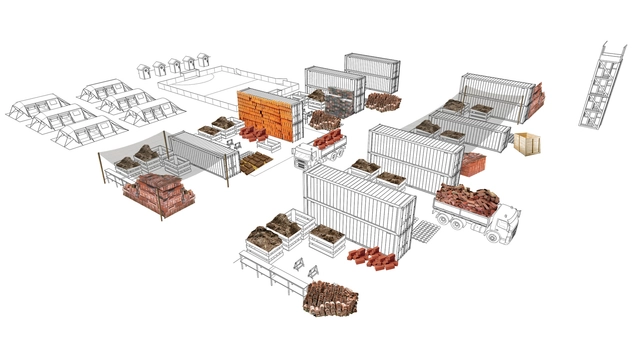
To mark the commemoration of the February 27 earthquake and tsunami, the creation of “Rubble Hospitals” is being promoted, drawing on recent earthquake experiences in Chile and Mexico.
A new guide for creating these spaces was announced in Concepción by Chile's Proyecta Memoria Foundation, coinciding with the anniversary of the February 27 earthquake and tsunami. The guide compiles experiences from earthquakes in Chile and Mexico, while promoting Rubble Hospitals as spaces to safeguard and reuse debris from large-scale seismic events.
The document is the result of three years of work and details memory rescue initiatives during the 2010 and 2015 earthquakes in Chile and the earthquakes in Mexico.
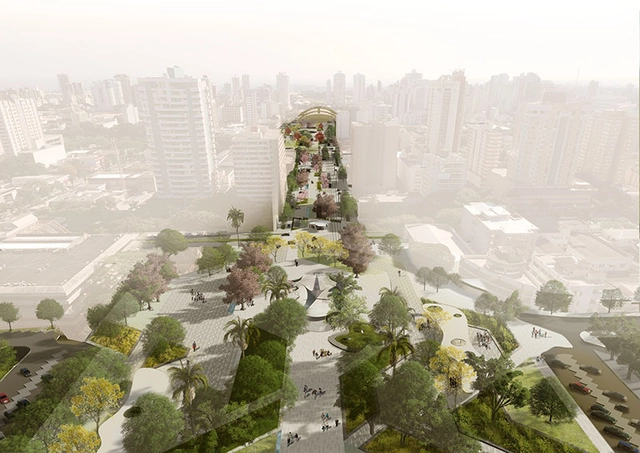
The official results for the National Competition for the Requalification of the Public Space of the Monumental Axis of Maringá have been released. This central urban area lies between Cathedral Square (Praça da Catedral) and the Vila Olímpica sports complex. Totaling approximately 169,000 square meters, the Monumental Axis includes gardens, public spaces, parking areas, and perimeter paving along the building facades. Due to the site's vast scale, proposals had to be presented in seven sectors to facilitate phased bidding and construction. The winning project was designed by a team comprising Pedro Paes Lira, Manoela Muniz Machado, Julia Marini, Laura Figueiredo, and Juliette Tellier from the firm Natureza Urbana, with landscape consulting by Bianca Vasone, Gabriella Ornaghi, and Lilian Dazzi, and engineering consulting by Alexandre Horiye Ferreira and Felipe Macedo Barbosa.
The jury, composed of architects and urban planners Haroldo Pinheiro, José Gilberto Purpur, Mario Figueroa, Orlando Busarello, and Renato Leão Rego, selected the following winners:
The Catalan archipelago is shaped, across almost its entire length, by a small mountain range running along it, rising from the coastline tangent to the sea to form cliffs, and extending barely a dozen kilometers at its greatest extent.
The architecture native to this coastal strip of land is repeatedly categorized as Catalan architecture, thereby overlooking and overshadowing the architecture of the inland—dark, somber, heavy, and intensely material. An architecture—that of the interior—of slow digestion, backlights, and still air, carrying a different scent.
To the northeast, we find a region where beech trees stand still, growing at a lower altitude than anywhere else in the country. Where the light is softer, more diffused; where shadows are both fainter and deeper. Where it rains differently. Where people speak differently. Where the masias are different. There they live. There they work. We are speaking of Olot. We are speaking of RCR.
Accelerating the fight against climate change and social inequalities depends on cities. Photo: Daniel Hunter/WRI Brasil
The greatest force in the fight against climate change lies in the hands of cities. This is where most people live and where the global economy drives forward. However, according to the new report by the New Climate Economy, titled "Unlocking the Inclusive Growth Story of the 21st Century: Accelerating Climate Action in Urgent Times," urban areas are not leveraging their transformative potential to promote sustainable development. Ultimately, this could mean missing our final opportunities to reduce poverty and halt climate change.
https://www.archdaily.com/1113695/cities-need-ambitious-action-to-promote-sustainable-developmentWRI Brasil
The “Welcome Mother Nature” project, winner of the June 2016 international competition to redesign Madrid's Plaza España, will ultimately not be allowed to alter the position of the Cervantes monument as initially planned.
The Community of Madrid announced at the Local Heritage Commission its intention to fast-track the declaration of the complex as an Asset of Heritage Interest (BIP). Consequently, the project designed by architects Fernando Porras Isla-Fernández, Aranzazu La Casta Muñoa, and Lorenzo Fernández-Ordóñez Hernández will not be allowed to rotate the statue of the Spanish writer to face the Edificio España, as reported by the Spanish newspaper El País.
https://www.archdaily.com/1113698/transformation-of-plaza-de-espana-in-madrid-must-respect-the-position-of-the-cervantes-monumentJavier García Librero
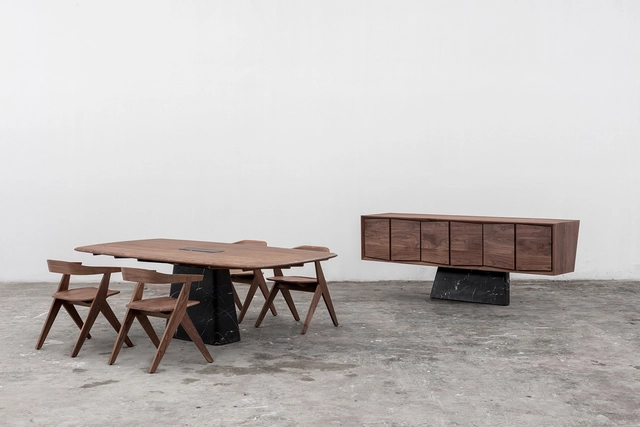
The Dolmen Collection is based on an exploration of balance between elements of different materialities. This exercise highlights the physical properties of stone and wood, creating tension between the suspended and supporting elements. Designed by Héctor Esrawe, Manuel Bañó, Federico Stefanovich, and Alejandro Ramírez, it comprises a dining table with chairs and a cabinet.
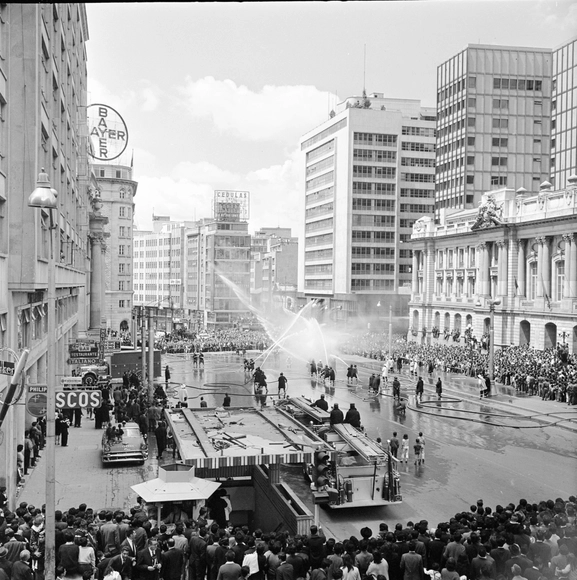
The modernization of Bogotá between 1940 and 1970, captured through urban and architectural photo essays, has been documented in various books, magazines, and photobooks of the era, as well as in the city's public and private archives. These images reveal an intentional, even critical, approach to how modern architecture reconfigured city centers, bridging new buildings and urban spaces with the existing cityscape.
When analyzing the impact of photojournalism, it is essential to examine the work of Sady González, Manuel H. and Daniel Rodríguez. In their work, architecture and the city serve as the backdrop for scenes of urban life, figures, historical events, and daily activities; their photographs offer an indispensable visual record for understanding the city's transformation and its historical context.
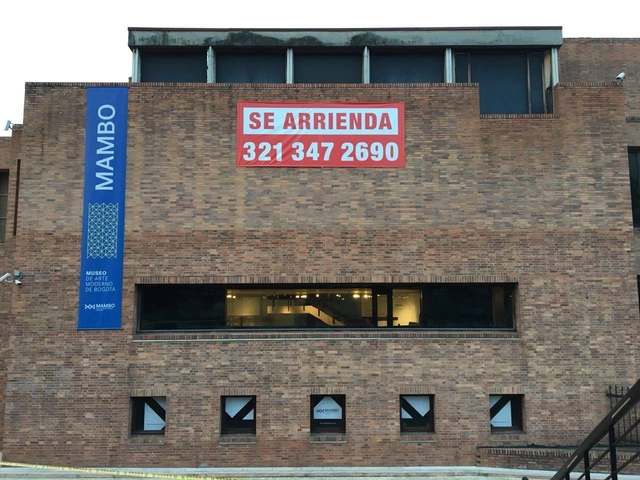
via MAMBO - Museo de Arte Moderno de Bogotá / Facebook
Designed by Rogelio Salmona, the Bogota Museum of Modern Art (MAMBO) appeared on Monday morning with a "For Rent" sign on its facade, drawing the attention of local media outlets like Dinero and La W.
The latter contacted the phone number listed on the sign and spoke with a Carlos Muñoz, an alleged real estate agent who confirmed that "the museum's spaces, totaling 4,200 square meters, have been put up for rent for 120,000,000 pesos a month" (equivalent to approximately 43,200 USD). The alleged agent provided details about the building's program as if marketing any other real estate listing. Furthermore, as the newspaper Dineroconfirmed, calls to the MAMBO communications office went to a recorded message confirming that Salmona's building was indeed for rent.
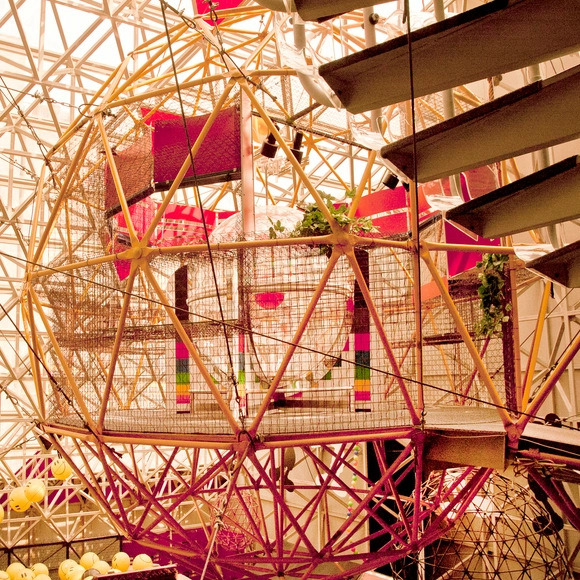
One of the most representative houses by Mexican architect José Díaz Infante that served as an experiment to study urban processes was the 'Earthquake-Resistant House' located at Ámsterdam 270. Also known as 'Kalikosmia,' this house addressed themes that broke with the purist forms common at the time, making it highly controversial. Furthermore, it was the result of an analysis based on the aftermath of the 1985 earthquake in Mexico City.
The Mexican architect defined himself as a "spatial designer," saying, "(...) I am timeless, I am not in history because I am more in science than in style. I do not belong to an era. My work has evolved in accordance with the different structures I have built. I treat each program differently, and in each project, I contribute something that I deny in the next." This was reflected in his career: in addition to being an architect, he collaborated with NASA and studied under Buckminster Fuller. As the designer of major works like the TAPO terminal and the Mexican Stock Exchange, he is today among the forgotten.
Dampness from water ingress, condensation, or leaking and burst pipes; cracks and fissures in partition walls, facades, columns, or beams; corrosion, deformation, and spalling are some of the most common building pathologies that can affect a structure throughout its lifespan. Detecting these issues is essential to address them, keep the building in good condition, and prevent accidents or structural failures.
To address this, the Official Association of Architects of Madrid (COAM) has launched its first public awareness campaign, titled ‘Arquitecto de la Casa’ (House Architect). The initiative aims to raise awareness about the necessity and benefits of ongoing building maintenance, highlighting specialized architects as the most qualified professionals for the job.
https://www.archdaily.com/1113684/discover-arquitecto-de-la-casa-coams-new-campaign-to-maintain-building-healthJavier García Librero
.jpg?1539810935 "Proyecta. Image Cortesía de Design Week México")












_20Wikimedia_Commons.jpg?1528296272&format=webp&width=640&height=580)