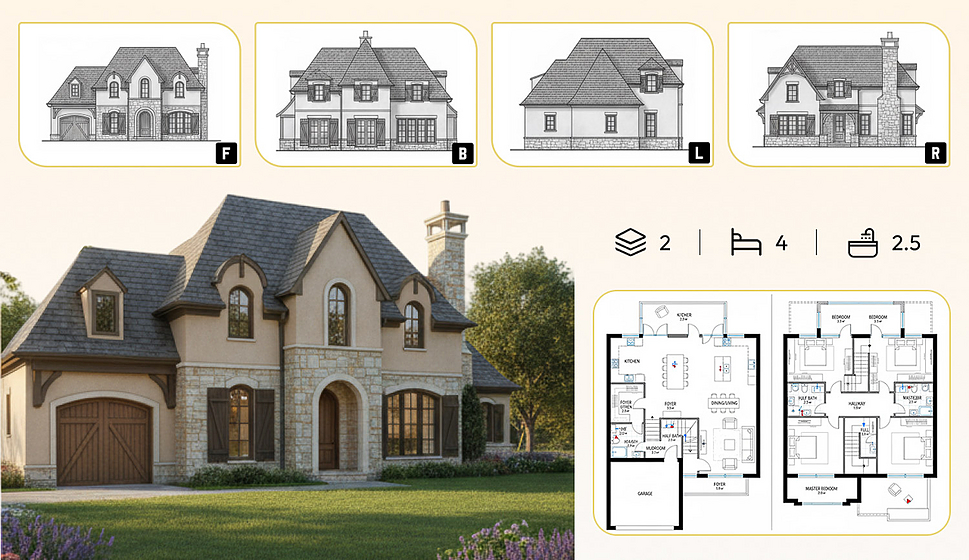
This guide covers a workflow that moves from project parameters to generated floor plans, 3D perspective views, exterior design exploration, and site context visualization, using AI tools in place of preliminary CAD and rendering work.
This guide covers a workflow that moves from project parameters to generated floor plans, 3D perspective views, exterior design exploration, and site context visualization, using AI tools in place of preliminary CAD and rendering work.
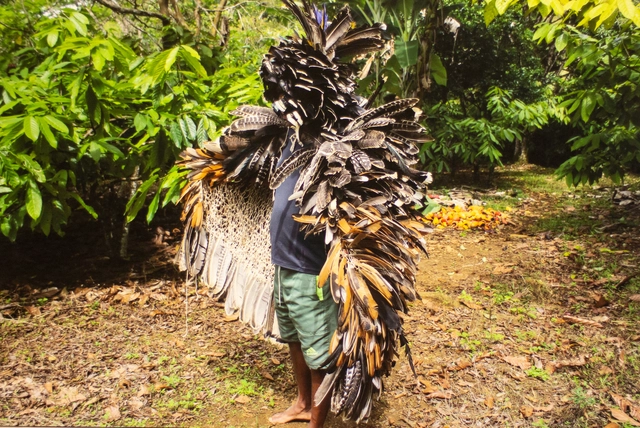
Hãhãwpuá is the name used by the Pataxó Indigenous people of Brazil to refer to the land, the soil, or, more precisely, the territory that after colonization became known as Brazil, though it has had—and still has—many other names. Amidst all these “Brazils,” Brazil as Indigenous land is the focus of the country's pavilion at the Venice Art Biennale 2024, which has consequently been renamed the Hãhãwpuá Pavilion.
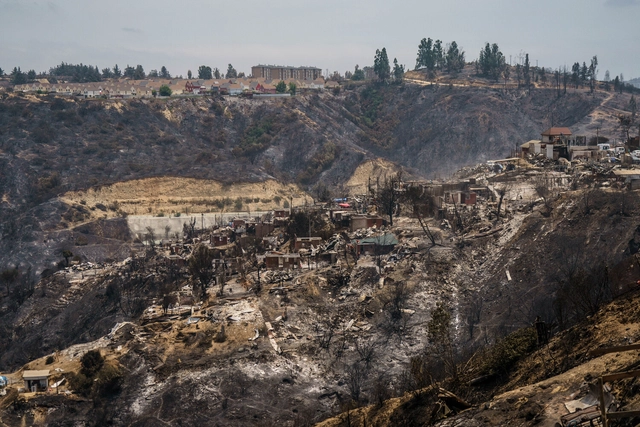
Nearly ten years after the last major fire in Valparaíso, Chile's Fifth Region is once again facing this type of disaster, but on a much larger scale. The fires, which began on February 2, affected more than 10,000 hectares and 15,000 homes, along with the total loss of the Viña del Mar Botanical Garden, an iconic nature sanctuary in the city.
Consequently, the community and authorities must once again begin the process of rebuilding and restoring the affected areas. At this critical juncture, it is paramount to consider the factors that heightened the risk and spread of the fires, and to reevaluate urban planning regulations, land regularizations, and, above all, community risk-prevention education—especially since many of these homes were built informally and outside existing codes.
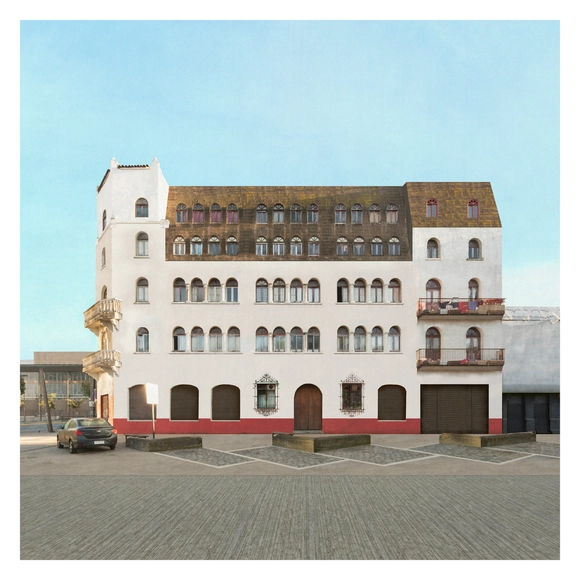
The images in this exhibition seek to create a space for reflection on a condition that can be extrapolated to the current state of the city of Concepción, Chile. They offer a simultaneous view of architectural works related by technique, scale, or construction period, capturing the distinctive identity that defined the city over the last 100 years—one that is currently threatened by an urban renewal process far removed from the motivations that gave rise to its heritage legacy.
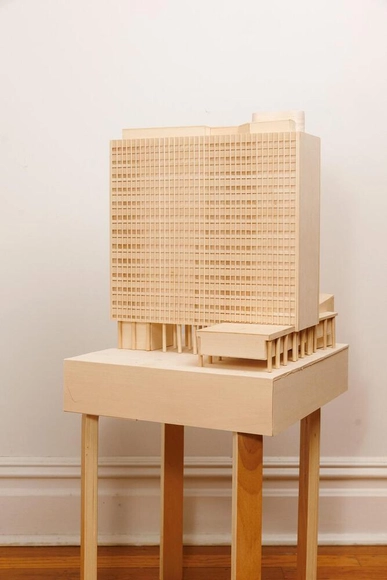
Conceived during the Fall Residency Program for Independent Projects at the IPA – Institute for Public Architecture, the project “The other of the other” (2023) was developed through visits to and research in a series of institutional sites and archives in New York City—resources that have influenced Talles Lopes's work since 2018. These primarily include spaces and archives related to the dissemination of Brazilian modernist architecture in the Global North from a New York perspective, specifically the MoMA archives in Manhattan.
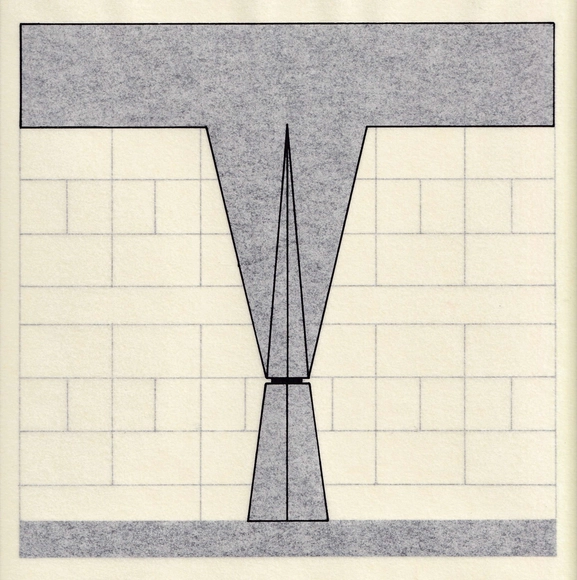
Some lessons, however simple, can resonate lastingly within our personal practice. This is the case with a specific memory from my undergraduate years in the Architecture and Urbanism program at Escola da Cidade, where, during a second-year technical drawing class, the professors suggested we retrace the floor plans of the Butantã House, designed by architect Paulo Mendes da Rocha. My recollection is that, immediately, some of the students found the activity uninspired or even irrelevant—which is understandable—while for others it was certainly enjoyable and fruitful, even if they might not recall this specific episode more than a decade later, as is the case here. The value of being exposed to different activities within a course—from the most to the least conventional, from the simplest to the most elaborate—is that each individual will utilize different tools and knowledge in unique ways. Hence the importance of a wide range of experiences, even within the seemingly rigid instruction of technical drawing. What is trivial for some can be instrumental for others, whether momentarily or over the long term.
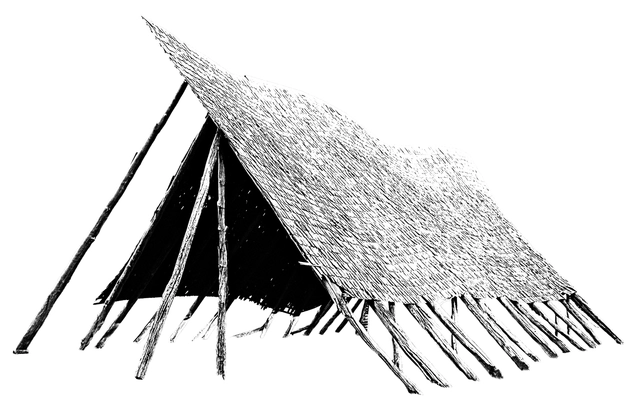
The architectural heritage established by the early settlers of the Aysén region—initially a minimal expression of dwelling designed to protect inhabitants from the elements, which later evolved intrinsically alongside the changing needs of its residents—symbolically represents a vernacular architectural identity in wood.
Today, with few exceptions, the remaining houses from the early years of spontaneous settlement in the region show advanced signs of decay. They are often repurposed as storage sheds or outbuildings next to the main house due to degraded materials, a lack of basic utilities, or precarious thermal insulation.
Similarly, although the vast majority of larger and more complex homes from a more recent period—built primarily in urban areas—remain inhabited, the structural decay of these buildings is increasingly evident. This precarious condition is closely linked to their occupants, who are mostly older adults lacking the financial resources or physical capability to undertake necessary repairs.
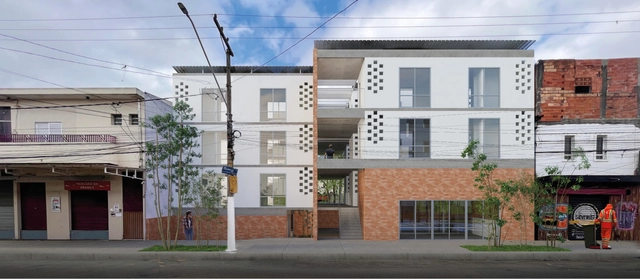
How can architecture and urbanism once again contribute to the debate and production of Social Interest Housing (HIS)? This was one of the core questions guiding the development of the Social Interest Housing Guidelines Manual for Jardim Lapena, developed by the Tide Setubal Foundation and BlendLab for the East Zone of São Paulo. This manual compiled a set of guidelines regarding housing, management models, site planning, and integration with the urban environment, shaping the proposals for the + Lapena Habitar Call for Projects held in late 2022.
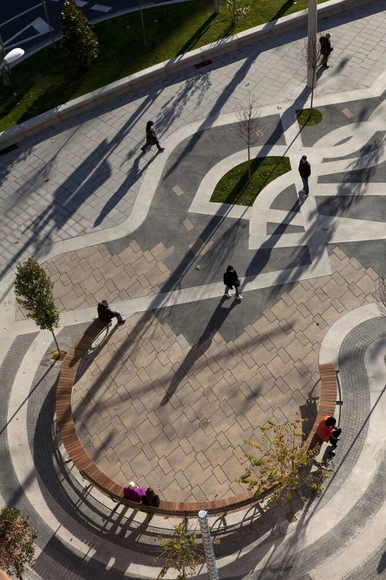
Concrete, in its various facets, exhibits an interesting duality thanks to its aesthetic and technical qualities, which have been explored by architects and designers in different typologies and contexts. On the one hand, reinforced concrete displays the strength and durability required for large-scale construction, efficiently withstanding adverse weather conditions. On the other hand, the malleability of stamped concrete allows it to elegantly adapt to complex shapes and imprint patterns on the surface, utilizing texture and pattern to cultivate a distinct atmosphere within the built environment.
Stamped concrete has gained prominence due to its durability and versatility, offering options and designs that adapt to different architectural styles. However, while we are familiar with its use and applications, specifying it requires a meticulous approach to ensure optimal results. Below is a practical guide covering the essential considerations from Melón Hormigones for specifying this innovative material, from pattern selection to proper care and maintenance.
We invite you to participate in the 2024 ArchDaily Brasil Building of the Year Award. In its eighth edition, we task our readers with the responsibility of recognizing and rewarding the projects that have had the greatest impact on the profession. By voting for the finalists, you become part of an unbiased network of jurors recognizing the most relevant projects built over the past year in Portuguese-speaking countries. Only a few days remain before the voting stage closes, which will select the three main winners of the 2024 ArchDaily Brasil Building of the Year Award from among the 15 finalists.
Registered users can vote for their favorite project once a day. The voting stage closes on April 3 at 11:59 PM (Brasília time GMT-3).
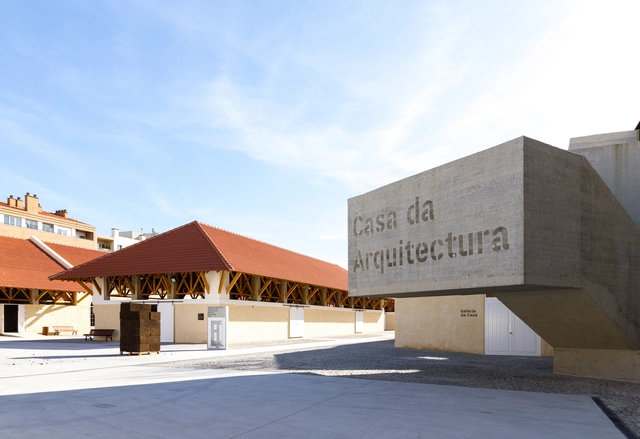
Casa da Arquitectura has opened a call for 10 doctoral research fellowships, funded by the Foundation for Science and Technology (FCT) under the Cooperation Protocol for the Funding of the Multiannual Plan for Doctoral Research Fellowships established between both institutions.
The craft of architecture is, fundamentally, a practice of approaching the other. While the product expected of the architect is a physical object, it must respond with the utmost sensitivity to the people who will use it—that is, those who will inhabit the space.
During the 1980s and 1990s, a paradigm shift occurred in how the social sciences understood certain social phenomena. Spatiality became a key concept for grounding social phenomena in physical space, giving rise to a new research perspective known as the "spatial turn in the social sciences." This approach aims to anchor social phenomena, such as dwelling, in concrete material spaces, acknowledging that physical space exerts agency over human social life, and vice versa.
*This article was submitted by Andrea Henríquez through our call for architectural research submissions.
We invite you to participate in the 2024 Obra del Año Award. For this fifteenth edition, we ask you to recognize the projects that are making the greatest impact on the built environment. By voting, you become part of an independent, impartial network that has consistently helped us celebrate architecture of all scales, purposes, and contexts, in countries both large and small. Only a few hours remain to vote for your favorite project and help narrow down 1,000 nominees to just 15 finalists.
Remember, registered users can vote for their favorite project. The first stage ends on Tuesday, March 26, 2024, at 11:59 PM (GMT-3). Thank you once again for helping us continue to democratize architecture.
The 2024 Obra del Año Award is brought to you by Dornbracht, renowned for its leading architectural designs, which can be found internationally in bathrooms and kitchens.
Today is the day to discover the finalists for ODA2024: the award for the best architecture in Spanish. Our expert jury—that is, you, the readers—has selected 15 of their favorite projects from nearly 1,000 works of architecture built in Latin America and Spain.
This award has become a true tradition, now in its sixteenth edition. It is an invitation to all our readers to recognize the projects published in 2023 that inspired them and represent the identity of their local contexts in a globalized world, shaping how architecture is practiced in Latin America and Spain within an increasingly heterogeneous and multicultural environment.
Starting today and until next Wednesday, April 3 at 11:59 PM (GMT -3), you can explore each of the finalists in detail and vote for the project that best represents the architecture in Spanish that inspires us, defines us, and shapes us. Discover all the finalist projects below.
The 2024 Obra del Año Award is presented to you thanks to Dornbracht, renowned for its leading architectural designs, which can be found in bathrooms and kitchens worldwide.
We are pleased to present the finalist projects of the 2024 ArchDaily Brasil Building of the Year Award. After two weeks of nominations, the favorite projects were chosen from hundreds of built works in Portuguese-speaking countries. Our jury, composed of thousands of readers, has once again done an excellent job of selecting these 15 works.
From today until April 3 at 11:59 PM (Brasilia time, GMT-3), you can vote once a day for the projects you consider to be the best examples of contemporary Lusophone architecture. The results will be announced on April 4.
We invite you to participate in ArchDaily’s Obra del Año Award! We ask you to recognize and reward the projects making the greatest impact on the built environment. By voting, you help celebrate architecture across all scales, purposes, and conditions, becoming part of an interdependent, unbiased, and distributed network of jurors who have already narrowed down nearly 1,000 projects to select just 15 finalists representing the very best of our architecture.
Remember that registered users can vote for their favorite project. Voting ends on April 3, 2024, at 11:59 PM (GMT-3), and the winners will be announced on the morning of Thursday, April 4. Thank you once again for helping us continue to democratize architecture!
The 2024 Obra del Año Award is brought to you by Dornbracht, renowned for its leading architectural designs, which can be found in bathrooms and kitchens worldwide.
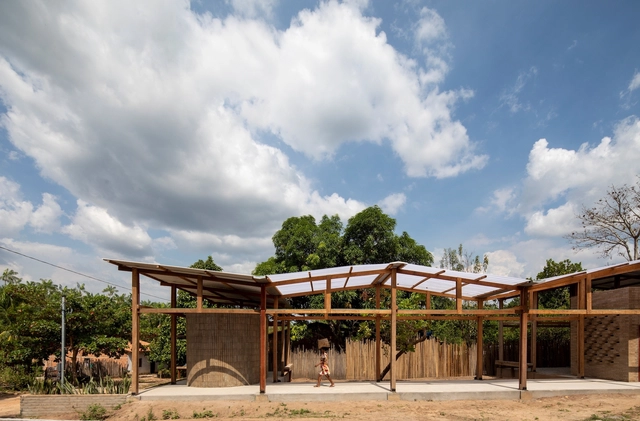
The Tomie Ohtake Institute and AkzoNobel have just released experimental videos about the three winning projects in the Professional category of the 9th Tomie Ohtake AkzoNobel Architecture Prize. The films feature Casarão 28, the Quebradeiras de Babaçu Reference Center, and the São Benedito Route.
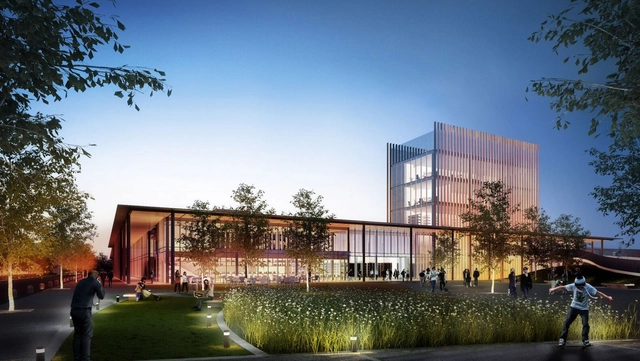
Large-scale urban facilities (GEUs) are generally buildings or complexes of buildings—whether public or private—and spaces where activities complementary to habitability take place. As such, this term refers to those buildings whose function, use, and location impact the development of new centralities. Due to their scope and strategic positioning, they can be identified as urban landmarks within a network of symbolic buildings that characterize globalized cities.
The city of Rosario has a strong track record of urban planning, starting with the 1935 Regulatory Plan by Ángel Guido, Carlos Della Paolera, and Adolfo Farengo, and continuing with Oscar Mongsfeld's 1968 Regulatory Plan. Following the return of democracy in 1983, successive municipal administrations ensured continuity in territorial planning by adhering to the main guidelines of these plans and formalizing others, such as the Master Plan (1991), the Rosario Master Plan (2001), and the Rosario Urban Plan (PUR) 2007/2017, along with its updates.
*This article was submitted by Mauro Latour and Pablo Mazzaro through our call for architectural research submissions.
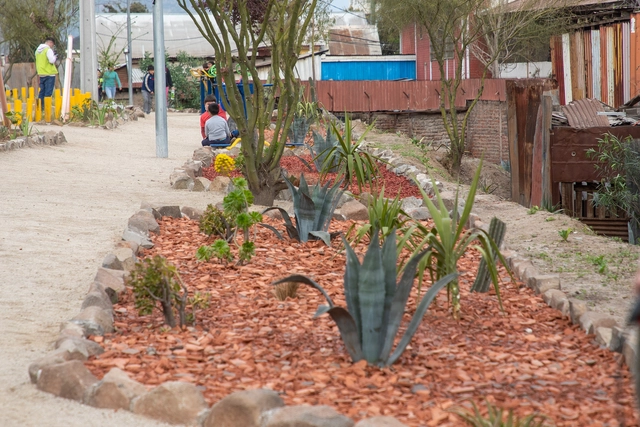
Applying ground cover in gardens is essential for several reasons. It helps conserve soil moisture, reducing the need for frequent irrigation, while controlling weed growth by blocking the sunlight necessary for germination. It also helps regulate soil temperature, keeping it warmer in winter and cooler in summer, and prevents erosion caused by wind and rain. In addition, it reduces soil compaction, facilitates root growth, improves water infiltration, and provides an aesthetic finish to the landscape.
In Renca, a municipality of Santiago characterized by an arid climate, finding ways to combat soil aridity is crucial for urban renovations aimed at improving thermal comfort in streets and public spaces. To address this, Cerámica Santiago, in collaboration with the Municipality of Renca, has developed a pioneering project to revitalize urban spaces using clay brick gravel. This material, called Princesa Brick Gravel, is a byproduct of brick manufacturing and has proven to be an effective solution for creating low-water gardens, transforming degraded sites into sustainable green spaces.
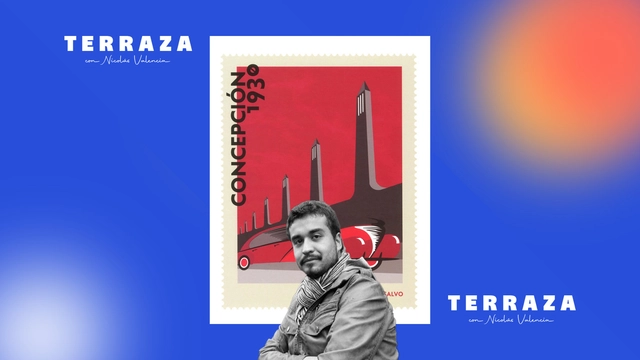
Nicolás Valencia speaks this week on the TERRAZA podcast with Chilean researcher Luis Darmendrail about his book Concepción 1930, published by dostercios editorial in 2023.
Concepción 1930 is a compelling study of a pivotal decade in the architectural history of the Chilean city of Concepción: the 1930s are presented as a turbulent period of change and new beginnings, where culture, commerce, the media, and institutions serve as the pillars of an urban life that flows alongside the narrative, revealing a city at the turn of the century.
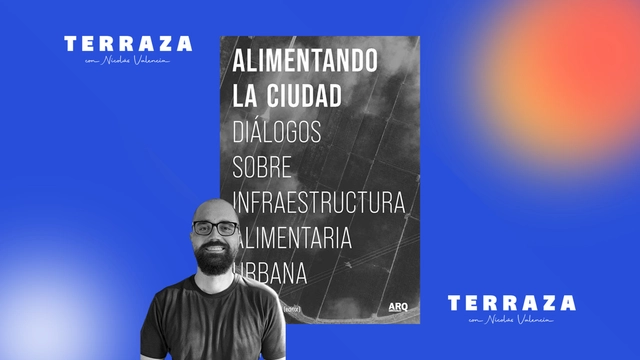
This week on the podcast TERRAZA, Nicolás Valencia speaks with Chilean researcher Nicolás Valenzuela Levi, editor of the book “Alimentando la ciudad. Diálogos sobre infraestructura alimentaria urbana”, published by Editorial ARQ in 2024.
“Alimentando la ciudad. Diálogos sobre infraestructura alimentaria urbana” is a collection of research on a type of infrastructure that we often fail to notice until it breaks down. The pandemic, followed by food price inflation, has heightened food insecurity, which manifests on the ground through examples such as the price of cooking oil at a neighborhood store or community kitchens as a local response. This book brings together an international, multidisciplinary group of researchers addressing these issues.
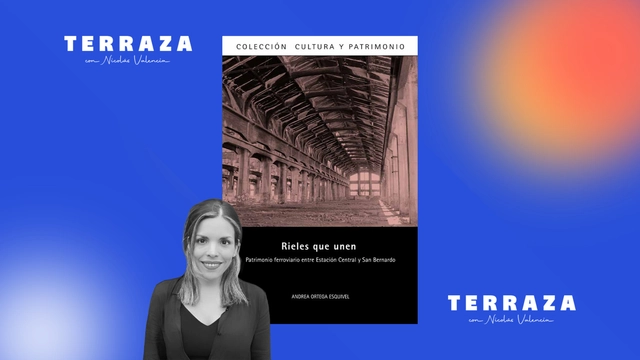
This week on the TERRAZA podcast, Nicolás Valencia talks with Chilean architect Andrea Ortega about her book “Rieles que unen. Patrimonio ferroviario entre Estación Central y San Bernardo” (Rails that Unite: Railway Heritage between Estación Central and San Bernardo), published by the National Cultural Heritage Service in 2022.
“Rieles que unen” is a critical account of the configuration and development of the heritage surrounding the initial urban stretch of the only active passenger and freight railway line currently operating in Santiago, Chile. The research approaches the understanding of railway heritage by integrating tangible and intangible elements, considering its urban-territorial scale and the valuation processes driven by organized communities at local levels.
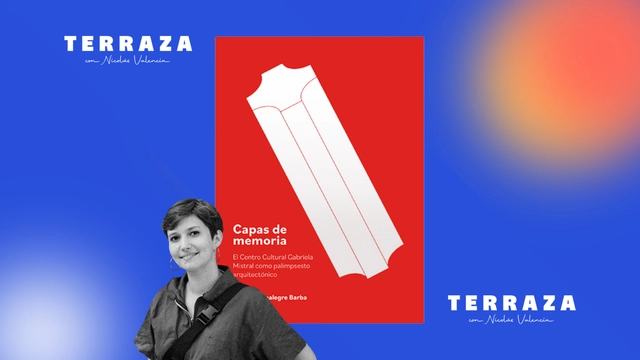
This week on the TERRAZA podcast, Nicolás Valencia speaks with Chilean architect Sofía Montealegre, author of the book “Capas de memoria,” published by LOCAL ediciones in 2024.
Montealegre writes about a giant that has changed both its name and its appearance over the last 50 years. Inaugurated in 1972, the UNCTAD III building was an emblem of the Unidad Popular, only to be transformed into the Diego Portales building during the dictatorship, and later reopened as the Centro Cultural Gabriela Mistral (GAM)—standing as a testament to our complex history.
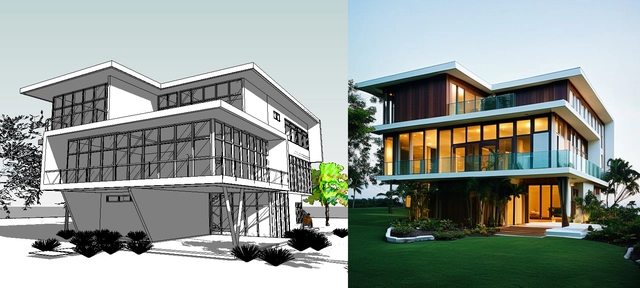
In the field of architecture, there is growing client interest in integrated solutions that offer comprehensive support across all stages of a project, simplifying and optimizing each phase of the construction lifecycle to deliver greater efficiency and precision. This spans stages such as budgeting, construction planning and management, resource and procurement management, materials purchasing, and ultimately, real estate sales.

This week on the TERRAZA podcast, Nicolás Valencia talks with José Luis Uribe, author of the book “Viaje a Paraguay,” published by Arquine in 2023.
In “Viaje a Paraguay,” Uribe approaches the work of Gabinete de Arquitectura, Lukas Fuster, Estudio Elgué, José Cubilla, and Javier Corvalán and the Laboratorio de Arquitectura, drawing from three expeditions conducted between 2017 and 2019 to reflect on Paraguay’s contribution to the contemporary state of architecture.