In this third dispatch from New York, Kosme de Barañano shares the current state of construction on two structures that will undoubtedly become new milestones in the network of globalized public space—a symptom of the sculptural turn in architectures designed for this type of consumption. The shed and the staircase: two very different constructions that somehow pose an age-old question: are they sculptures, or are they architecture?
https://www.archdaily.com/1114898/reflections-on-changes-in-new-york-city-shed-versus-vesselKosme de Barañano
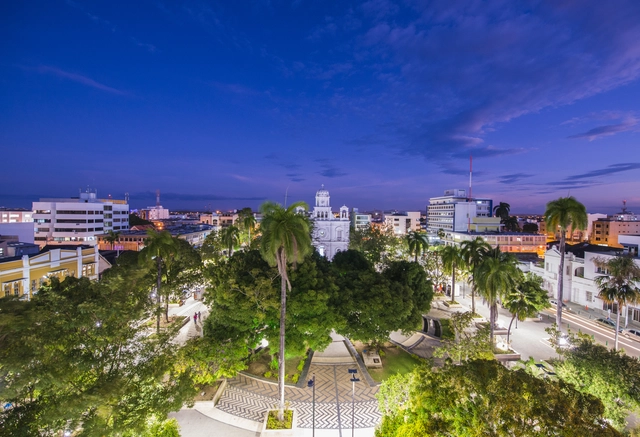
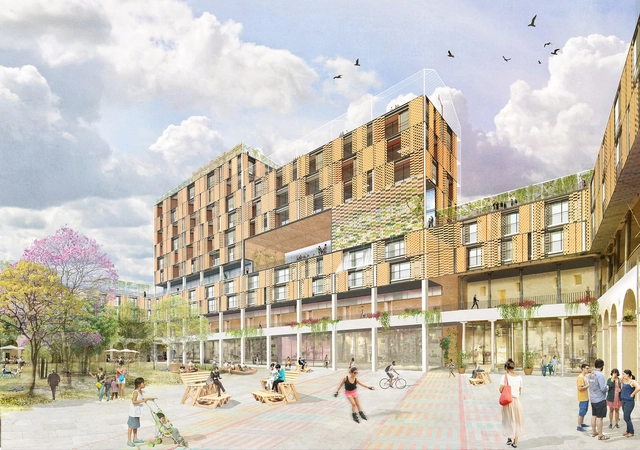
Spanish firm Ecosistema Urbano has presented details of Febres Cordero, one of the first projects in Cuenca, Ecuador, to emerge from the Cuenca RED initiative. This iconic, historic building, which served as a school for decades, is being transformed into a mixed-use development that will serve as a benchmark for economic, environmental, and social sustainability in the city.
Developed under the ICES (Emerging and Sustainable Cities Initiative) program of the Inter-American Development Bank, in collaboration with the Municipality of Cuenca, Cuenca RED is an initiative for which Ecosistema Urbano has proposed programs and activities to establish a new network of reactivated public spaces within the historic center of the city, a UNESCO World Heritage site since 1999.
On Sunday, April 1, the 15th edition of the Latin American Social Workshop (TSL) concluded in Peru. This annual workshop brings together students and architects from across the Americas to analyze, reflect, design, and build public facilities over ten days in diverse Latin American contexts.
Known as XV TSL Puno, this edition took place in Chucuito, a Peruvian town situated at an altitude of over 3,800 meters (12,400 feet) on the shores of Lake Titicaca, near the city of Puno—the folklore capital of Peru. There, 250 students divided into three teams worked on landscape, public space, and heritage restoration projects, led by ENSUSITIO + Jhony Chávez, Ruta 4, and Lucio Torres, respectively.
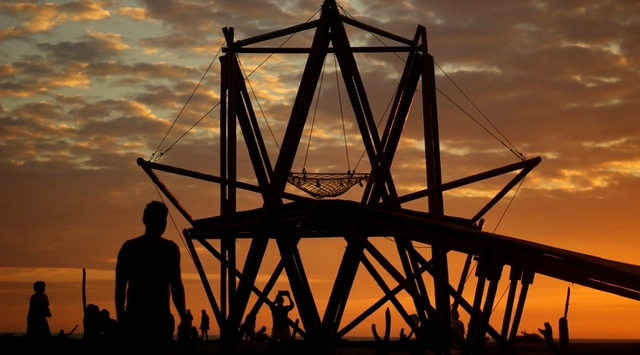
Following the workdays, amidst coca leaves and fried trout, a recurring question arose during our conversations with the workshop participants: how can social architecture move beyond the photograph of children drawing and adults talking in a town hall meeting? Below, we present the reflections of four Latin American practices that participated in the TSL between 2017 and 2018.
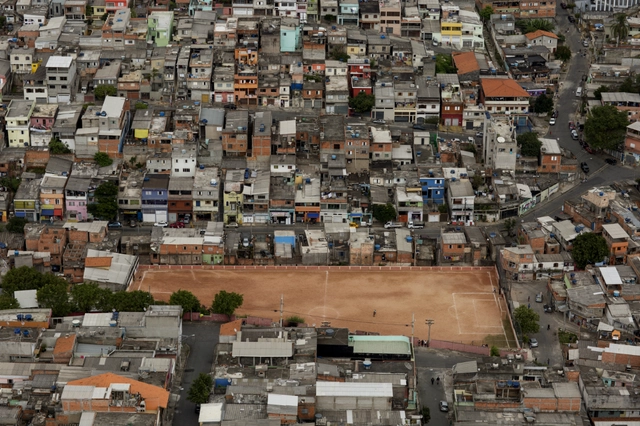
It was a city of untamed rivers: they seasonally burst their banks, shaping fertile, humid floodplains. When the waters receded, the ground became firm enough for a ball to roll and feet to run after it. It was in a São Paulo without rivers buried under sad slabs of concrete that futebol de várzea—floodplain football—emerged.
Tracing the history of várzea football in São Paulo means understanding how the city was built around imposing rivers like the Tietê. In the early 20th century, immigrant populations, Afro-Brazilians, and recently freed Black people occupied these territories, giving rise to neighborhoods like Barra Funda in the city's west zone. Far more than an amateur sport, it became established as a symbol of social organization and the struggle for the right to the city, at a time when space in the capital was beginning to be contested and feel the pressures of gentrification.
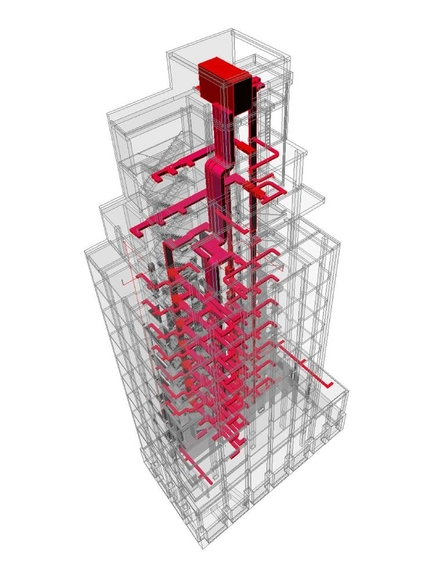
The arrival of BIM methodology is driving a paradigm shift in how different players in the global construction sector work and collaborate. In Spain, a growing number of companies are using and beginning to benefit from this digital modeling tool. However, much work remains, and the full implementation of this new workflow will require periods of adaptation and assimilation for both the public administration and the private sector.
A few weeks ago, Ana Rojo, General Director of Production and Engineering at Ineco, announced that public building projects in Spain would be required to use BIM methodology by the end of 2018.
https://www.archdaily.com/1114905/bim-implementation-in-spains-public-sector-will-be-gradual-states-cscaeJavier García Librero
Applications are now open for the 2018 social housing public call from CAU/GO . Projects for housing for families with incomes of up to three minimum wages can be submitted until June 29.
Across the country, in addition to the housing deficit, there is a high rate of substandard housing. For this reason, the public call supports both new construction and renovation projects.
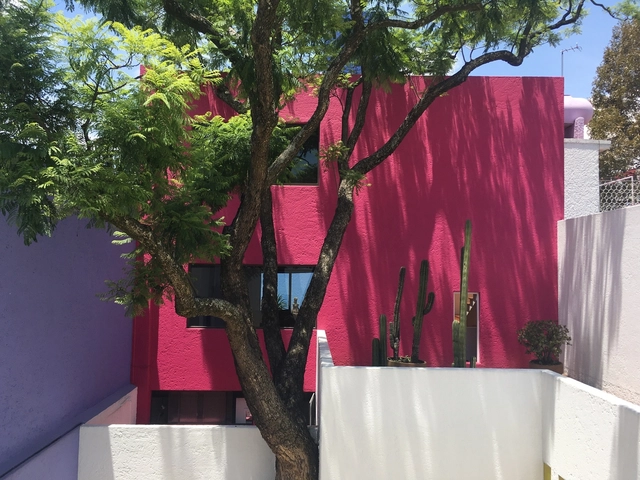
On Thursday, September 6, ArchDaily México celebrated its sixth anniversary. The exclusive event took place in one of the country's most significant architectural gems: Casa Gilardi, designed by Luis Barragán, the only Mexican architect to receive the Pritzker Prize. The venue served as the setting for some of today's most influential architects to connect with the ArchDaily México team.
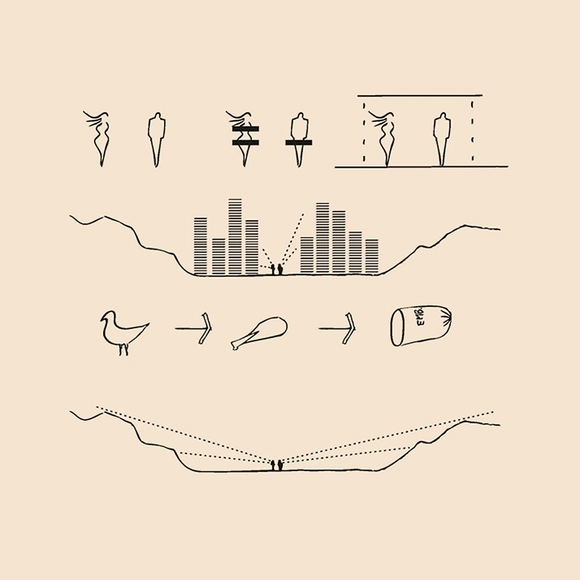
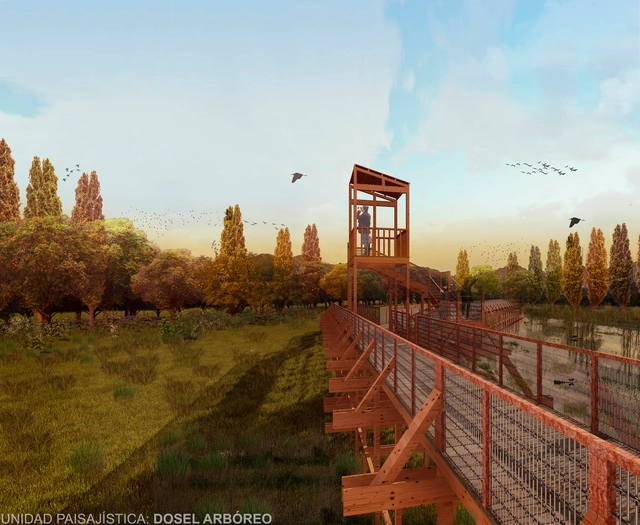
Designed by Milena Lara Silva, the project Ruta de las aves was selected as one of the 10 winners in the Thesis Project category of the 2018 Concurso Arquitectura Caliente (CAC 2018), a Chilean competition organized by Grupo Arquitectura Caliente and funded by the Ministry of Cultures, Arts, and Heritage.
The constant industrial threats endangering the delicate wetland ecosystems are primarily the result of Chile's weak environmental legislation. In the rural sector of Trumao, 11 kilometers from the city of La Unión, this has led to the gradual degradation of its forested wetland. This decline risks not only its biodiversity but also local communities that have persisted since ancient times thanks to the dynamic landscape and its natural resources—both of which are vital for their survival, economy, and, above all, their culture.
In addition to the national pavilion, Mexico will have a presence in the main exhibition with the participation of Rozana Montiel (Rozana Montiel Estudio de Arquitectura) as one of the 71 participants invited by the artistic directors.
In this interview, the Mexican architect shares what her participation in the exhibition will entail, the overall outlook of Mexico's presence in alignment with the 'Freespace' theme, and how her career and recent projects inform and influence the piece that will be presented from May 26 to November 25, 2018, at the Venetian Arsenale.
Serpentine Gallery Pavilion 2017. Diébédo Francis Kéré. Image
Cristina Cabrera, director of the ICO Foundation, has presented the programming prepared by the institution for 2018, the year of its 25th anniversary. She outlined the program's main direction across the Foundation's three areas of activity: Art, Economy, and International.
In the field of Art, she presented the three temporary exhibitions at the Museo ICO focusing on architecture and the promotion of highly relevant but underrecognized figures in the discipline: Joaquín Vaquero Palacios, Carlos Cánovas, and Diébédo Francis Kéré.
https://www.archdaily.com/1114902/francis-kere-and-joaquin-vaquero-palacios-in-the-ico-foundations-2018-programJavier García Librero
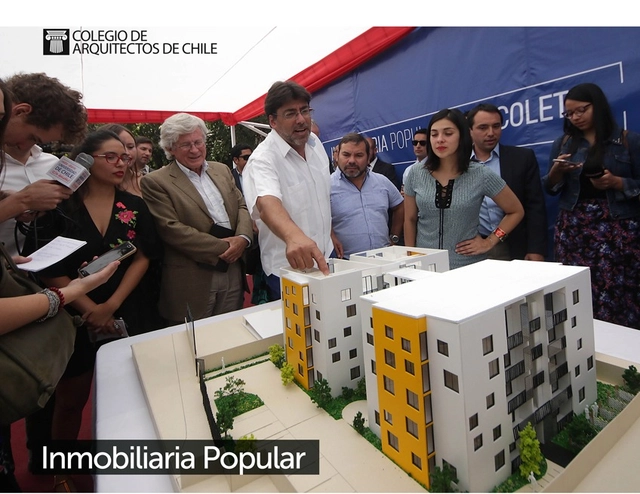
Today, Friday, April 13, starting at 10:00 AM (GMT -3) in Santiago, Chile, the mayor of Recoleta, Daniel Jadue, and 2002 National Architecture Award winner Juan Sabbagh will present the municipal Inmobiliaria Popular (Public Housing) project at the national headquarters of the Architects' Association (Colegio de Arquitectos).
Unveiled in late January of this year, the initiative—unprecedented in Chile—consists of the construction of two five-story buildings with a total of 38 apartments, each measuring 55 square meters, to be rented to vulnerable families in the municipality. Other municipalities in the Chilean capital—Renca, Macul and Las Condes—have already announced they will study replicating the model.
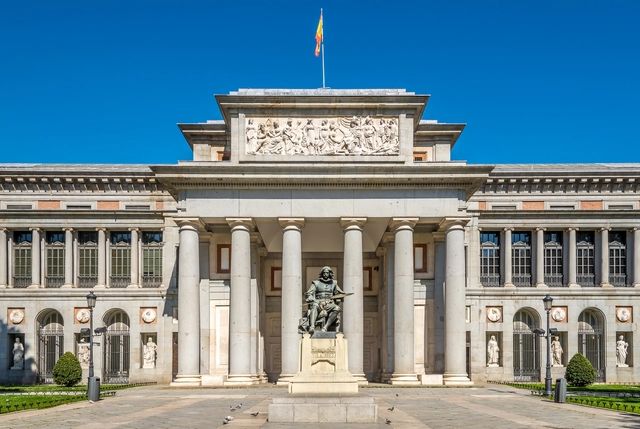
The Prado Museum is currently preparing the events to commemorate its bicentennial, which will officially begin on November 19, marking 199 years since its inauguration.
However, despite the celebratory atmosphere surrounding this major milestone, water flow and the water table beneath the foundations of this landmark building—designed by architect Juan de Villanueva and recently expanded by Navarrese architect Rafael Moneo—are a source of concern. In 2014, these issues had already caused leaks, cracks, and dampness.
https://www.archdaily.com/1114903/water-the-invisible-threat-to-the-prado-museumJavier García Librero
Globally recognized for promoting and manufacturing some of the design world's most iconic pieces, Herman Miller, Inc. launched its new Cosm chair by Studio 7.5—a sophisticated design engineered to instantly respond to body movement and posture to provide complete balance and support.
To mark this launch, Herman Miller Mexico organized a competition to design a building facade based on the core features of the new Cosm chair. The facade design was required to take into account the following characteristics: Auto-Harmonic Tilt, Intercept Suspension, Flexible Frame, and/or the wide palette of available colors.
As an exemplary figure in the production of modern architecture, Lúcio Costa worked on several fronts—from building design to urban planning, as in the case of Brasília. Among his many facets, his role in promoting and establishing policies to protect the country's historical heritage represents a milestone both in his career and for the nation's cultural assets.
Out of 132 cities across 23 countries worldwide, a Colombian city has once again won the One Planet City Challenge, an initiative organized by the World Wide Fund for Nature (WWF) to recognize urban centers taking action for sustainability.
The winning city is Montería, which was recognized during the Global Climate Action Summit held in San Francisco, United States, on September 12. Awarded for the fourth consecutive year, the Colombian city was highlighted for implementing sustainable mobility through urban design modifications, such as the construction of bike lanes and pedestrian pathways. Additionally, Montería was recognized for integrating strategies in its agricultural sector, particularly in cattle ranching, which is known to be a major contributor to the greenhouse effect.
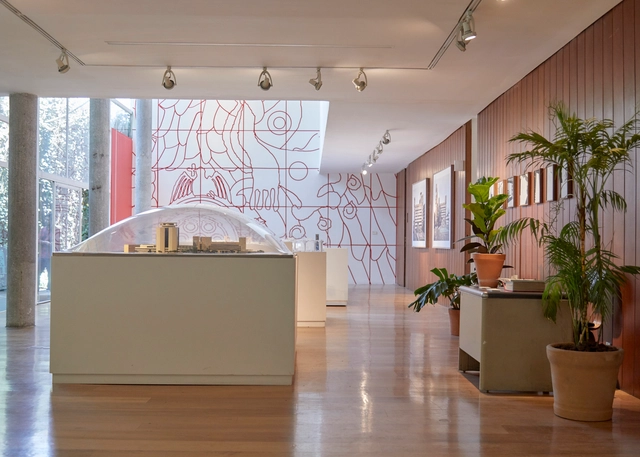
Titled Archivo(s) Centro SCOP reclaims the memory of the former SCOP Center (opened in 1954 and currently the headquarters of the Ministry of Communications and Transportation, or SCT) as well as the future of its artistic and architectural heritage following the September 19 earthquakes. In the mid-1950s, the SCOP Center was one of the most ambitious and iconic public architectural projects of the "Mexican Miracle." Clad in 6,000 square meters of murals and sculptural ensembles by prominent artists such as Juan O'Gorman, José Chávez Morado, and Rodrigo Arenas Betancourt, the building crystallized the ambitions and aspirations of its era, under the direction of architect Carlos Lazo, who led the SCOP from 1952 until his untimely death in a plane crash in 1955.
Recent environmental pollution incidents in the Chilean cities of Quintero and Puchuncaví have reignited the debate surrounding the health impacts on residents of so-called sacrifice zones. Last August, the Chilean newspaper La Tercera reported that these cities on Quintero Bay coexist with "15 major energy, chemical, and fuel companies," including a smelter, a natural gas plant, and four thermoelectric power plants.
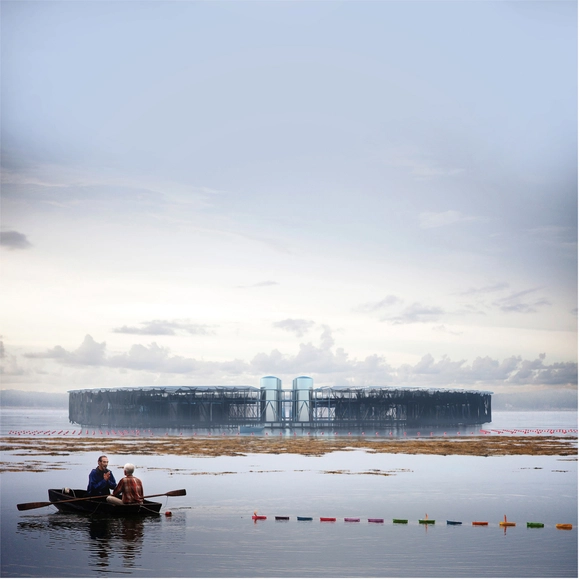
In response, Chilean architect Leonardo Quinteros has developed "Marine Forest" as his thesis project. The proposal features a decontamination platform designed to bioremediate the bay using cultivated brown algae, drawing on research into methods for extracting and absorbing heavy metals to demonstrate the species' potential as a marine bioremediator.
Quinteros—winner of the 2015 CNPP and currently designing the new Providencia Municipal Building in Santiago alongside Tomás Villalón and Nicolás Norero—based his project on a decontamination plan known as FIC Algas. Developed by the Faculty of Ecology at Andrés Bello University (UNAB) in collaboration with the Regional Government of Valparaíso, FIC Algas
Within the framework of Gallery Weekend, which took place from September 20 to 23, Dosa Studio presented an installation at the joségarcía, mx gallery that represents a synthesis of the Casa Palmas project, located in Texcoco, State of Mexico.
In the heart of the Santa María La Ribera neighborhood, this installation—composed of two walls embracing a sunken space within the house where the gallery is located—decontextualizes the design gestures developed in Casa Palmas to shape a new space. This environment transports visitors to that original, 40-year-old home, which was transformed to improve its residents' quality of life through a spatial experience that weaves a close relationship with its context.
Originally titled "La casa existencial, comportamientos "anti-urbanos" en la ciudad de Loja" (The Existential House: "Anti-Urban" Behaviors in the City of Loja), Ecuadorian architect David Medina Jiménez conducted this research in 2015 to obtain a degree at the Universidad Técnica Particular de Loja.
As noted by the Colegio de Arquitectos del Ecuador Pichincha on its blog, Medina Jiménez's thesis "explores the importance of 'consciousness' from an existentialist perspective, and its relationship with architecture and the city. The author reaches bold conclusions by questioning an urban planning prejudice that most have taken for granted: the supposed need to densify cities at all costs."
What is architecture? A full answer will probably not be found in words—at least not in those shared here. Nevertheless, it is argued that what we call "architecture"—what we recognize as such—is immanent to self-awareness and consciousness [1] (and these, in turn, to unconsciousness, like light and shadow). The former, self-awareness, is knowledge of the self, of Dasein [2]; the latter, consciousness, is knowledge of the surrounding reality.
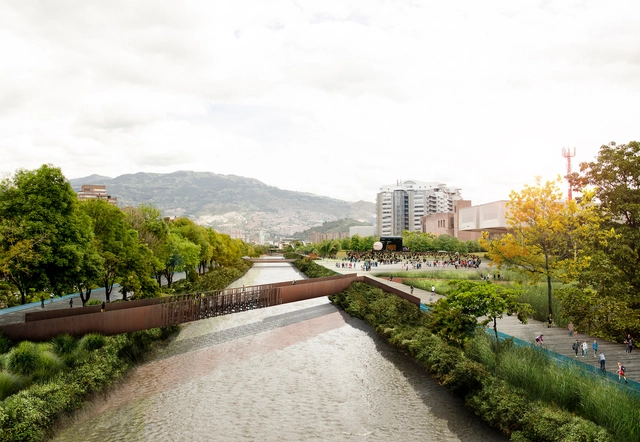
The Parques del Río project in Medellín has become the first Colombian representative among the winners at the 2018 World Architecture Festival (WAF18), currently being held in Amsterdam, Netherlands.
Self-described as the world's largest architectural awards program, the festival announced on its second day that the project designed by Latitud Taller de Arquitectura y Ciudad won the 'Masterplanning' subcategory under the 'Future Projects' section.
On Friday, November 17, 2017, in the presence of Felipe Jesús Gutiérrez Gutiérrez, Secretary of Urban Development and Housing, and Xóchitl Gálvez Ruiz, head of the Miguel Hidalgo borough, Mayor Miguel Ángel Mancera inaugurated the Cuernavaca Railroad Linear Park by Gaeta-Springall Arquitectos, which will provide public space for residents and visitors in the Ampliación Granada, Cuauhtémoc Pensil, Modelo Pensil, Dos Lagos, and Granada neighborhoods.
A proposal to include financing for properties built using bioconstruction techniques is awaiting the appointment of a rapporteur in the Environment Committee. The bill was introduced by Senator Randolfe Rodrigues (Rede-AP) at the request of movements advocating for affordable and sustainable social housing. The goal is to make this financing available through the Minha Casa Minha Vida program.
Daniel Libeskind will visit Chile this coming December, following an invitation extended by Mauricio Soria, the mayor of Iquique, and approved by the Chilean city's municipal council. However, the decision has drawn coverage from local media due to opposition from council members who voted against the initiative, primarily over the budget: 75 million Chilean pesos (around $110,000), which includes a "city visit, site visit, public lecture, and a preliminary draft or conceptual proposal," as highlighted on Twitter by council member Felipe Arenas, one of the dissenting voices in the municipal vote.
Although the announcement was shared by the mayor's office on Twitter on November 8, efforts to bring Libeskind to the country began exactly a year ago when the architect visited Chile to give a lecture at ENMATERIA's International Architecture and Materials Encounter. During that visit, the American architect met for the first time with Soria and his technical team in Santiago.
Máquina Fitorremediadora de Relave Minero. Image Cortesia de Concurso CAP 2018
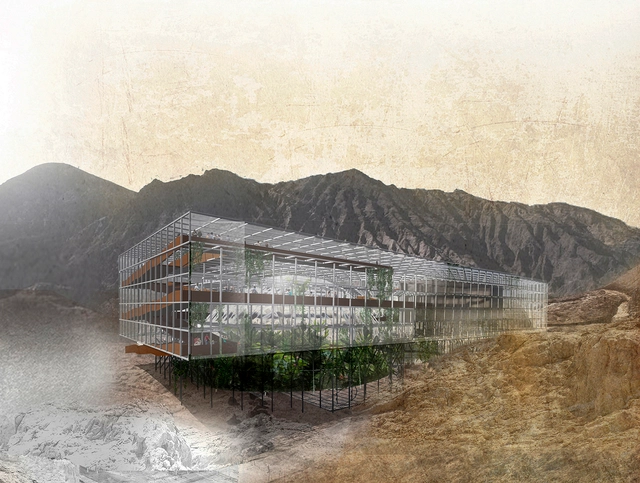
With the proposal 'Mining Tailings Phytoremediation Machine', the Chilean team won first place in the 11th Alacero Steel Design Competition for Architecture Students 2018 in Colombia.
The team, composed of students from Universidad Finis Terrae—Diego Concha, Tomás Aguirre, and Trinidad Hermosilla—presented a project that aims to "recover and reuse mining waste by utilizing plants with high tolerance to minerals to reduce and mitigate the site's environmental risks," as explained by the authors in the project description. The team was advised by professors Andrés Echeverría and Cristián Lecaros.



.jpg?1523545445 "TSL Canoa 2017: Aula Colectiva Training and Entrepreneurship Center / TACTICO Taller de Arquitectura. Image © Nicolás Valencia")
.jpg?1523546713 "TSL Puno 2018: Hatun Tinkuy / ENSUSITIO + Jhony Chávez. Image © Nicolás Valencia")
.jpg?1523546075 "TSL Canoa 2017: El Atrapasueños / Natura Futura Arquitectura + Ruta 4. Image © Nicolás Valencia")
.jpg?1523548272 "TSL Puno 2018: Taller Cóndor / Ruta 4 Arquitectura. Image © Nicolás Valencia")






.jpg?1518970631&format=webp&width=640&height=580)