As the urgency to replace fossil fuels increases, new electric vehicle models are announced with growing frequency. From urban cars to models equipped with solar panels, the focus is on prioritizing electric mobility, with automakers shifting production lines and countries and cities passing laws to accelerate the energy transition.
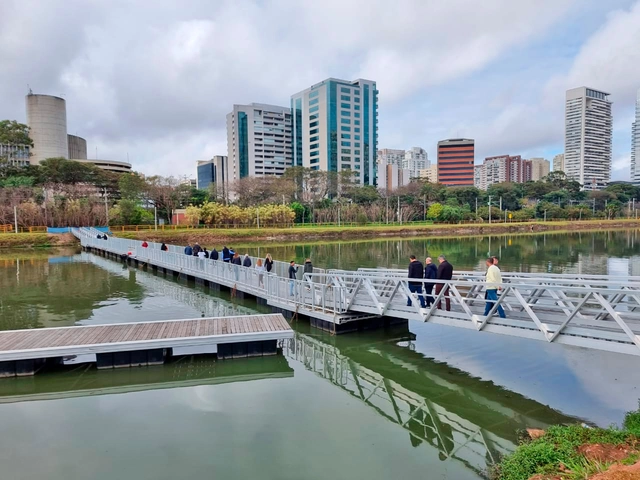
Photo via São Paulo State Secretariat for the Environment, Infrastructure and Logistics
Located in one of the most urbanized areas of São Paulo, the Bruno Covas Novo Rio Pinheiros Park will be the city's largest linear park, running along the entire west bank of the river. Opened in 2022, the first 8.2-kilometer (5.1-mile) section features various attractions, such as bike paths, playgrounds, picnic areas, and trails. However, people living next to the river are often unaware that the area is open to the public and that they can use the space, despite frequently crossing the bridges over it.
https://www.archdaily.com/1135863/sao-paulos-newest-park-on-the-banks-of-the-pinheiros-river-presents-accessibility-challenges-for-those-arriving-on-footArchDaily Team
The São Paulo Association of Art Critics (APCA) announced yesterday evening the winners of the 2022 APCA Awards. The accolade is divided into ten categories, covering Architecture, Visual Arts, Cinema, Dance, Literature, Popular Music, Radio, Theater, Children's and Youth Theater, and Television. After two years of virtual meetings, the jurors for each category met in person to debate the nominations.
https://www.archdaily.com/1135868/meet-the-winners-of-the-2022-apca-awards-in-the-architecture-categoryArchDaily Team
Over 4% of deaths in European cities during the summer months are due to urban heat islands, and one-third of these deaths could be prevented if tree canopy cover reached 30%. These are the main findings of a study recently published in the journal The Lancet and conducted by the Barcelona Institute for Global Health (ISGlobal).
https://www.archdaily.com/1135853/trees-can-prevent-heat-related-deaths-in-cities-study-confirmsArchDaily Team
The Instituto Tomie Ohtake and AkzoNobel have announced the finalist projects for the 9th Tomie Ohtake AkzoNobel Architecture Prize. A total of 10 works were selected in the Professional category and three projects in the Student category, along with one project recognized with an honorable mention in the latter.
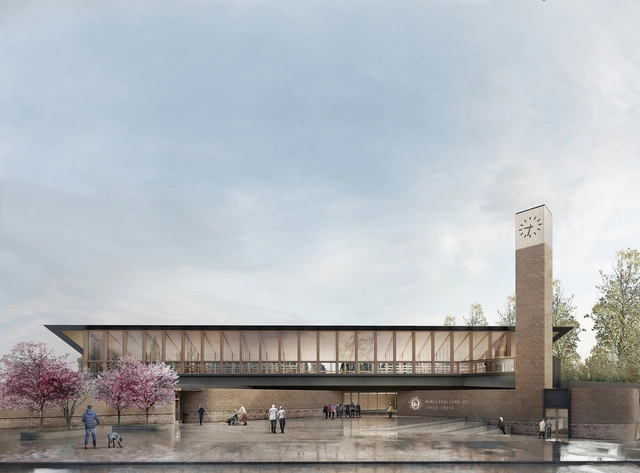
Cristóbal Tirado and Doering Pardo were awarded first place in the public competition “Architectural Design and Profile of the Chile Chico Town Hall.” Organized by the local municipality's Secretariat of Communal Planning in the Aysén Region, the competition aimed to select a distinctive and iconic architecture for this extreme region, while incorporating energy efficiency criteria, openness toward General Carrera Lake, and outdoor spaces for civic gatherings.
The selected project proposes “to articulate a dialogue between the present day and its technologies, and the historical past and foundational building traditions of Chile Chico.” With this in mind, the materials—brick, wood, and glass—were adapted to current technical and spatial requirements to create a modern civic building.
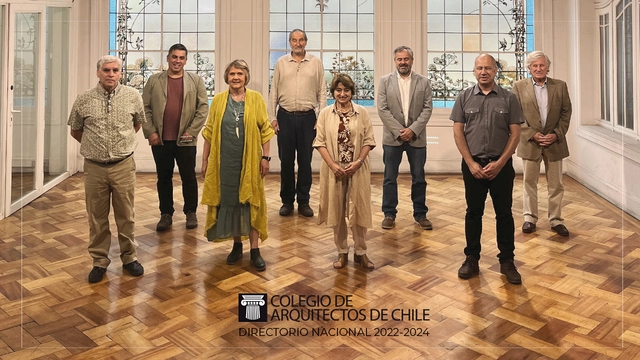
On Friday, January 20, 2023, during the Constitutive Session of the new National Board elected by our members in the 2022 CA Elections, the new Executive Board and officers of the Colegio de Arquitectos de Chile were chosen for the 2022–2024 term.
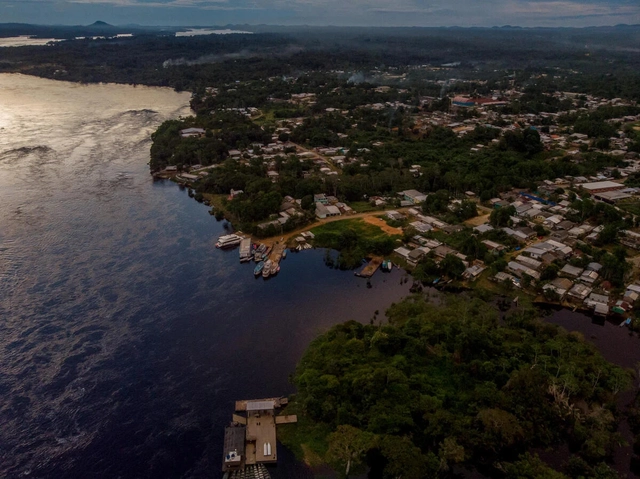
São Gabriel da Cachoeira (AM) is considered the most Indigenous city in Brazil, home to 23 peoples belonging to five language families — Eastern Tukano, Arawak, Yanomami, Japurá-Uaupés, and Tupi. There, at two small excavation sites, archaeologists have found evidence proving a dense, continuous, and ancient settlement dating back at least two thousand years.
The findings challenge the common narrative that characterizes the region by depopulation, isolation, and disconnection from the rest of the Amazon. The area is one of the best-preserved in the Amazon and has been studied since 2019 by Parinã (Intercultural Archaeological Program of the Northwest Amazon), which has just compiled its first reports on the recovered archaeological fragments.
Various experts in the design, construction, and monitoring of sustainable buildings in Latin America come together on Emisor Cero, the new podcast from Proyecto CEELA produced by podcastera.mx. The show aims to highlight the concrete challenges and actions capable of mitigating the climate crisis affecting us all, while simultaneously exposing and debunking various myths about green architecture.
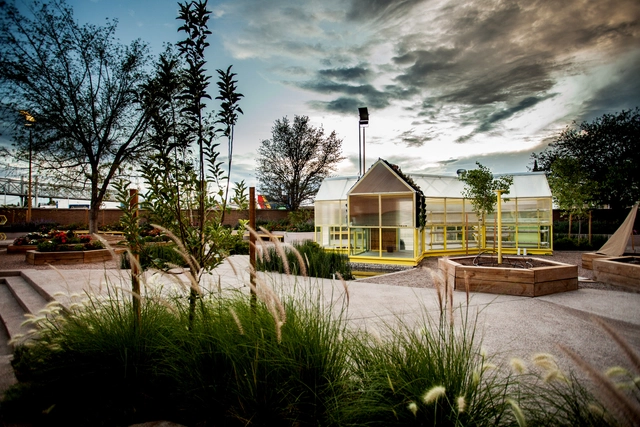
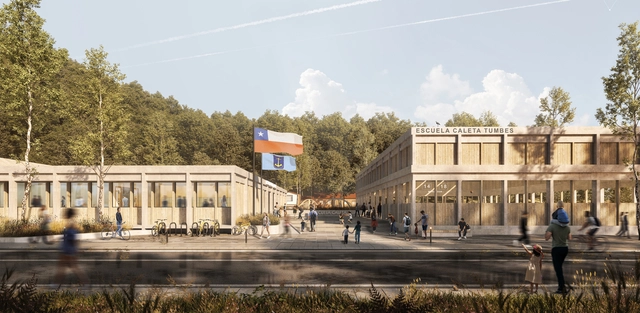
The community of Caleta Tumbes in the commune of Talcahuano, a few kilometers from Concepción, suffered severe damage from the 2010 Chile earthquake and tsunami. Nearly a decade later, the local municipality launched a public tender for the opportunity to rebuild one of the most affected structures, the F-495 School.
The winning project was designed by the firm 6280 Arquitectos, led by Pablo Arellano and Patricio Lopetegui. Below, the team describes the proposal in their own words.
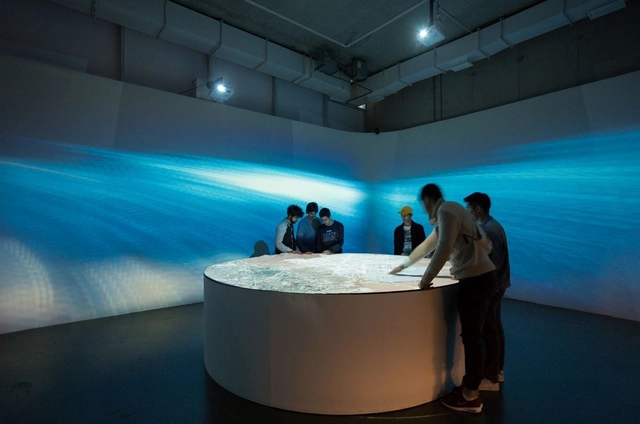
In a context where cultural expressions are increasingly valued, and their presentation and representation are vital to conveying diverse content, the design of exhibition spaces becomes particularly relevant when projecting and establishing different perceptions and narratives, both in daily life and during specific events.
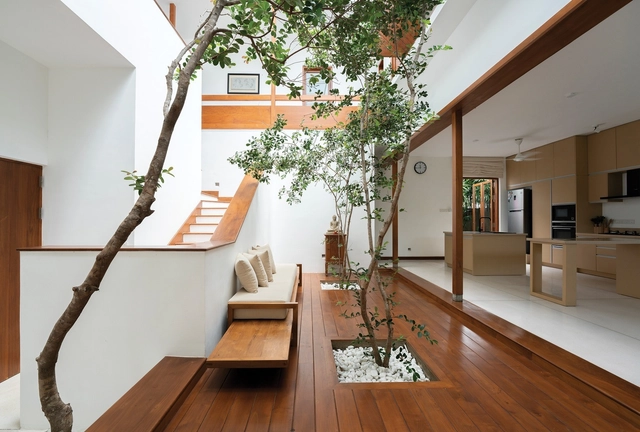
Residential architecture plays a vital role in people's lives, influencing their quality of life and well-being. To design environments that are truly tailored to the biopsychosocial needs of each user, it is essential to incorporate the principles of neuroscience applied to architecture. In this regard, Rudolf Steiner's Seven-Year Cycles theory offers a valuable conceptual framework for understanding the different phases of life and their implications for home design. This article addresses the stages of the architectural project, from briefing to execution, highlighting the relevance of cognitive and behavioral neuroscience concepts—such as priming, framing, nudging, wayfinding, salutogenic design, and biophilic design—in light of the Seven-Year Cycles theory.
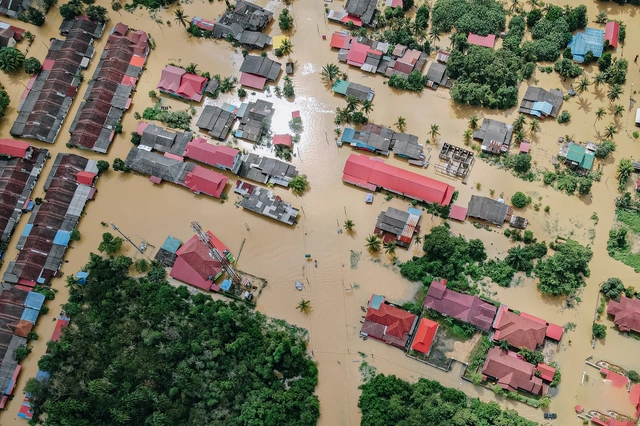
Recent floods have wreaked havoc in Libya, damaging critical infrastructure and claiming the lives of more than 6,000 people. Wildfires in Canada burned 18.5 million hectares, an area equivalent to the size of Syria. September 2023 saw astonishing heat records that alarmed climate scientists.
The events recorded over the last few months reinforce the urgency for countries to correct their course in the fight against climate change. The upcoming UN Climate Change Conference (COP28) in Dubai presents a crucial opportunity to do so.
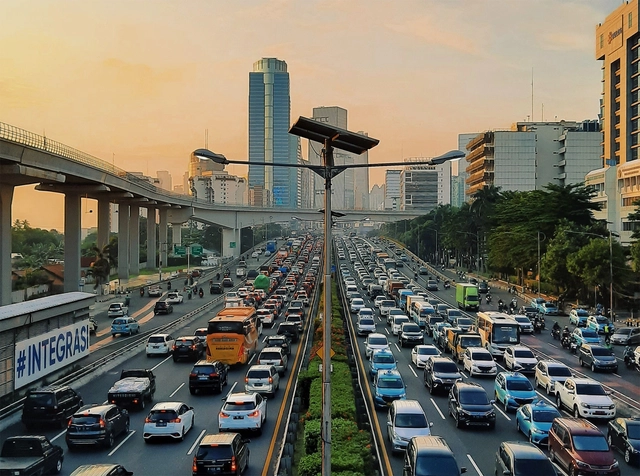
Traffic in Jakarta, Indonesia. Photo by Revan Pratama, via Unsplash
There is a stereotype that in poor countries, where few people own cars, alternatives to the automobile are flourishing. I saw a Mastodon post making this claim, and I pointed out in the comments that this is not quite true. This is a more detailed version of what I said in 500 characters. In short, across most of the Third World, public transit is poor, and almost all passengers who use vans and buses do so out of poverty, as do most people who walk.
https://www.archdaily.com/1136272/the-poor-quality-of-public-transportation-in-developing-countriesAlon Levy
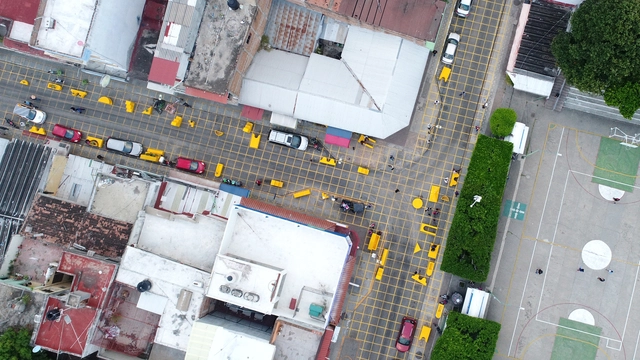
dérive LAB, a multidisciplinary laboratory founded in Mexico, presents "Shared Streets" ("Calles Compartidas")—a project that seeks to spatially transform streets from spaces regulated by traffic control devices to those governed by human relationships. It reminds us that streets are not merely corridors for transit and transport, but places that host a myriad of other social, economic, and cultural activities.
During the summer months, very hot days followed by intense, high-precipitation rainfall are common. As a result, urban flooding is a frequent occurrence in large cities. However, certain architectural and urban planning solutions can help improve people's quality of life, particularly through green infrastructure interventions and the application of biophilia.
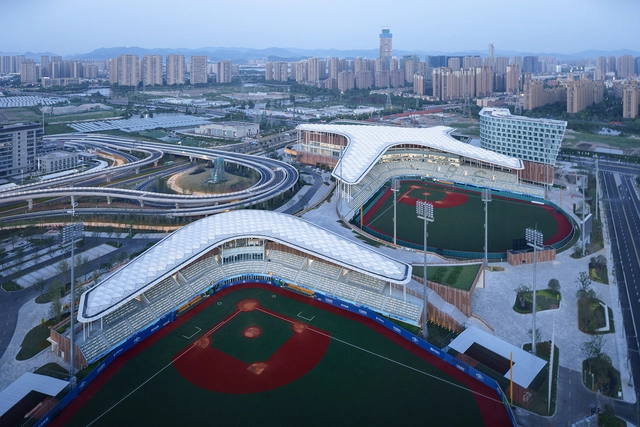
At the recently concluded Asian Games, the Architectural Design and Research Institute of Zhejiang University (UAD) participated in the design of numerous competition venues. Among them, the Hangzhou Asian Games Baseball and Softball Sports Cultural Center is the largest newly built venue for this edition of the Games, as well as the largest, most advanced, and highest-standard baseball and softball sports center in China to date. For this edition of Spotlight, we interviewed UAD's Qian Xidong to discuss his design philosophy shaped by years of professional practice.
https://www.archdaily.com/1136321/more-than-architecture-a-way-of-life-an-interview-with-qian-xidong-of-uad韩爽 - HAN Shuang
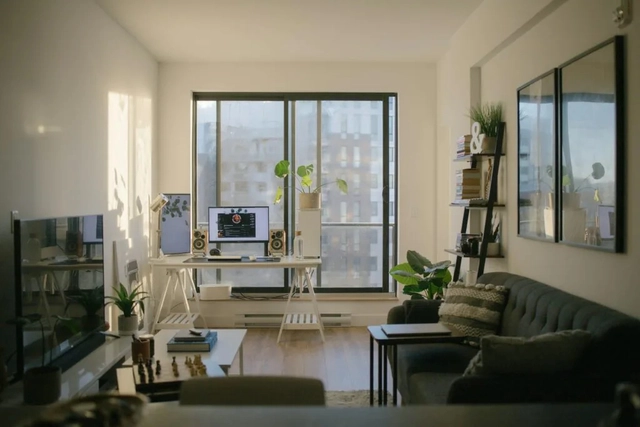
With the pandemic, many companies and individuals had to discover new ways of working, and working from home gained ground—the realization that so many activities could be performed remotely surprised many. There was an expectation that this work model would become permanent. However, the reality is that many companies are returning to in-person or hybrid schedules—and this might not be the best option for the planet.
One of the greatest difficulties when studying is understanding how to apply the concepts presented to us. In structural engineering education, it is common to use symbols and abstractions to understand the forces involved in a structure and how they work. Another major challenge is translating this abstract information into something tangible: the actual building elements.
Engineer Matheus Borges has been creating illustrations on his Instagram to help decode this information. Below, we look at what these support types are and how they behave.
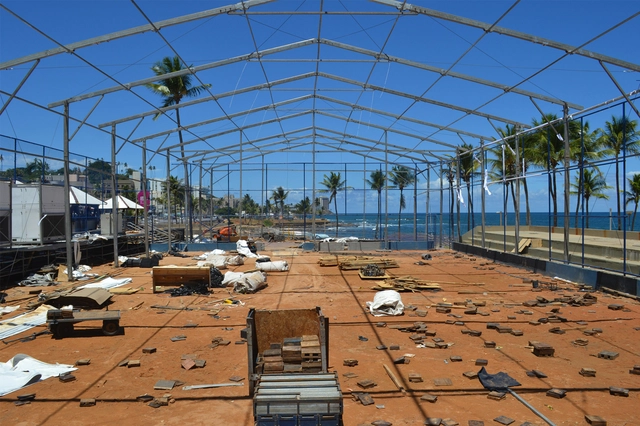
Às vésperas de embarcarmos, coletivamente, à bordo de mais uma aventura conhecida como carnaval, o primeiro propriamente dito após o longo e difícil período da pandemia de Covid-19, é importante falarmos sobre um outro aspecto da folia, menos abordado e visibilizado nas narrativas dominantes sobre o tema. Num recorte temporal mais recente, é possível perceber que em algumas cidades, com o aumento da escala, proporção e engajamento dos festejos carnavalescos, aliado ao grande interesse turístico e econômico disparado pela festa, o carnaval passou a mobilizar engendramentos cada vez mais amplos de logísticas, equipamentos e estruturas. Esses elementos passaram a tensionar uma série de espacialidades e outras dinâmicas urbanas existentes, incorporando-se, cada vez mais invasivamente, na relação entre essa importante festa popular e determinados espaços das cidades.
OUTIN. DESIGN A multidisciplinary, collaborative design firm. Its services span architecture (social and community interaction, innovative retail spaces, exhibitions, co-working spaces, boutique hotels), residential and lifestyle spaces, FF&E design and installation, and product design and fixture R&D. The four design teams under OUTIN. DESIGN operate independently while frequently collaborating on cross-disciplinary projects.
R.E.C The team responsible for architecture (social and community interaction, innovative retail spaces, exhibitions, co-working spaces, boutique hotels), art direction, and strategic consulting. Its name stems from reflections on "Time Recycle"—the "long-term cycle" of 24 hours, 1440 minutes, and 86400 seconds. From understanding the essence of things to designing solutions, the team integrates the cycle and symbiosis of time. This ensures our projects are both poetic and pragmatic, combining research-driven design with the sustainable commercial performance of each project.
WMT The team responsible for residential and lifestyle sectors. Its core concept, "inspiring turning points in life," embodies new inspirations and forms while stimulating new lifestyles. All of our designs express a flexible, practical approach to relaxation and personalized concepts, ultimately creating warm and welcoming living spaces. Over the years, this has formed WMT's core value—"Comfortable life comes from WMT."
SIBAN The team responsible for interior FF&E design services. It focuses on the intersection of social architectural spaces, innovative commerce, and daily life. SIBAN has years of experience in FF&E design and master planning for international home brand exhibition spaces, giving them a global vision and deep understanding of brand display. In residential FF&E styling, the team focuses on reflecting non-replicable, unique living states within private spaces, rejecting purely formalistic, decorative arrangements.
JEDI 404 The creative incubation team responsible for product design and fixture research and development. JEDI 404 seeks to construct original design concepts through "non-existent" and unconventional paths, perceiving and gathering raw emotions from design practice and multidimensional spaces. JEDI 404 builds a boundaryless platform where diverse imaginations converge to co-create infinite possibilities of objects.
Throughout its existence, architecture has continuously reinvented itself, driven not only by the emergence of new techniques and trends, but also by a deeper understanding of the human being. In recent times, the field of neuroarchitecture has yielded valuable research into how built environments influence our brains and, consequently, our behavior and well-being. This interdisciplinary approach suggests that interior design—specifically materiality and surface design—can play a crucial role in modulating individuals' neural and behavioral responses.
Highly beneficial in climates with wide diurnal temperature ranges, where there is a significant difference between day and night temperatures, thermal mass is a key concept to consider when designing for optimal thermal comfort. As a passive strategy for temperature control, it eliminates the need for additional energy consumption, making the building more sustainable.
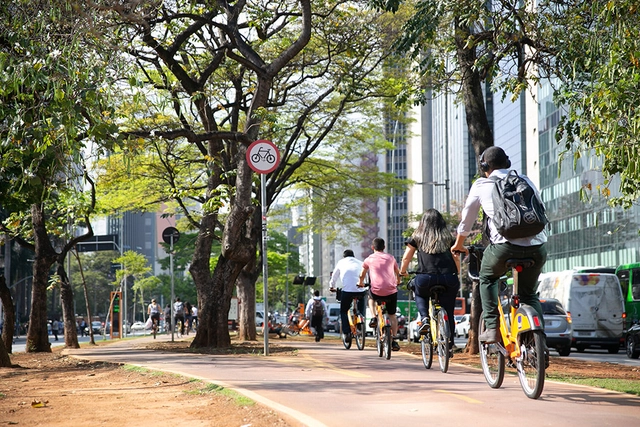
Bike lane in São Paulo-SP. Image: Joana Oliveira/WRI Brasil
From the mid-20th century to the present day, time lost in traffic has become one of the primary sources of frustration in urban life. Historically, the classic formula for combating this problem has been to add more and more car lanes and build overpasses, based on the unfulfilled promise of improving traffic flow.
This consequence is well documented: every new car lane added represents a barrier to other modes of transportation and means longer travel distances for everyone. The result is induced demand—an invitation for more and more people to travel by car.