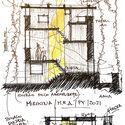
Highly beneficial in climates with wide diurnal temperature ranges, where there is a significant difference between day and night temperatures, thermal mass is a key concept to consider when designing for optimal thermal comfort. As a passive strategy for temperature control, it eliminates the need for additional energy consumption, making the building more sustainable.
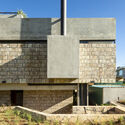




According to ProjetEEE (Designing Energy-Efficient Buildings), "a building with high thermal mass will experience reduced indoor temperature fluctuations and a thermal lag in heat flow due to its high heat storage capacity, causing the peak indoor temperature to be delayed and dampened relative to the outdoors. Indeed, components with high thermal mass function as a sort of thermal battery: during summer they absorb heat, keeping the building comfortable; in winter, if properly oriented, they can store heat to release it at night, helping the building stay warm."