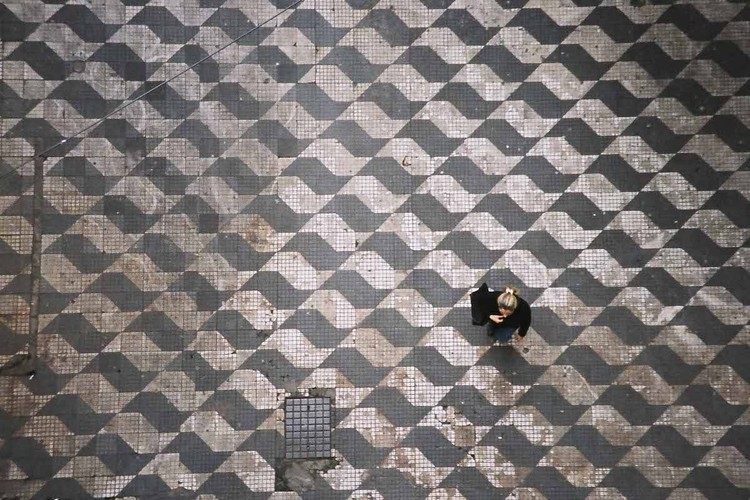
São Paulo sidewalk. Image courtesy of Caos Planejado
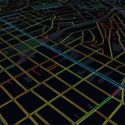
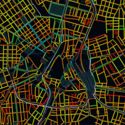
The quality of streets and sidewalks is a widely debated topic in Brazil, and the coronavirus pandemic has added another layer of complexity—public health—prompting us to question whether it is actually possible for pedestrians to practice social distancing. This concern led architecture student Conrado Freire to develop a map of sidewalk widths in São Paulo.
Adapted from Meli Harvey's Sidewalk Widths NYC project on New York City sidewalks, Largura do Passeio uses sidewalk data provided by the GeoSampa portal to visually synthesize information about São Paulo's pedestrian pathways that is not typically accessible to the general public. Based on the open-source code released by Harvey—which has also been adapted for cities like Toronto, Washington, Berlin, and Milan—Freire creates a visual mapping of what is often only felt by pedestrians moving through São Paulo's urban space.
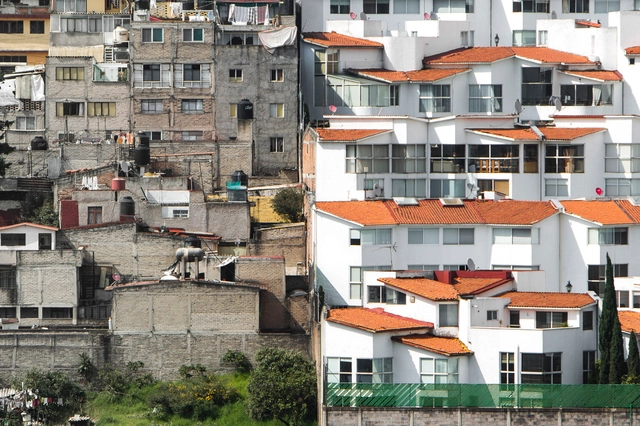
On June 17, Mexico's Supreme Court of Justice of the Nation (SCJN) issued a landmark ruling ordering the National Institute of Statistics and Geography (INEGI) to generate disaggregated statistical data on populations in informal or precarious settlements across the country. This resolution brings to the forefront the discussion on the role that judges can and should play when making decisions that directly impact urban planning, land management, our cities, and our housing.
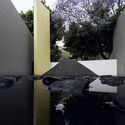
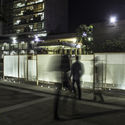
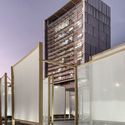
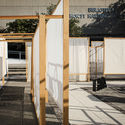
Rarely do we encounter an open-air fine arts museum like the Garden of Fine Arts, designed by Tadao Ando in 1994 for the city of Kyoto, Japan. Reproductions at various scales of renowned masterpieces appear among concrete columns, beams, and walls, along with ramps and glass bridges, interacting with cascading waterfalls and the background vegetation from the adjacent Botanical Gardens.
Pancho Gallardo, the Chilean architectural photographer now based in Madrid, has long admired the Japanese architect's work, particularly for, as he explains, "the use of concrete as an element that creates spaces, textures, angles, and shadows which, above all, in spaces like this open-air museum, establish a direct relationship with sunlight, where every corner becomes a dramatic composition of visual angles."
Below, he shares a series of photographs taken on-site, accompanied by more of his thoughts.
In Mexico, the official Jornada de Sana Distancia (National Social Distancing Campaign) began on March 23, 2020. During this period, various firms, businesses, and universities reached a turning point where it became necessary to discuss the present and future impacts of the COVID-19 pandemic on operations at different levels. A few weeks ago, ArchDaily launched a series of interviews with Mexican firms reflecting on their organizational and operational experiences when transitioning from in-person to remote work. But what about universities? What happens to the new generations experiencing this shift in their schools? How is spatial thinking affected after nearly two months of social distancing? What lies ahead for educational models, and especially for university spaces?
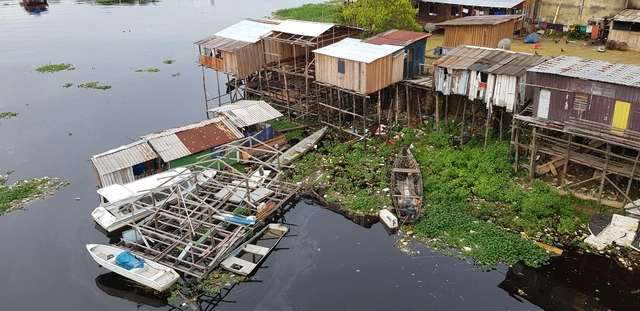
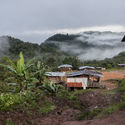
Wooden stilt houses in the Educandos district of Manaus. Photo by guentermanaus, via Shutterstock
The global pandemic caused by the coronavirus has demanded emergency actions to save lives, which, in turn, require complementary measures to preserve jobs and income, especially for the most vulnerable segment of the population. The field of architecture and urbanism is no exception: the precarity facing a significant portion of professionals is worsening due to social isolation measures, which are absolutely essential to combat the pandemic. Left without financial reserves to guarantee basic survival, many architects are left with no alternatives. Emergency measures currently being discussed in Congress, such as a basic income, are urgent. While they rightly focus on low-income populations, the scale of the crisis demands additional actions.
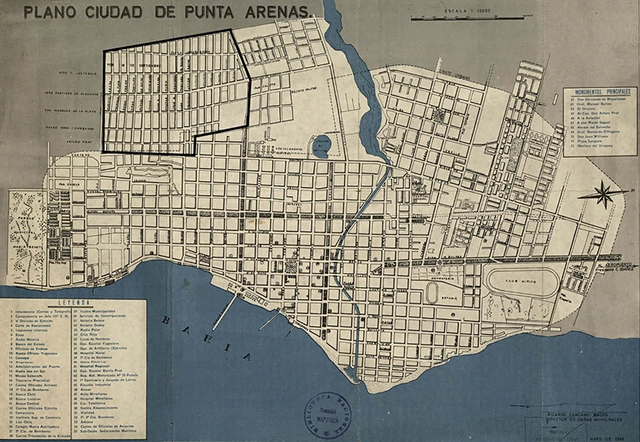
Barrio 18 como límite urbano en el año 1969. Image Cortesía de Alejandro Parada Valencia
Residents of the city of Punta Arenas collectively developed—in collaboration with writer Víctor Hernández and architect Alejandro Parada—a literary and graphic reconstruction documenting the heritage icons that represent the founding and evolution of the 18 de Septiembre neighborhood. The project, titled "Rutas Patrimoniales Barrio 18 de Septiembre, Punta Arenas", is framed within the Regional Cultural Identity Strengthening program of the Magallanes Region's Regional Ministerial Secretariat of Cultures, Arts, and Heritage, and is part of the 2017-2022 Public Policies for Cultural Promotion.
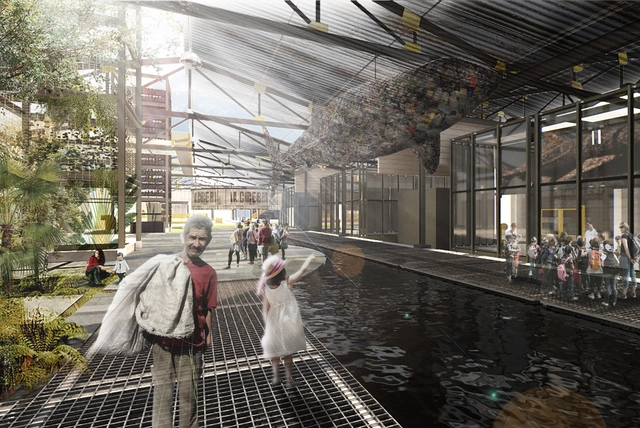
“Alternative Utility Platforms” is a project that seeks to generate spaces for social innovation in the integrated management of urban waste. According to Giulia Bianchi and Luis Morillo, the authors of the proposal, the city of Barquisimeto, Venezuela, currently generates approximately 21,147 tons of solid waste per month. Only 61.79% of this waste ends up in landfills, meaning the remaining 33.25% winds up on streets, in informal dumps, rivers, and streams, improperly disposed of. Out of this total, ultimately only 4.97% is processed by recycling companies, and the majority of that volume is sorted and supplied by street waste collectors. For this reason, and through their thesis project developed at the Central University of Venezuela, the authors propose to generate new employment models for the collection and treatment of municipal solid waste through an urban and architectural intervention.
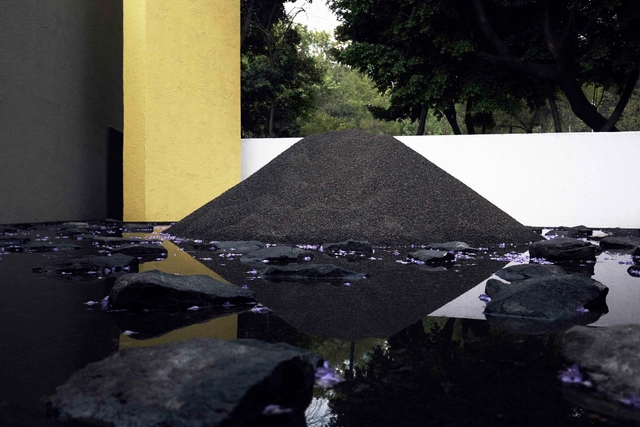
The Eco Pavilion 2020 is the tenth edition of this competition, which, since 2010, has served as a space for reflection on architecture through temporary installations in the courtyard of the Museo Experimental el Eco. This year's edition was structured around Mathias Goeritz's idea of "the serpent," based on a concept proposed by architect Javier Senosiain.
The TEMA Pavilion 2019 competition was established to give architecture and design students from the University of Guadalajara the opportunity to showcase their knowledge, aspirations, and interest in space through an intervention in a shared social space on the CUAAD campus. The initiative is organized by TEMA Diseño y Contexto, a group made up of students from the University Center of Art, Architecture, and Design (CUAAD) at the University of Guadalajara. The winners of the TEMA Pavilion 2019 Competition were recently announced, comprising first, second, and third place, excluding honorable mentions.
As part of an initiative by ArchDaily and the Abierto Mexicano de Diseño, a call for entries was launched this year, inviting architects, urban planners, landscape designers, industrial designers, graphic designers, floral designers, and any creative discipline that understands public space as a place for fostering collaborative encounters in cities. Published in September, the call sought unpublished or previously published projects in the form of written essays, research papers, visual essays, lectures, or other digital communication formats that offered a personal or collective reflection aligned with the theme 'Public Space.'
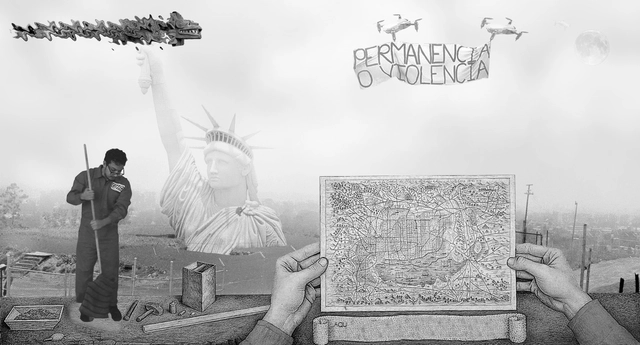
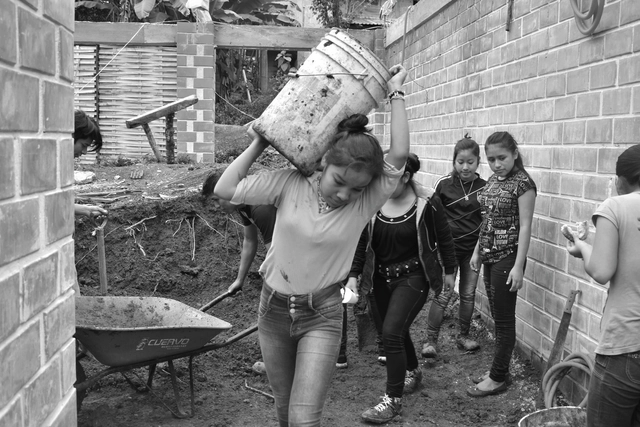
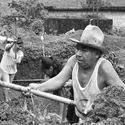
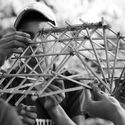
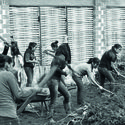
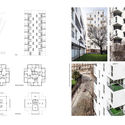
In light of recent statements by the Federal Government and the new programs announced by institutions involved in housing production in Mexico, we believe it is essential to open a dialogue and exchange ideas to better understand the concepts of self-construction, self-production, and the “Social Production and Management of Habitat” [SPMH], as well as the role of architecture in these social processes.
https://www.archdaily.com/1123823/the-role-of-architecture-in-self-construction-self-production-and-assisted-social-housing-productionMariana Ordoñez y Jesica Amescua
As part of the 2020 program, and inspired by MUTEK Montreal’s Edition 21—which aligned two network cities in a simultaneous edition and used virtual convergence to expand activities and connect global digital art communities—comes the joint MUTEK MX & MUTEK JP Edition 17+5, featuring a series of hybrid events.
Electric scooters represent a significant opportunity to reduce transportation-related carbon emissions by bridging the "first and last mile" connections that people often make by car to access public transit systems during urban trips.
With traditional access to information restricted due to social distancing measures implemented worldwide in response to the COVID-19 pandemic, and with many unable to access physical architecture media like magazines, books, and other print publications, Summa+ has decided to release nearly 100 digital issues of its magazine, making its content available for free to readers around the world.
Lockdown and preventive isolation have exposed the obsolescence of models that fail to meet contemporary needs, whether in housing, public space, or rural areas. The Colombian Society of Architects took action, bringing together its regional representatives and professionals from other related fields to rethink social behavior within territories, cities, and housing.
As the philosopher Byung-Chul Han states: every age has its signature afflictions. These illnesses have represented some of the most significant challenges in human history, bringing drastic changes not only to the healthcare sector but also to economic and political spheres, revealing humanity as a complex network negotiating its daily existence through actions that have reshaped our ways of living and relating to one another.
Mexico's National Social Distancing Campaign began on March 23, 2020. However, a couple of weeks prior—even in the face of the federal government's recommendation to continue normal activities—social media users were already opting to mirror the European model and self-isolate. Architecture firms immediately began closing their physical spaces to transition to remote work, though for others, the shift took several weeks. Yet, this period of social and physical (spatial) distancing is experienced differently in every household. Over the months of this pandemic, we have witnessed not only the inequities in access to basic needs in dense urban areas, but also the fragility of the social order itself. Whether at a macro or micro scale, all of these experiences occur within and are shaped by the built environment, positioning architecture as both an active participant and a critical arbiter in this equation.
For the third time since its founding in 2002, Mexico will host the Latin American Social Workshop of Architecture Students (TSL Mexico 2020). This edition is organized by the Latin American Coordinator of Architecture Students (CLEA Latin America), alongside CONEA Mexico and the Municipality of San Felipe del Progreso.
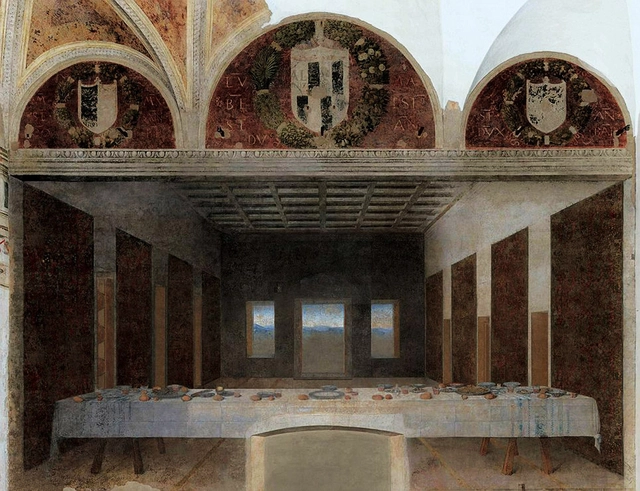
Bence Hadju 2012, "Abandoned paintings" based on "The Last Supper" by Leonardo da Vinci 1495. Image via Revista rita_
This article by Felipe Samarán Salówas originally published in the 11th issue of rita_ magazine under the title "Inhabited Renders and Deserted Architecture. The Hidden Message of Architecture Revealed by Photography" and is part of a joint dissemination collaboration. Below, we present a study on how the focus of architecture has shifted from "serving the person by addressing all their dimensions" to "generating a universe of surprising, beautiful, and photogenic forms and spaces," relegating the end-user to the background or into oblivion.
The Superintendency of Industry and Commerce has granted a utility patent for the invention "Multifunctional Self-Supporting Modular Roof System" to professors Camilo Ayala García and Christiaan Job Nieman Janssen, from the design department, and Diego Alejandro Velándia Rayo, from the architecture department, at the Faculty of Architecture and Design of the Universidad de los Andes.
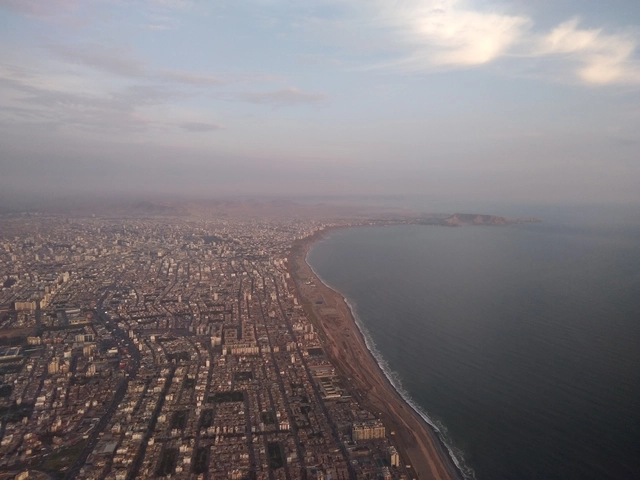
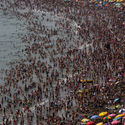
. ¿Cuándo será un gran espacio público? Costa Verde. Lima. . Image Cortesía de Humberto Viccina
After the state of emergency, nothing will return to the way it was. At that point, public and private spaces will routinely be occupied in ways that prevent transmission of a still-active virus. However, just as this situation has forced us to recognize our deficient healthcare system, it has also revealed how inadequate the spaces we inhabit often are.
In 2018, sociologist and cycling activist Marina Harkot defended her master's thesis Bicycles and Women at the University of São Paulo (USP). To develop a qualitative methodology examining the challenges faced by female cyclists in the city, she interviewed various women: those who bike to work, those who explore the city on two wheels, and those who love tackling the capital's rolling topography.
Her methodology succeeded in revealing a common thread among these diverse cyclists: “It is the network surrounding these women that seems to prompt them to start cycling and keep them riding — as well as female role models, the women (whether known to them or not) who ride and inspired them,” wrote the researcher.
Urban infrastructure. Photo by Denys Nevozhai, via Unsplash
When reality demands complex and unprecedented answers from us, one of the most interesting methods to find them is biomimicry, which consists of asking nature questions in search of inspiration. In this light, it is worth asking: how does nature deal with emergency situations where an organism's behavior must be quickly modified?
https://www.archdaily.com/1123556/the-intubated-city-also-needs-healingBarão Di Sarno
According to researchers, staying at home has led to a reduction in pollution levels, and this drop has saved more lives than those lost to the coronavirus. Images of pollution-free canals in Venice and animals returning to areas previously occupied by humans swept the internet, proving how our model of relentless development pressures the planet's natural resources—and how quickly nature regenerates when given the chance.

.jpg?1593472562 "Housing improvement programs in the Maya zone. Motul. Image © Onnis Luque")
.jpg?1593472682 "Soy de Azteca: peripheral aesthetics in Mexico. Image © Zaickz Moz")














_22.43.53.jpg?1597908512&format=webp&width=640&height=580)

_22.43.53.jpg?1597908512)