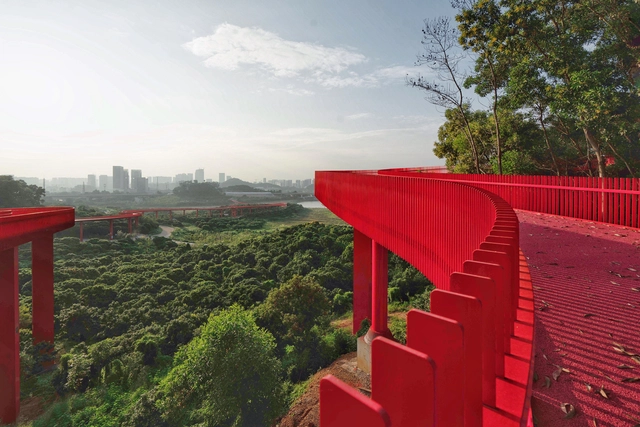
This week, we feature job openings from two of China's leading architecture practices: Beijing-based People's Architecture Office (PAO) and Shenzhen-based Meng Architects. Known for their distinct design philosophies and active presence in different sectors of the architectural field, both offices are looking for talented architects to join their teams.
https://www.archdaily.com/1127866/jobs-of-the-week-peoples-architecture-office-meng-architectsMilly Mo
Ad Urbis is a Cuban collective navigating the complexities of inserting contemporary architecture into a high-value heritage context like Havana, prioritizing above all architectural research, theory, and practice across the realms of design and education.
We interviewed the collective to explore their reflections, workflows, the relationship between practice and academia, and their upcoming projects and outlook for the future of architecture in Cuba.
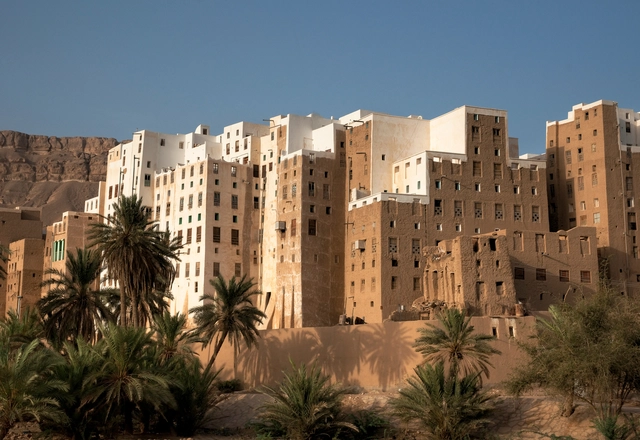
Shibam, the Manhattan of the Desert, a 500-year-old mud-brick city in eastern Yemen. Photograph by Don Whitebread. Image via Shutterstock
The construction industry's role in today's climate crisis is deeply concerning—between material production, building execution, and operations, the sector is one of the largest emitters of greenhouse gases. At the same time, urban populations are growing at unprecedented rates. Within the shaping of major cities—which consume massive amounts of energy—reducing the discipline's impact seems to rely on small-scale interests and personal initiatives rather than sweeping action from the academic, professional, or political spheres.
History has provided us with numerous construction techniques and local material uses that have proven sustainable over time. This involves the efficient use of resources that bypass major industrial processing stages and eliminate the need for long-distance transport. In some cases, at the end of their life cycle, they can even be returned to the environment, such as adobe and timber. In other instances, reclaimed materials—such as recyclable waste and debris generated directly on-site—can also be integrated. Undoubtedly, modern technology and knowledge can help optimize these materials for large-scale application in major cities. Is it possible to develop projects with low environmental impact and adapt them to dense urban contexts? Is this the future path for building materials?
"Domingos Libro" is hosted by Carmelo from Enorme Studio. Every two weeks, he delves into forgotten architectural publications, books, and architecture magazines from the '60s, '70s, and '80s that carry the most fascinating backstories.
This new episode is a holiday special focusing on the December 1971 issue of Architectural Design magazine and the "12 Cautionary Tales for Christmas" proposed by Superstudio.
This week’s job openings come from two design firms based in Beijing and Shenzhen: Origin Architect and JKP Architects. Specializing in different scales and themes, both practices are active across various architectural fields and are seeking like-minded architects to join their teams.
40 viviendas públicas sostenibles en Sant Feliu de Llobregat, Barcelona. Image Cortesía de AMB Área Metropolitana de Barcelona
Through IMPSOL (Metropolitan Institute for Land Development and Property Management), the Barcelona Metropolitan Area (AMB) has begun construction on a new series ofsocial housing (VPO) units on Anselm Clavé Street in Sant Feliu de Llobregat (Barcelona, Spain). Project design and construction management are led by Guillermo López of MAIO Architects.
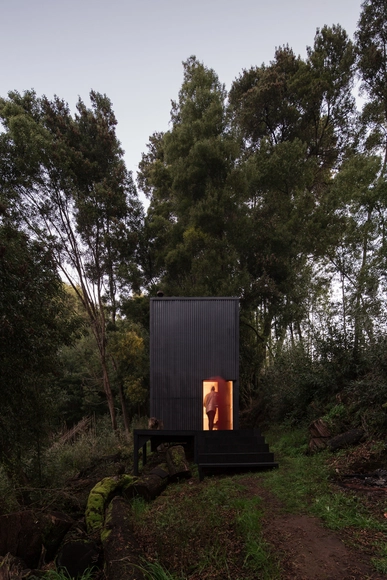
Paradoxically, the confinement we have experienced during the current health crisis has also sparked a series of encounters that ignore border limitations. For Estudio Diagonal, an emerging practice that has achieved international recognition for projects like Refugio 3x3, remote work has allowed them to open up to the world and the multiple opportunities it offers without leaving their place of origin. Based in the city of Osorno in southern Chile, the interdisciplinary team led by architect Sebastián Armijo designs and builds a series of works that draw both from the local landscape and its resources and from the architectural influences shaping current global trends.
A critical perspective on the regionalism that dominates local academic discourse, the importance of physical materialization in conceptualizing their work, and the drive to achieve high design standards with minimal resources are some of the recurring themes in their thinking and practice. In the following interview, Sebastián Armijo elaborates on the interests and influences that drive him to develop a variety of projects rooted in the concept of "pragmatic irreducibility."
Following the restoration of the building originally designed by architects Óscar Borasino and Ruth Alvarado—the Mil Centro renovation by Estudio Rafael Freyre—one can quickly understand the importance of legacies.
This is precisely what the CAP-RL Lifetime Achievement Award - Casa Rosselló Award sought to celebrate. Organized by the Lima Regional Chapter of the Peruvian Association of Architects as part of the I Lima International Biennial of Architecture (BIALIMA 2021), the award aimed to recognize and highlight architects and professionals whose significant project, cultural, academic, and public service contributions have consistently demonstrated a combination of coherence, talent, vision, and commitment over time, and whose work has made a consistent and meaningful contribution to society, the profession, and the built environment.
During the 1980s, NGOs and other organizations interested in housing highlighted the urgent need to address the housing issue comprehensively—seeking a dignified home and environment for vulnerable populations, particularly in Latin America, which was already the world's most urbanized region by the turn of the 21st century. Eight megacities concentrated 14% of the global population, including Mexico City, São Paulo, Buenos Aires, and Rio de Janeiro, among others. Furthermore, urban areas have expanded so rapidly that they have outpaced population growth, driven by the construction of residential complexes, shopping malls, and industrial parks.
As part of a new initiative to merge architecture with cinematic storytelling, the series Arquis recently premiered on HBO Max. The show offers an intimate portrait of the lives and work of six of the most renowned architects in Mexico and Latin America, including Alejandro Aravena, Mauricio Rocha, Alberto Kalach, Simón Vélez, Carla Juaçaba, and Isay Weinfeld.
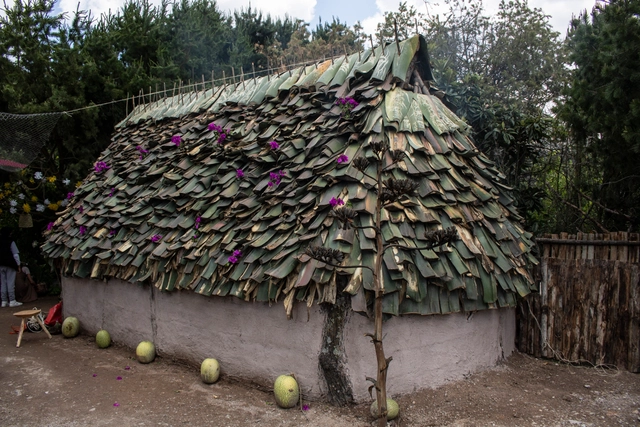
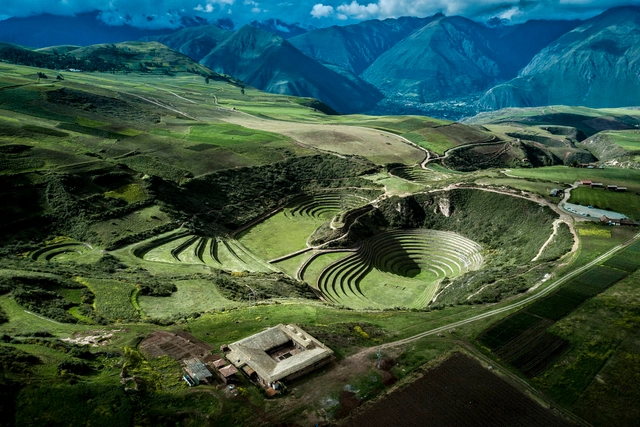
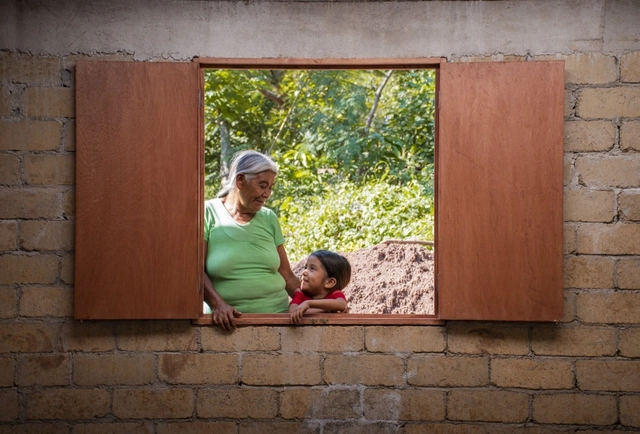
The architecture of Indigenous peoples in Mexico has a vast history that has transformed over the years, sustained by an oral heritage passed down from generation to generation. Various cultural fields are directly linked to this architecture—as it is an integral process involving diverse actors—such as gastronomy and agriculture, which play a fundamental role in shaping these communities. This makes immersing oneself in these dynamics essential to understanding how the spaces that house and connect these activities are produced.
https://www.archdaily.com/1127725/rosario-arguello-on-the-conservation-of-local-techniques-and-materials-in-rural-areas-of-mexicoArchDaily Team
"Domingos Libro" is presented by Carmelo from Enorme Studio, where every two weeks, he delves into forgotten architectural publications, books, and architecture magazines from the 60s, 70s, and 80s that have the most interesting stories behind them.
In this new episode, he discusses the catalog of the exhibition "Houses For Sale," published by Rizzoli and B.J. Archer in 1980. Through the Leo Castelli Gallery, one could purchase the designs for eight houses by renowned architects (Emilio Ambasz, Peter Eisenman, Vittorio Gregotti, Arata Isozaki, Charles Moore, Cesar Pelli, Cedric Price, and Oswald M. Ungers), upending the traditional "client commissions architect for their dream home" relationship.
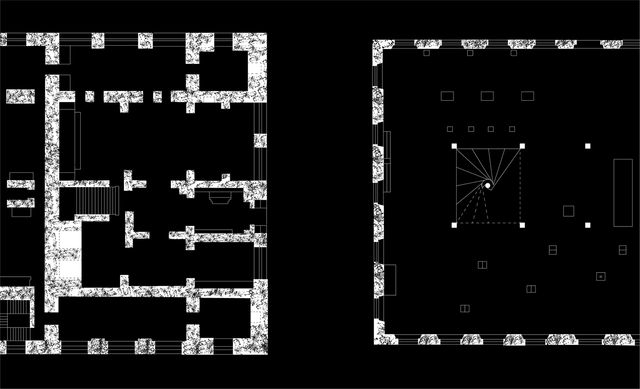
Detail of the ground floor plan of the Anahuacalli Museum (left) and detail of the ground floor plan of Solar do Unhão (right). Illustration by Beatriz Sallowicz and Teodoro Saldanha
In 1963, the exhibition “Nordeste” inaugurated the Museum of Popular Art of Unhão in Salvador. Despite the promising backdrop for Lina Bo Bardi to launch the museum project within the restored premises of Solar do Unhão, its activities were cut short after only a year. This temporary and sole exhibition open to the public relied on loans from various private collections and museum archives to present a vast assembly of diverse objects, inviting the general public to understand the value of popular craftsmanship. The exhibition, which the architect would have preferred to title ‘Civilização Nordeste’ [Northeast Civilization], exposed class attitudes that had little to do with an understanding of what she termed the "progressive attitude of popular culture linked to real problems." (BO BARDI, 1963)
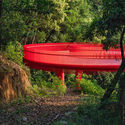
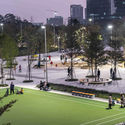
What happens when firms from different parts of the world—Bogotá, Rotterdam, and Hong Kong—unite to design a park on the other side of the globe that fosters innovation and integrates the forest landscape with the city?
Economic crises, health emergencies, and natural disasters, followed by social conflicts, political disagreements, and the search for new places to live, have historically driven the displacement of hundreds of thousands of people. The result: changes in residence, habitat, and culture.
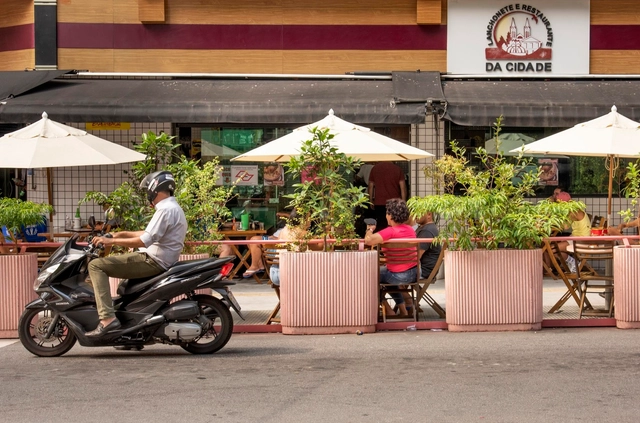
Who would have thought that residents of São Paulo, one of the busiest cities in the world, would miss the hustle and bustle of the streets? Through a simple and elegant intervention, Brazilian architects Gustavo Cedroni and Martin Corullon of Metro explain how they supported one of the areas hardest hit by the pandemic, using small architectural gestures to bring life back to the street.
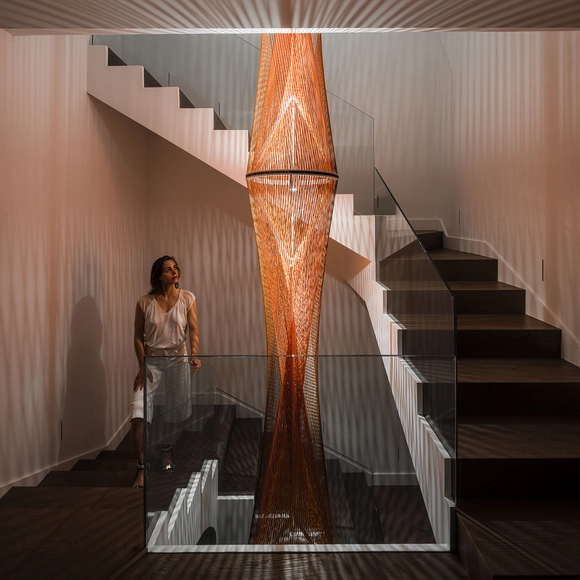
Inés Esnal has designed a sculpture specifically conceived for the stairwell of a single-family home. Her architectural training has heavily influenced her understanding of art in relation to space, from both phenomenological and geometric perspectives. By combining artistic approaches with scientific strategies in her creative process, she aims to create a work of art that is geometric yet atmospheric, logical yet experiential.
Titled Flame, this sculpture is made of polypropylene ropes on a steel frame, measuring 75 x 502 cm and spanning the three levels of a residence in La Moraleja, Madrid.
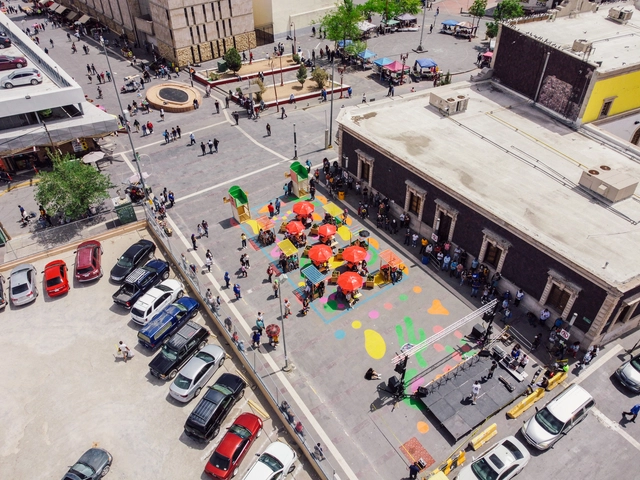
Ciudad Juárez is an industrial Mexican city located on the northern border with the United States, specifically adjacent to El Paso, Texas. Over the years, Juárez's economy has been dominated by the ‘maquiladora’ (assembly plant) industry, and the city was once considered one of the most violent in the world due to a wave of crime between 2008 and 2012. Its territory blends multiculturalism, migration, and resilience, creating a hybrid phenomenon that over decades has shaped the mold of “border culture.”
https://www.archdaily.com/1127749/nomada-laboratorio-urbano-public-space-and-the-new-normal-on-the-us-mexico-borderArchDaily Team
As part of an initiative to document the history of Monterrey, Nuevo León, Mexico, REGIOPOLIS emerged as a documentary video series narrated from the perspective of the city's creators, aiming to leave an architectural record of the Monterrey metropolis. Each episode showcases some of the most significant works that laid the foundation for its urban fabric, exploring the historic and emblematic architecture built to this day.
From September 24 to 26, 2021, the seventh edition of Open House Madrid will take place. This international architecture festival offers free access to Madrid's architecture, featuring tours of more than 100 landmark buildings and spaces across the capital that are typically closed to the public. Under the theme "I don't even know where I live," the event aims to promote architectural culture, rediscover the city through its built environment, and provide an experience that helps people connect with and appreciate their surroundings.
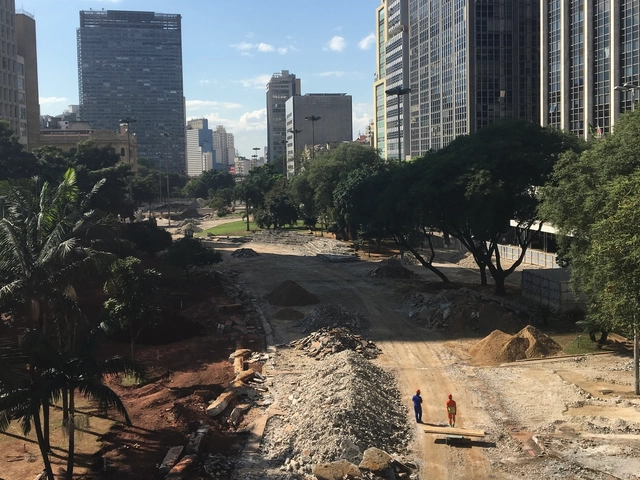
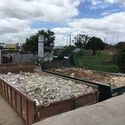
Start of the revitalization works in Anhangabaú Valley. Men coexist with mountains of rubble generated by the demolition of the pre-existing pavement. June 2020. Prepared by Guilherme Trevizani Ribeiro. Image courtesy of Guilherme Trevizani Ribeiro
How can waste become a resource? Or rather, when did waste stop being a resource? Why does contemporary architecture still build as if our buildings were great titans that will survive different eras and adversities? These are all questions that cross the mind of a recent architecture graduate. One of the current challenges of architectural production in a metropolis like São Paulo is understanding that, after demolition, the building does not disappear. What does our National Solid Waste Policy indicate?
Although latent, this issue is still rarely debated within academia, a space that should be constantly proposing alternatives to our way of life. And even when it is debated, where is the benefit to the public? How can we disseminate these lessons? Education is still the key to getting our future back on track.
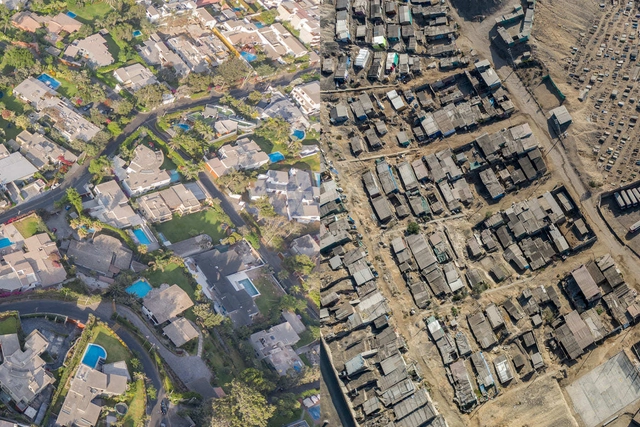
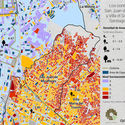
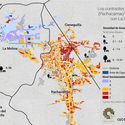
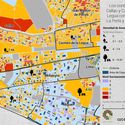
Just over a year after the start of the pandemic in Peru, a multidisciplinary team from OjoPúblico and Espacio y Análisis has conducted an extensive investigation based on various geographical and socioeconomic databases. The study reveals wide gaps in access to public spaces and green areas across 44 districts in Lima and Callao (Peru). In several cities around the world, the pandemic has demonstrated how unequally public space is distributed, especially in low-income neighborhoods and vulnerable areas that lack shared spaces like green areas, parks, or playgrounds. Through this mapping report, the team shows how more than half of the districts in Lima and Callao have less than 3 square meters of recreational space per inhabitant. It also highlights stark urban contrasts along district boundaries separating different socioeconomic levels and underscores the urgent tasks facing local authorities to increase and improve the quality of recreational areas.
Videos
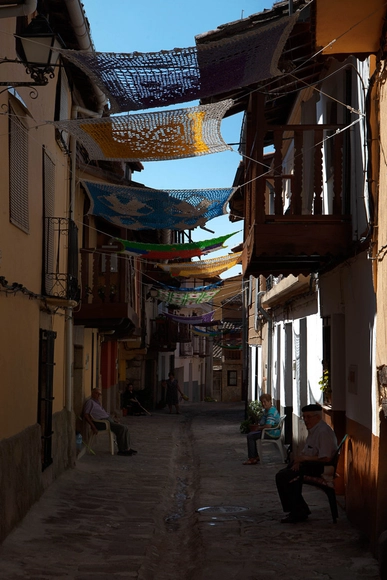
Tejiendo la calle de Marina Fernández Ramos. Image Cortesía de RUA Ediciones
"You should know that Mr. Matías took down one of the sunshades from where you installed it and put it on his balcony, because he wants the shade right at his doorstep," says Pepe, a resident of Valverde de la Vera, a small rural municipality in Extremadura, featured in the book "Tejiendo la Calle." This new publication gathers nearly ten years of testimonies from weavers and residents who brought to life the project of the same name, initiated by Marina Fernández Ramos in 2013.
Videos
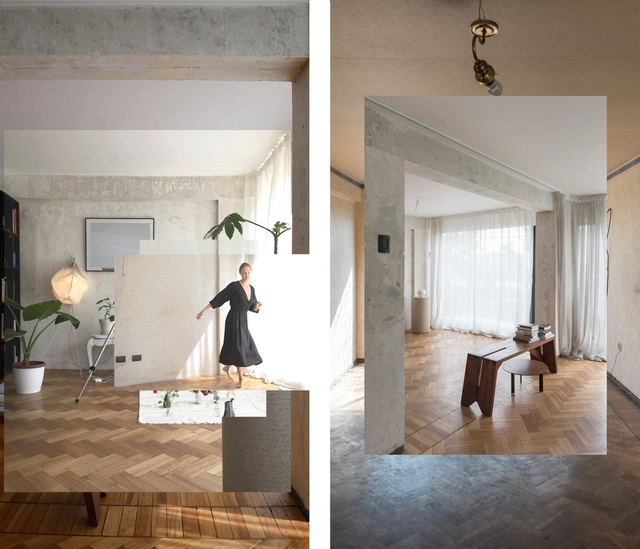
collage based on frames from the DA House audiovisual project. Image
Questioning both the methodologies involved in the production of architecture and its consumption in traditional representation allows us to engage in a series of interdisciplinary dialogues that, rather than limiting the possibilities of the discipline itself, can expand it in response to the complex contexts that define today's landscape. Rodrigo Valenzuela Jerez, architect and founder of EstudioRO - (E)Studio Futur@ and current director of the School of Architecture at the Universidad de las Américas (UDLA), Chile, shares in the following interview some of the design concepts that guide his “expanded” practice, in which form is a secondary outcome of the strategies and operations that enable users to appropriate their own spaces.

.jpg?1611317602&format=webp&width=640&height=580)






.jpg?1628181990&format=webp&width=640&height=580)
.jpg?1628181990)