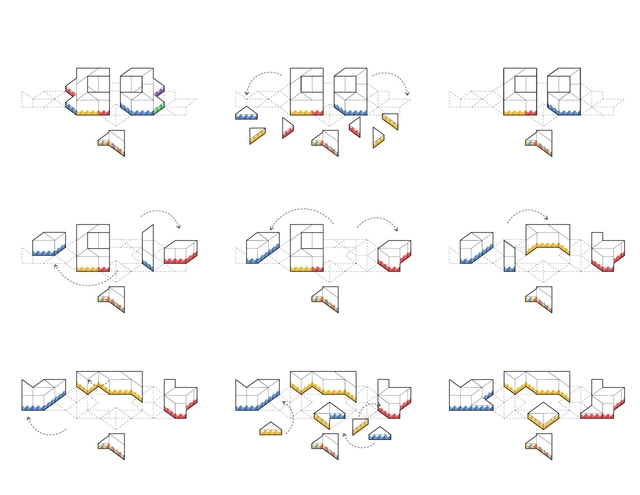
Stopmotion configuraciones. Image Cortesía de El Equipo Mazzanti
The Madrid Institute of Architects has provided a space for El Equipo Mazzanti + horizontal for a dynamic exhibition of their career, showcasing their pedagogical design process through play—a methodology characteristic of the firm led by Colombian architect Giancarlo Mazzanti. The exhibition is on view at COAM until January 24.
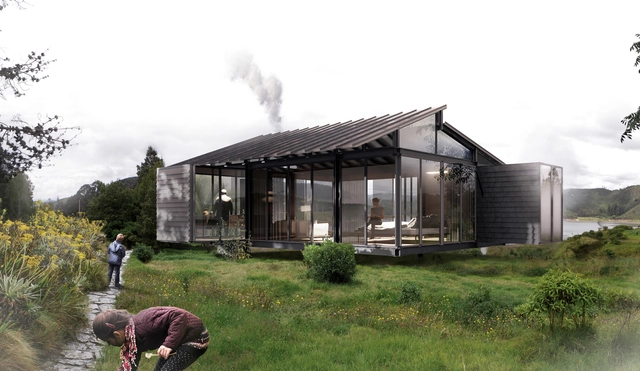
Presented at the recent edition of the Feria del Diseño 2019 in Medellín, Iku Hábitat is a modular architectural construction system developed in Colombia that aims to streamline construction processes using designed and prefabricated components assembled with screws.
https://www.archdaily.com/1120967/iku-habitat-a-modular-home-in-colombia-assembled-with-screwsArchDaily Team
First Place: "Entre sombras" / Josué Coeto Velasco, Ignacio González, Abraham Méndez, Hueman Hidalgo. Image
The TEMA Pavilion Competition was created to provide young architects and students from the University of Guadalajara student body with the opportunity to design an ephemeral project that expresses ideas beyond the typical academic requirements of an architecture or design school. On November 11, the proposals were evaluated by internationally recognized architecture and design practices, including José Amozurrutia and Carlos Facio / TO; Andrea Castilla and Deha Chehade / Chehade Carter Interior Design; and architect Diego Vergara Álvarez.
The Richard H. Driehaus Architecture Competition seeks to revitalize traditional architecture in overlooked areas of Spanish towns, while promoting the work of local artisans and builders. In this first phase, municipalities submitted proposals to rehabilitate or remodel various architectural spaces. Out of all the submissions, Alzira (Valencia), Santa Cruz de la Palma (Tenerife), Santiago de Compostela (La Coruña), and Guadix (Granada) were selected.
https://www.archdaily.com/1120993/4-rehabilitation-proposals-in-spanish-cities-for-the-richard-h-driehaus-architecture-competitionArchDaily Team
Ilustración 6. Incorporación de vegetación para minimizar los efectos de islas de calor. Image Cortesía de Universidad de Cuenca
The following analysis was developed within the research project “Sustainable and Safe Building Certification,” funded by the Research Directorate of the University of Cuenca and led by Dr. Felipe Quesada Molina. This research addresses the sustainability assessment of residential buildings in the city of Cuenca.
https://www.archdaily.com/1120986/strategies-for-the-sustainable-and-safe-building-certification-of-the-city-of-cuenca-ecuadorArchDaily Team
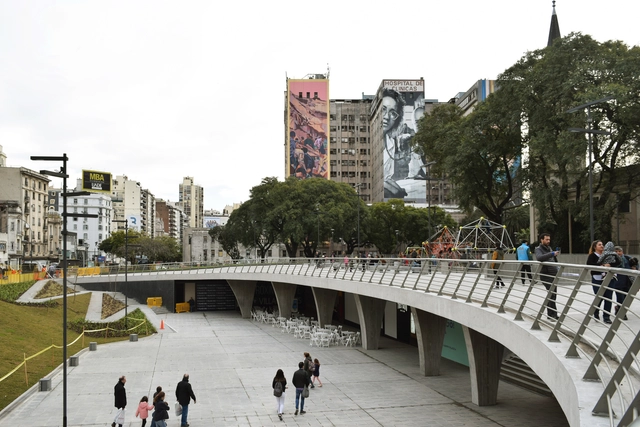
Plaza Houssay has recently been a subject of debate. Just four years after its official reinauguration as an "Urban Campus," its grand reopening was announced for early this week. Returning this public space to the city promises to not only reactivate the adjacent urban area but also reclaim its role as a gathering place for local residents, featuring the addition of four movie theaters and various dining options.
For five editions, the Logroño International Festival of Architecture and Design, Concéntrico, has been experimenting not only with new public space design proposals, but also with management models.
Imágen: ArtefactoryLab. Image Cortesía de Estudio Herreros
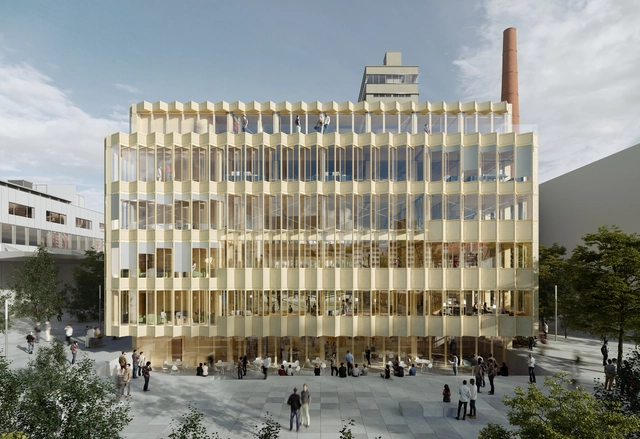
The "Smart Living Lab," a research and development center for the built environment of the future founded in 2014 and located in the blueFACTORY innovation district, launched an open call in 2018 for the design of its new building. This competition was open to all interested design firms from both Switzerland and abroad, ensuring equal opportunities and fostering high-quality projects.
André Gorz wrote in 1974: «Ecology is like universal suffrage and the Sunday day of rest: at first, all the bourgeois and all the proponents of order tell you that you want their ruin, and the triumph of anarchy and obscurantism. Then, when circumstances and popular pressure become irresistible, they grant you what they denied you yesterday and, fundamentally, nothing changes».
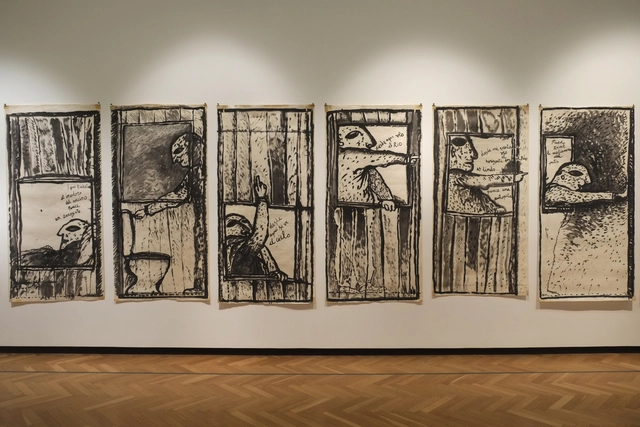
The galleries of the National Museum of Fine Arts in Buenos Aires are currently showcasing the creativity of Clorindo Testa. Curated by María José Herrera and Mariana Marchesi, the new exhibition “Esta es mi casa” (This Is My House) offers a closer look at the architect-artist: What did he think about before going to bed? What did he see from his window? What was his house like?
In March 2020, the fourth edition of Hello Wood will arrive in Argentina. This creative, professional, and social program teaches students to think with their hands and learn through experience. The program is currently seeking creative minds to join as project leaders.
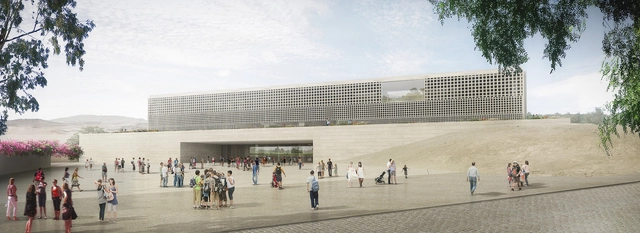
Museo Nacional del Perú en cosntrucción, una de las contadas obras públicas elegida por concurso púlbico. Image Cortesía de Alexia León Angell
We are pleased to start the year by sharing major news that is spreading across Peru. For many, it comes a bit late; for others, the timing is perfect. Regardless, it is finally here: public works in Peru can now be carried out through architectural competitions.
With the goal of promoting the development of innovative urban ideas and proposals that can be implemented in the execution plans of the Provincial Municipality of Satipo, this entity—through its Sub-Department of Urban Development and Infrastructure, in collaboration with the Colegio de Arquitectos del Perú Regional Junín—launched the Satipo National Ideas Competition 2019: "Intervention on Jr. Colonos Fundadores and Treatment of the Satipo Waterfront" Ideas Competition.
As its name suggests, the project consists of two intervention areas: on one hand, it proposes an intervention on two blocks of Jr. Colonos Fundadores through pedestrianization, pavement treatment, and urban furniture design; on the other hand, it outlines the design of the Satipo Waterfront with an urban program that includes a bike path and sports equipment, as well as pavement treatment and urban furniture.
1° Premio - Perspectiva Interior. Image Cortesía de Federico Canavese, Martin Rodriguez Frank y Fernando Vignoni
On August 2, the winners of the International Ideas Competition for the design of the new Argentine Pavilion for Expo 2023 were announced. Organized by the Central Society of Architects(SCA) and the Association of Architects of the Province of Buenos Aires (CAPBA), and sponsored by the Argentine Federation of Architect Entities (FADEA), the Argentine Pavilion is the first of six international competitions launched in recent months as part of Expo 2023.
The recent book 'Plan de desarrollo urbano de la zona noroeste de la ciudad de Mar del Plata' by Guillermo Tella, Beatriz Cuenya, Martín Delucchi, and Laura Corbalán Vieiro synthesizes the results achieved through the technical assistance and institutional coordination experience carried out during 2017-2018 for the Municipality of General Pueyrredón (province of Buenos Aires, Argentina) by the Center for Urban and Regional Studies (CEUR-CONICET) and the Inter-American Development Bank (IDB).
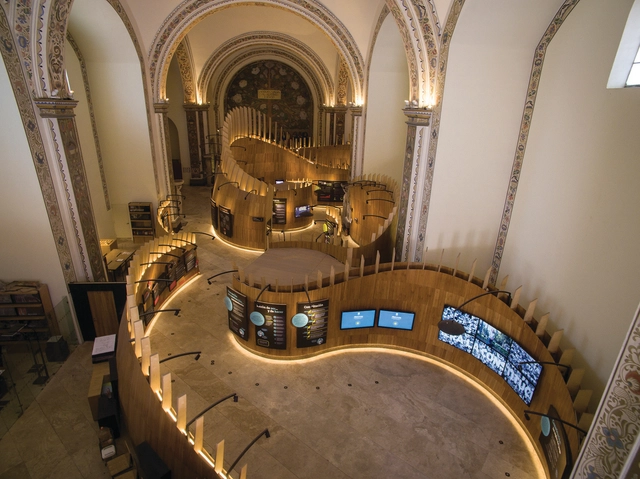
Mexican studio Tuux was recognized with the Red Dot Award in the Product Design 2019 category for the design of the new exhibition and operational spaces of the Museum of the Constitutions (Museo de las Constituciones), an accolade the jury awards to entries featuring exceptional design.
https://www.archdaily.com/1120778/mexicans-win-german-competition-for-exhibition-designArchDaily Team
Today, Mexico’s contemporary architecture scene is shaped by architects who work daily to address the evolving conditions of their surroundings. Various events—such as the 2017 earthquakes—have brought critical issues to the forefront, prompting a rethinking of the profession at different levels, gathering lessons that have redefined the role of the discipline and, above all, the place that architectural objects occupy in the world. This paradigm shift has heightened architects' awareness regarding materiality, regional processes, and urban issues, opening up space for the collective. This involves multidisciplinary teams providing new answers but, above all, asking new questions.
On October 18, during the 17th edition of the Buenos Aires International Biennial of Architecture and concluding a series of keynote lectures, debates, and exhibitions held at the Usina del Arte in Buenos Aires, the winners of the “Evolución Ladrillo” (Brick Evolution) award, the CICA (International Committee of Architectural Critics) awards, the Bienal BA category awards, and the Grand Biennial Prize were announced, honoring a total of 28 architecture firms, institutions, and organizations for their work in the field of architecture.
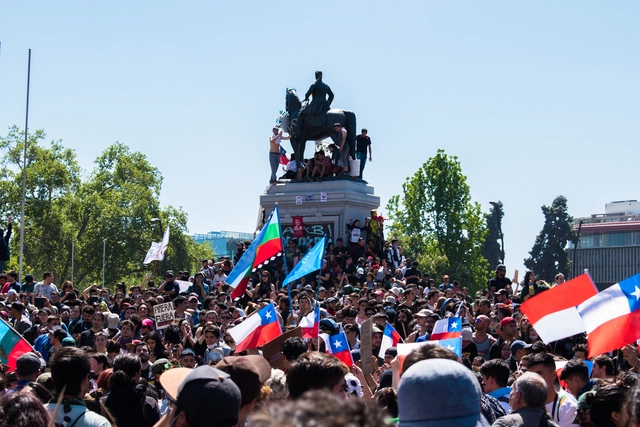
Amid the ongoing social crisis in Chile, the National Council for Urban Development (CNDU) issued an official statement acknowledging "broadly the diagnosis of deep segregation in our cities and the urgent need for greater social integration."
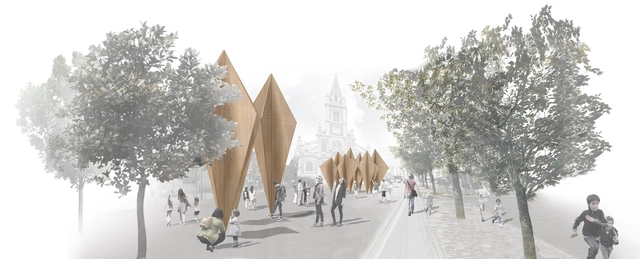
May 3 is a holiday originating from the Feast of the Finding of the Holy Cross, also known as the May Cross (Cruz de Mayo) or Festival of the Crosses (Fiesta de las Cruces), which has its roots in the Roman Rite celebrating the devotion to the Cross of Christ. Over time, this commemoration has evolved and been adopted across cities in Mexico, Chile, Spain, Ecuador, El Salvador, Guatemala, Paraguay, Peru, Trinidad and Tobago, Argentina, Colombia, and Venezuela, where the festivities typically include floral decorations, processions, and dances.
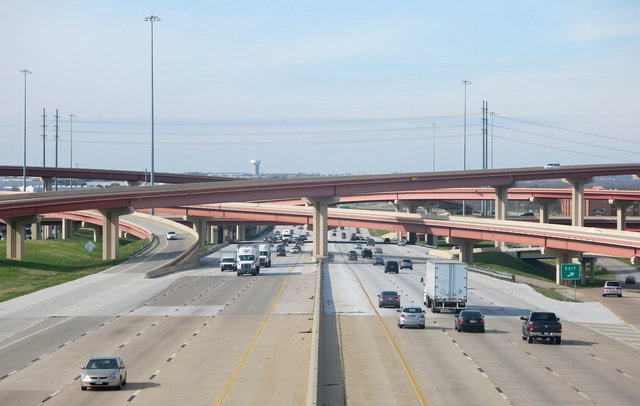
Today, discussing infrastructure means discussing geopolitics and connectivity as a key driver of global competitiveness. Connectivity, however, should not be understood solely as physical infrastructure, even if we are talking about roads for autonomous vehicles or hyperloop tunnels.
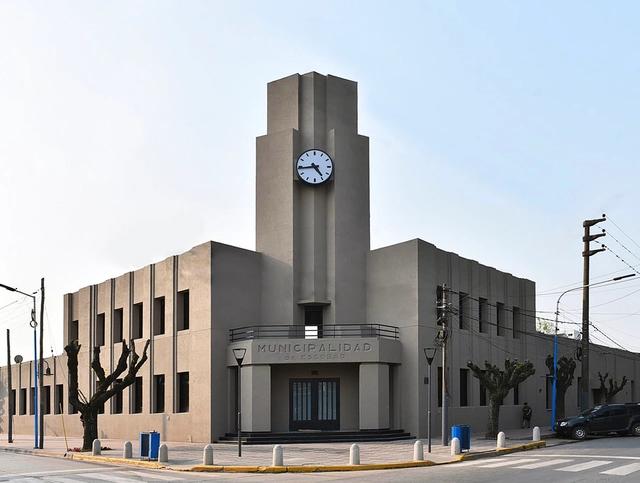
A numerical coincidence links the municipality of Escobar with the life of architect Francisco Salamone. In 2019, the district celebrates 60 years since its creation—having achieved municipal independence in 1959—an anniversary inviting its residents to reflect on both its history and its future. August also marked the 60th anniversary of Salamone's death. In 1938, he was commissioned to design the Municipal Palace in Escobar. The project, however, was left unfinished due to budget constraints, making it the only project by the architect in Buenos Aires that remains incomplete today. To mark this double anniversary, the local government is revisiting the original design to finally complete the building.














-20180529.jpg?1574888445 "DPS Apartments / Estudio MMX + Olga Romano. Image")