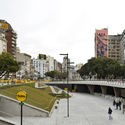
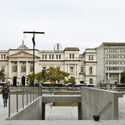

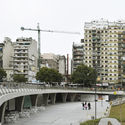

Plaza Houssay has recently been a subject of debate. Just four years after its official reinauguration as an "Urban Campus," its grand reopening was announced for early this week. Returning this public space to the city promises to not only reactivate the adjacent urban area but also reclaim its role as a gathering place for local residents, featuring the addition of four movie theaters and various dining options.
Located between the Hospital de Clínicas and the Schools of Economics, Medicine, and Pharmacy and Dentistry of the University of Buenos Aires, and spanning a total area of 20,710 m², Plaza Houssay serves as an important recreational space for both neighborhood residents and students who frequent the area daily, concentrating a high volume of foot traffic and daily activity, making it highly significant on an urban scale.
Related Article What Will the Project for Plaza Houssay in Buenos Aires Look Like?

Officially opened in 1980, this plaza has undergone a series of renovations that transformed its morphology and infrastructure over time. Even then, the original design integrated a large underground parking garage to address the need for more open space along the main thoroughfares, Uriburu Street and Córdoba Avenue, both areas of heavy daily traffic. The presence of this underground level significantly conditioned the plaza's landscape design, leaving most of its surface covered in concrete, with concentric brick circle patterns and minimal greenery.
In 2007, a renovation led to the loss of the plaza's characteristic design, as the brick circles were removed, and both paths and open spaces were repaved. To accommodate the high volume of students from the three nearby University of Buenos Aires campuses who used the plaza for recreation, the concrete-covered area was expanded, allocating more space to rest areas and pathways to facilitate the movement of large crowds. The San Lucas Chapel, originally part of the old Hospital de Clínicas, was preserved as a landmark in the center of the plaza, surrounded by lush vegetation.
Over the last four years, the plaza has undergone even more frequent modifications, positioning it at the center of debates regarding what criteria determine a high-quality public space. During successive construction periods, the resulting urban disruptions—such as the closure of subway entrances, pedestrian path blockages, narrowed roadways, and the displacement of local artisans and book vendors—have sparked strong opposition.
In 2015, plans were first introduced to transform the plaza into an "Urban Campus," promising to turn the site, after a short construction period, into "a hub of innovation, talent, and creativity." In January of that year, it was announced that soccer and basketball courts and a skate park would be incorporated into the renovations planned for April. The project was officially inaugurated that June, billed as the "city's first Urban Campus." Following these interventions, the plaza's green space had increased by 50%, and the new infrastructure boosted recreational sports and public enjoyment in the area.

Despite these changes, in 2016—just one year after this positive transformation—the Buenos Aires Legislature approved an amendment to the Planning Code, passing a bill that allowed for a dining hub on the block occupied by the plaza. This paved the way for a hybrid model merging public space with private commercial operations. Once plans to redevelop the area into a "recreational, culinary, and cultural hub" were confirmed, the plaza went under construction again 16 months ago. This latest modification promised to bring four movie theaters and a major food court, with tenants including McDonald's, Mostaza, Freddo, Antares, and other major food chains.
Although adding commercial spaces reduces the plaza's green area significantly, the development is expected to substantially improve safety in the neighborhood. Local residents and students had repeatedly called for increased activity in the plaza to allow them to walk through the area safely. According to the project guidelines, these safety concerns will also be addressed with enhanced lighting, a direct and effective connection to the subway, and improved visibility along the paths.

After 16 months, the construction fences blocking access to the area were finally removed this Tuesday, and the plaza—which has changed configuration so many times—has once again become an urban hub. As with any project involving urban redevelopment, the project has sparked both positive and negative reactions.
Related Article What Criteria Determine a Good Public Space?
Among the benefits of this reopening is a practical new entrance to the subway, which, alongside the integration of Ecobici bike-share stations, will strengthen transit connections and facilitate more efficient, fluid commuting.
Parking will also remain, relocated to the second underground level with a capacity for 600 vehicles. The hybrid approach of blending green space with retail promises to increase safety, boost activity in the area, and benefit those attending or working at the adjacent institutions.

Even though the updates only concern the introduction of new infrastructure and services, the project overhauled the plaza's entire footprint. Consequently, the work required demolishing the entire plaza, except for the existing parish church, which significantly increased costs.
Additionally, promoted as a positive outcome, the new commercial spaces and movie theaters are expected to "generate surplus value in the area," leading to an increase in property values. However, this may not be as favorable for students who rent nearby to save on commuting costs to their campuses. This redevelopment has sparked an interesting debate, raising many questions about the area's future: What will happen to the activities the plaza previously hosted? Will safety actually improve? Will the space promised for the artisan market and book stalls be maintained in the long term? We invite our readers to share their thoughts in the comments section.

Related article For the People, By the People: What Is Public Architecture, According to Our Readers?
This article was written by Belén Maiztegui. The translation is powered by AI.
¿Cómo será el proyecto para la Plaza Houssay en Buenos Aires?
La remodelación de la Plaza “Dr. Bernardo A. Houssay” propone reorganizar los elementos urbanos preexistentes a partir de una matriz espacial sintética, en forma de un área central seca extensa de 50 x 50 m que se extiende hacia sus bordes, complementada por un anillo perimetral verde que media la relación con las calles.