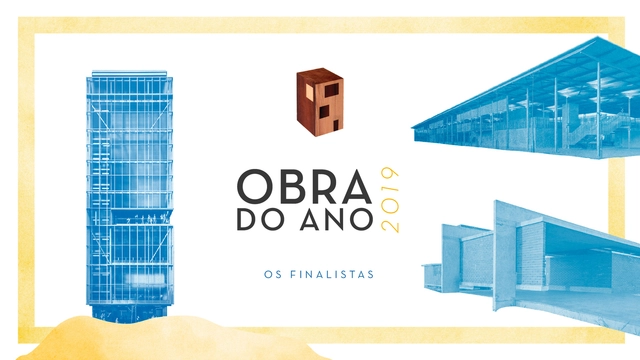
We are pleased to present today the finalist projects for the 2019 Building of the Year Award (ODA19). After two weeks of nominations and more than 10,000 votes, the favorite projects have been selected from hundreds of works built in Portuguese-speaking countries. Our jury of experts—our own readers—has once again done an outstanding job selecting the 15 finalists. The projects span a remarkable diversity of programs, including cultural, commercial, and educational facilities, public squares, high-end residences, and renovations. This selection offers an engaging overview of contemporary architectural production in Brazil and Portugal, deeply shaped by material exploration, the richness of our geographic contexts, and the diverse challenges faced by our societies.
The wall currently under construction on the US-Mexico border. Image: José Luis Gonzalez / Reuters
Margarida Quintã and Luís Ribeiro da Silva are the winners of the 15th edition of the Fernando Távora Award, the Northern Regional Section of the Order of Architects (OA) announced this week. With the proposal As Fronteiras do México [The Borders of Mexico], the duo explores "the impact of architecture and urbanism on mediating issues related to territorial borders, migration, and the cross-border dimension of human well-being."
The School of Architecture and Urbanism of the Federal University of Juiz de Fora (UFJF) has announced the results of the national competition for its new headquarters building. The winning team consists of architects Bruno Eduardo Nakaguma Gondo, Carlos Eduardo Murgel Miller, Eduardo Saguas Miller, and Felipe Fuchs, from São Paulo.
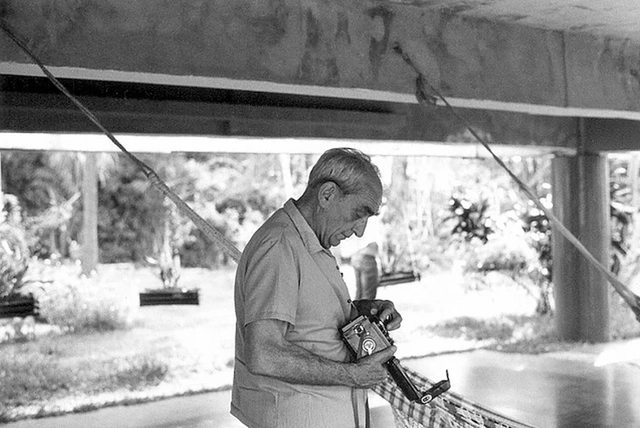
Flávio de Carvalho, publicity photo. Image via Arquivo.Arq
Flávio de Carvalho was a modern Brazilian architect recognized worldwide for his innovative and provocative way of showcasing his worldview through art. Discover some of his artistic expressions below.
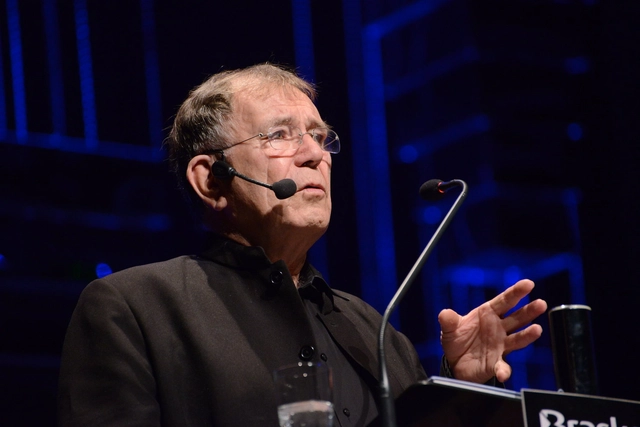
The author of more than 30 books and a champion of cities for people, Danish architect Jan Gehl and his team of around 50 professionals have worked to free the centers of cities as diverse as Moscow, Melbourne, Shanghai, and New York from cars.
Romano Guerra Editora has launched a crowdfunding campaign on Catarse to reissue the celebrated book RINO LEVI – arquitetura e cidade. Based on Renato Anelli's doctoral dissertation, the book features iconographic research by a team led by Abilio Guerra and is filled with photography by Nelson Kon.
The benefits of urban vegetation are numerous and well known. In addition to shading public spaces and producing oxygen, trees and shrubs contribute to thermal comfort, by humidifying the air, and acoustic comfort, as they can be used as barriers to minimize noise.
Brazil's most famous architect, Oscar Niemeyer, kept his office active until his death in 2012 at the age of 104. One of the last projects he designed is nearing completion in Leipzig, Germany. The project is a 12-meter-diameter sphere embedded in the corner of a 19th-century brick building, which will house a cafe and bar for employees of the HeiterBlick and Kirow Ardelt AG railway companies.
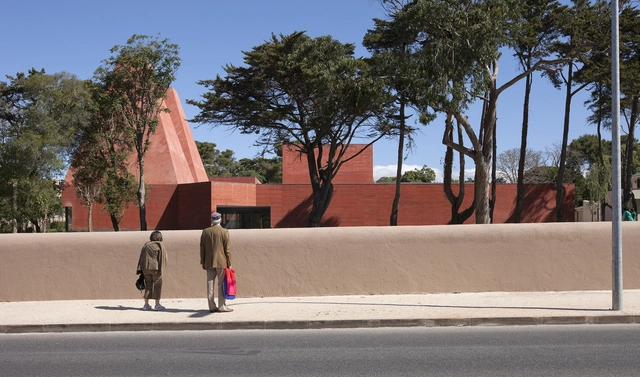
Centro Paula Rego. Image Cortesia de Casa da Arquitectura
In October, the Casa da Arquitectura – Portuguese Centre for Architecture will open the exhibition “Souto de Moura – Memory, Projects, Works,” which will remain on display until September 2020. Curated by Francesco Dal Co and Nuno Graça Moura, the exhibition offers a unique and rare monographic reading of the work of one of Portugal's most prestigious architects.
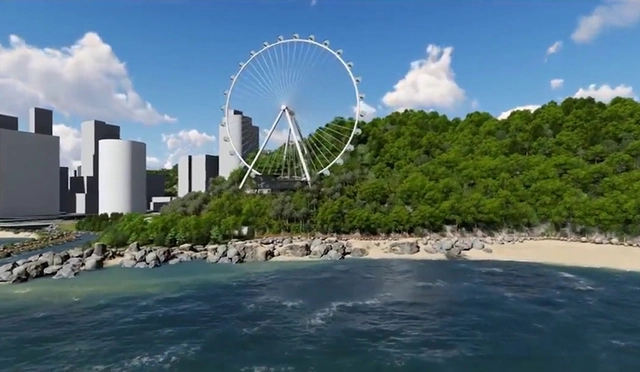
The proposal to build South America's largest Ferris wheel in Balneário Camboriú (SC) underwent another public hearing this Monday (11)—this time to present the project's Neighborhood Impact Assessment (EIV), which plans for a 57,200-square-meter complex in the Praia do Coco area.
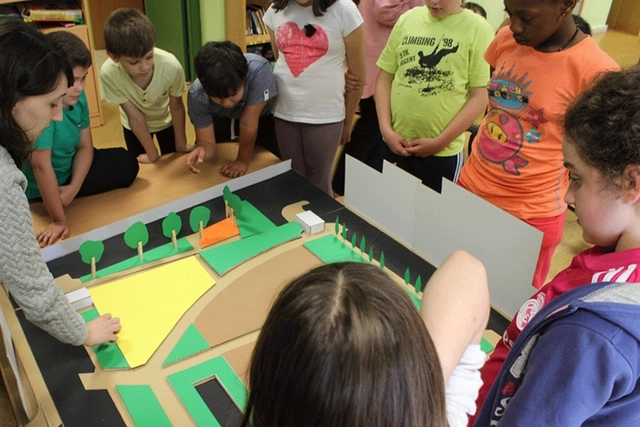
Projeto “Arquitetura para Crianças”, realizado na Galícia, Espanha. Image Cortesia de CAU/BR
The Urban and Environmental Policy Commission (CPUA) of CAU/BR will produce supplemental educational materials on architecture and urbanism for elementary and middle school classrooms. Developed in partnership with Pistache Editorial, the project aims to bring urban planning discussions into schools to help build better cities in the future. The goal is to foster students' critical perspective on the urban environment, helping them understand the city as a space with multiple historical layers.
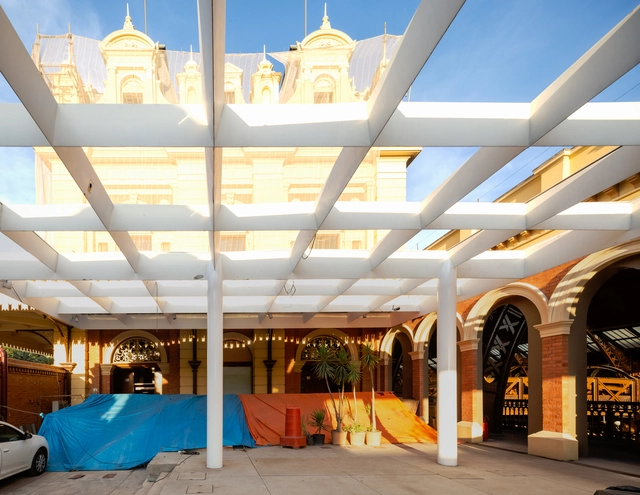
Partially destroyed by a fire in 2015, the Museum of the Portuguese Language has undergone a lengthy restoration process and now has a date to reopen its doors: June 27, 2020. The announcement was made by state and municipal officials this Monday, December 16, during a visit to the site.
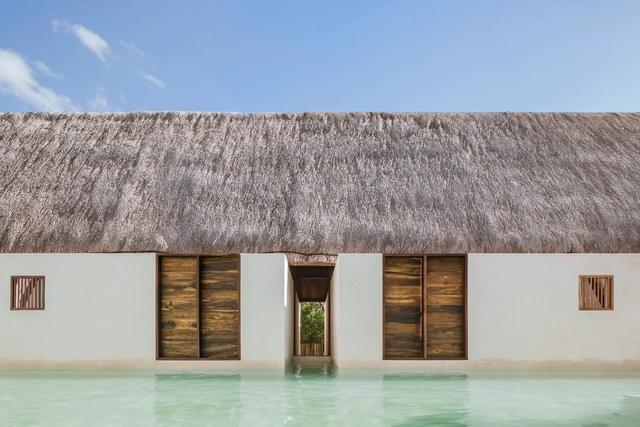
Much like stone, wood, and other natural materials, straw and thatch have been used as building resources since the dawn of human history. However, with the advent of new technologies like concrete, and the concept of *Progress* driven by the Industrial Revolution—and subsequently by the rise of steel—many traditional materials fell out of favor, widely replaced by modern alternatives.
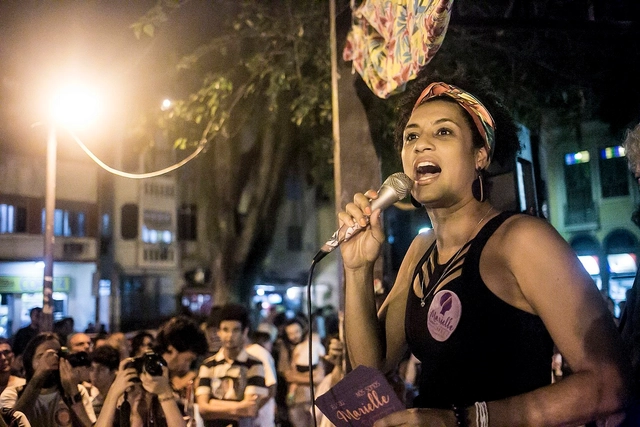
Today marks one year since the brutal assassination of Rio de Janeiro sociologist and city councilwoman Marielle Franco. The week before her death, Marielle took part in a series of debates organized by CAU/RJ called "Architecture - Feminine Noun," aimed at strengthening mobilizations for International Women's Day.
https://www.archdaily.com/1122060/watch-marielle-franco-in-the-debate-architecture-feminine-nounPedro Vada
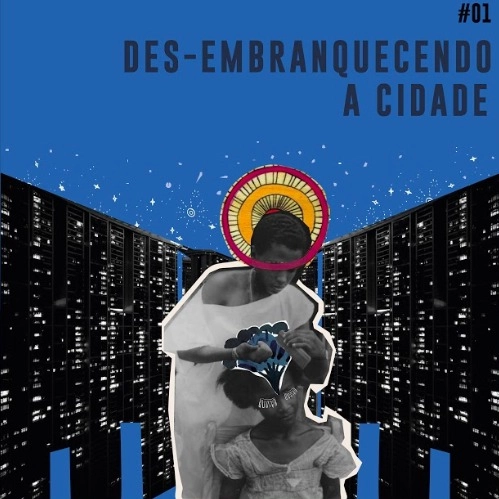
The “De-whitening the City” Podcast is a space invented from the desire of five Black women residing in Salvador, São Paulo, Rio de Janeiro, and Belo Horizonte to circumvent geographic distance in order to foster and celebrate connection. Emmily Leandro, Gabriela Gaia, Luciana Mayrink, Malu de Barros, and Natalia Alves make up the Terra Preta collective, giving shape and voice to this exercise in creating a shared virtual territory—both a political and aesthetic commitment—now made public for the first time.
https://www.archdaily.com/1122076/de-whitening-the-cityTerra Preta Cidade
Projeto Tercer Sonido, Madri, Espanha. Image Cortesia de CicloVivo
C40 Cities, a global coalition of cities, launched a competition to select the best solutions for transforming underutilized urban spaces into resilient, carbon-neutral developments. Named Reinventing Cities, the competition selected 15 innovative ideas poised to "reinvent" the future of cities.
"PHANTOM. Mies as Rendered Society" Exhibition. Courtesy of Andrés Jaque—Office for Political Innovation
Design is a critical act, and architecture is an inevitably political discipline—no matter how much one tries to deny it. This is the view of Andrés Jaque, a Spanish architect and founder of the Office for Political Innovation, based in Madrid and New York. Jaque dedicates himself to architectural practice, research, and activism as if they were inseparable. In this interview, conducted during the 12th São Paulo International Architecture Biennale, Jaque discusses how queer perspective can contribute to community engagement and how architecture is "unfolding into a trans-scalar activity and a multi-media practice."
Once subjugated by outlaw armed groups and devastated by the largest urban military operation in Colombia's history, the Las Independencias neighborhood, located in Medellín's Comuna 13, is today an open-air graffiti gallery of sorts, accessed via a system of electric escalators—the only ones in the world built in an informal settlement.
With over 1.3 million visits last year, the GeoSampa platform, an open-format digital map of the city of São Paulo, has expanded its reach since its launch in 2016. These results demonstrate that the portal remains a benchmark for geospatial data in São Paulo, thereby strengthening public sector transparency — one of the guidelines of the Strategic Master Plan.
The Ministry of Education (MEC) has released its list of the best and worst architecture programs in Brazil, based on the Preliminary Course Score (CPC). Topping the list is the Architecture and Urbanism program at the Centro Universitário Facvest, in Lages, Santa Catarina.
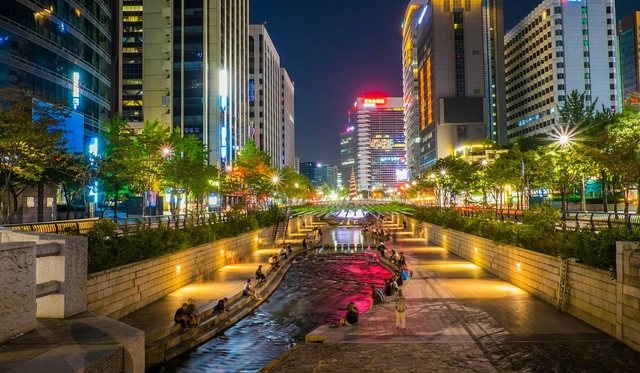
Renaturalization of the Cheonggyecheon River in Seoul – South Korea. Source: https://www.koreapost.com.br/wp-content/uploads/2016/01/Rio-Cheonggyecheon-Seul.jpg. Courtesy of the authors
The significant restoration of the natural riverbed of the Cheonggyecheon River in Seoul, South Korea, and the urban revitalization of its surroundings are a brilliant example of Sustainable Urban Drainage. This deconstruction is based on the premise of renaturalization, which aims to restore the pre-development water balance (increasing concentration time and reducing peak runoff) through high permeability. It also demonstrates the undeniable importance of preserving valley floors and Permanent Preservation Areas (APPs) in Brazil, as defined by the Forest Code.
https://www.archdaily.com/1121937/sustainable-urban-drainage-to-achieve-un-sdg-targetsAdriana Idalina Rojas Gutierrez e Ivanete Carpes Ramos
Whether for universal accessibility, spatial fluidity, or plastic continuity, ramps bring unique and highly welcome qualities to architectural projects. That is, of course, when they can be successfully integrated into the design—typically a demanding task due to accessibility standards governing maximum slopes.
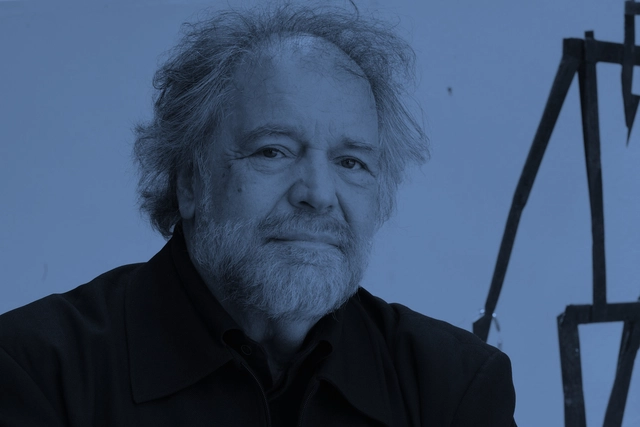
This week's Arquicast Entrevista features the work of an internationally recognized architect from Minas Gerais. A 1973 graduate of the School of Architecture at the Federal University of Minas Gerais (UFMG), Gustavo Penna founded his firm, GPA&A, that same year. Since then, the practice has been based in a century-old mansion in downtown Belo Horizonte. Penna has won numerous international awards, and his work has been exhibited in Brazil and around the world, including at the São Paulo Architecture Biennale, the Venice Biennale, the World Triennial of Architecture in Belgrade, and the Institut Français d’Architecture in Paris.



.jpg?1564667184&format=webp&width=640&height=580)
_(Custom).jpg?1559915700&format=webp&width=640&height=580)


.jpg?1556291339&format=webp&width=640&height=580)