Africa like the rest of the world has a rich built heritage that faces the ever-present danger of extinction due to lack of documentation, conflict and gentrification. This lecture hopes to spotlight the gaps yet to be bridged in our public knowledge of endangered buildings in Africa and in fact, other parts of the world.
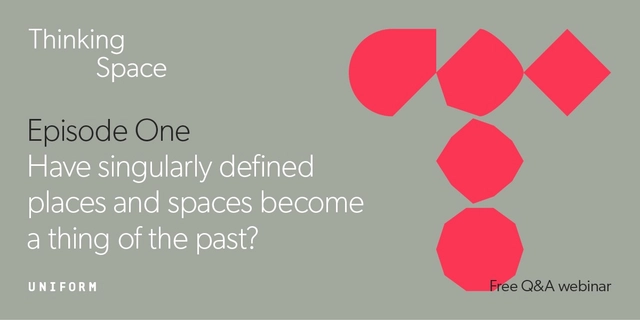
A Uniform hosted webinar series in which we'll be exploring the changing relationship with space & the built environment. In this 60 minute webinar, we will discuss how the world has changed and how we must change with it.
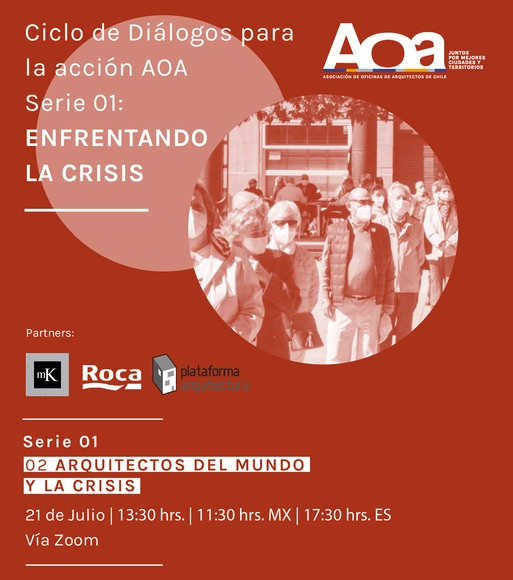
Aiming to continue the discussion and uncover opportunities for adaptation and resilience, the Association of Architecture Offices (AOA) continues its series of conversations addressing various topics relevant to both professional practice and the public and private spheres that shape the city.
On Thursday, July 30, at 6:00 PM, Cosentino City Barcelona and ArquinFAD invite you to discover the finalist projects of the 2020 FAD International Awards, presented directly by their authors.
The Peninsulist Presents/ Designing Inclusive Spaces: In conversation, Resolve Collective and Yinka Ilori, chaired by Professor Paul Goodwin
The recent health pandemic and resulting economic crisis have revealed deep socio-economic inequalities. Architects Akil Scafe-Smith and Gameli Ladzekpo from Resolve Collective and interdisciplinary designer Yinka Ilori discuss collaboration, social engagement and creating inclusive public realm spaces.
Architecture Residency Free Virtual Public Lectures by 'T' Space / SMHF
As part of its annual Architecture Residency Program, the Steven Myron Holl Foundation and 'T' Space offers a Virtual Public Lecture Series, featuring practicing architects, scholars, and esteemed art professionals.
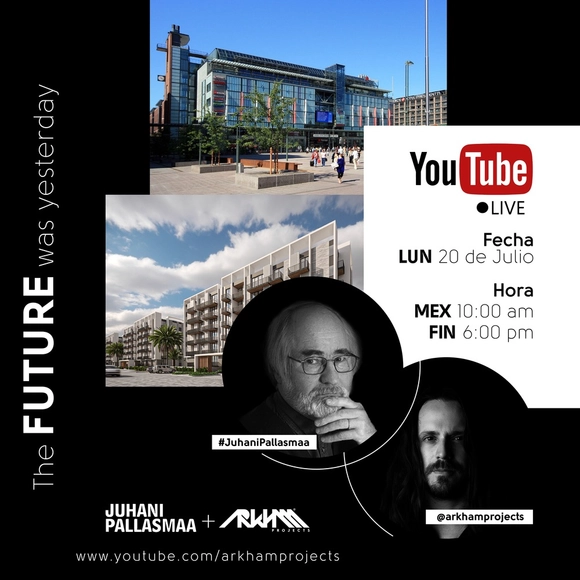
The poster was created in-house at Arkham Projects.
Min Peniche, creative director of Arkham Projects, will be in conversation with Juhani Pallasmaa to discuss the future of architecture and how it resonates with topics explored decades ago. The discussion will examine the similarities and differences between past and present thinking, architecture, and humanism.
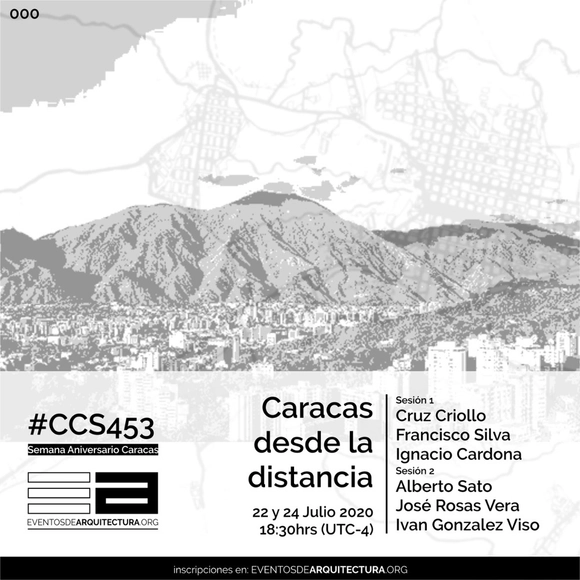
Caracas is not only thought about by those who walk its streets daily, participate in its activities, or simply contemplate it from their windows. Those who have chosen to reside in distant latitudes or opposite time zones also keep it in mind, and in some way, it has become part of their new daily routines.
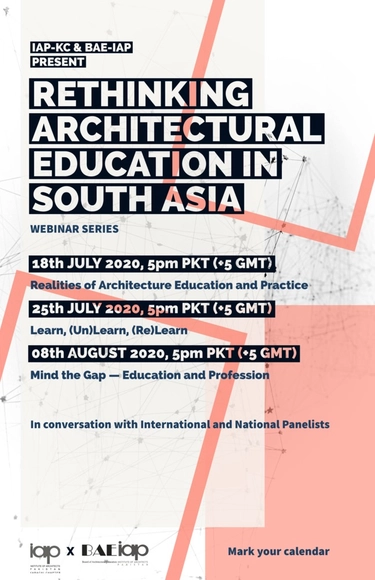
Institute of Architects Pakistan-Karachi Chapter (IAP-KC) and the Board of Architectural Education (BAE-IAP) are excited to announce the webinar series, “Rethinking Architectural Education in South Asia” to be held every Saturday, 5pm PKT (+5 GMT), starting 18th July - 08th August, 2020.
Tuesday, July 21, at 8:00 PM: João Whitaker is the guest for the next Meia Hora com o BrCidades. Whitaker, a professor at FAUUSP and former Municipal Secretary of Housing for São Paulo, will discuss housing and the right to the city with Paolo Colosso and Tainá de Paula.
Social Urbanism is an urban intervention strategy created in Medellín that was fundamental in transforming the social reality of the city's impoverished neighborhoods. Brazil already has a success story in Recife: the Compaz (Community Centers for Peace). Drawing on these experiences and with the support of professors from Eafit Urban, the postgraduate program launched by Insper, Itaú Cultural, and Arq.Futuro aims to train managers capable of addressing the complex reality of vulnerable urban centers in Brazil.
The eighth edition of the international architecture festival in Buenos Aires will take place on the weekend of July 18 and 19, featuring a revamped format to adapt to the current situation and bring architecture to citizens during this atypical 2020. Virtually, Open House Buenos Aires will open the doors to 16 examples of the city's architecture, which will be presented through live streams conducted by their architects and those who inhabit their spaces. From your screen, you will be able to discover, learn about, and reflect on various themes surrounding the city and its contemporary and historical heritage.
Simone Cadinelli Arte Contemporânea opens the exhibition "How to inhabit the present? Act 1 – Everything is coded fog" on July 20, 2020, featuring video works by 14 artists from across Brazil, installed in the gallery's window on Rua Aníbal Mendonça, in Ipanema. The videos will run 24 hours a day and can be viewed by passersby. The exhibition will be replicated on the gallery's website, with full information on the works and artists [https://www.simonecadinelli.com].
Tower Grove Park, St. Louis, MO. Photograph by Virginia Harold
As the world bears witness to the widespread protests that directly confront racism and the institutions that uphold its existence, monuments continue to function as sites of radical gathering and critical action. This keynote discussion will focus on acknowledging, removing, and reimaging how monuments function within our society.
On the weekend of July 25 & 26, Gray Area is proud to present in partnership with the Architectural Association and California College of the Arts, a transcontinental gathering of leading creatives in art, architecture and design for UTOPIAA, a new online festival dedicated to boldly reimagining architecture and spatial practice in response to the ongoing global pandemic. Curated by the Architectural Association’s new AA Visiting School San Francisco in residence at Gray Area, this two-day event will feature live workshops, panel discussions, online exhibitions and other activities staged in virtual space for audiences in the Bay Area, London and beyond, bringing together the respective institutions’ communities of innovators, designers, architects and academics for a critical conversation about the future of the cities and spaces we inhabit.
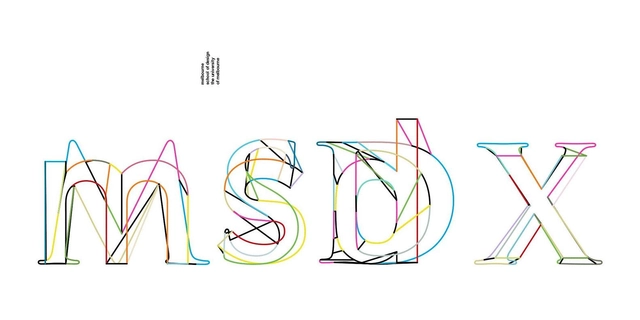
For the first time, MSDx will be held as a virtual exhibition on an interactive multimedia platform, showcasing hundreds of pieces of studio work by our talented students.
We all know the Workplace will never look the same after this, but how will what we call our 'Workspaces' change? How can we best prepare to adapt for the new normal, ensuring our spaces continue to attract staff and build the human connection?