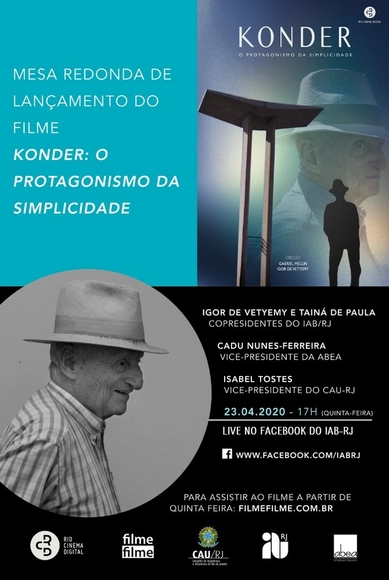
This Thursday, April 23, 2020, at 5:00 PM, the feature-length documentary “Konder: o protagonismo da simplicidade” (Konder: The Protagonism of Simplicity) will premiere. The launch includes a virtual roundtable discussion on the IAB-RJ Facebook page and the film's release on the digital platform filmefilme.com.br. Produced in partnership between ABEA (Brazilian Association for Architectural and Urban Planning Education) and IAB/RJ (Institute of Architects of Brazil – Rio de Janeiro), the film was sponsored by CAU/RJ (Council of Architecture and Urbanism of Rio de Janeiro) with the support of all Architecture and Urbanism entities in the state.
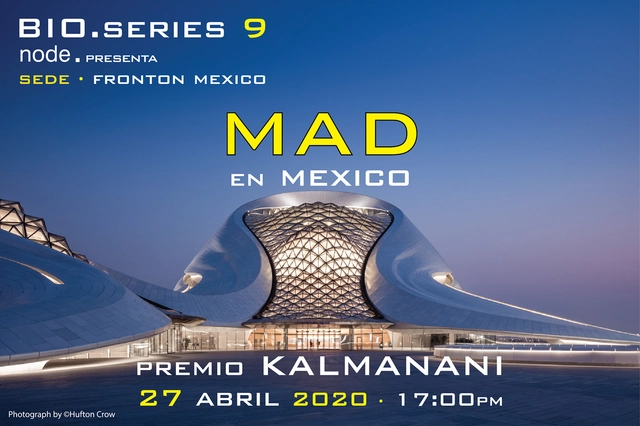
Ingrid Quintana presents a critical assessment of the Bauhaus centenary celebrations, highlighting unexplored aspects of the relationship between the legendary German school and Latin America: the diffuse transatlantic contacts woven through the migratory flows of masters and students, and their relevance as a historiographical category for the examination of transitional aesthetics in regional design.
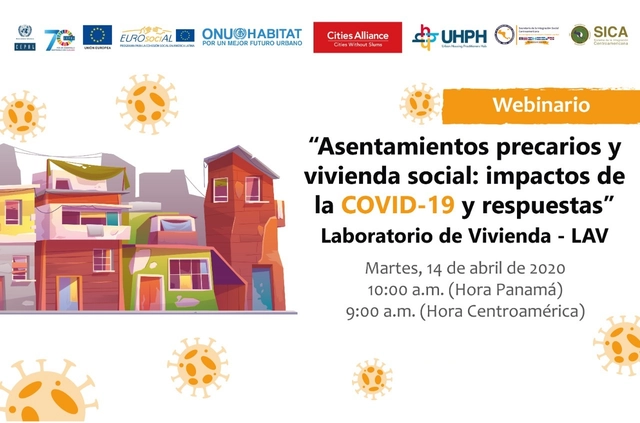
This webinar focuses on identifying responses to the crisis and emergency caused by COVID-19 and gathering input for public action regarding informal settlements in Central America and social housing policy, with the goal of promoting structural change within the context of urban inequality and segregation.
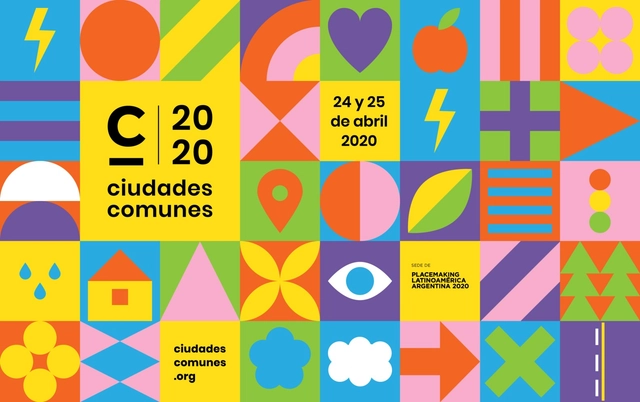
On April 24 and 25, 2020, the Ciudades Comunes Congress will take place—an online meeting to rethink and redefine the co-construction of the city in light of the current global health crisis. Ciudades Comunes brings together individuals with experience in collaborative practices that impact the territory and the community. Organized from Buenos Aires, the event will feature speakers from across Latin America and will be broadcast live to the world at ciudadescomunes.org
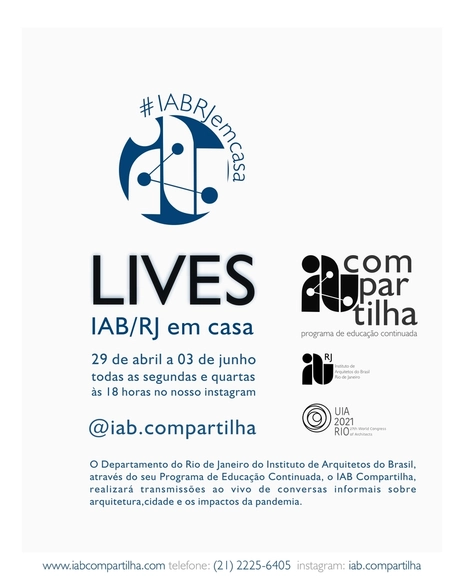
Given the current scenario of social isolation, IAB-RJ's continuing education program, IAB Compartilha, is bringing a selection of our 2020 regular season courses into your homes through reflections and debates in live streams as part of our new cultural and educational program for these times: "IAB-RJ em casa."
BIMOn is Spain's first online BIM event. Following the success of previous years, we are celebrating its third edition. It is the perfect opportunity to connect companies from various fields with experts and professionals working in BIM. We will feature testimonials from experts across various sectors who will reveal the current reality of the industry. This is a must-attend event if you want to stay up to date with the latest developments and the current state of the field.
IV Latin American Landscape Architecture Biennial 2020
The 4th Latin American Landscape Architecture Biennial aims to highlight the relevant role of landscape architecture in the construction of the human habitat. This space is intended to serve as a catalyst for reflection and an incentive for creativity, recognizing and awarding high-quality works and projects that have proposed innovative solutions to the environmental and social issues affecting Latin American countries.
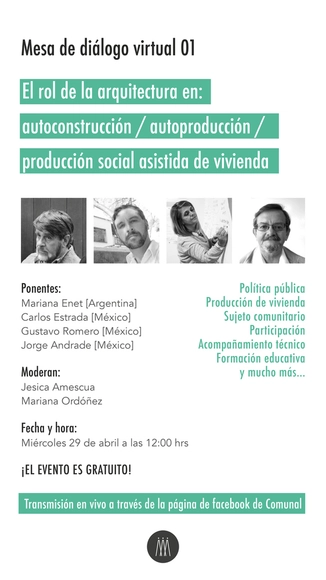
In light of recent statements by the Federal Government and new programs announced by institutions related to housing production in Mexico, we believe it is necessary to engage in dialogue and exchange ideas to better understand the concepts of self-construction, self-production, and assisted social housing production, as well as the role of architecture in these social processes.
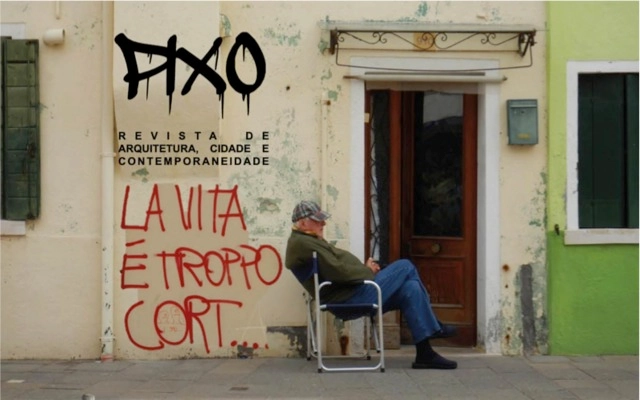
In conjunction with the 2019 IAPS Symposium, "Aging in Place in a World of Inequalities: How to Design Healthy Cities for All"—held from November 27 to 30, 2019, in Pelotas, Brazil—the thirteenth edition of PIXO (a journal of architecture, city, and contemporaneity) is now accepting submissions under the theme AGING IN PLACE. The symposium was promoted by the IAPS Environment and Gerontology Network, with support from the PlaceAge Project, the UFPel Behavioral Studies Laboratory, and the Graduate Program in Architecture and Urbanism at UFPel.
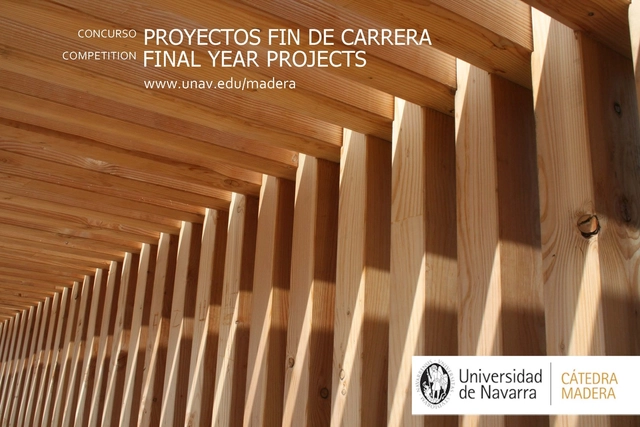
University of Navarra Timber Chair Final Degree Project Competition
The 8th edition of the Timber Chair Final Degree Project (PFC) Competition awards the final degree project that, through its quality, innovation, originality, or creativity, highlights the use of timber and sustainability in an architectural project.
The Faculty of Architecture, Design, and Urbanism at the University of the Republic (FADU-Udelar), through a committee composed of Leandro Reimundi Scafidi (DEAPA professor) and the Audiovisual Media, Communication and Publications, and Cultural Activities services, invites you to participate in the "Quarantine" photography competition, held in the context of the current situation in Uruguay.
These are small creative challenges that we will launch regularly. We are talking about projects, illustration, photography, sketches, design, video, or other media, all of which share architecture as a common thread. Here, you will test all your skills and discover some you didn't know you had! It’s your time!
Landscape Institute, fragment of "Woman at the Window" by René Portocarrero (1940), intervened by Lucas Períes (2020)
The Landscape Institute of the Catholic University of Córdoba (Argentina), in collaboration with the Latin American Landscape Initiative (LALI) —within the framework of World Landscape Architecture Month (IFLA 2006 declaration)— invites professionals and enthusiasts of visual arts, illustration, or design in all fields to participate in the art competition "The Landscape Through My Window."
"Habitar a Quarentena" (@habitaraquarentena) is a collaborative project that seeks to gather insights through accounts and photographic records of the various experiences of living through this period of isolation via Instagram.
Natural disasters, flooding, unbalanced environmental exploitation, urban occupation of high-risk areas, exclusionary urban planning, the degradation of historical and cultural heritage, precarious housing, restrictive urban mobility, and government neglect are some of the many adversities that define the context of contemporary cities. The city emerges as a grave consequence of these disastrous events, which occur either through continuous processes or isolated episodes.